
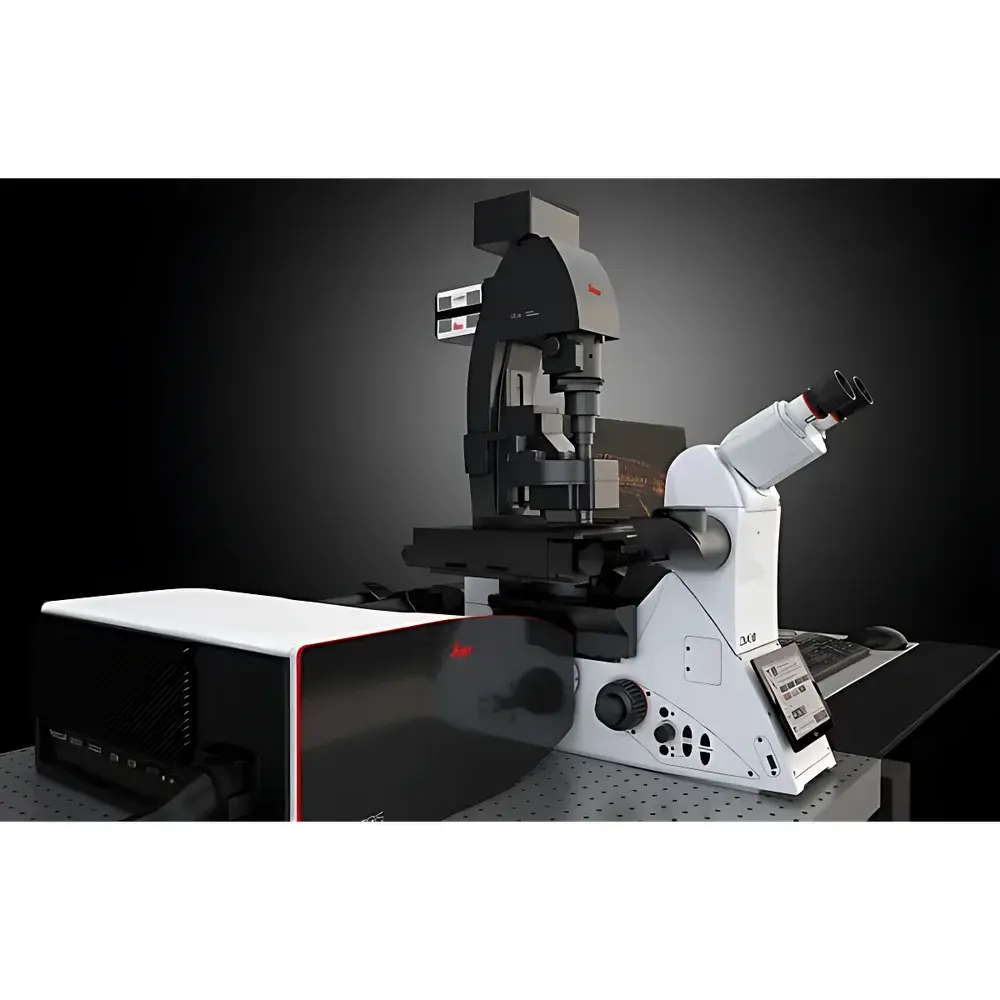
Leica STELLARIS SpectraPlex Confocal Microscope
| Brand | Leica |
|---|---|
| Origin | Germany |
| Instrument Type | Point-Scanning Confocal Microscope |
| Model | STELLARIS SpectraPlex |
| Spectral Unmixing Capacity | >15 fluorophores per acquisition |
| Workflow Integration | Aivia AI-powered analysis platform |
| Compliance | Designed for GLP/GMP-aligned spatial biology workflows, compatible with ISO 13485–informed documentation practices |
Overview
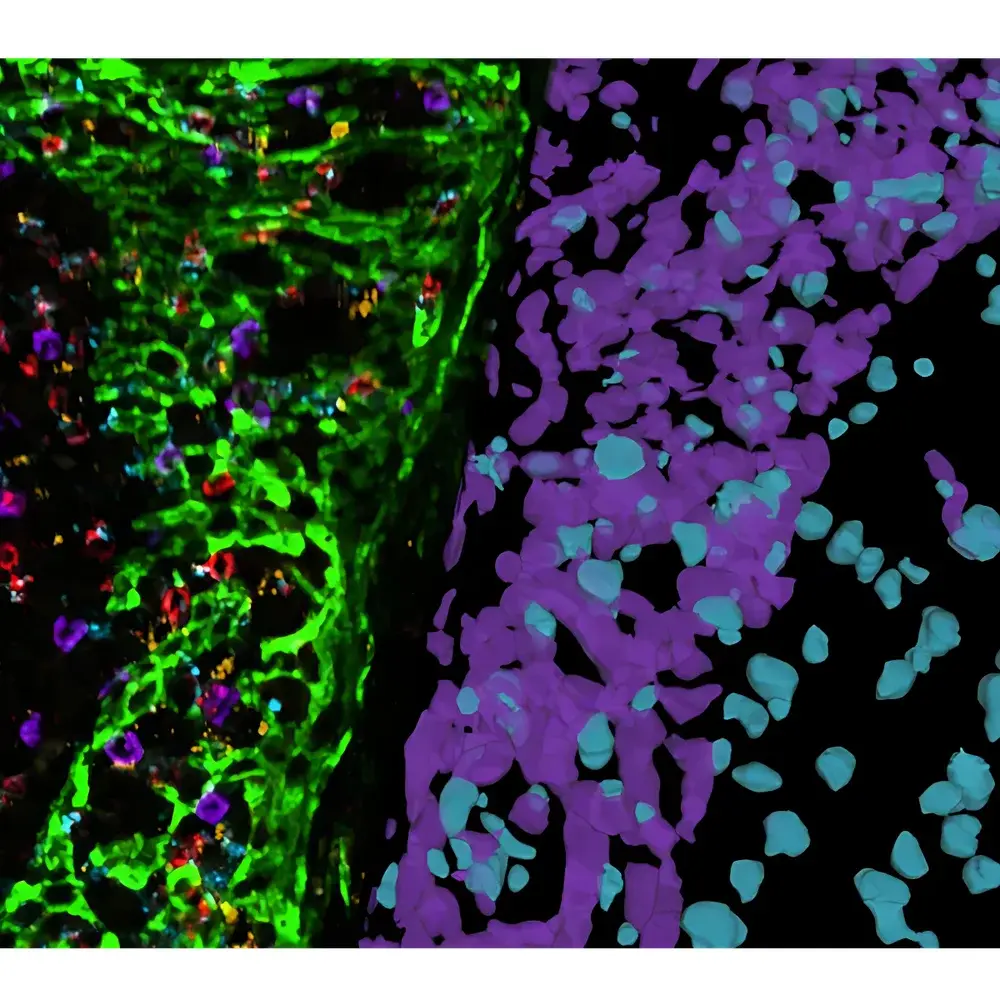
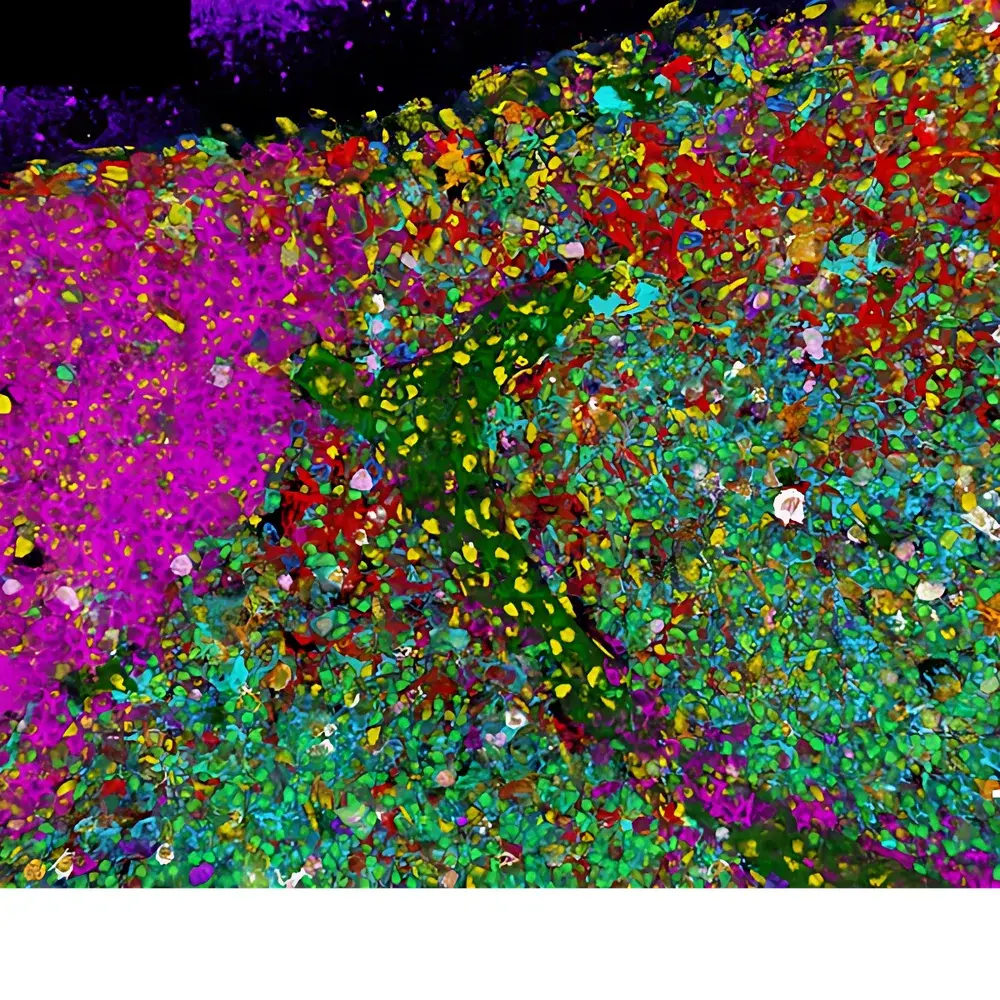
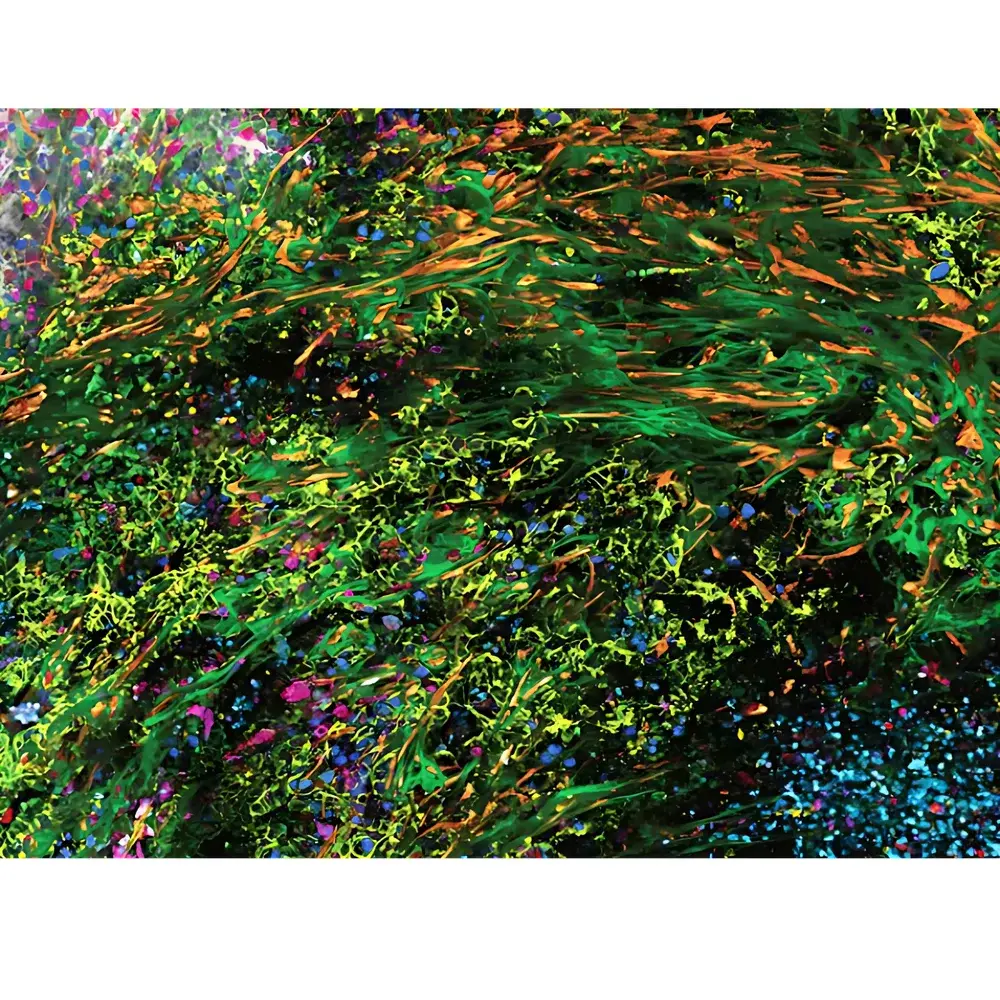
The Leica STELLARIS SpectraPlex Confocal Microscope is a high-performance, point-scanning laser confocal system engineered for quantitative 3D multiplexed imaging in spatial biology. Built upon Leica’s proprietary HyD X hybrid detector architecture and resonant scanning technology, it delivers photon-efficient detection across the full visible to near-infrared spectrum (400–900 nm). Unlike conventional filter-based multicolor systems, SpectraPlex leverages full-spectrum acquisition coupled with advanced spectral unmixing algorithms to resolve overlapping emission profiles—enabling simultaneous detection and quantification of more than 15 spectrally distinct fluorophores within a single scan. This capability supports rigorous spatial phenotyping, cell–cell interaction mapping, and subcellular co-localization analysis at isotropic resolutions down to 120 nm lateral and 300 nm axial (depending on objective and labeling density). The platform is purpose-built for reproducible, multi-scale imaging—from organelle-level dynamics in live cells to intact tissue volumes exceeding 1 mm³—while maintaining signal fidelity and minimizing phototoxicity through adaptive excitation power control.
Key Features
- Full-spectrum spectral detection with real-time unmixing of ≥15 fluorophores per acquisition
- HyD X hybrid detectors offering >40% quantum efficiency across 400–900 nm, optimized for low-light spatial biology applications
- Resonant scanning at up to 16 kHz line rate, enabling high-speed volumetric imaging with minimal photobleaching
- Integrated “Virtual Fridge” database for managing fluorophore properties, extinction coefficients, and quantum yields—linked directly to experimental design
- Automated panel optimization engine that computes optimal excitation wavelengths, detection windows, and gain settings based on fluorophore spectral profiles and sample autofluorescence background
- Dynamic acquisition parameter adjustment: laser power, dwell time, and pinhole size automatically optimized per channel to balance signal-to-noise ratio and photodamage
- Seamless data export to Aivia software for AI-driven spatial clustering, neighborhood analysis, and topology-aware segmentation
Sample Compatibility & Compliance
The STELLARIS SpectraPlex accommodates fixed and live specimens across diverse formats—including coverslip-mounted monolayers, organoids, cleared tissue sections (e.g., CLARITY, iDISCO), and whole-mount embryos. Its modular optical path supports immersion objectives from 20× to 100× (oil, glycerol, water), with motorized correction collar and focus stabilization (Leica Adaptive Focus Control). All hardware and software components comply with CE marking requirements for in vitro diagnostic (IVD) research instrumentation. While not an IVD device per se, its architecture aligns with principles outlined in ISO/IEC 17025 for measurement traceability and supports audit-ready metadata capture per FDA 21 CFR Part 11 when deployed with validated Aivia deployment configurations. Experimental logs, acquisition parameters, and unmixing matrices are embedded in standardized OME-TIFF files, ensuring interoperability with FAIR data management frameworks.
Software & Data Management
SpectraPlex operates under Leica LAS X Navigator software, which embeds GLP-compliant experiment tracking—including user authentication, timestamped parameter logging, and electronic signature support. The “Design Panel” module enables collaborative fluorophore panel planning using stored spectral libraries and simulated unmixing previews prior to wet-lab execution. Raw spectral data is stored in open-format OME-TIFF containers with embedded JSON metadata describing acquisition conditions, unmixing coefficients, and instrument calibration history. Integration with Aivia provides GPU-accelerated deep learning models trained on annotated spatial biology datasets (e.g., tumor microenvironment atlases), supporting unsupervised cell-type clustering, spatial autocorrelation (Moran’s I), and distance-based interaction scoring (e.g., nearest-neighbor analysis between T-cell and PD-L1+ macrophages). All processing pipelines are scriptable via Python API and exportable as version-controlled Jupyter notebooks.
Applications
- Cancer immunology: Multiplexed profiling of immune checkpoint expression, cytotoxic granule polarization, and stromal interface mapping in FFPE or frozen tumor sections
- Neurodevelopmental studies: Simultaneous visualization of synaptic proteins, glial markers, and activity reporters (e.g., GCaMP) in thick brain slices
- Developmental biology: Long-term timelapse of morphogen gradients and progenitor cell migration in optically cleared embryonic tissues
- Microbiome–host interactions: Spatial resolution of bacterial biofilm architecture alongside host epithelial barrier markers in intestinal organoids
- Drug mechanism-of-action studies: Quantitative assessment of target engagement, pathway modulation, and off-target localization across heterogeneous cell populations
FAQ
What distinguishes SpectraPlex from conventional filter-based confocal systems?
SpectraPlex acquires full emission spectra per pixel rather than discrete bandpass-filtered channels—enabling computational separation of highly overlapping fluorophores without physical filter changes.
Can SpectraPlex perform live-cell imaging with minimal phototoxicity?
Yes—its adaptive laser power control, high-quantum-efficiency detectors, and resonant scanning reduce total illumination dose by up to 60% compared to galvo-based systems at equivalent SNR.
Is spectral unmixing performed in real time during acquisition?
Unmixing occurs post-acquisition using pre-calibrated reference spectra; however, real-time preview of unmixed channels is available during acquisition for immediate quality assessment.
How does the Virtual Fridge integrate with laboratory inventory management?
It functions as a local fluorophore registry supporting CSV import/export, versioned spectral reference updates, and cross-linking to vendor lot numbers and conjugation protocols.
Does Aivia require separate licensing for spatial analysis modules?
All spatial phenotyping, neighborhood analysis, and topology modeling tools are included in the Aivia Advanced license tier bundled with STELLARIS SpectraPlex deployments.





