
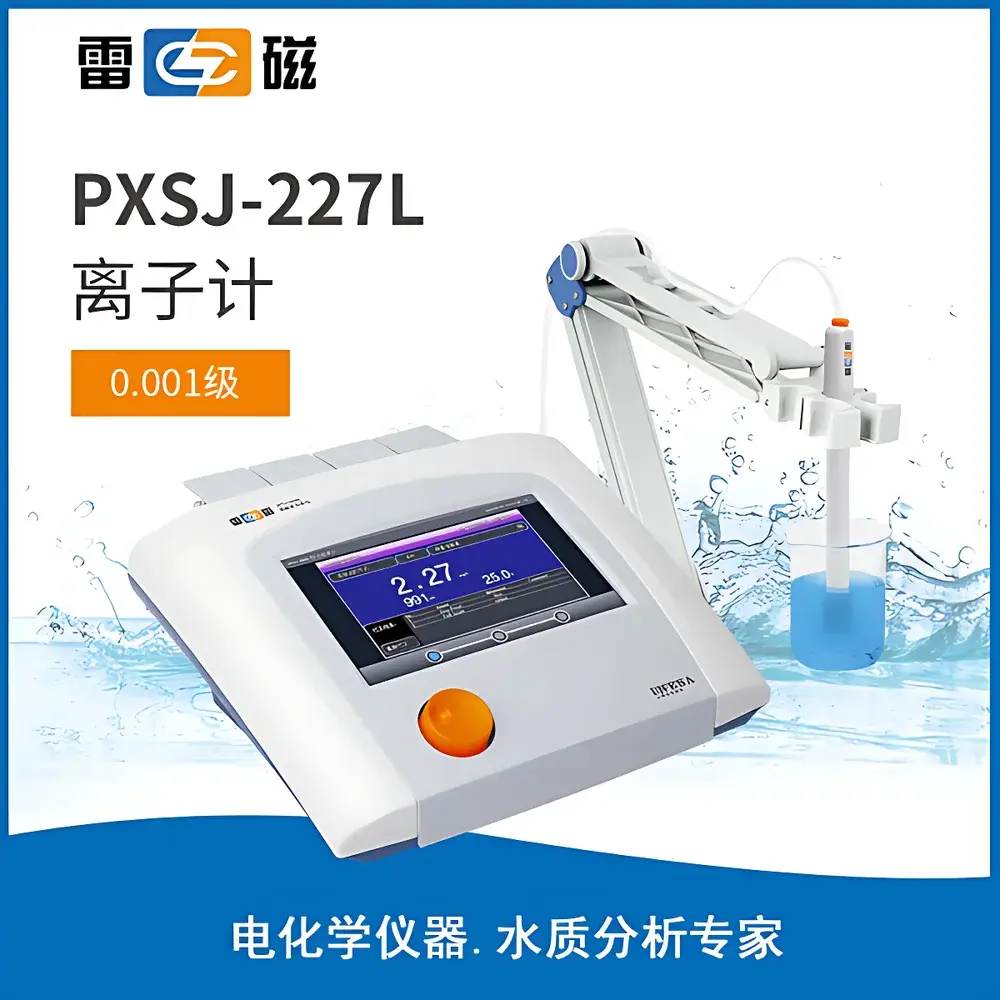
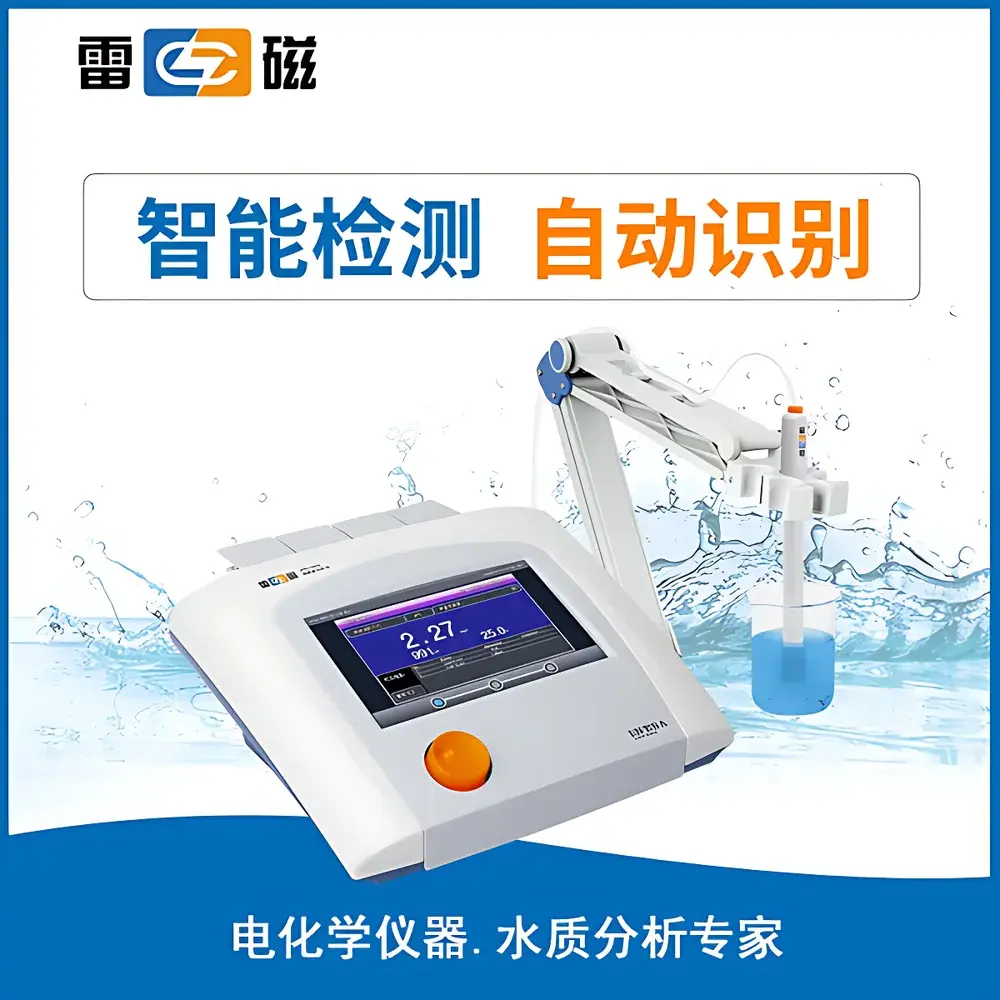
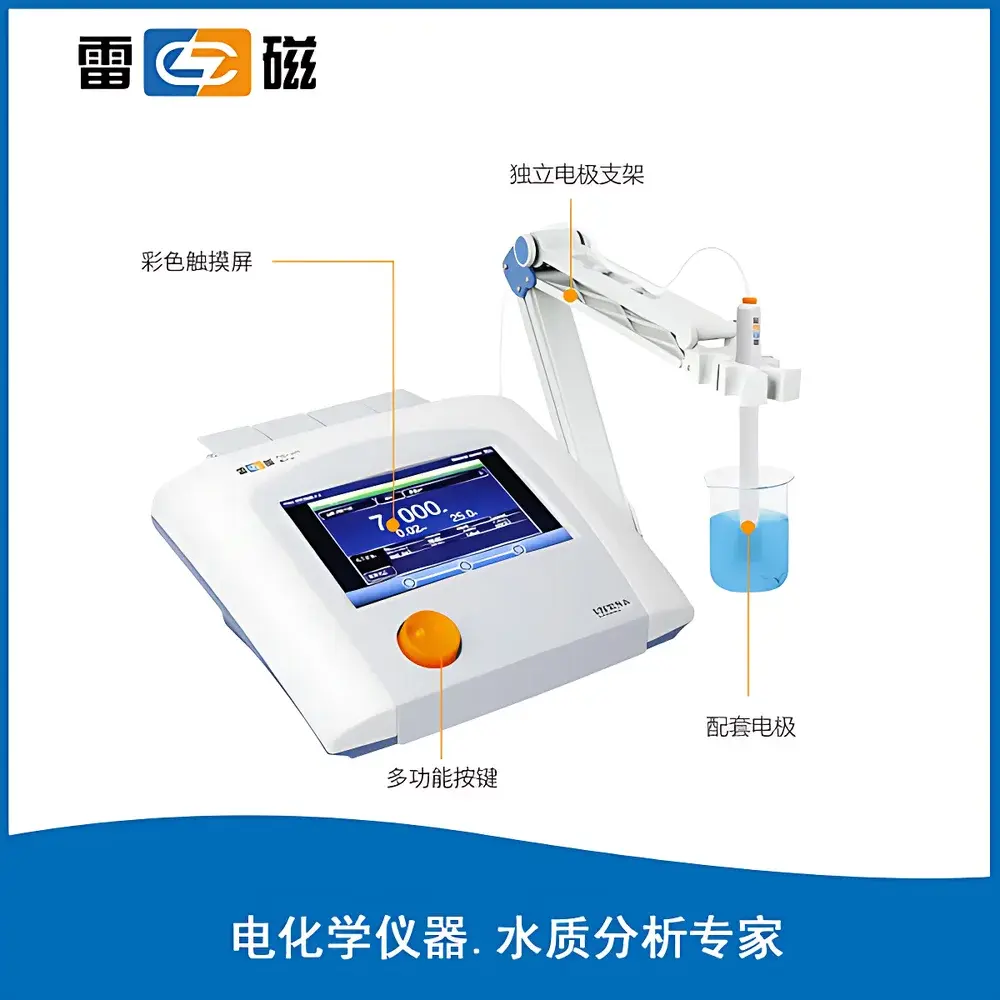
Leici PXSJ-227L Benchtop Ion Concentration Meter
| Brand | Leici |
|---|---|
| Origin | Shanghai, China |
| Model | PXSJ-227L |
| Instrument Type | Benchtop |
| Ion Measurement Range | –2.000 to 20.000 pX |
| Minimum Resolution | 0.001 pX |
| mV Range | –2000.00 to 2000.00 mV |
| mV Resolution | 0.01 mV |
| Temperature Range | –5.0 to 130.0 °C |
| Temp. Resolution | 0.1 °C |
| Temperature Accuracy | ±0.1 °C |
| pH/pX Accuracy | ±0.002 pH/pX |
| mV Accuracy | ±0.03% FS |
| Ion Concentration Units | pX, mol/L, mmol/L, g/L, mg/L, μg/L |
| Data Storage Capacity | 1000 measurement sets |
| Compliance | GLP-compliant data traceability |
| Power Supply | 24 VDC, 3 A (adapter input: 100–240 VAC) |
Overview
The Leici PXSJ-227L is a high-precision benchtop ion concentration meter engineered for quantitative electrochemical analysis of monovalent and multivalent ions in aqueous solutions. It operates on the principle of potentiometric measurement using ion-selective electrodes (ISEs), where the measured potential difference between the indicator electrode and reference electrode follows the Nernst equation—enabling direct, logarithmic quantification of ion activity across six decades of concentration. Designed for routine and regulatory-grade water quality testing, the instrument delivers 0.001-class accuracy per Chinese JJG 1090–2013 metrological verification requirements and supports traceable calibration against internationally recognized standard solutions (GB, DIN, NIST). Its dual-mode architecture simultaneously acquires and processes mV, pH, pX, ORP, temperature, and derived ion concentration values—making it suitable for environmental monitoring laboratories, municipal water treatment facilities, and industrial effluent QA/QC departments requiring robust, repeatable ion analytics.
Key Features
- Potentiometric measurement platform with automatic endpoint detection: supports auto-read, timed-read, interval-read, and manual-read modes for flexible experimental protocols.
- Integrated temperature compensation system with Pt1000 sensor; automatic 1–6 point calibration with electrode health monitoring and calibration expiry alerts.
- Multi-standard buffer library preloaded with GB, DIN, and NIST pH/pX standards; user-definable buffer groups for method-specific calibration workflows.
- Comprehensive ion mode support: factory-configured profiles for H⁺, Na⁺, K⁺, NH₄⁺, Cl⁻, F⁻, and customizable user-defined ion models.
- Seven selectable concentration units (pX, mol/L, mmol/L, g/L, mg/L, μg/L) with real-time conversion and four-significant-digit scientific notation display.
- Four analytical measurement modes: direct concentration readout, standard addition, sample addition, and Gran plot analysis for low-concentration or complex-matrix samples.
- GLP-compliant audit trail: timestamps, operator ID, electrode serial numbers, calibration history, and measurement metadata are embedded in each stored record.
Sample Compatibility & Compliance
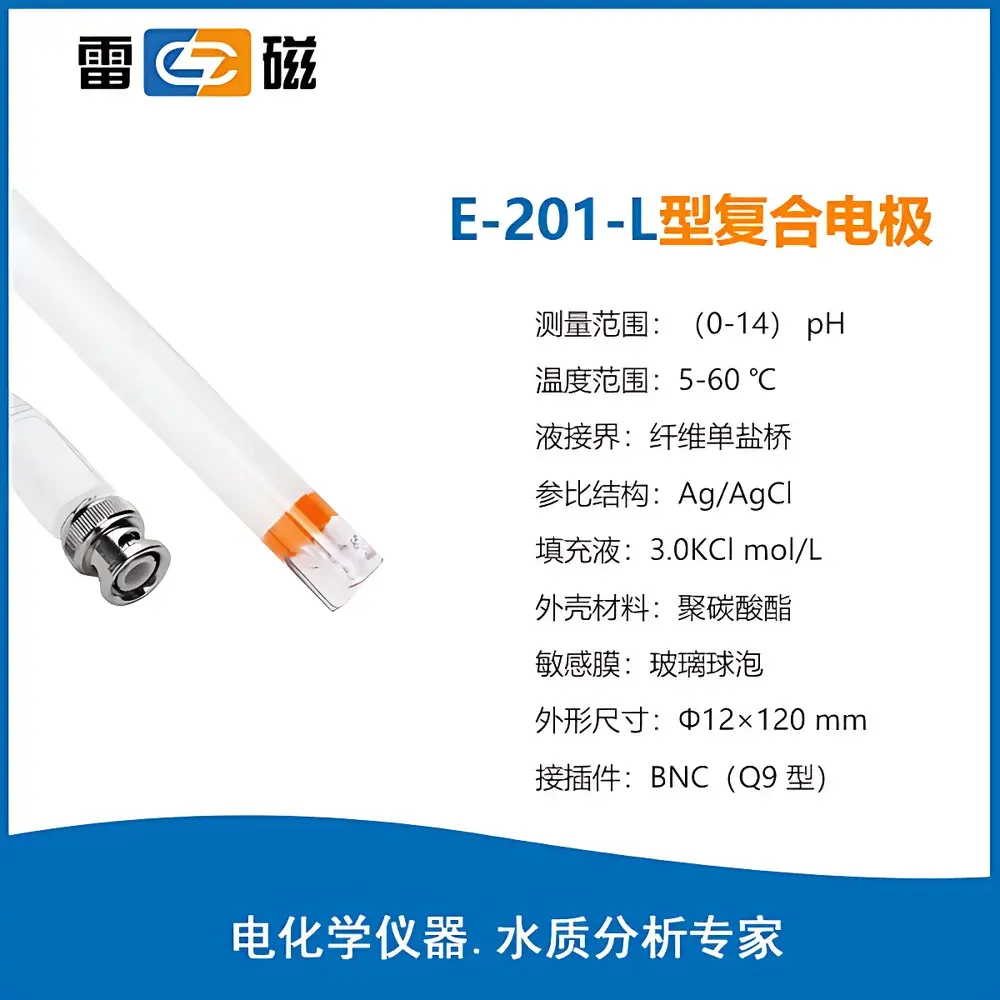
The PXSJ-227L is optimized for aqueous liquid samples within conductivity ranges typical of natural waters, wastewater, drinking water, and industrial process streams. It accommodates standard glass-body and solid-state ISEs (e.g., LaF₃-based fluoride electrodes, Ag/AgCl reference systems) via BNC and mini-DIN interfaces. All measurements adhere to ISO 10523 (water quality — determination of pH), ISO 10304-1 (ion chromatography reference for validation), and ASTM D1293 (standard test method for pH of water). The instrument’s data structure and storage protocol meet GLP documentation requirements for laboratory accreditation (e.g., CNAS-CL01, ISO/IEC 17025), including mandatory retention of raw mV values, calibration curves, and uncertainty annotations.
Software & Data Management
Data handling is implemented through an embedded 32-bit ARM processor running a deterministic real-time OS. Up to 1000 complete measurement records—including raw potentials, calculated concentrations, calibration parameters, temperature logs, and operator tags—are stored internally with timestamped integrity. Export is supported via USB host port (U-disk) and RS-232/USB-C interface for PC connectivity. No proprietary software is required: exported CSV files contain UTF-8–encoded columns compatible with LIMS, Excel, and statistical packages (e.g., JMP, Minitab). Firmware supports firmware update via USB and includes password-protected user role management (administrator, analyst, viewer) aligned with FDA 21 CFR Part 11 access control principles.
Applications
- Environmental monitoring: quantification of fluoride, nitrate, ammonium, and chloride in surface water, groundwater, and wastewater per EPA Method 300.0 and China’s HJ 535–2009.
- Drinking water compliance: verification of residual F⁻ (0.5–1.5 mg/L) and Cl⁻ levels against WHO Guidelines and GB 5749–2022.
- Industrial process control: monitoring of aggressive ions (e.g., Cl⁻ in cooling water, F⁻ in semiconductor rinse baths) to prevent corrosion or etching deviations.
- Educational laboratories: teaching Nernstian behavior, selectivity coefficient determination, and standard addition methodology in analytical chemistry curricula.
- Research applications: kinetic studies of ion exchange resins, membrane permeability assays, and speciation modeling in geochemical simulations.
FAQ
Does the PXSJ-227L support connection to an automated sample changer?
Yes—it features RS-232 and TTL-level trigger outputs compatible with third-party autosamplers for unattended calibration and batch analysis.
Can custom ion-selective electrodes be configured in the instrument?
Yes—users may define new ion modes by entering slope (mV/decade), intercept, and selectivity coefficients via the setup menu.
Is the internal clock battery-backed for time-stamped GLP records during power loss?
Yes—the real-time clock retains date/time for ≥72 hours without external power, ensuring continuity of audit trails.
What is the maximum allowable sample conductivity for stable ISE measurements?
Optimal performance is maintained below 20 mS/cm; above this, a flowing junction reference electrode or ionic strength adjuster is recommended.
Are calibration reports exportable in PDF format?
No—calibration data exports as CSV only; however, third-party tools can generate PDF reports from structured CSV output.







