
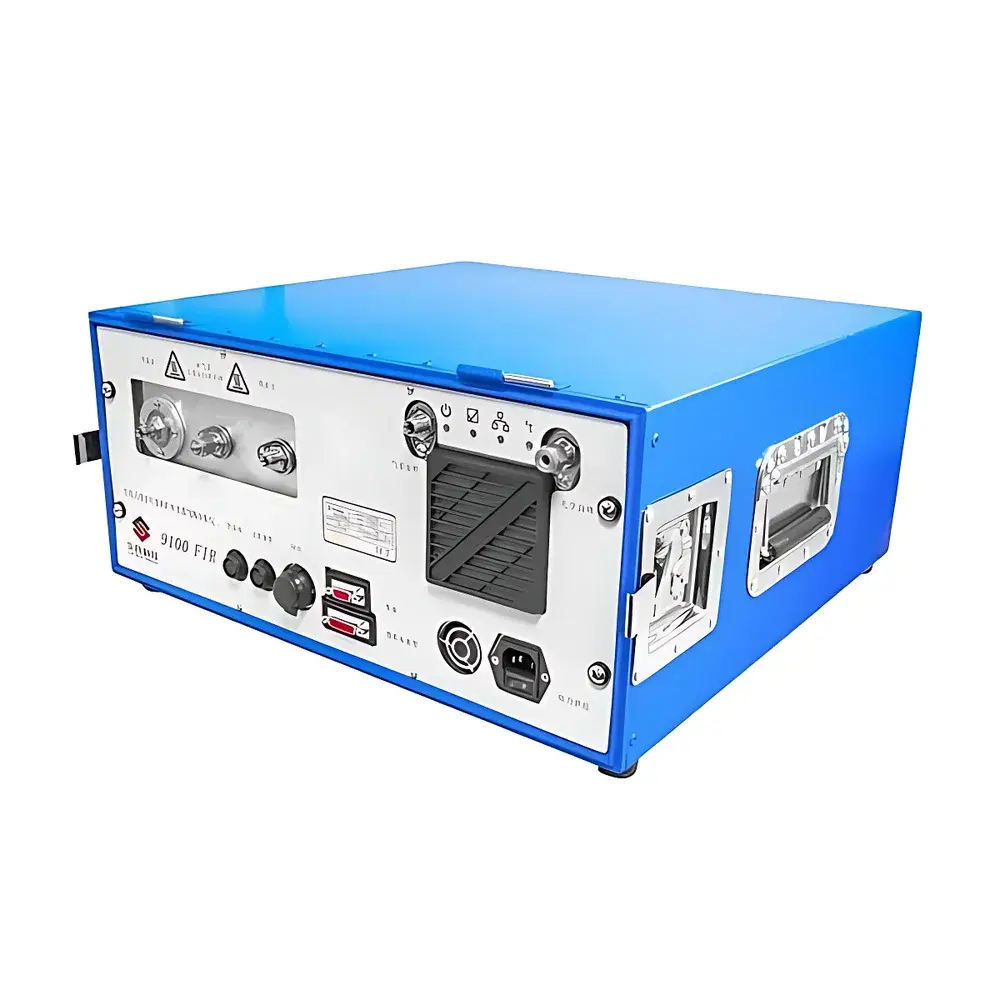
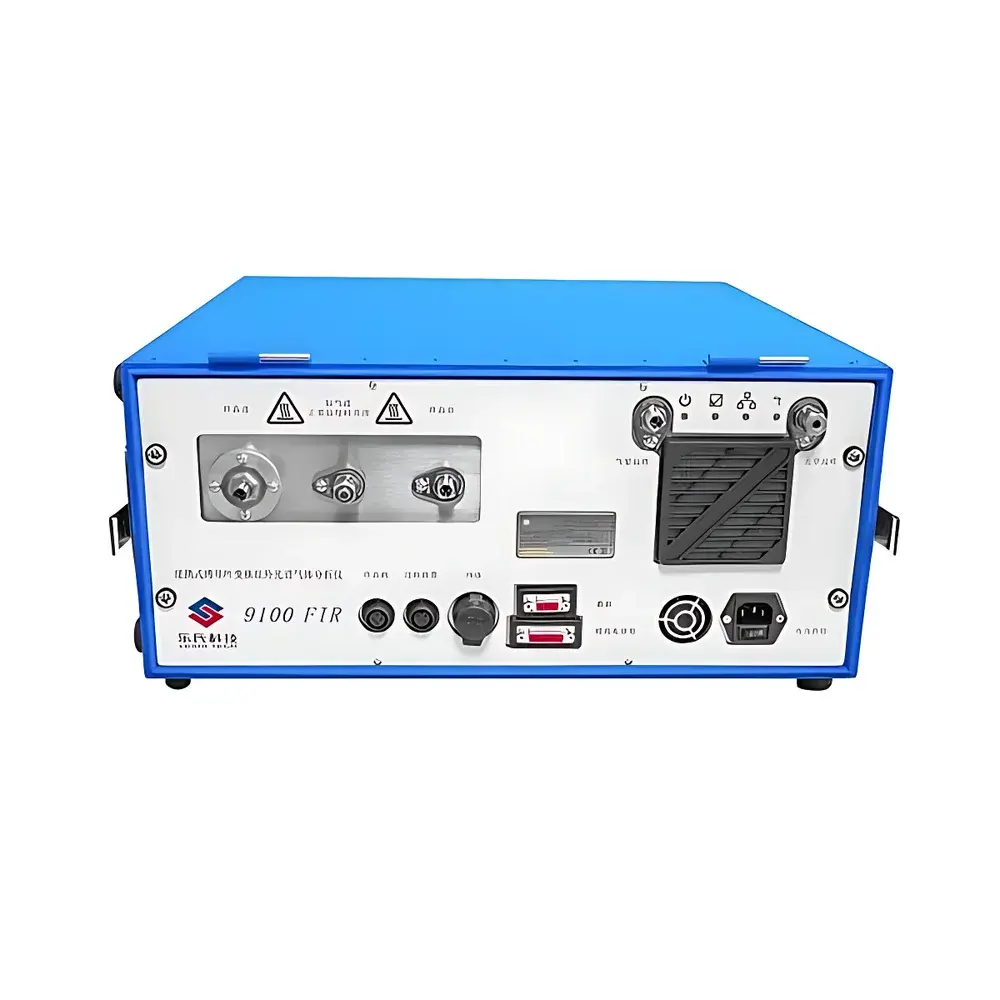
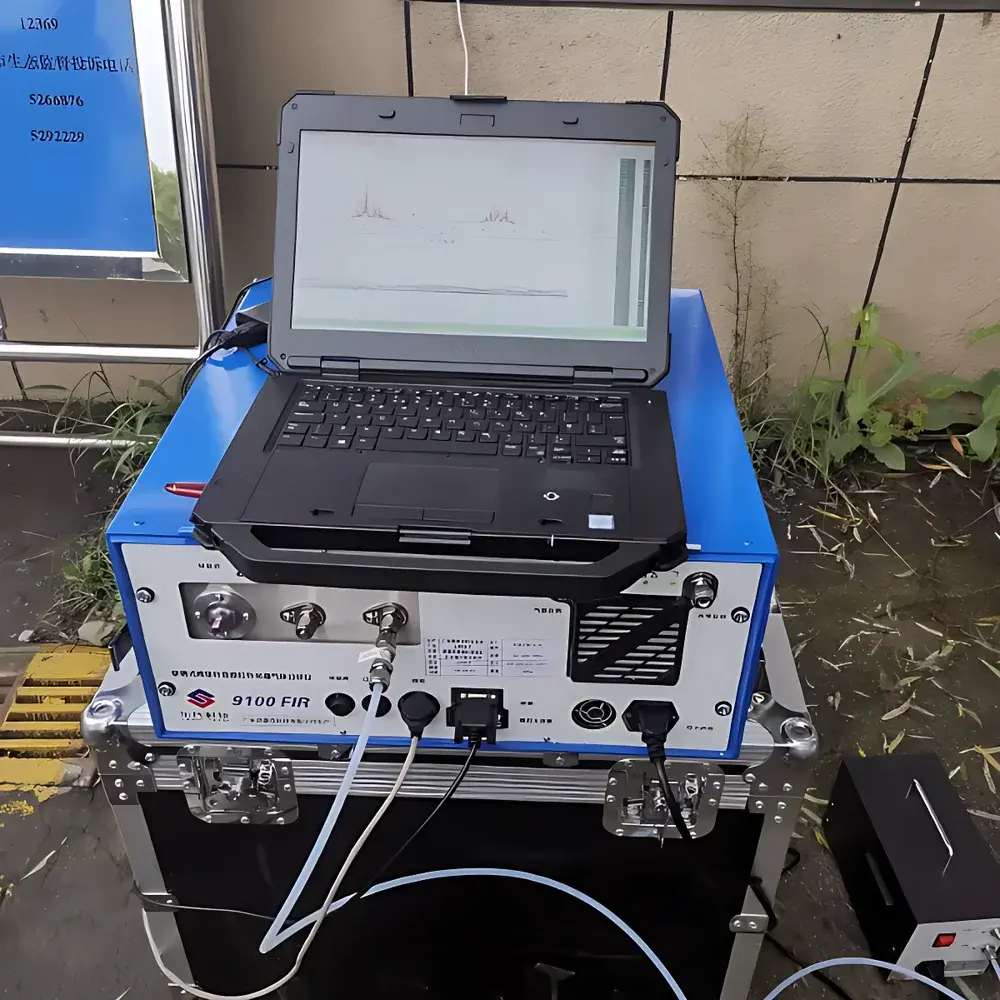
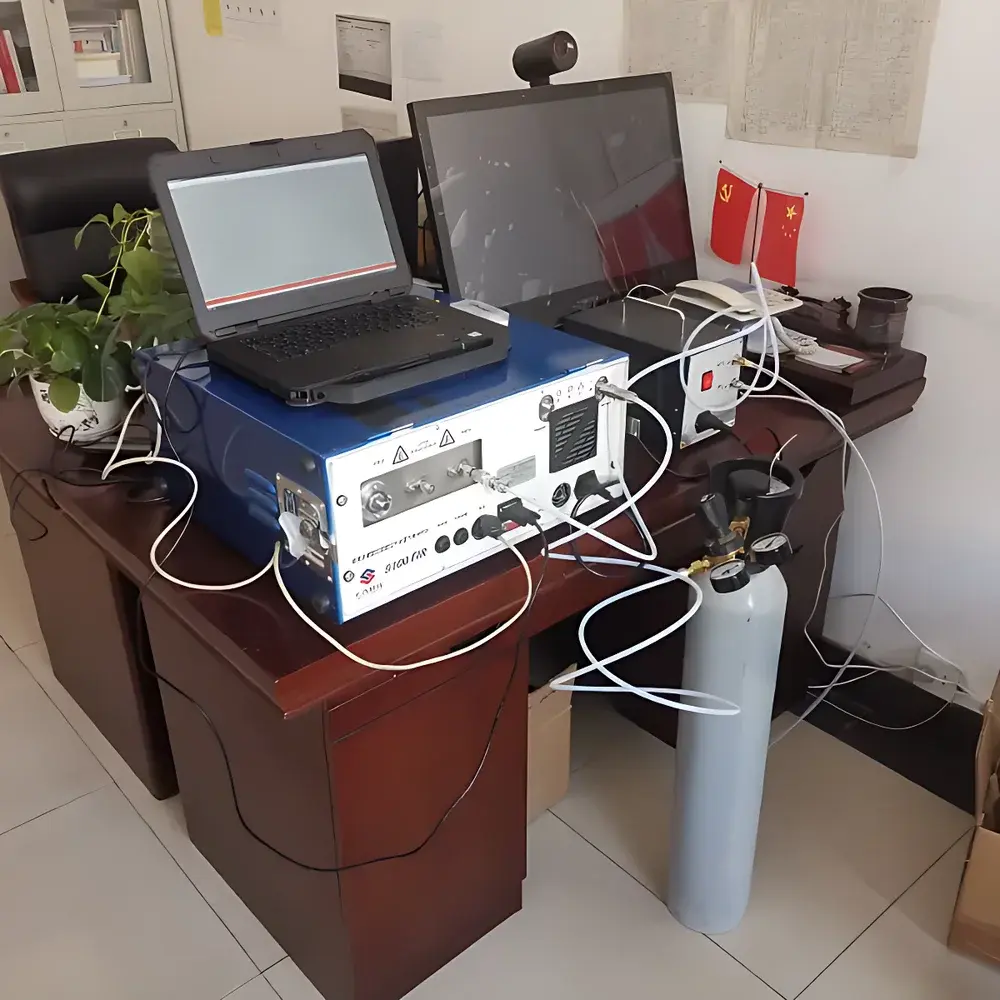
LESHI 9100FIR Portable Fourier Transform Infrared (FTIR) Gas Analyzer
| Brand | Leshi |
|---|---|
| Origin | Beijing, China |
| Model | 9100FIR |
| Instrument Type | Portable |
| Spectral Range | 485–8500 cm⁻¹ |
| Resolution Options | 1, 2, 4, or 8 cm⁻¹ |
| Scan Speed | Up to 1 scan/sec (resolution-dependent) |
| Signal-to-Noise Ratio | >20,000:1 (peak-to-peak, 60-sec acquisition), >120,000:1 (RMS, 60-sec acquisition) |
| Wavenumber Accuracy | ±0.01 cm⁻¹ |
| Operating Sample Temperature | Up to 180 °C (hot-wet sampling) |
| Detector | Ambient-temperature DTGS |
Overview
The LESHI 9100FIR is a field-deployable, high-performance Fourier Transform Infrared (FTIR) gas analyzer engineered for real-time, in-situ qualitative and quantitative analysis of complex gaseous mixtures under demanding industrial and environmental conditions. Based on Michelson interferometry, the instrument acquires full mid-infrared spectra (485–8500 cm⁻¹) without spectral scanning, enabling simultaneous detection of hundreds of organic and inorganic compounds—including VOCs, NOx, SO2, NH3, HCl, CO, CO2, CH4, HF, and numerous halogenated hydrocarbons—within a single measurement cycle. Its core architecture supports true hot-wet sampling: integrated 180 °C heated sampling train, thermally stabilized optics, and ambient-temperature DTGS detection eliminate condensation artifacts and preserve molecular integrity during analysis. Unlike electrochemical or single-band NDIR analyzers, the 9100FIR applies multivariate chemometric modeling (PLS, CLS) directly to raw interferograms, minimizing cross-sensitivity and delivering robust speciation even in overlapping absorption regions.
Key Features
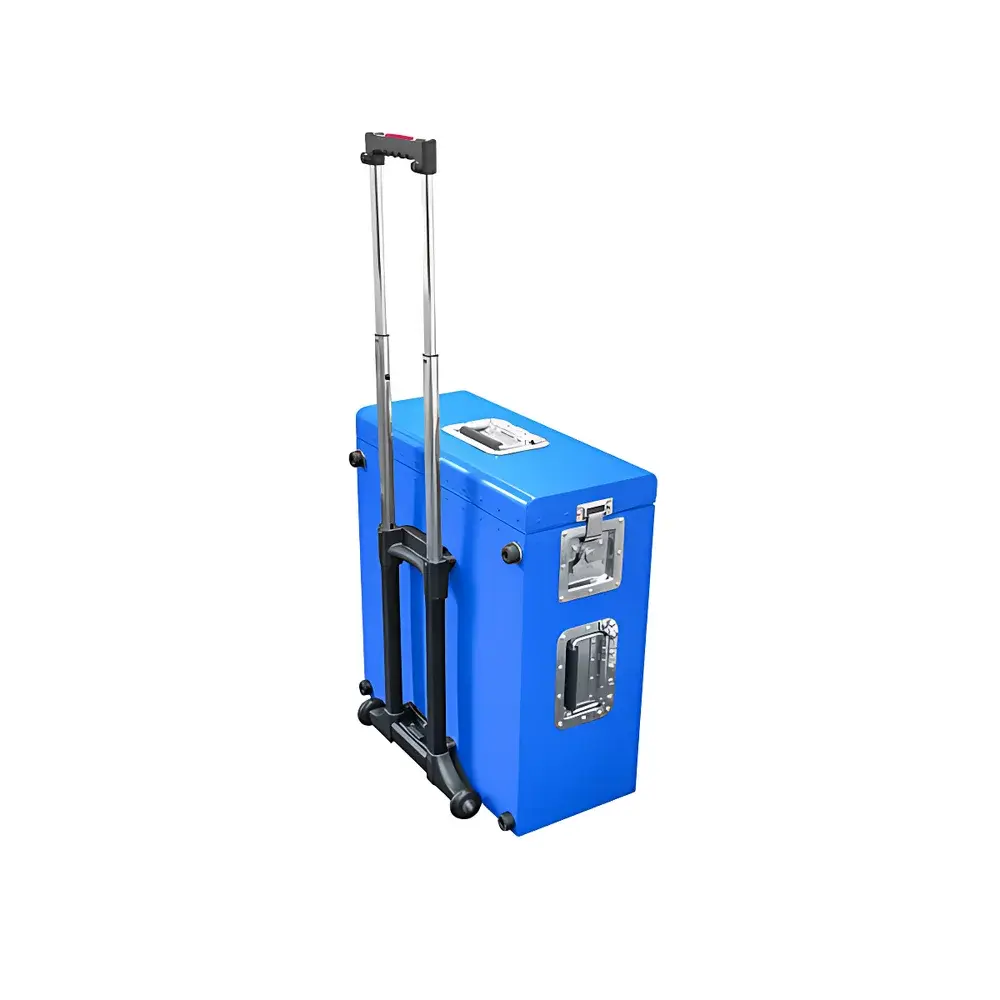
- True Portable FTIR Performance: Delivers laboratory-grade spectral resolution (down to 1 cm⁻¹, unapodized) in a ruggedized, battery-operable chassis rated for continuous operation in industrial perimeters, stack environments, and emergency response scenarios.
- Hot-Wet, In-Situ Sampling Architecture: Full-path heating (probe, line, and gas cell) up to 180 °C ensures representative analysis of thermally labile or condensable species without dilution, cooling, or chemical derivatization.
- Dual Nitrogen Purge System: Independent purge circuits for both the sample cell (reverse-flow cleaning) and internal optical path maintain long-term photometric stability and mitigate contamination from particulates or aerosols.
- Self-Calibrating Optical Bench: Incorporates a VCSEL (Vertical-Cavity Surface-Emitting Laser) as a wavelength reference, guaranteeing wavenumber accuracy better than ±0.01 cm⁻¹ over 10 years without recalibration.
- Intelligent Dynamic Range Management: Multi-range analog front-end and automated gain switching enable seamless quantification across concentration spans—from sub-ppb to percent-level—without manual intervention.
- Real-Time Oxygen Co-Measurement: Integrated zirconia-based O2 sensor provides stoichiometric correction and combustion efficiency assessment concurrent with IR spectral acquisition.
- Front-Panel Operational Feedback: LED status indicators provide immediate visual verification of system readiness, thermal stabilization, purge flow, and alarm conditions.
Sample Compatibility & Compliance
The 9100FIR is validated for direct analysis of untreated, humid, particulate-laden process and ambient gases. Its heated filtration (≤2 µm) and thermal management ensure compatibility with flue gases from coal-fired power plants, waste incinerators, cement kilns, and chemical reactors. The instrument meets the technical requirements and test protocols defined in five Chinese EPA standards: HJ 919–2017 (ambient VOCs), HJ 920–2017 (inorganic emergency monitoring), HJ 1011–2018 (VOC speciation), HJ 1240–2021 (stationary source emissions), and HJ 1330–2023 (NH3/HCl). While not certified to ISO/IEC 17025 or US EPA PS-15, its spectral fidelity, traceability, and audit-ready data logging support GLP-aligned workflows and regulatory submission preparation. All spectral acquisitions are timestamped and annotated with temperature, pressure, O2%, resolution setting, and purge status—enabling full forensic reconstruction of analytical conditions.
Software & Data Management
The embedded analysis platform provides automated compliance reporting per ASTM D6348, ISO 12039, and UK EA TGN 15. It performs real-time baseline correction, atmospheric compensation, and drift normalization using dual-beam referencing. Quantitative results are generated via PLS regression models trained on NIST-traceable calibration standards; users may import custom libraries or reprocess archived interferograms offline using supplied MATLAB-compatible tools. Data export is native to CSV and Excel-compatible formats, preserving metadata integrity. The software enforces 21 CFR Part 11–compatible audit trails: every spectrum, calibration event, model update, and parameter change is logged with user ID, timestamp, and cryptographic hash. No local spectral library storage is required—the system references compound-specific absorption fingerprints from an encrypted onboard database containing >400 pre-validated analytes (expandable).
Applications
- Continuous emission monitoring (CEM) of regulated pollutants (SO2, NOx, CO, NH3, HCl, HF) from stationary sources
- In-process control of catalytic cracking, ammonia synthesis, and sulfur recovery units
- Emergency response screening for chemical spills, industrial accidents, or clandestine manufacturing
- Occupational hygiene assessment in refineries, paint booths, and semiconductor fabrication facilities
- Deactivation studies of SCR/DeNOx catalysts under realistic thermal and compositional stress
- Performance validation of abatement technologies (RTOs, scrubbers, biofilters)
- Ammonia slip monitoring in selective catalytic reduction (SCR) systems
- Multi-component characterization of biogas, syngas, and landfill gas
- Method development and validation for regulatory laboratories pursuing ISO/IEC 17025 accreditation
FAQ
What is the minimum detectable concentration for common pollutants like NH₃ or HCl?
Detection limits are matrix- and model-dependent; typical LDLs range from 0.2 ppm (NH₃) to 0.5 ppm (HCl) at 1 cm⁻¹ resolution and 60-second integration, per HJ 1330–2023 protocol.
Can the 9100FIR operate unattended for extended periods?
Yes—internal data logging supports continuous acquisition for ≥72 hours; scheduled auto-calibration and nitrogen purge cycles can be programmed via the scheduler module.
Is external PC hardware required for operation?
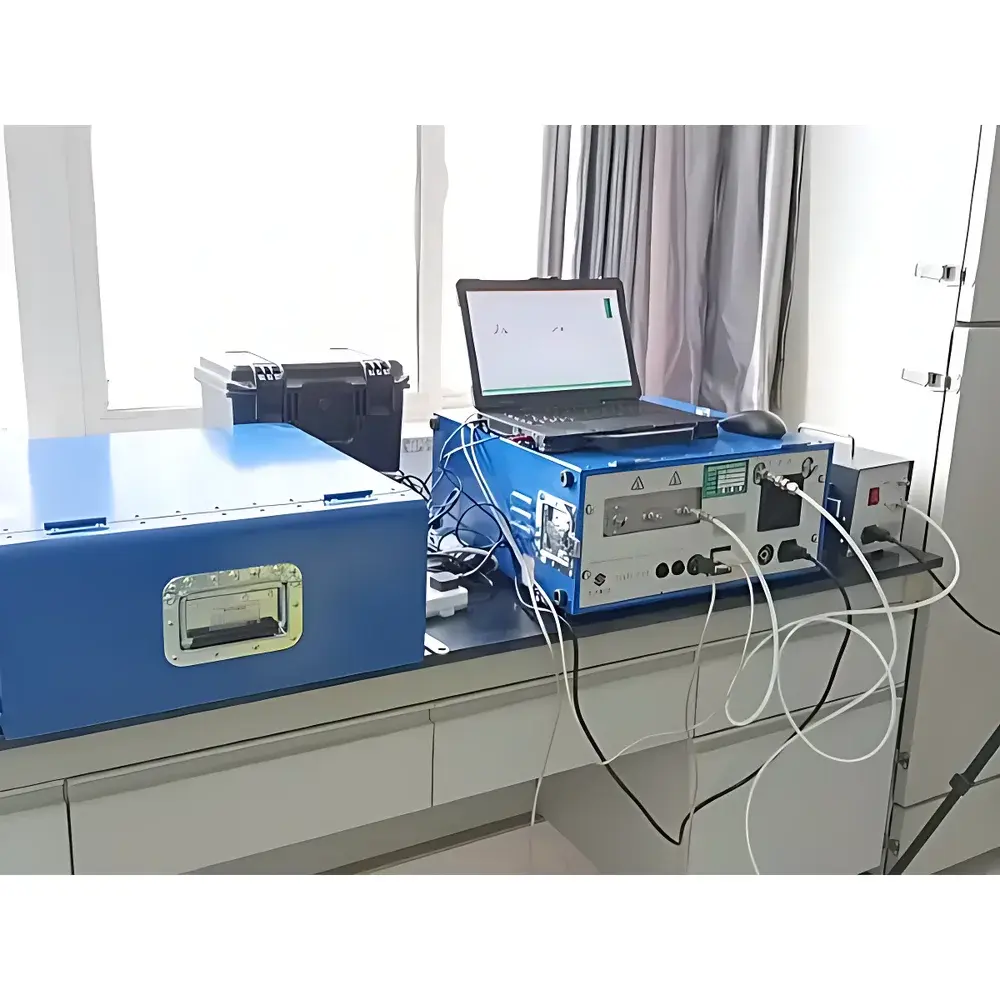
No—the instrument includes a built-in touchscreen interface for all primary functions; a Windows laptop is optional for advanced chemometric modeling or report generation.
How is spectral library expansion handled for novel compounds?
Users may upload reference spectra (NIST/JASCO format) and generate new PLS models using the included offline calibration suite; model validation reports comply with ICH Q2(R2) guidelines.
Does the system support remote diagnostics or firmware updates?
Yes—via secure SSH or TLS-enabled web interface; all updates are cryptographically signed and require multi-factor authentication.





