
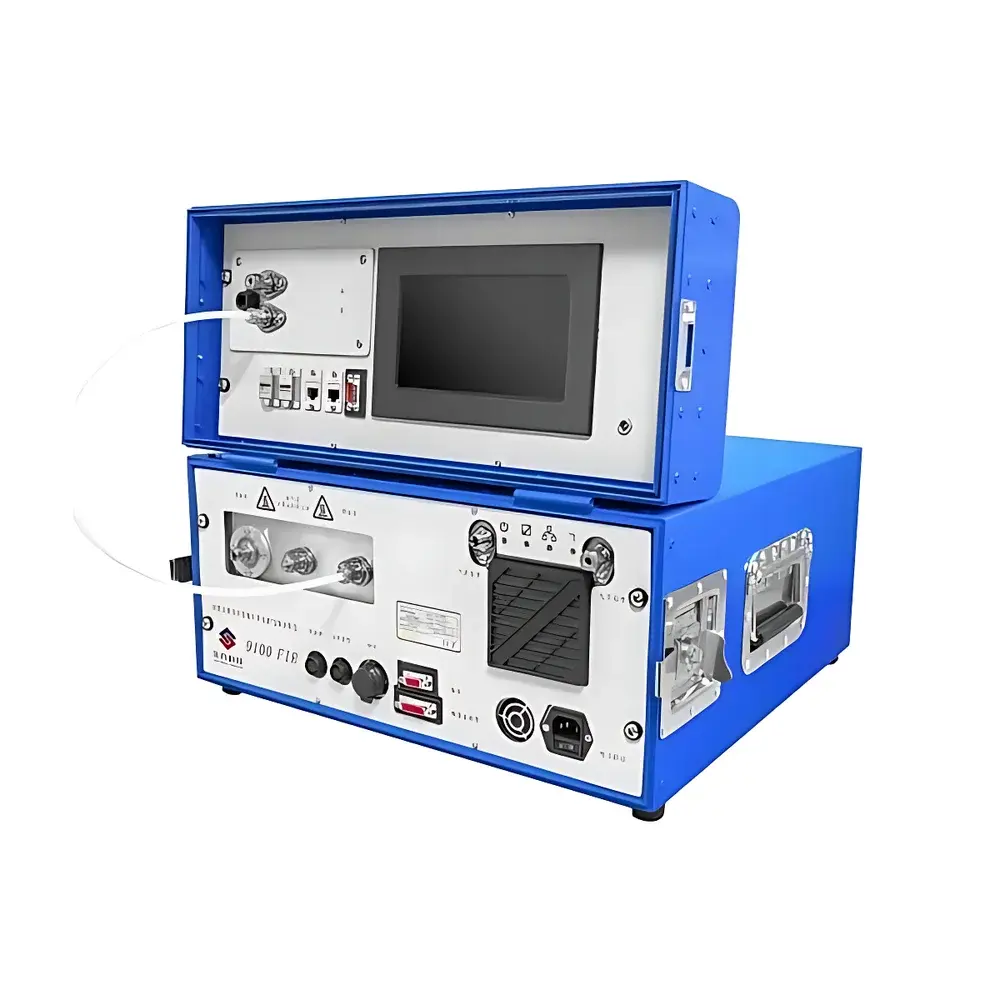
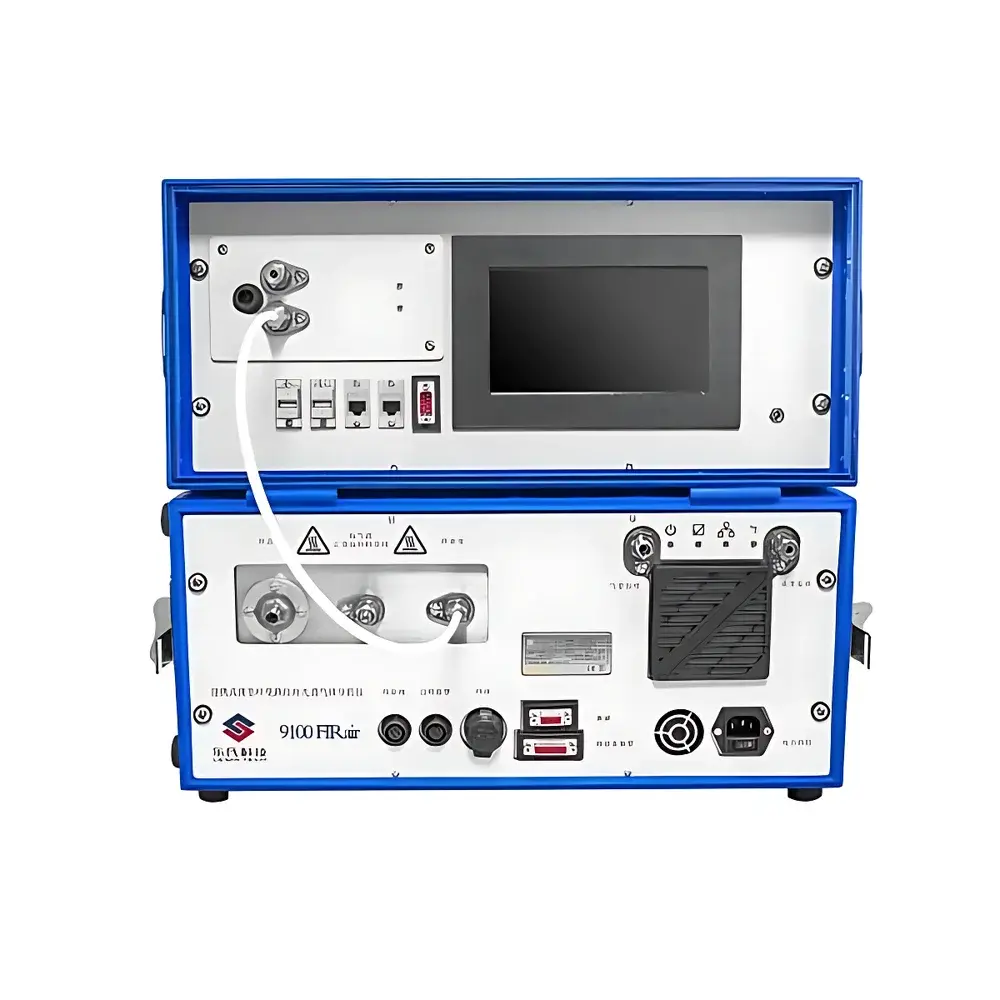
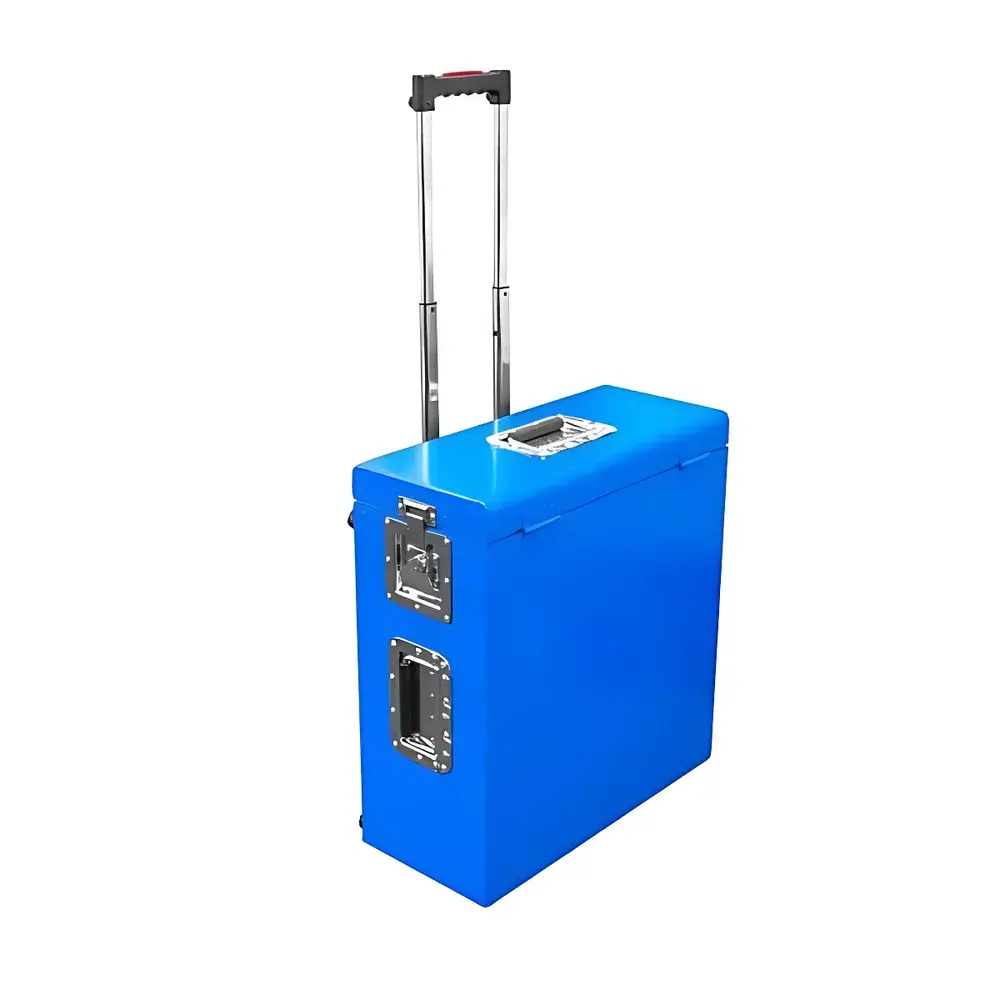
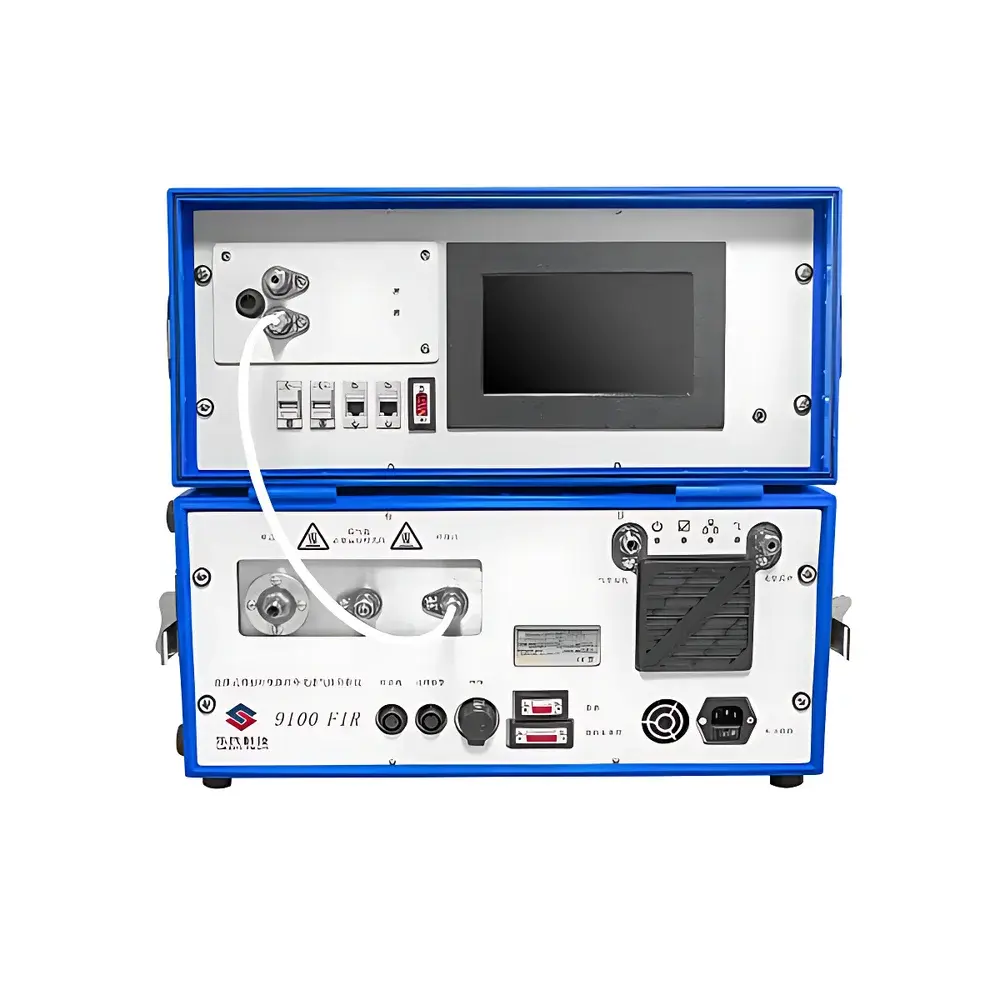
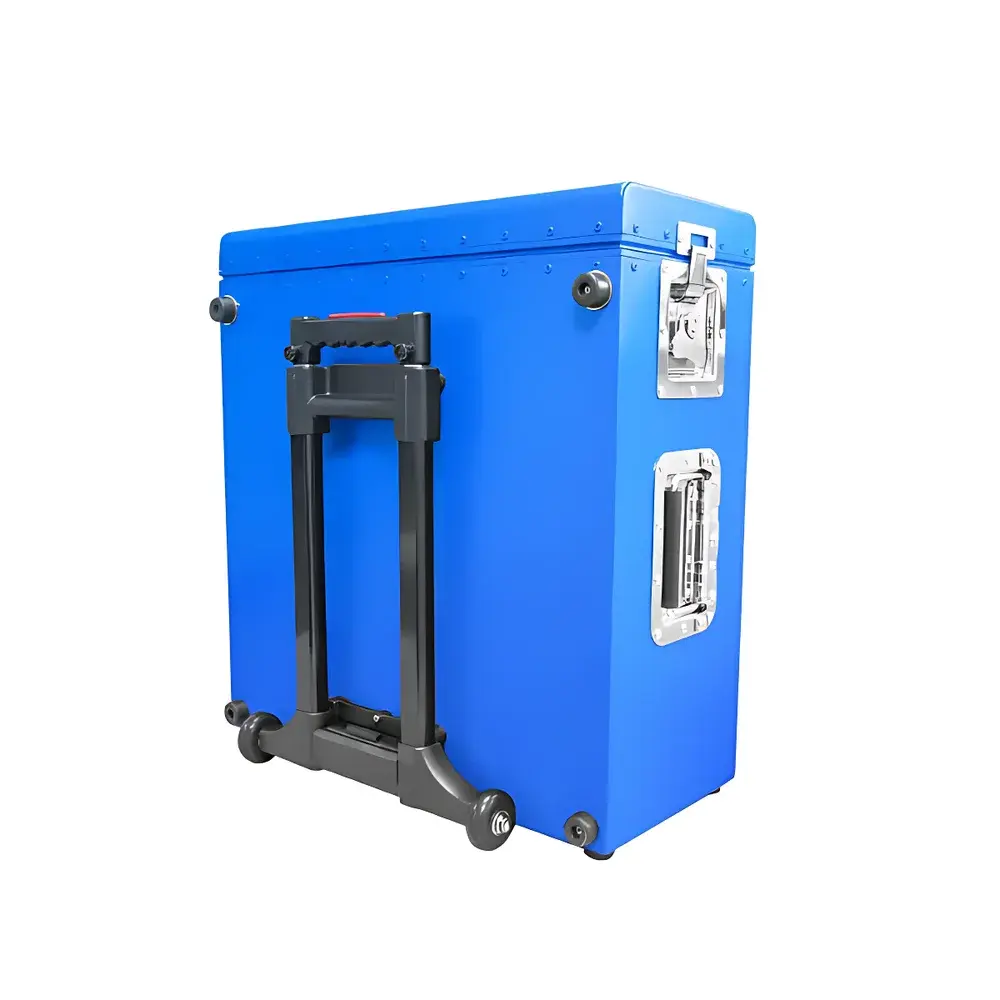
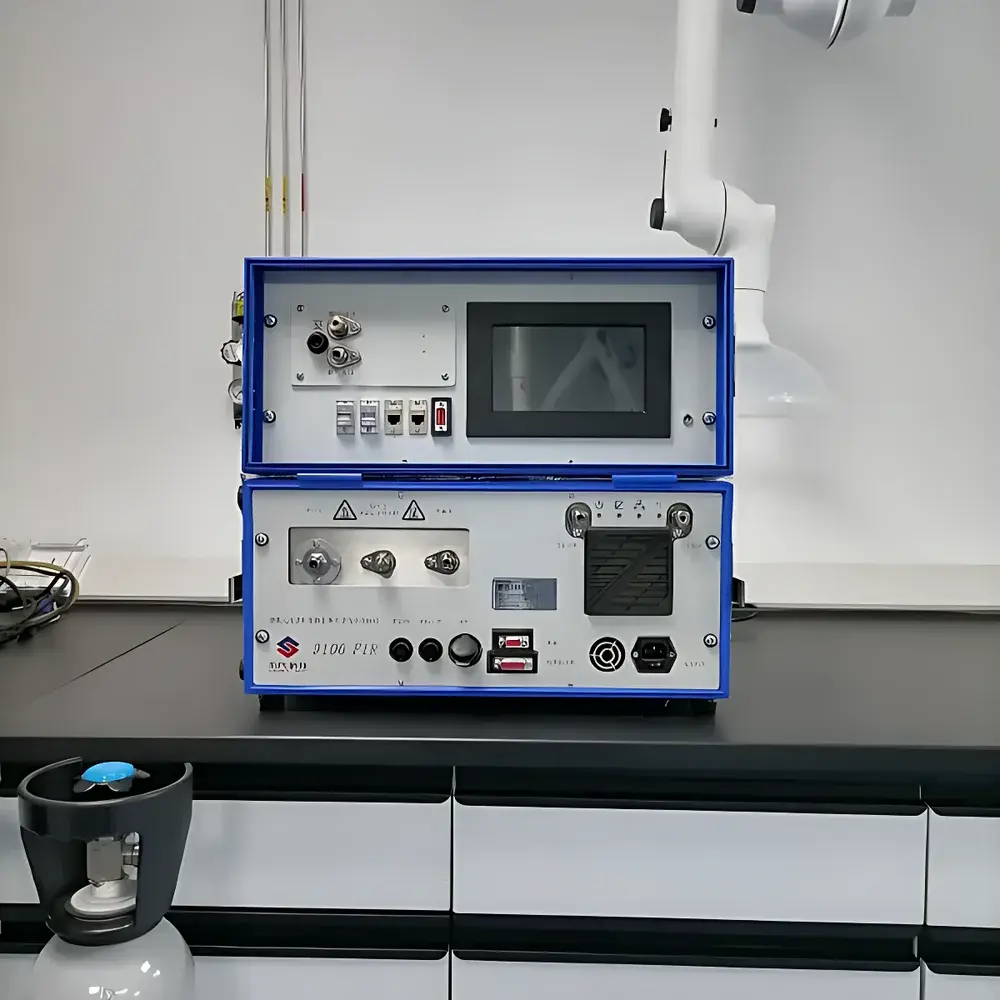
LESHI 9100FIRair Portable Fourier Transform Infrared (FTIR) Gas Analyzer
| Brand | LESHI |
|---|---|
| Origin | Beijing, China |
| Manufacturer Type | Authorized Distributor |
| Product Category | Domestic |
| Model | 9100FIRair |
| Detection Principle | Infrared Absorption Spectroscopy (FTIR) |
| Instrument Type | Portable |
| Typical Configuration | Multi-component VOC & Inorganic Gas Analyzer |
| Sampling Method | Pump-aspirated |
| Spectral Range | 485–8500 cm⁻¹ |
| Resolution Options | 1 cm⁻¹, 4 cm⁻¹, or 8 cm⁻¹ |
| Accuracy | ±2% of full scale |
| Response Time | <90 s (gas-dependent) |
Overview
The LESHI 9100FIRair is a portable, field-deployable Fourier Transform Infrared (FTIR) gas analyzer engineered for real-time, multi-component qualitative and quantitative analysis of volatile organic compounds (VOCs) and inorganic gases in ambient air, workplace environments, and confined spaces. Based on the interferometric principle of Michelson interferometry, the instrument acquires full mid-infrared spectra (485–8500 cm⁻¹) with selectable spectral resolution—enabling simultaneous detection of hundreds of analytes without prior separation. Unlike dispersive IR or electrochemical sensors, the 9100FIRair performs *in-situ*, *non-destructive*, and *uncooled* analysis under native sampling conditions—preserving thermally labile species and avoiding catalytic conversion artifacts. Its optical architecture supports direct hot-wet sampling up to 180 °C, eliminating condensation-related bias and enabling accurate measurement of water vapor, ammonia, hydrogen sulfide (via optional H₂S module), CO, CO₂, NO, NO₂, SO₂, CH₄, N₂O, and over 400 pre-validated VOCs—including aldehydes, ketones, aromatics, chlorinated hydrocarbons, and oxygenates.
Key Features
- Full-spectrum FTIR engine: High-stability vertical-cavity surface-emitting laser (VCSEL) reference source ensures long-term wavenumber accuracy (±0.02 cm⁻¹) and >10-year operational lifetime with minimal drift.
- Uncooled DTGS detector: Broadband infrared sensitivity (0.8–25 µm), wide linear dynamic range (>10⁴), and intrinsic thermal stability eliminate cryogenic maintenance requirements.
- Integrated sample conditioning: Onboard particulate filtration (≤0.3 µm), heated sample line (up to 180 °C), and dual nitrogen purge paths—one for optical bench purging (to maintain >95% light throughput) and one for internal gas cell cleaning (preventing residue buildup).
- Resolution-selectable acquisition: User-configurable spectral resolution (1 cm⁻¹ for high-fidelity identification; 4 cm⁻¹ or 8 cm⁻¹ for faster duty cycles), with scan times adjustable from 15 s to 120 s per spectrum.
- Embedded chemometrics platform: Real-time PLS (Partial Least Squares) and MCR-ALS (Multivariate Curve Resolution–Alternating Least Squares) algorithms resolve overlapping bands and suppress interferences—critical for complex mixtures such as industrial stack emissions or landfill off-gas.
- Modular sensor expansion: Optional integrated zirconia O₂ sensor and external H₂S-specific electrochemical module bridge spectral gaps where fundamental IR absorption is weak—ensuring comprehensive coverage across regulatory target lists.
Sample Compatibility & Compliance
The 9100FIRair meets the technical specifications outlined in Chinese national environmental monitoring standards HJ 919–2017 (VOCs in ambient air), HJ 920–2017 (inorganic hazardous gases in emergency response), and HJ 1011–2018 (performance verification protocol for portable FTIR analyzers). Its measurement traceability aligns with ISO 14644-1 (cleanroom particulate control), ASTM D6348–22 (gaseous emissions by FTIR), and EU Directive 2010/75/EU (IED—Industrial Emissions Directive) requirements for continuous emission monitoring systems (CEMS). The instrument’s pump-aspirated sampling system complies with EN 14181 (QAL3 functional testing) and supports GLP/GMP-compliant data integrity through audit-trail-enabled firmware logs and time-stamped raw interferogram storage.
Software & Data Management
Controlled via an embedded ARM-based Linux OS, the analyzer runs proprietary QuantSoft™ v4.x software—certified for FDA 21 CFR Part 11 compliance (electronic signatures, role-based access, immutable audit trails). All spectra are stored in standardized JCAMP-DX format; quantitative results export directly to .xlsx for post-acquisition reprocessing using user-defined calibration models. Offline library matching supports custom spectral libraries (≥5500 reference compounds), and spectral subtraction tools enable background correction for variable humidity or matrix shifts. Data synchronization occurs automatically via Ethernet or Wi-Fi to central LIMS or cloud-based environmental dashboards (e.g., AWS IoT Core or Microsoft Azure IoT Hub).
Applications
- Ambient air quality emergency response (e.g., chemical spill, fire plume characterization)
- Occupational exposure assessment in petrochemical plants, semiconductor fabs, and paint manufacturing facilities
- Greenhouse gas flux studies (CH₄, N₂O, CO₂) in landfill, agricultural, and wastewater treatment settings
- VOC profiling in indoor air quality audits and building material emission testing
- Confined space entry verification (tank farms, cargo containers, sewer systems) per OSHA 1910.146 and NFPA 350
- Stack testing and process optimization in pharmaceutical drying, solvent recovery, and thermal oxidation units
FAQ
Does the 9100FIRair require routine calibration with certified gas standards?
Yes—initial factory calibration uses NIST-traceable multi-gas standards. Field recalibration is recommended every 30 days or after major maintenance, using EPA Protocol Gases or equivalent certified blends.
Can the instrument operate continuously in high-humidity environments?
Yes—the heated optical path (maintained at 45 °C above ambient) and dual nitrogen purge prevent dew formation and preserve signal-to-noise ratio even at 95% RH.
Is spectral library expansion supported post-purchase?
Yes—customers may import custom reference spectra in .spc or .jdx format and train new PLS models using QuantSoft™’s offline modeling module.
What is the typical service life of the DTGS detector?
The uncooled DTGS detector is rated for ≥8 years of continuous operation under standard environmental conditions (20–30 °C, <70% RH), with no degradation in responsivity or noise floor.
How does the instrument handle cross-sensitivity between formaldehyde and methanol?
The 1 cm⁻¹ resolution mode resolves their characteristic C=O (1745 cm⁻¹) and C–O (1033 cm⁻¹) bands separately; PLS deconvolution further isolates contributions using second-derivative preprocessing and constrained fitting.
Related Products







