
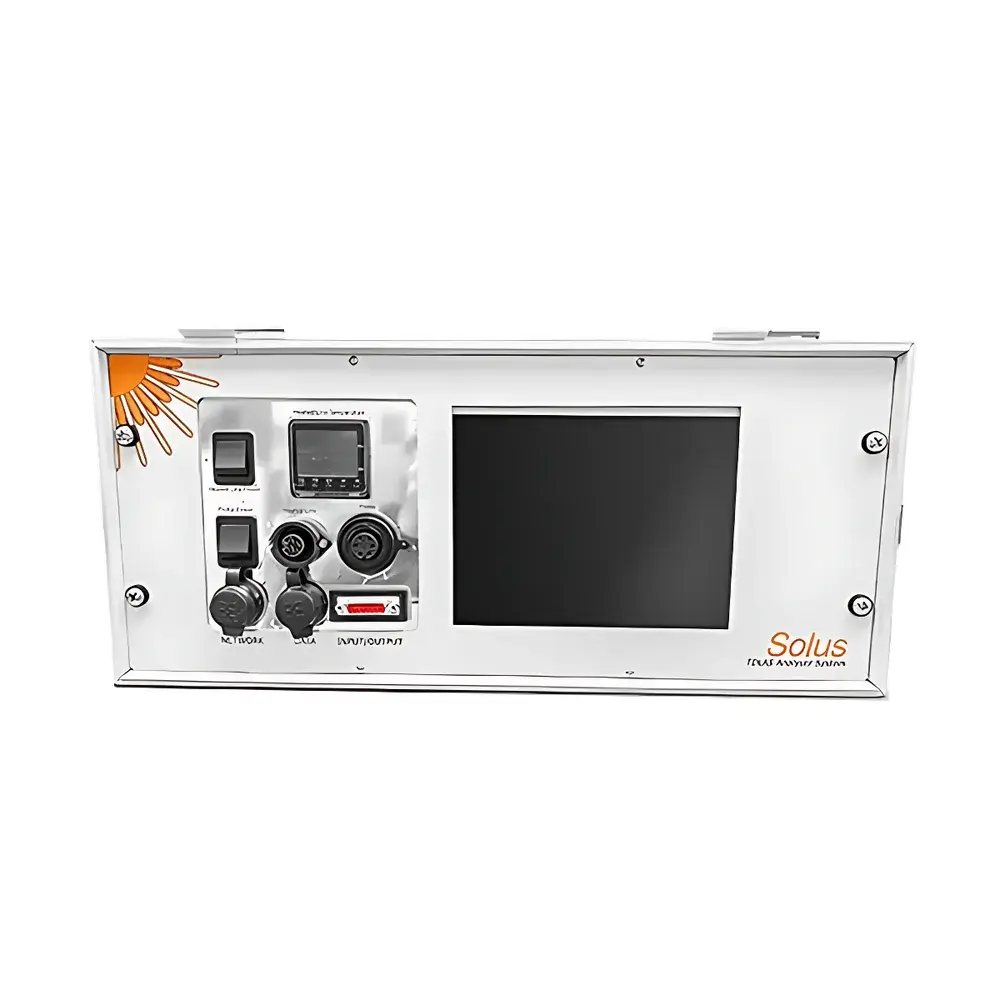
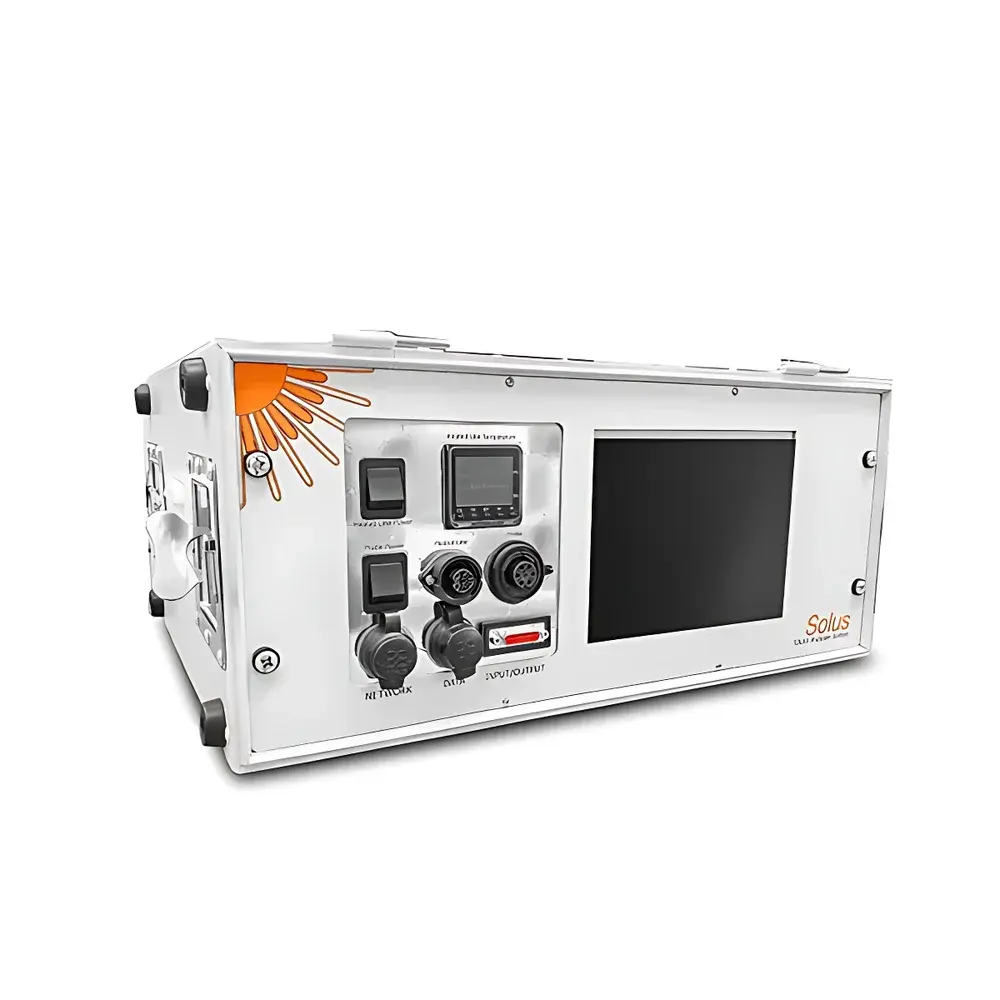
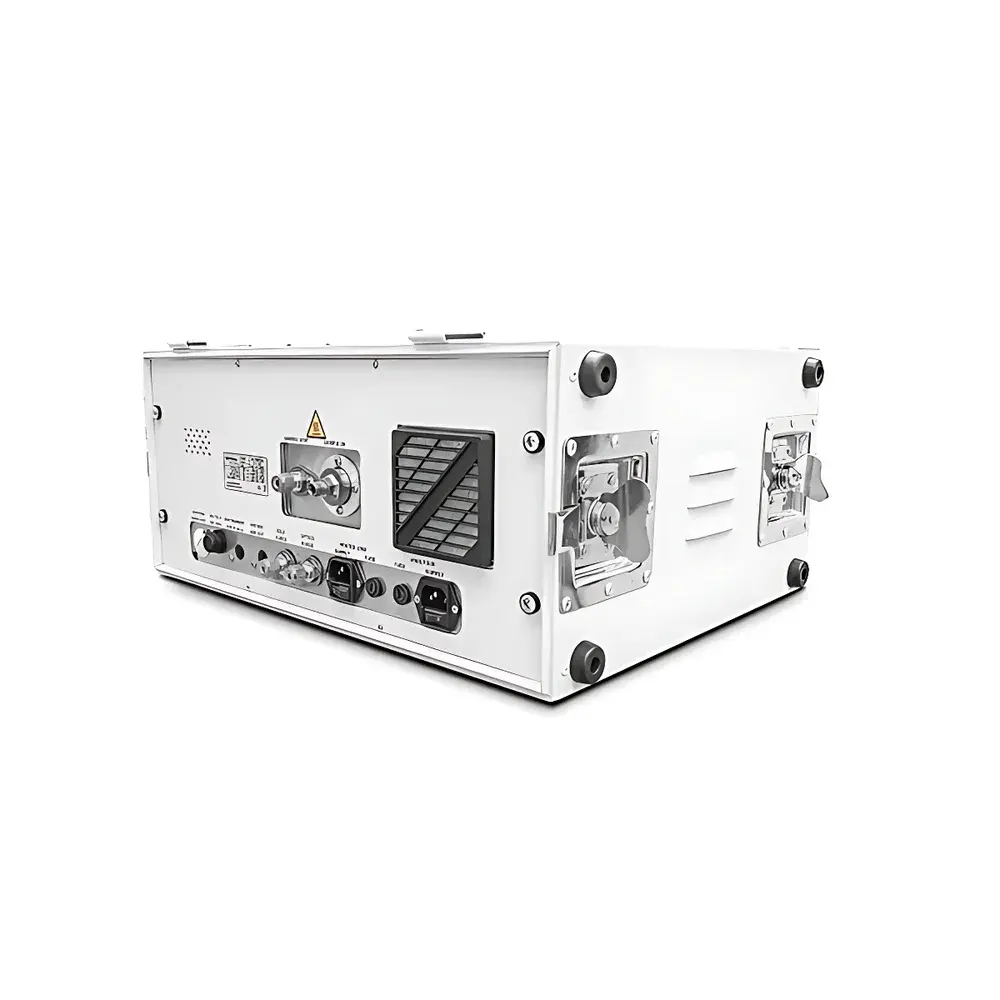
Protea SOLUS Online Laser HCl Analyzer
| Brand | Protea |
|---|---|
| Origin | United Kingdom |
| Manufacturer Type | Authorized Distributor |
| Origin Category | Imported |
| Model | SOLUS |
| Instrument Type | Online |
| Detection Principle | Tunable Diode Laser Absorption Spectroscopy (TDLAS) in Near-Infrared (NIR) |
| Measurement Gases | HCl, NH₃, H₂O (simultaneous or configurable), optionally O₂ (with zirconia sensor) |
| Response Time | < 3 s |
| Sample Volume | 15 mL |
| Integrated Sampling System | Yes (heated filter, purge valve, mass flow control) |
| Housing Material | Carbon fiber composite with thermal insulation |
| Calibration | Zero-point drift-free |
Overview
The Protea SOLUS Online Laser HCl Analyzer is an industrial-grade, real-time trace gas monitoring system engineered for continuous, selective, and quantitative measurement of hydrogen chloride (HCl) in demanding emission and process streams. It employs Tunable Diode Laser Absorption Spectroscopy (TDLAS) — a physics-based, line-of-sight optical technique operating in the near-infrared (NIR) spectral region. By precisely tuning the laser wavelength to target the unique rotational-vibrational absorption lines of HCl (and optionally NH₃ or H₂O), the SOLUS achieves high specificity without chemical cross-sensitivity. Unlike broad-band NDIR or electrochemical sensors, TDLAS delivers inherent selectivity, eliminating interference from CO₂, SO₂, NOₓ, CH₄, or particulate-laden matrices. The analyzer is designed for permanent installation in stack ducts, scrubber bypass lines, or engine exhaust manifolds, supporting compliance with regulatory frameworks including EU Industrial Emissions Directive (IED), U.S. EPA Method 320, and EN 15267-certified performance criteria.
Key Features
- Single- or dual-gas configuration: Simultaneous or sequential quantification of HCl and NH₃ (e.g., for SCR ammonia slip monitoring), with integrated H₂O compensation capability.
- Sub-3-second response time: Enables dynamic process feedback control and rapid detection of transient emission events.
- Minimal sample demand: Only 15 mL total sample volume required per analysis cycle — reduces pump load, power consumption, and condensation risk.
- Fully integrated sampling module: Includes heated sintered metal filter (maintained at >180 °C), automated purge valve, and precision mass flow controller — eliminates need for external sample conditioning systems.
- Optional built-in zirconia O₂ sensor: Provides stoichiometric context for combustion efficiency assessment and dilution correction.
- Embedded industrial PC (optional): Runs Protea’s proprietary firmware with local data logging, alarm management, and Modbus TCP/RTU or Ethernet/IP protocol support.
- Zero-maintenance optical path: Solid-state laser source, fixed alignment optics, and carbon fiber chassis ensure long-term stability without recalibration or optical realignment.
- Thermally isolated housing: Carbon fiber composite construction provides mechanical rigidity, low thermal mass, and resistance to ambient temperature fluctuations — critical for field deployment in unconditioned shelters or outdoor enclosures.
- Calibration-free operation: No zero gas, span gas, or consumable calibration standards required during routine operation — significantly reducing operational cost of ownership (TCO) over 5+ year service life.
Sample Compatibility & Compliance
The SOLUS is validated for use with hot, humid, and particulate-laden gas streams up to 200 °C (with optional high-temp probe variant) and dew points up to 90 °C. Its heated filtration and purge architecture ensures reliable operation in flue gases from waste incineration, cement kilns, and marine diesel engines. The analyzer meets CE marking requirements under the ATEX Directive 2014/34/EU (Zone 2/22), EMC Directive 2014/30/EU, and RoHS 2011/65/EU. For regulated reporting, it supports audit-ready data integrity features including timestamped raw absorbance spectra, instrument status logs, and user-accessible diagnostic flags — fully compatible with GLP/GMP-aligned QA/QC workflows and FDA 21 CFR Part 11-compliant data archiving when paired with Protea’s CloudLink SCADA interface.
Software & Data Management
Control and visualization are managed via Protea’s web-based interface accessible through any modern browser (HTTPS-enabled). The embedded firmware records second-by-second concentration values, laser temperature/voltage diagnostics, flow rate, filter pressure drop, and O₂ (if installed) — all stored internally on industrial-grade microSD card (≥32 GB, 10-year retention). Data export supports CSV, XML, and OPC UA formats. Remote firmware updates, spectral validation reports, and alarm threshold configuration are performed securely over TLS-encrypted connections. Optional integration with third-party DCS/SCADA platforms is supported via native Modbus TCP, Profibus DP-V1, or MQTT v3.1.1 protocols — enabling seamless incorporation into existing environmental monitoring networks.
Applications
- Ammonia slip monitoring in Selective Catalytic Reduction (SCR) systems for coal-fired power plants and municipal waste-to-energy facilities.
- Real-time HCl emission verification during incineration of PVC-containing waste streams — critical for WID (Waste Incineration Directive) compliance reporting.
- Marine exhaust gas cleaning system (EGCS) verification and scrubber outlet monitoring on LNG- and heavy fuel oil-powered vessels.
- Engine test cell emissions characterization for R&D and homologation — meeting ISO 8178 and IMO MARPOL Annex VI test protocols.
- Process safety interlock for chlor-alkali plant vent streams and hydrochloric acid production units.
FAQ
Does the SOLUS require periodic calibration with certified gas standards?
No. The TDLAS measurement principle is fundamentally reference-free; concentration is derived directly from Beer-Lambert law using known line strength and path length. Zero drift is inherently suppressed by the laser’s wavelength locking mechanism and thermal stabilization — eliminating the need for zero gas or span gas during normal operation.
Can the analyzer operate in high-dust environments such as cement kiln stacks?
Yes. The integrated heated sintered stainless-steel filter (operating at 180–220 °C) prevents ash accumulation and condensate formation. Optional ceramic probe variants extend suitability to particulate concentrations exceeding 10 g/Nm³.
Is H₂O measurement mandatory when quantifying HCl?
No. H₂O is measured only when selected for compensation or co-monitoring. The algorithm applies water vapor interference correction only if H₂O signal exceeds user-defined thresholds — preserving measurement autonomy for dry or low-humidity streams.
What communication protocols are supported for integration into existing plant networks?
Standard protocols include Modbus TCP (primary), Modbus RTU (RS-485), and Ethernet/IP. Optional MQTT and OPC UA gateways are available for IIoT and cloud-based analytics deployments.
How is data integrity ensured for regulatory reporting?
All measurements are timestamped with UTC-synced hardware clock, logged with full metadata (laser current, detector gain, temperature, flow), and cryptographically signed upon export — satisfying ALCOA+ (Attributable, Legible, Contemporaneous, Original, Accurate, Complete, Consistent, Enduring, Available) data governance principles.







