
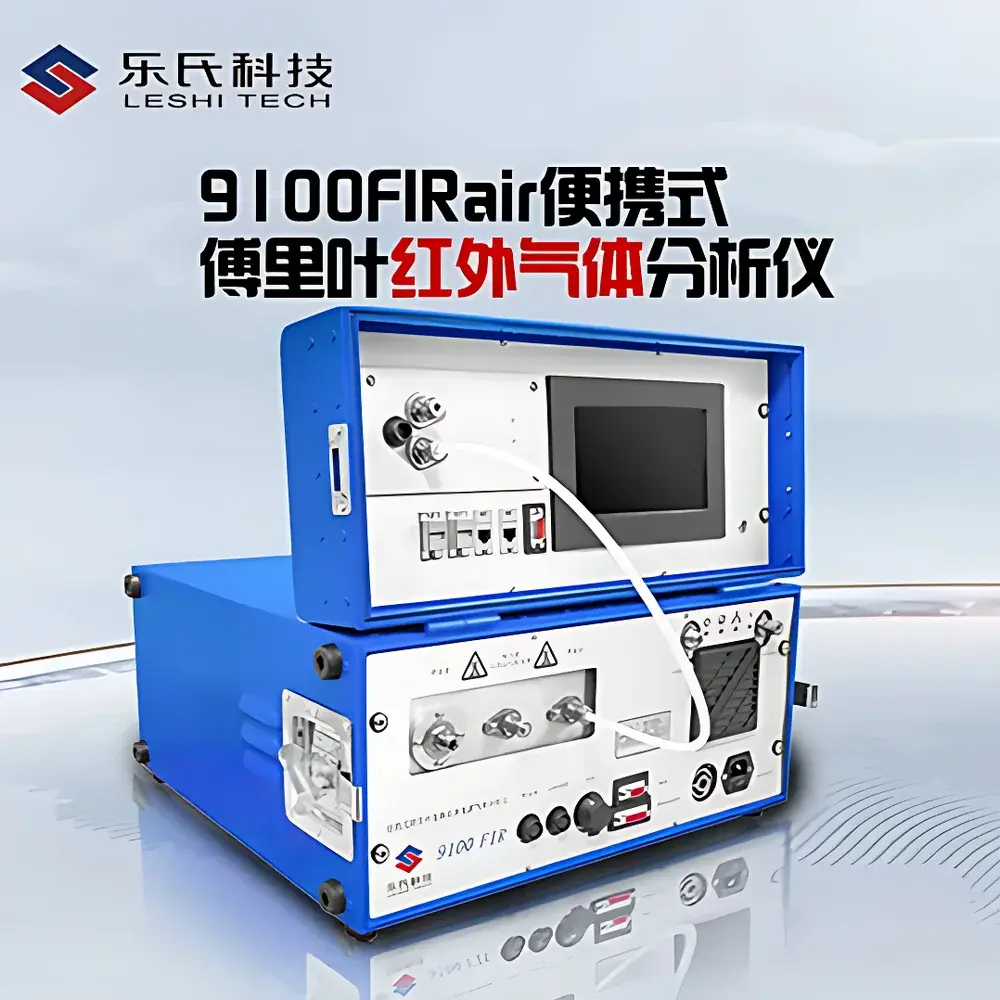
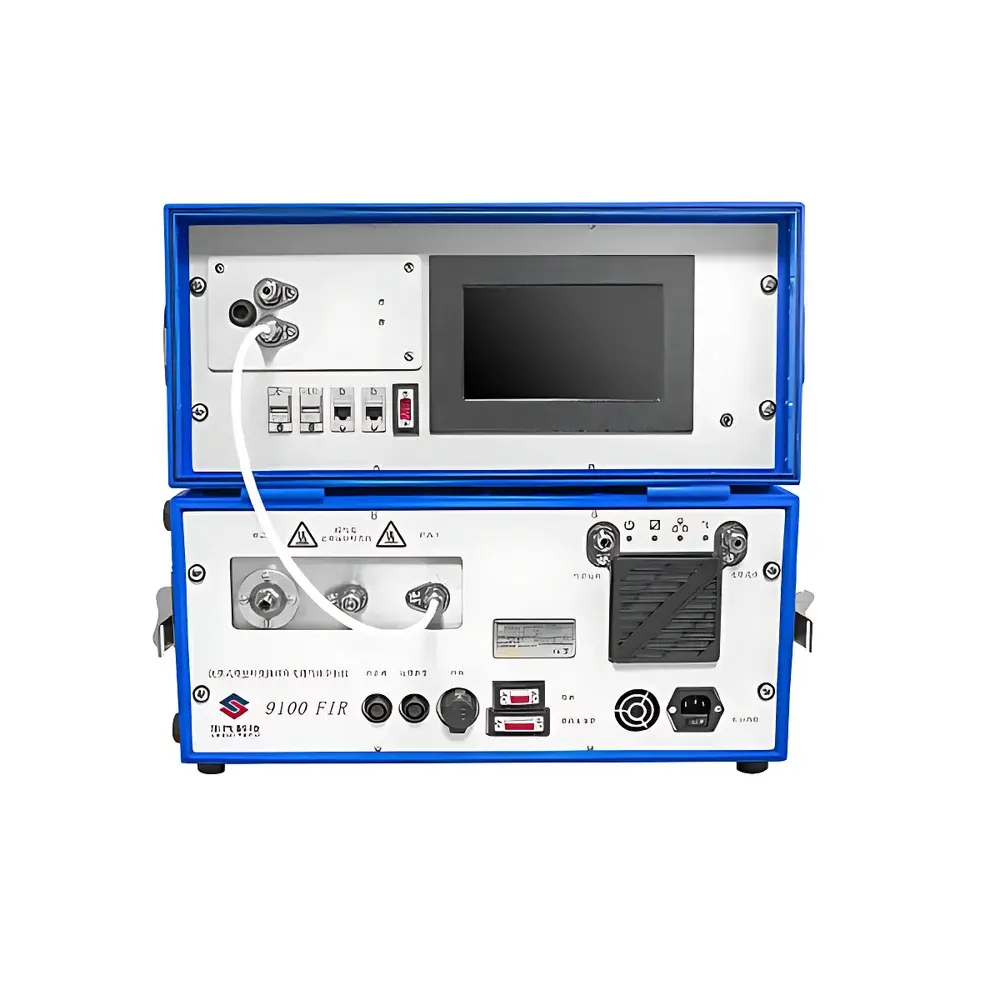
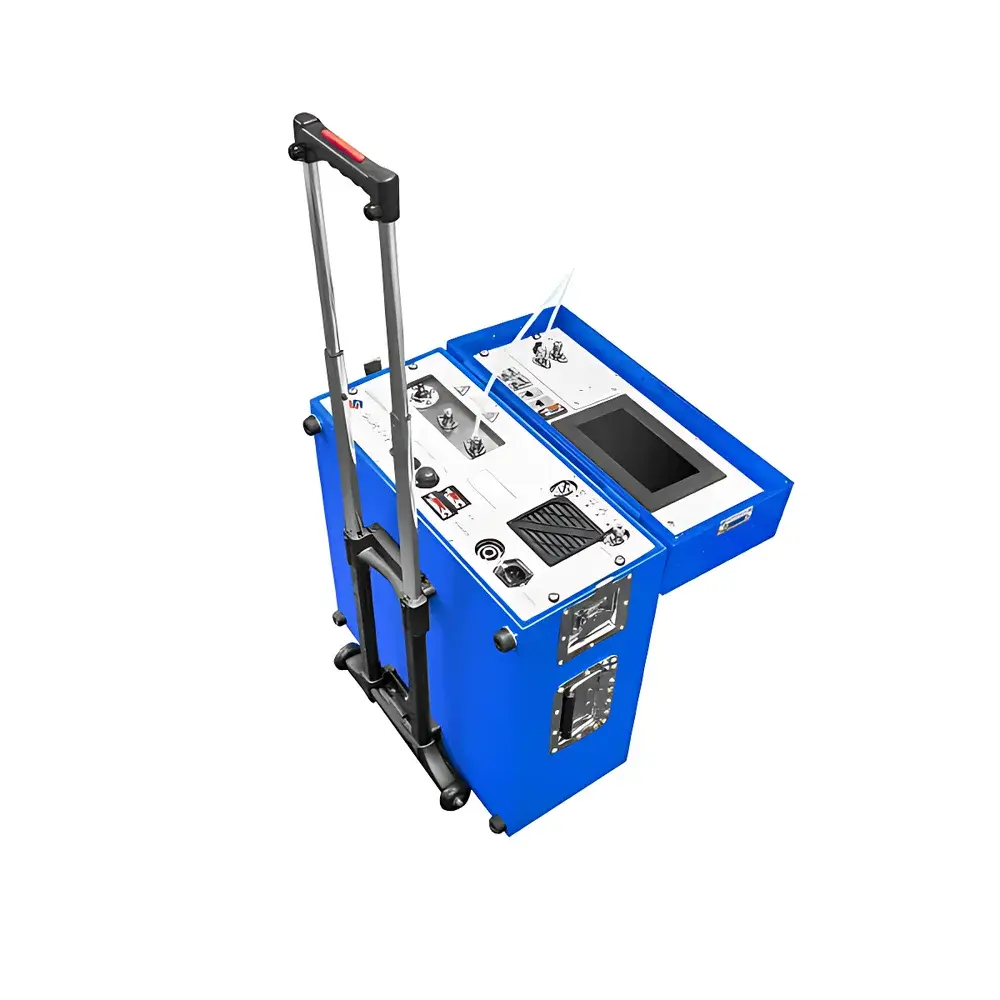
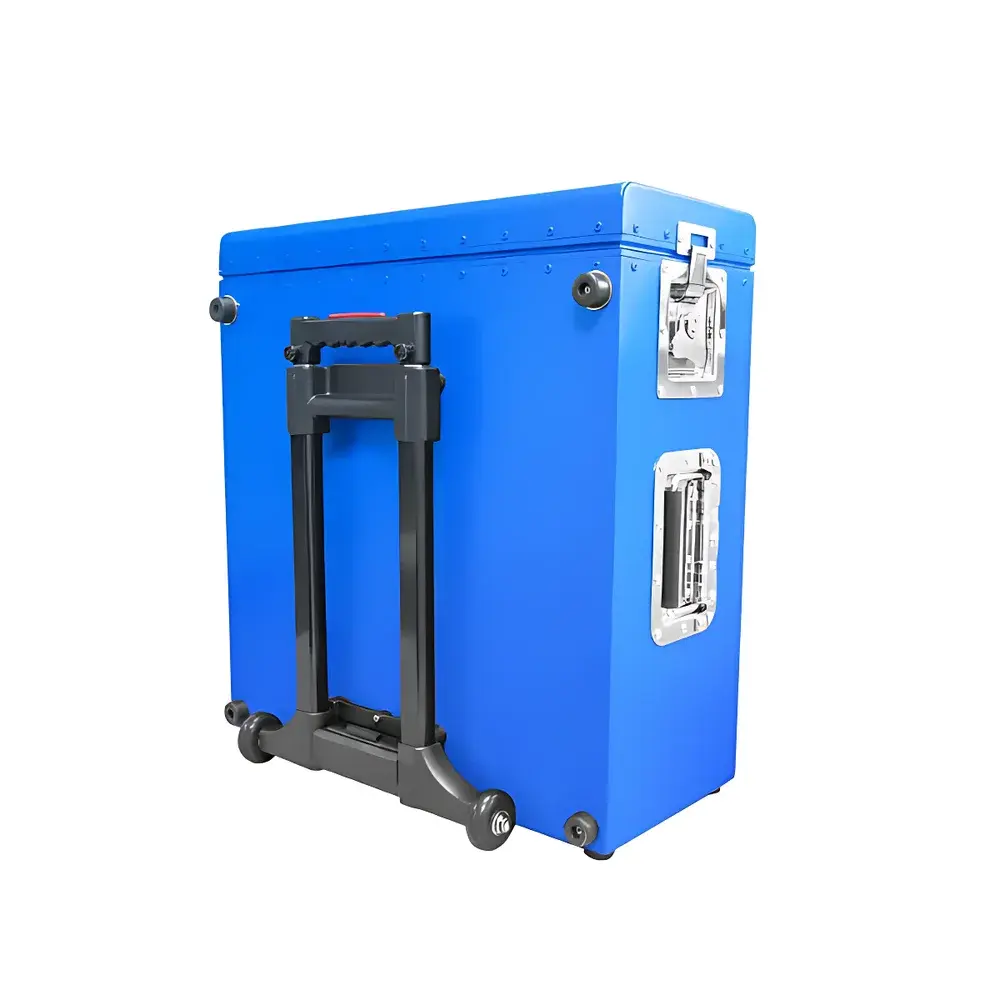
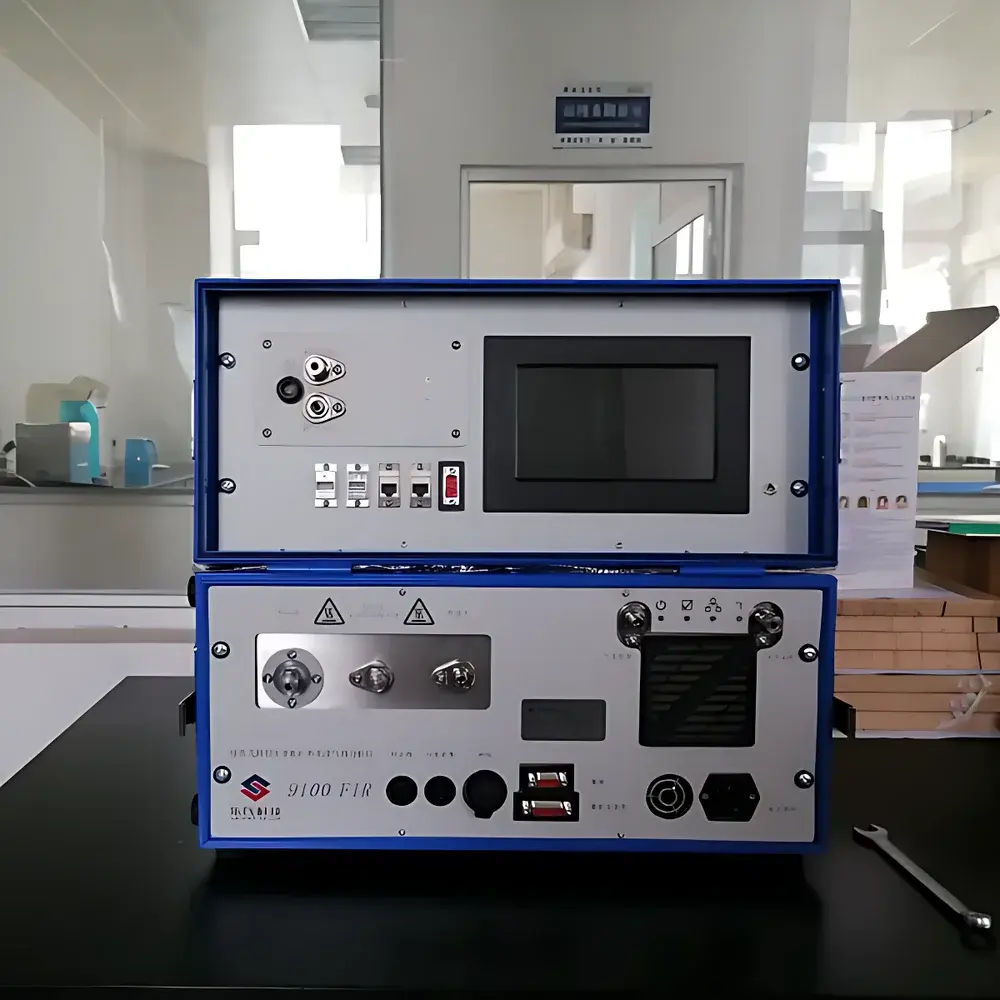
LESHI 9100FIRair Portable FTIR Greenhouse Gas Analyzer
| Brand | LESHI |
|---|---|
| Origin | Beijing, China |
| Manufacturer Type | Authorized Distributor |
| Product Category | Domestic |
| Model | 9100FIRair |
| Price | ¥1,180,000 CNY |
| Measurement Principle | Fourier Transform Infrared Spectroscopy (FTIR) |
| Detection Principle | Deuterated Triglycine Sulfate (DTGS) Detector |
| Accuracy | ±2% of reading |
| Target Gases | ≥51 quantified species (including CO₂, CH₄, N₂O, CO, SF₆, CFCs, VOCs, and inorganic acids) |
| Response Time | ≤90 s |
| Repeatability | ±2% RSD |
| Spectral Resolution Options | 1 cm⁻¹ or 4 cm⁻¹ |
| Detector Type | Ambient-Temperature DTGS |
| Reference Laser | VCSEL (Vertical-Cavity Surface-Emitting Laser), 10-year operational lifetime |
| Sample Handling | In-situ, hot/wet, non-destructive, multi-component simultaneous analysis |
| Compliance Standards | HJ 919–2017, HJ 920–2017, HJ 1011–2018 |
Overview
The LESHI 9100FIRair Portable FTIR Greenhouse Gas Analyzer is a field-deployable, high-fidelity Fourier Transform Infrared (FTIR) spectrometer engineered for real-time, multi-component gas analysis under ambient and challenging environmental conditions. Unlike conventional single-gas electrochemical or NDIR sensors, the 9100FIRair leverages full-spectrum interferometric detection across the mid-infrared region (typically 600–4000 cm⁻¹), enabling simultaneous qualitative identification and quantitative concentration measurement of all infrared-active gases—without prior separation or chemical derivatization. Its core architecture implements in-situ sampling and direct optical analysis, eliminating condensation, adsorption losses, or catalytic degradation commonly encountered in cooled or extractive systems. This enables accurate, interference-resilient monitoring of greenhouse gases (GHGs) such as CO₂, CH₄, N₂O, SF₆, and fluorinated hydrocarbons, alongside regulated VOCs and inorganic toxicants (e.g., NH₃, HCl, SO₂, NO, HCN) in complex matrices.
Key Features
- Multi-Gas Quantification: Capable of quantifying ≥51 target gases with trace-level sensitivity; spectral library supports over 400 pre-validated compounds at launch, expandable via user-defined calibration.
- High-Fidelity Spectral Resolution: Selectable resolution modes (1 cm⁻¹ or 4 cm⁻¹); 1 cm⁻¹ mode delivers enhanced peak discrimination for overlapping bands—critical for isomer differentiation (e.g., acetone vs. propanal) and low-concentration GHG detection in humid air.
- Robust In-Situ Optics: Integrated nitrogen-purged optical path with dual anti-contamination interfaces: external reverse-flow purge port for sample cell cleaning and internal optical-path purge for beamline maintenance—ensuring long-term photometric stability and signal-to-noise ratio (>10,000:1).
- Ambient-Temperature DTGS Detection: Eliminates cryogenic cooling requirements while maintaining wide dynamic range (10⁴ linear span), broad IR responsivity (up to 4000 cm⁻¹), and >5-year detector service life under continuous operation.
- VCSEL-Based Interferometer Stability: Uses a temperature-stabilized vertical-cavity surface-emitting laser (VCSEL) as internal reference wavelength standard—achieving <0.001 cm⁻¹ wavenumber repeatability over 10 years without recalibration.
- Integrated Preconditioning Module: Built-in heated particulate filter (up to 180 °C), moisture-tolerant flow control, and optional O₂ sensor (zirconia-based) or H₂S electrochemical add-on module—enabling co-measurement where FTIR sensitivity is inherently limited.
Sample Compatibility & Compliance
The 9100FIRair is validated for direct analysis of undiluted, hot, and humid gas streams—including stack emissions, ambient air, landfill headspace, biogas, and confined-space atmospheres (e.g., cargo containers, tank trucks, manholes). It complies with Chinese national standards HJ 919–2017 (VOCs in ambient air), HJ 920–2017 (inorganic toxic gases in emergency response), and HJ 1011–2018 (performance verification protocol for portable FTIR analyzers). While not certified to ISO 14064-3 or EPA Method TO-16, its measurement uncertainty (<±2% RSD) and documented traceability to NIST-traceable reference standards support data acceptance in regulatory reporting frameworks requiring GLP-aligned instrumentation validation. The system meets IP54 ingress protection rating and operates reliably from −10 °C to +50 °C ambient temperatures.
Software & Data Management
Controlled by an embedded Linux-based industrial computer, the 9100FIRair runs proprietary ChemView™ software featuring PLS (Partial Least Squares) and MCR-ALS (Multivariate Curve Resolution–Alternating Least Squares) chemometric engines for robust multicomponent deconvolution—even in presence of spectral overlap or baseline drift. All raw interferograms and processed spectra are timestamped, stored with full metadata (flow rate, temperature, pressure, purge status), and exportable in ASCII or Excel-compatible CSV format. Audit trails record operator actions, method changes, and calibration events—supporting basic 21 CFR Part 11 compliance when deployed with user authentication and electronic signature modules. Offline reprocessing is supported: users may import archived interferograms to apply updated libraries or refine quantification models without re-sampling.
Applications
- Real-time GHG flux monitoring at municipal landfills, wastewater treatment plants, and agricultural facilities per IPCC Tier 2/3 protocols.
- Emergency response screening for hazardous gas releases (e.g., chemical spills, industrial accidents) in accordance with HJ 920–2017.
- Mobile source emission testing—on-road diesel fleets, marine engine exhaust, and aviation ground support equipment.
- VOC speciation in ambient air for ozone precursor studies and urban air quality modeling.
- Confined-space entry safety verification (O₂, CO, H₂S, VOCs, acid gases) in petrochemical, maritime, and infrastructure sectors.
- Process gas monitoring during carbon capture unit commissioning and performance verification.
FAQ
Does the 9100FIRair require daily calibration?
No. The VCSEL-referenced interferometer ensures intrinsic wavenumber stability; routine calibration is recommended every 30 days using certified gas mixtures, aligned with HJ 1011–2018 verification intervals.
Can it measure H₂S despite FTIR’s weak absorption at low concentrations?
Yes—via optional external electrochemical H₂S module, integrated into the same data stream and synchronized with FTIR acquisition for concurrent reporting.
Is humid gas sampling supported without condensation artifacts?
Yes. The heated sample path (up to 180 °C), combined with dry-purge optics and humidity-resistant DTGS detector, enables stable operation at up to 95% RH without spectral distortion.
What spectral libraries are included out-of-the-box?
The instrument ships with 400+ validated quantitative methods and a searchable qualitative library containing >5500 IR reference spectra (NIST, EPA, and proprietary databases).
How is data integrity ensured during field deployment?
All measurements include embedded GPS coordinates, environmental sensor logs (T, P, RH), and cryptographic hash signatures for raw interferogram files—facilitating third-party audit and chain-of-custody documentation.
Related Products







