
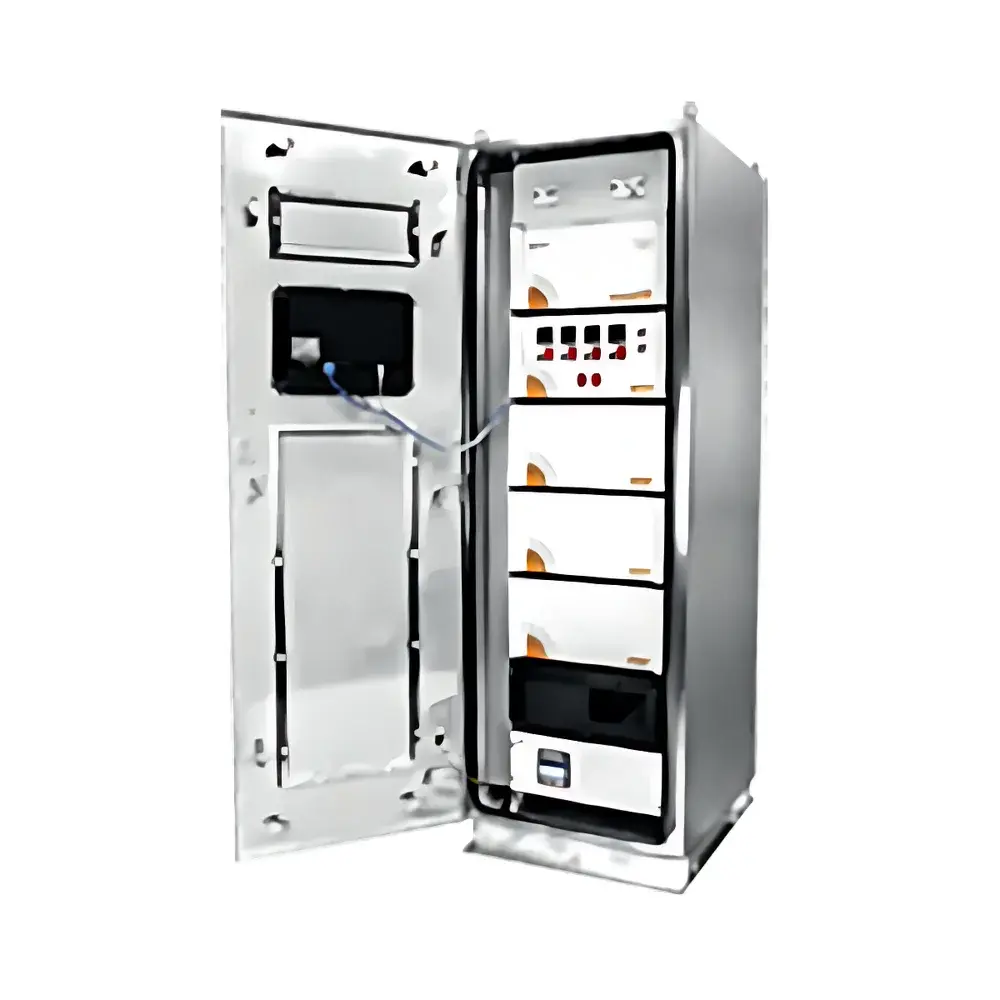
LESHI AtmosFIR Fourier Transform Infrared (FTIR) Toxic Gas Index Analyzer
| Brand | Leshi |
|---|---|
| Origin | United Kingdom |
| Manufacturer Type | Authorized Distributor |
| Origin Category | Imported |
| Model | AtmosFIR |
| Instrument Principle | Infrared Absorption Spectroscopy |
| Form Factor | Portable |
| Response Time | T90 |
| Repeatability | ±2% of full scale for CO, CO₂, NO, NO₂, HCN, HCl, HBr, HF, SO₂, Acrolein |
| Spectral Range | 400–5000 cm⁻¹ |
| Detector | Ambient-Temperature DTGS |
| Quantifiable Gases | Up to 50 components simultaneously |
| Spectral Library | >5000 reference spectra (400+ freely accessible) |
| Algorithms | PLS, CLS, ILS |
| Gas Expansion Capability | User-definable spectral library extension |
Overview
The LESHI AtmosFIR Fourier Transform Infrared (FTIR) Toxic Gas Index Analyzer is an engineered solution for real-time, multi-component quantification of combustion-derived toxic gases in fire effluents and industrial emissions. Based on the physical principle of infrared absorption spectroscopy—where molecular vibrational transitions produce characteristic absorbance bands in the mid-infrared region—the AtmosFIR delivers trace-level identification and concentration measurement of hazardous analytes without chemical conversion or sample pre-treatment. Its design aligns with internationally recognized fire toxicity assessment frameworks, including ISO 19702:2006, EN 45545-2:2020, IMO Res. A.653(16), and GB/T 38309–2019. Unlike single-gas electrochemical or NDIR sensors, the FTIR architecture enables simultaneous detection of structurally diverse compounds—including acidic gases (HCl, HF, HBr), nitrogen oxides (NO, NO₂), carbon oxides (CO, CO₂), cyanide species (HCN), sulfur dioxide (SO₂), and unsaturated aldehydes (e.g., acrolein)—within a single 30-second scan. The instrument operates under ambient conditions, eliminating cryogenic cooling requirements and supporting field-deployable operation in fire testing laboratories, regulatory compliance verification sites, and mobile environmental monitoring units.
Key Features
- Simultaneous quantification of up to 50 gas components—including CO, CO₂, NO, NO₂, HCN, HCl, HBr, HF, SO₂, and acrolein—within a single interferogram acquisition cycle
- High-fidelity spectral resolution across 400–5000 cm⁻¹, enabling robust peak deconvolution and interference mitigation in complex smoke matrices
- Ambient-temperature deuterated triglycine sulfate (DTGS) detector with no liquid nitrogen or thermoelectric cooling—reducing maintenance overhead and startup latency
- Measurement repeatability better than ±2% of full-scale range for all listed target analytes under controlled calibration conditions
- Embedded chemometric engine supporting Partial Least Squares (PLS), Classical Least Squares (CLS), and Iterative Least Squares (ILS) algorithms for multivariate spectral fitting
- Expandable spectral library architecture: users may import validated reference spectra and calibrate new analytes without firmware modification
- Pre-loaded library of >5000 IR reference spectra; 400+ spectra licensed for unrestricted use in method development and validation
Sample Compatibility & Compliance
The AtmosFIR interfaces directly with standardized smoke sampling systems per ISO 19702 Annex B and EN 45545-2 Clause 7. It accepts conditioned, filtered, and temperature-stabilized gas streams from cone calorimeters, radiant panel apparatuses, and large-scale fire test chambers. Sample inlet pressure and flow rate are maintained within ±5% of nominal setpoints via integrated mass flow control. All quantitative methods comply with GLP-aligned data integrity protocols, including electronic signature support, audit trail logging, and version-controlled method storage. The system meets functional requirements for regulatory reporting under EU Regulation (EU) No 305/2011 (CPR), IMO FTP Code, and U.S. EPA Method TO-15 supplemental guidance for FTIR-based VOC and toxicant analysis. Calibration traceability follows ISO/IEC 17025:2017 requirements through NIST-traceable gas standards.
Software & Data Management
The AtmosFIR is operated via LESHI’s proprietary SpectraView™ software, a Windows-based platform compliant with FDA 21 CFR Part 11 for electronic records and signatures. Software modules include real-time spectral visualization, automated baseline correction, dynamic background subtraction, and time-resolved concentration profiling (TIC plots). All raw interferograms and processed spectra are stored in HDF5 format with embedded metadata (date/time, instrument ID, operator, calibration status). Export options include CSV, XML, and ASTM E2937-compliant report templates. Audit trails record every user action—including method edits, calibration updates, and result overrides—with immutable timestamps and operator authentication. Remote diagnostics and firmware updates are supported over secure TLS-encrypted Ethernet or Wi-Fi connections.
Applications
- Fire toxicity testing in aerospace cabin material certification (SAE AS4767, FAA AC 20-135)
- Regulatory compliance verification for rail vehicle interior materials (EN 45545-2 R1–R22 hazard levels)
- Marine fire safety evaluation per IMO FTP Code Annex 1 and ISO 5659-2 smoke density correlation
- Fixed-source emission monitoring during coal-to-gas retrofitting and flue gas desulfurization (FGD) commissioning
- VOC and odorant profiling at wastewater treatment plants and landfill gas collection points
- Research-grade combustion chemistry studies requiring speciated halogenated and nitrogenous compound tracking
FAQ
What combustion gases does the AtmosFIR quantify with certified accuracy?
The instrument provides validated quantification for CO, CO₂, NO, NO₂, HCN, HCl, HBr, HF, SO₂, and acrolein per ISO 19702:2006 Annex D. Additional analytes may be added via user-defined calibration.
Is the system suitable for continuous unattended operation in a fire test lab?
Yes—designed for 24/7 duty cycles with automatic zero/span checks, thermal drift compensation, and redundant power supply options.
How is spectral library expansion performed?
Users import high-SNR reference spectra (in JCAMP-DX or ASCII format), assign stoichiometric coefficients, and validate using certified gas mixtures prior to deployment.
Does the AtmosFIR meet requirements for third-party certification reports?
Yes—data export formats, audit trail structure, and calibration documentation align with ISO/IEC 17025 and UKAS accreditation criteria for testing laboratories.
What is the typical T90 response time for low-concentration HCN detection?
Under standard sampling conditions (1 L/min, 2 m pathlength, 4 cm⁻¹ resolution), T90 is ≤12 seconds for HCN at 10 ppmv.
Related Products







