
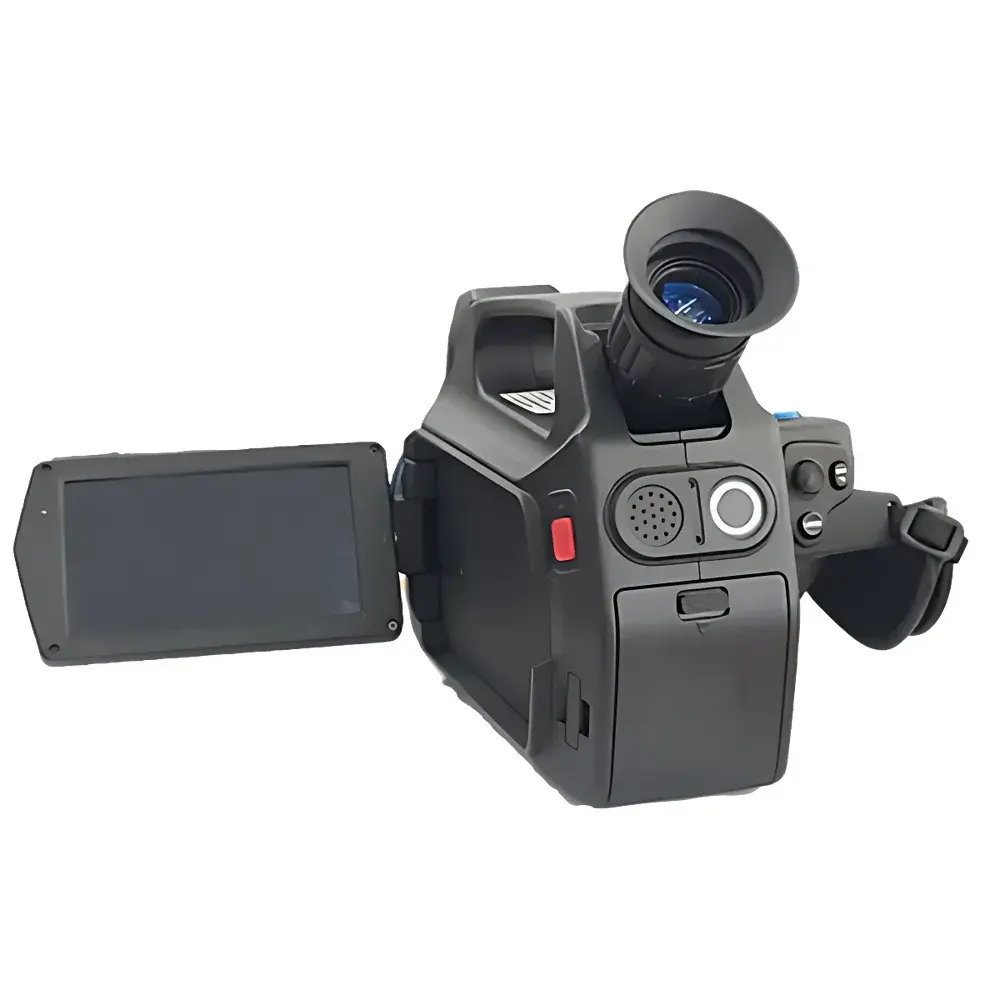
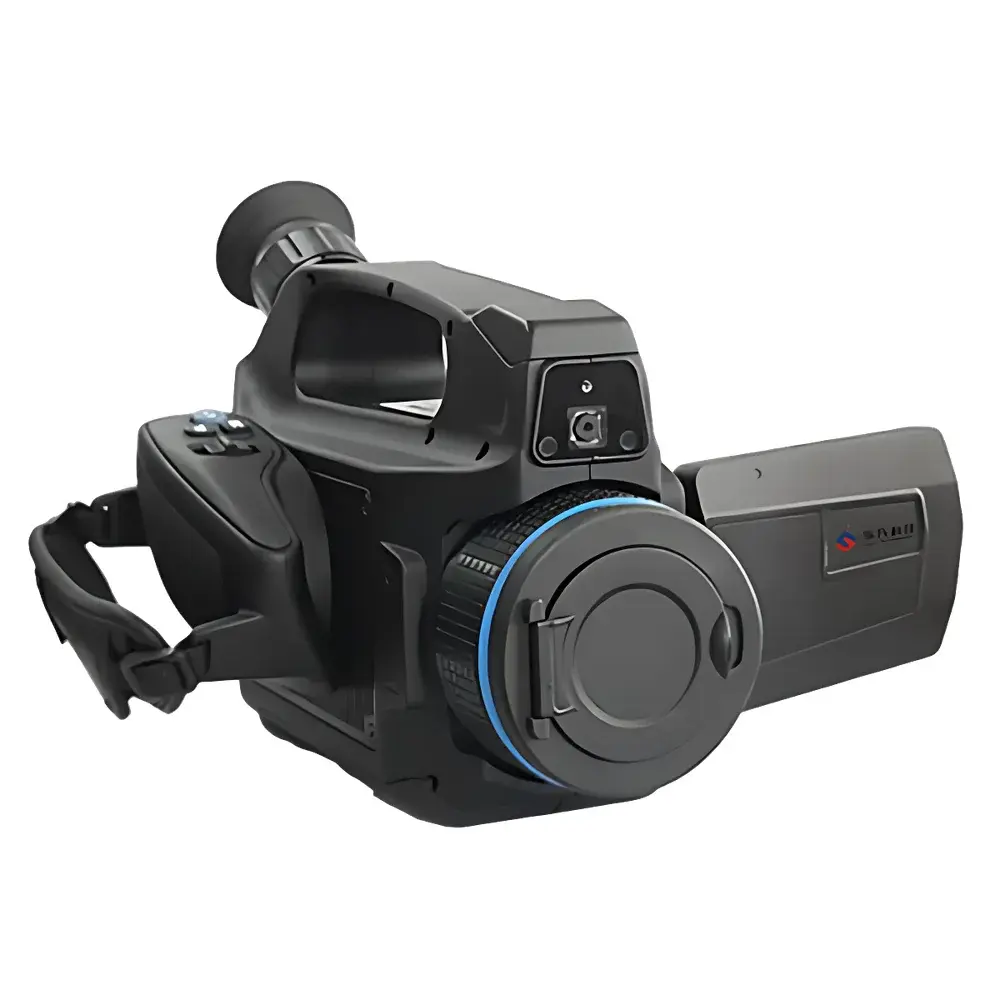
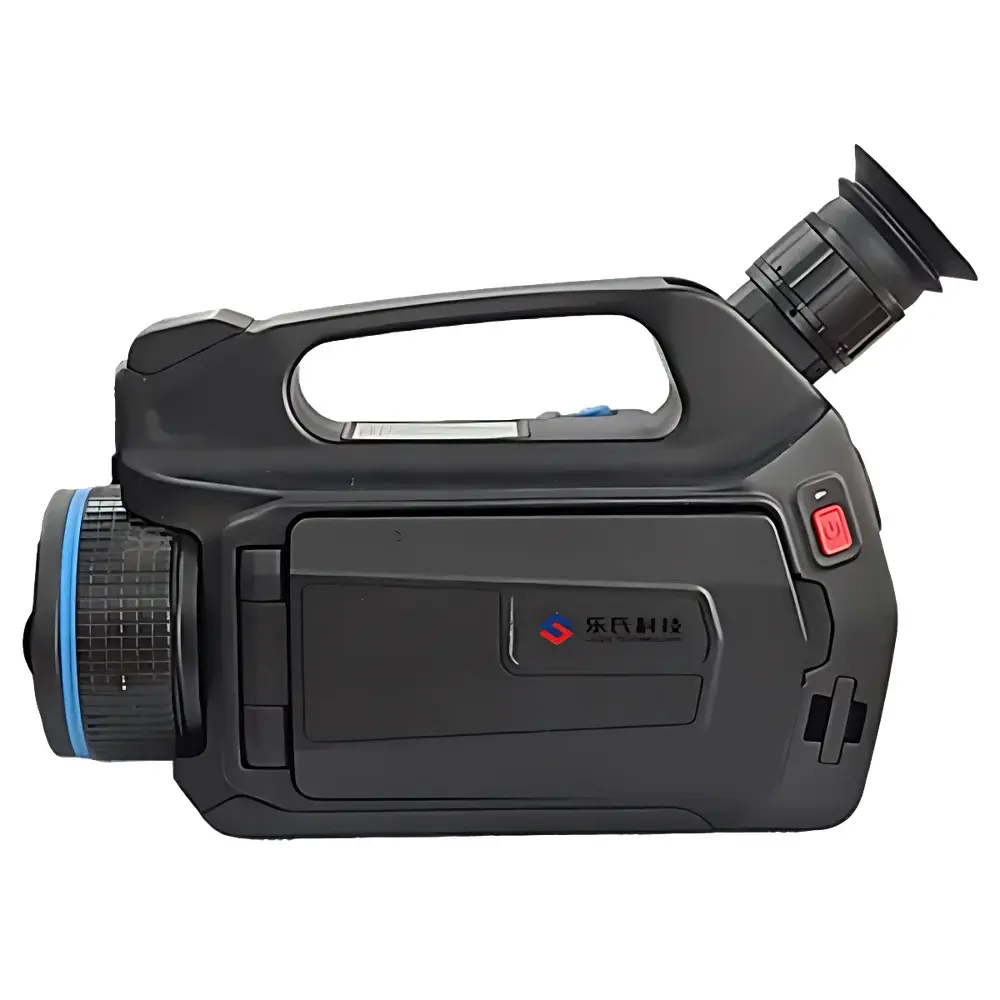
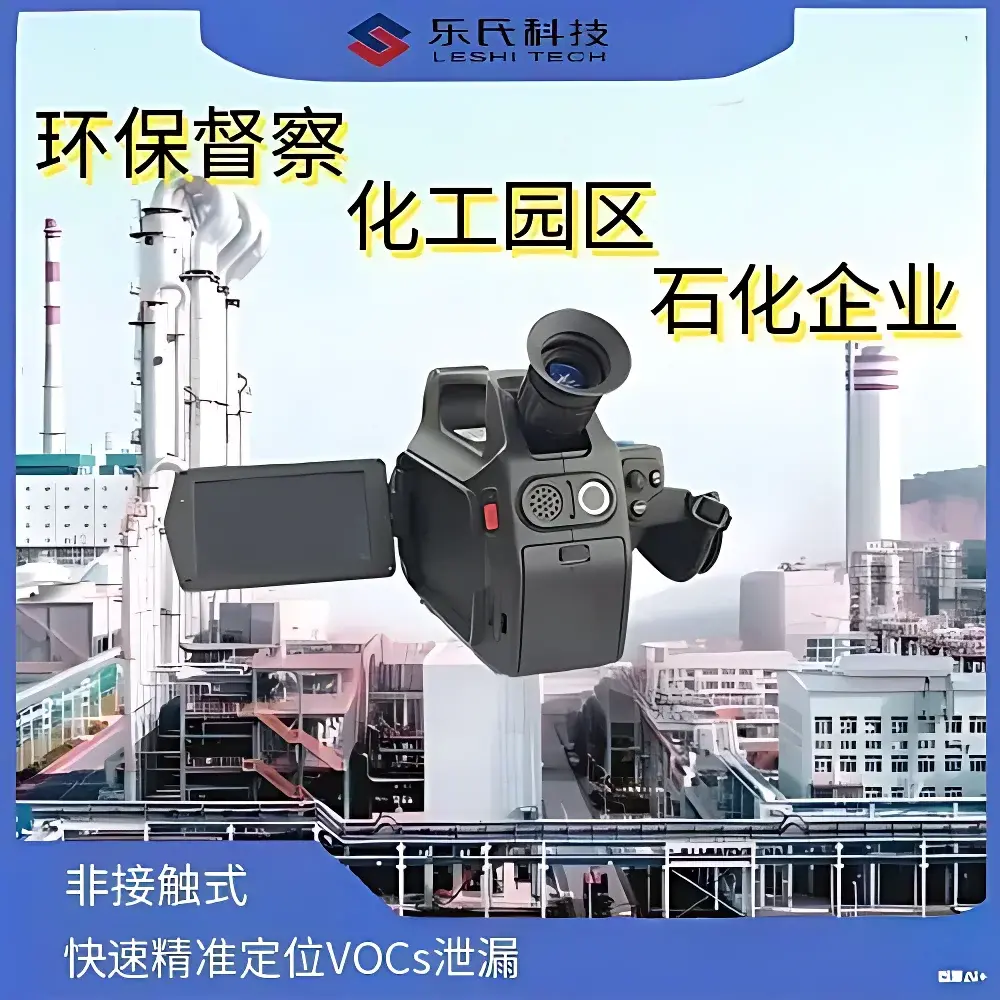
LESHI GIR320 Plus Optical Gas Imaging (OGI) Camera
| Brand | Leshi |
|---|---|
| Origin | Beijing, China |
| Manufacturer Type | Authorized Distributor |
| Country of Origin | China |
| Model | GIR320 Plus |
| Price Range | USD 104,000–142,000 |
| Cooling Type | Cooled |
| Measurement Method | Non-contact |
| Application Type | Continuous Monitoring |
| Detector Type | Type-II Superlattice (T2SL) |
| Spectral Band | Mid-wave infrared (MWIR) |
| Spectral Range | 3.2–3.5 µm |
| Thermal Sensitivity (NETD) | ≤0.010 °C @ 25 °C |
| Infrared Resolution | 320 × 256 |
| Temperature Range | −40 °C to +350 °C |
| Accuracy | ±2 °C or ±2% of reading (whichever is greater), calibrated per ISO 18434-1 |
| Frame Rate | 60 Hz (full frame) |
Overview
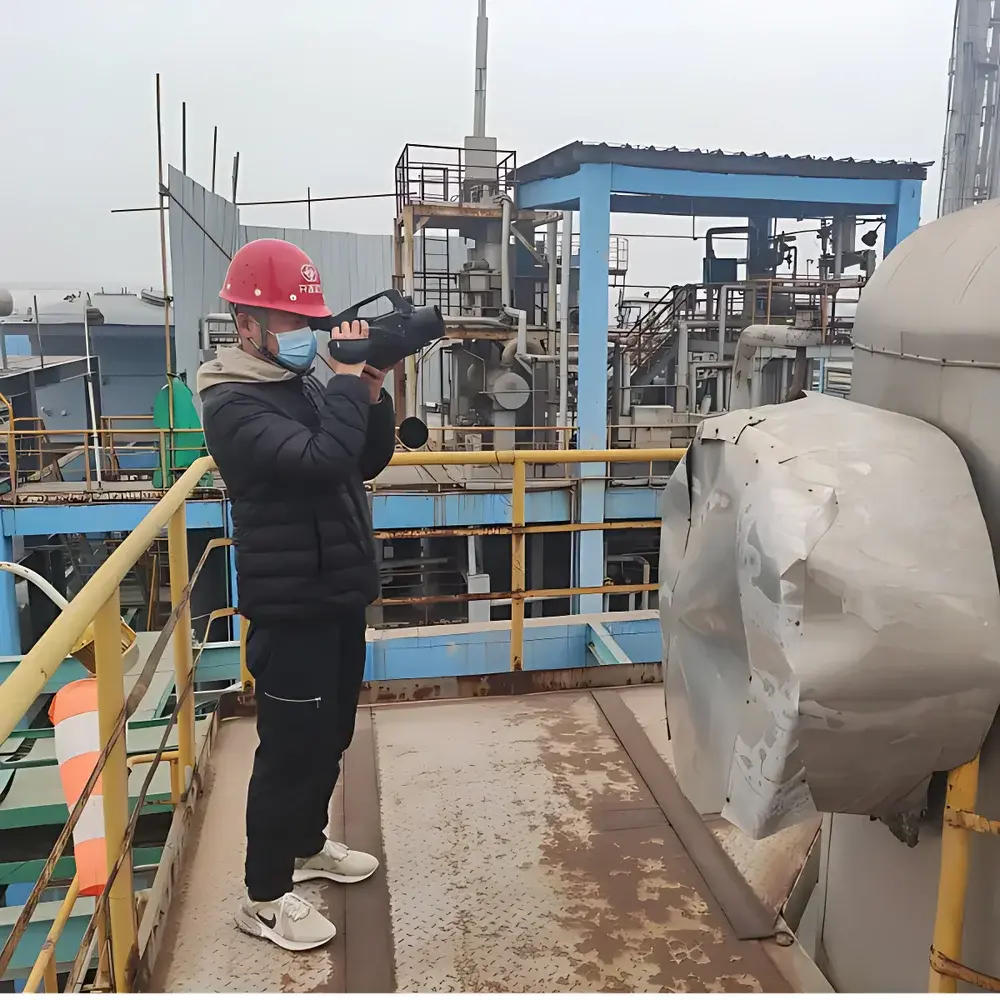
The LESHI GIR320 Plus Optical Gas Imaging (OGI) Camera is an industrial-grade, cooled mid-wave infrared (MWIR) thermal imaging system engineered for passive, non-contact detection and visualization of volatile organic compounds (VOCs) and other hydrocarbon-based gases. It operates on the principle of optical gas imaging—leveraging the unique vibrational absorption signatures of gas molecules in the 3.2–3.5 µm spectral band. Unlike active laser-based or point-sensor methods, the GIR320 Plus captures real-time, spatially resolved gas plume imagery by detecting minute radiance differentials between background thermal emission and gas-phase absorption. This enables rapid scanning of large industrial assets—including piping networks, flanges, valves, storage tanks, and offshore platforms—without physical access or process interruption. Designed for regulatory compliance and operational safety, the system meets core requirements for LDAR (Leak Detection and Repair) programs under EPA Method 21 and EU IED Directive Annex VI, while supporting continuous monitoring workflows in hazardous environments.
Key Features
- Cooled Type-II Superlattice (T2SL) MWIR detector delivering NETD ≤0.010 °C @ 25 °C—enabling high-contrast, low-noise visualization of trace hydrocarbon leaks at distances up to 50 m.
- Real-time AI-powered gas plume recognition engine with automatic bounding-box annotation and confidence scoring—trained on >12 VOC species including methane, propane, butane, ethylene, and benzene.
- Dual-stream synchronized recording: Full-radiometric IR video + HD visible-light video + time-stamped audio—captured simultaneously with embedded GPS metadata for forensic auditability.
- Motorized autofocus, auto-iris, and auto-gain control—optimized for dynamic field conditions; supports touch-screen, joystick, and ergonomic handgrip operation.
- Multi-mode imaging: Pure IR, visible-light, fusion (alpha-blended), picture-in-picture (PIP), and edge-enhanced modes—all configurable via intuitive UI with customizable palettes and isotherms.
- Comprehensive thermographic analysis suite: Spot, line, and area temperature profiling; user-defined alarm thresholds; emissivity correction; and non-uniformity compensation (NUC) with shutterless calibration.
- Integrated wireless communication stack: Dual-band Wi-Fi (2.4/5 GHz) and LTE/4G modem for live streaming, remote device control, and over-the-air firmware updates.
- Fingerprint biometric authentication with role-based user profiles—ensuring data integrity, audit trail compliance, and secure multi-user deployment in shared facilities.
- ATEX/IECEx-certified enclosure (II 2G Ex ib IIB T4 Gb) and IP54 ingress protection—validated for Zone 1 hazardous locations across oil & gas, chemical, and petrochemical sectors.
Sample Compatibility & Compliance
The GIR320 Plus is optimized for detection of gases exhibiting strong fundamental C–H stretch absorption in the 3.2–3.5 µm window—primarily aliphatic and aromatic hydrocarbons. It is not sensitive to CO₂, N₂, O₂, or H₂O vapor. The instrument complies with ISO 18434-1:2008 (Condition monitoring — Thermography — Part 1: General procedures) and supports traceable calibration against blackbody references (NIST-traceable). For regulatory reporting, it generates PDF reports compliant with EPA OOOOa and EU MRV frameworks, including leak location coordinates, plume size estimation, and timestamped thermal metadata. Data export formats include JPEG2000 (.jp2), full-radiometric .seq, and CSV-compatible thermographic logs—compatible with third-party LDAR management platforms (e.g., Meridian, LDARSoft).
Software & Data Management
Built-in SmartOGI™ software provides on-device image annotation, measurement tagging, and report generation without external PCs. All radiometric data are stored in standard IR format (ISO 18434-1 compliant), enabling post-capture quantitative analysis—including plume quantification using relative optical density (ROD) models. Cloud synchronization via LESHI CloudLink™ supports centralized fleet management, automated leak log aggregation, and integration with CMMS/EAM systems via RESTful API. Audit trails record all user actions—including login/logout, parameter changes, and report exports—with immutable timestamps aligned to UTC. Software adheres to FDA 21 CFR Part 11 principles for electronic records and signatures where applicable.
Applications
- LDAR program execution per EPA Method 21 and ASTM D7986-22 for fugitive emissions screening in refineries, chemical plants, and terminals.
- Unmanned inspection of elevated or inaccessible infrastructure—such as flare stacks, compressor stations, and subsea manifolds—using tripod, drone-mount, or vehicle-integrated configurations.
- Environmental compliance verification during EPA inspections, EIA follow-ups, and third-party certification audits (e.g., ISO 14064-1, GHG Protocol).
- Preventive maintenance support for predictive leak trending—correlating thermal plume persistence with valve stem wear, gasket degradation, or法兰 misalignment.
- Emergency response triage: Rapid identification of leak source, directionality, and approximate mass flow rate during unplanned releases.
FAQ
Does the GIR320 Plus require external calibration sources during routine use?
No. It features shutterless non-uniformity correction (NUC) and internal temperature stabilization, eliminating need for manual blackbody referencing between inspections. Annual factory recalibration is recommended per ISO/IEC 17025.
Can it quantify leak rates in grams per hour?
Not directly. It provides qualitative and semi-quantitative plume visualization. Quantitative flux estimation requires integration with complementary sensors (e.g., FID/PID) or modeling tools (e.g., Gaussian dispersion models) using exported plume geometry and environmental data.
Is the device compatible with drone-mounted operation?
Yes. Its weight (≤2.8 kg), low power draw (<12 W), and RS-422/MAVLink interface support integration with industrial UAV platforms certified for Zone 1 operations.
What file formats does it export for regulatory submission?
Radiometric .seq (FLIR-compatible), JPEG2000 (.jp2) with embedded metadata, CSV thermographic logs, and PDF summary reports—all compliant with EPA OOOOa documentation requirements.
How is cybersecurity addressed in remote data transmission?
All Wi-Fi and 4G communications employ TLS 1.2+ encryption; device firmware is signed and verified; and cloud uploads require MFA-authenticated sessions with RBAC-controlled access permissions.





