
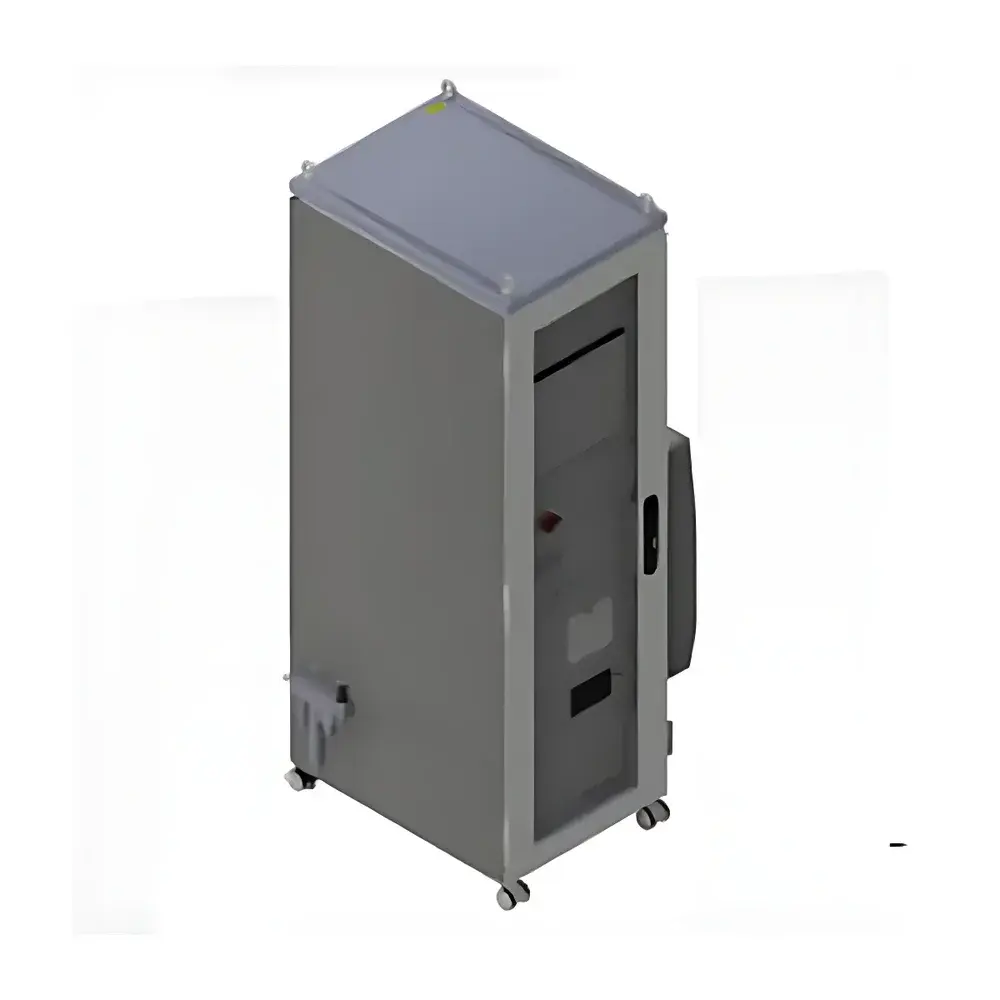
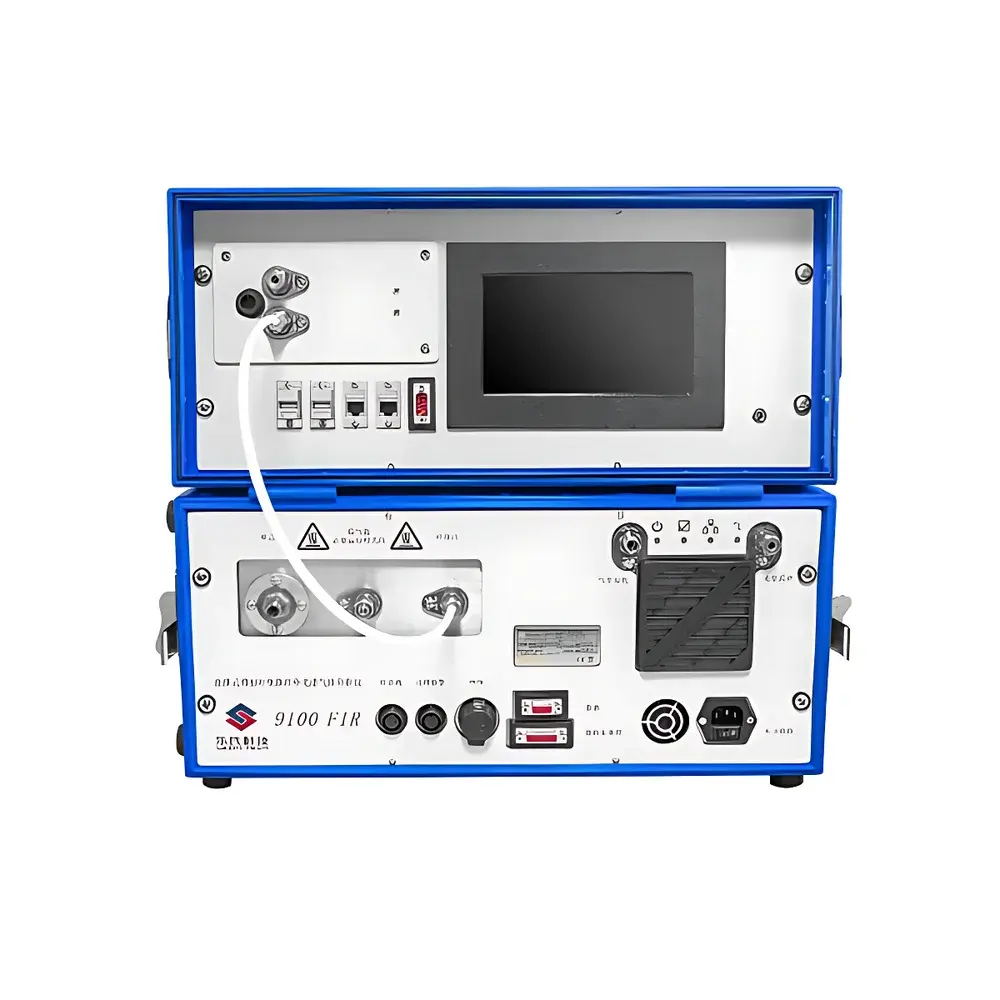
LESHI Soil Greenhouse Gas Real-Time Monitoring System
| Brand | LESHI |
|---|---|
| Origin | Beijing, China |
| Manufacturer Type | Authorized Distributor |
| Country of Origin | China |
| Model | Soil GHG Analyzer |
| Price Range | USD 210,000 – 350,000 |
| Channel Capacity | 24 independent sampling ports |
| Operating Temperature | Ambient (10–35 °C) |
| Target Gases | N₂O, CH₄, CO₂, CO, C₁–C₆ hydrocarbons, aromatic & cyclic hydrocarbons, carboxylic acids & derivatives, aldehydes, ketones |
| Measurement Mode | Real-time, sequential multi-point gas chromatography with integrated thermal desorption and PID/FID detection modules |
Overview
The LESHI Soil Greenhouse Gas Real-Time Monitoring System is an engineered field-deployable platform designed for continuous, high-temporal-resolution quantification of soil-atmosphere exchange fluxes of greenhouse gases (GHGs) and volatile organic compounds (VOCs). Built upon a sequential multi-channel gas sampling architecture, the system integrates programmable 24-port valve manifolds, temperature-stabilized sample lines, and dual-detector gas chromatography (GC-PID/FID) to enable unattended operation across heterogeneous soil plots or controlled mesocosms. Unlike single-point static chamber methods, this system captures spatially resolved concentration gradients across up to 24 independent sampling locations—providing true 3D temporal-spatial gas field data essential for validating biogeochemical models, assessing land-use impacts, and supporting IPCC Tier 2/3 inventory reporting requirements.
Key Features
- 24-channel fully automated sampling manifold with pneumatic actuation and leak-tight stainless-steel flow paths (≤1 mL dead volume per channel)
- Ambient-temperature sampling capability (10–35 °C operational range), eliminating need for cryogenic trapping or heated transfer lines in most temperate field deployments
- Integrated dual-detection GC module: photoionization detector (PID) for broad-spectrum VOC screening (detection limit: ≤0.1 ppb for benzene) and flame ionization detector (FID) for precise hydrocarbon quantification (linear dynamic range: 10⁴)
- Onboard thermal desorption unit (TDU) with programmable trap cooling (−30 °C) and rapid flash-heating (≥400 °C/sec), enabling quantitative recovery of polar and semi-volatile compounds including organic acids and carbonyls
- Embedded environmental sensor suite: simultaneous measurement of soil temperature (±0.2 °C), volumetric water content (±1.5 vol%), and matric potential (±0.5 kPa) at each sampling port via optional probe integration
- Robust industrial-grade enclosure (IP65 rated) with internal humidity control and battery-backed real-time clock for long-term unattended operation (72+ hr runtime on auxiliary power)
Sample Compatibility & Compliance
The system is validated for direct analysis of headspace gases from static chambers, soil gas probes (stainless-steel porous cups, 10–50 cm depth), and lysimeter outflows. It complies with ASTM D6866-22 (radiocarbon-based biogenic carbon determination), ISO 14067:2018 (carbon footprint quantification), and supports GLP-aligned data integrity through audit-trail-enabled firmware. All gas pathways meet EPA Method TO-17 specifications for sorbent tube-based VOC sampling, and chromatographic performance adheres to USP system suitability criteria (peak asymmetry ≤1.5, RSD ≤2% for retention time). Data output formats are compatible with FAO’s Global Soil Partnership metadata standards and ICOS (Integrated Carbon Observation System) Level 2 data submission protocols.
Software & Data Management
The proprietary LESHI GHG Control Suite (v4.2) provides centralized configuration, sequence scheduling, real-time chromatogram visualization, and automated peak integration using iterative deconvolution algorithms. Raw data are stored in HDF5 format with embedded calibration metadata, instrument status logs, and environmental context tags. The software supports 21 CFR Part 11-compliant user access controls, electronic signatures, and immutable audit trails. Export options include NetCDF-4 (CF-1.8 compliant), CSV with ISO 8601 timestamps, and direct API-driven ingestion into cloud platforms such as ICOS Carbon Portal or FluxNet-CH4 databases. Remote diagnostics and firmware updates are performed over TLS 1.3-secured SSH or LTE-M cellular link.
Applications
- Quantification of soil carbon flux dynamics under climate change scenarios (e.g., drought/flood cycles, warming experiments)
- Evaluation of agricultural management practices—including tillage intensity, cover cropping, biochar amendment, and nitrogen fertilizer regimes—on N₂O and CH₄ emissions
- Baseline characterization and long-term monitoring of landfill cover soils, mine reclamation sites, and wetland restoration projects
- Validation of eddy covariance tower measurements via ground-truthed spatial flux mapping
- Method development for emerging GHG species (e.g., methyl halides, isoprene oxidation products) in collaboration with university and national lab partners
FAQ
Does the system require external calibration gases during routine operation?
Yes—daily automated calibration is performed using certified NIST-traceable gas standards (CH₄/N₂, CO/air, CO₂/air, and multi-component VOC blends) via integrated permeation tubes and mass flow controllers.
Can the system operate autonomously for extended periods in remote field sites?
Yes—the system supports solar-charged battery backup, satellite telemetry (Iridium Short Burst Data), and adaptive sampling logic that reduces cycle frequency during low-flux periods to extend deployment duration beyond 6 months.
Is soil moisture or temperature compensation applied automatically during flux calculation?
Yes—flux calculations apply the Hsieh et al. (2000) modified linear regression algorithm, incorporating concurrent in-situ soil temperature and water content as covariates to correct for diffusion limitations and microbial activity dependencies.
What level of technical support is provided for method validation and regulatory reporting?
LESHI offers application-specific protocol development services, including SOP drafting aligned with ISO/IEC 17025, third-party verification reports, and assistance preparing documentation for national GHG inventory submissions (e.g., UNFCCC Biennial Update Reports).
Related Products







