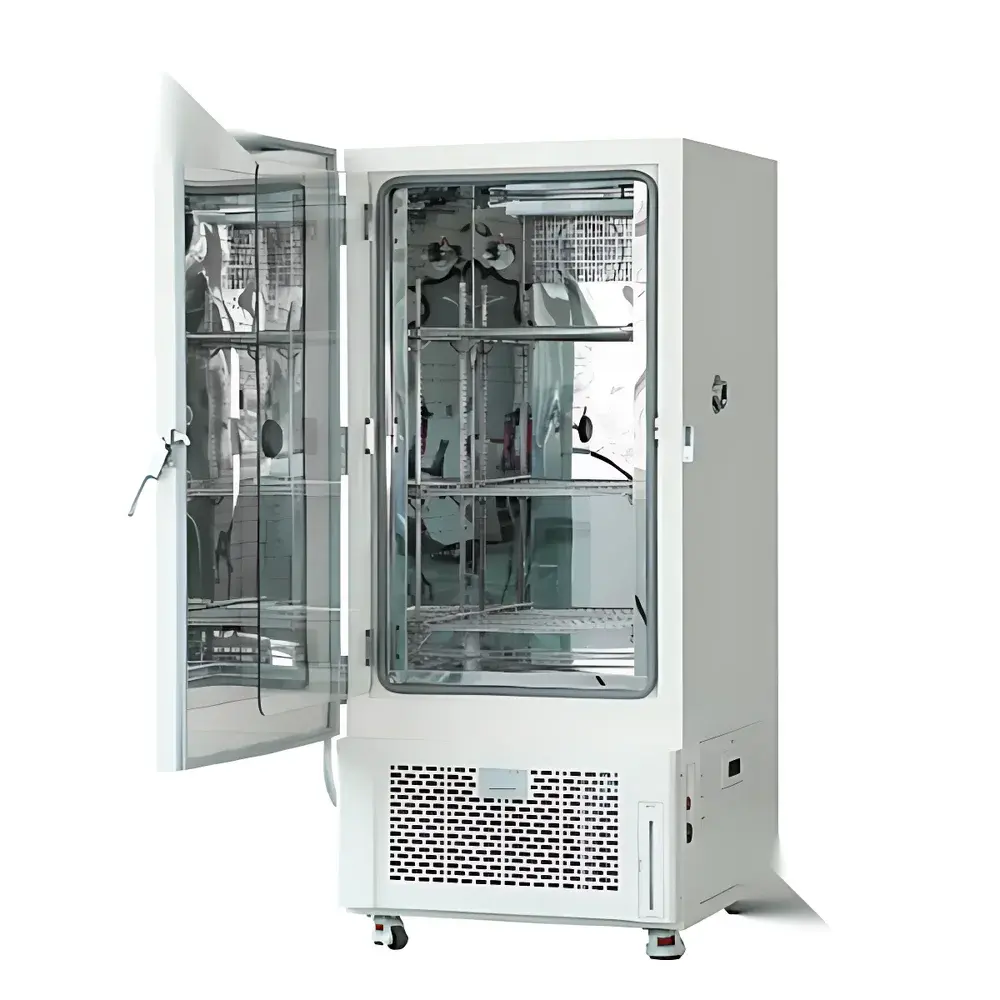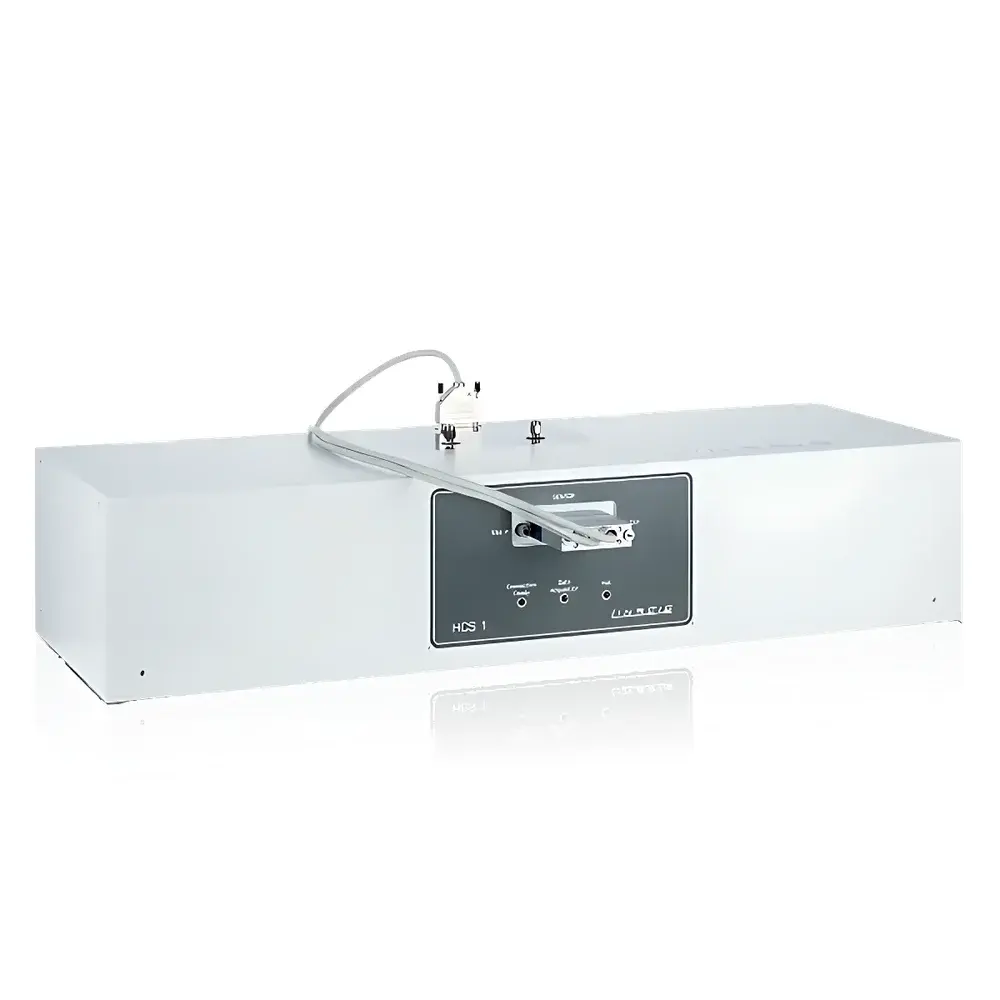
LINSEIS HCS L36 Hall Effect Measurement System
| Brand | LINSEIS |
|---|---|
| Origin | Germany |
| Model | HCS L36 |
| Instrument Type | Ambient-Temperature Hall Effect Tester |
| Constant Current Source Range | DC: 1 nA–125 mA (8 decades, ±12 V compatible) |
| AC | 16 µA–20 mA, input impedance > 100 GΩ, frequency range 1 mHz–100 kHz |
| Voltage Measurement | DC low-noise/low-offset: 1 µV–2500 mV, 4 gain ranges, digital resolution 300 pV |
| AC | 20 nV–1 V, adjustable integration time and gain |
| Mobility Range | 10⁻³–10⁷ cm²·V⁻¹·s⁻¹ |
| Resistivity Range | 10⁻⁴–10⁷ Ω·cm |
| Carrier Concentration Range | 10⁷–10²² cm⁻³ |
Overview
The LINSEIS HCS L36 Hall Effect Measurement System is a precision-engineered platform for quantitative electrical characterization of semiconductor and conductive materials. Based on the classical Hall effect principle—where a transverse voltage develops across a current-carrying conductor under perpendicular magnetic field—the system enables direct determination of the Hall coefficient (RH), sheet resistance (R□), and bulk resistivity (ρ). From these primary measurements, carrier concentration (n or p) and Hall mobility (µH) are calculated using fundamental semiconductor physics relationships: RH = 1/(q·n) (for n-type) or RH = −1/(q·p) (for p-type), and µH = |RH|/ρ. The HCS L36 supports both van der Pauw and Hall bar geometries, and its modular architecture allows configuration-specific optimization for research-grade metrology in academic labs, R&D centers, and semiconductor process development environments.
Key Features
- Triple-configurable platform: HCS L36 Basic (permanent magnet, ±0.7 T), HCS L36 Advanced (electromagnet, ±1 T DC with bipolar current reversal and optional AC field up to 0.1 Hz), and HCS L36 Ultimate (Halbach array, 0.5 T DC/AC, compact 40 mm bore)
- High-fidelity current sourcing: DC range from 1 nA to 125 mA (8 decades), fully programmable with compliance voltage up to ±12 V; AC excitation from 16 µA to 20 mA, with >100 GΩ input impedance and 1 mHz–100 kHz bandwidth
- Ultra-low-noise voltage measurement: DC sensitivity down to 1 µV with 300 pV digital resolution and four selectable gain stages; AC mode with 20 nV minimum detectable signal, adjustable integration time and gain for optimal SNR
- Thermal versatility: Configurable temperature modules spanning cryogenic (LN₂-cooled to −196 °C), ambient, and high-temperature operation (up to +800 °C in advanced variants); temperature stability ±0.05 °C
- Controlled atmosphere chamber: Hermetically sealed sample compartment supporting vacuum, inert (N₂, Ar), oxidizing (O₂), and reducing (H₂/N₂ mix) environments—critical for air-sensitive or thermally activated materials
- Modular sample stage design: Accommodates multiple sample formats—standard sizes from 5 × 5 mm² to 50 × 50 mm² (max height 5 mm); high-temp ceramic plate option (10 × 10 mm², max 2 mm height) for elevated-temperature measurements
- Integrated LED illumination: Optional multi-wavelength (UV–VIS–NIR) lighting for photo-Hall or optoelectronic response studies
- Lock-in amplifier compatibility: Enables phase-sensitive detection for sub-microvolt signal recovery in noisy environments or low-conductivity samples
Sample Compatibility & Compliance
The HCS L36 is validated for characterization of elemental semiconductors (Si, Ge), compound III–V and II–VI materials (GaAs, InP, InGaAs, CdTe), wide-bandgap nitrides and carbides (GaN, SiC), metal oxides (ITO, ZnO, NiO), chalcogenides (Sb, Bi₂Te₃), and thin-film metallic layers. Its van der Pauw-compatible geometry eliminates correction factors for irregular shapes, while contact alignment fixtures ensure reproducible ohmic contact placement per ASTM F76 and ISO 10810 standards. All electrical calibration routines adhere to traceable NIST protocols. Data acquisition and reporting comply with GLP/GMP requirements through audit-trail-enabled software logging, electronic signatures, and 21 CFR Part 11–compatible user access control—essential for regulated QC/QA workflows in semiconductor manufacturing and materials certification laboratories.
Software & Data Management
The Windows-based LINSEIS HCS Control Suite provides full instrument orchestration: automated I–V sweep, R–T profiling, Hall coefficient mapping vs. field strength, and real-time calculation of n, µH, and σ. Raw data export is supported in CSV, TXT, and HDF5 formats; batch processing scripts enable throughput optimization for multi-sample campaigns. The software embeds built-in uncertainty propagation models based on measurement error budgets (current source accuracy, voltage digitization noise, field homogeneity, thermal drift). Exported datasets include metadata tags for temperature, atmosphere, magnetic field polarity, and contact configuration—ensuring FAIR (Findable, Accessible, Interoperable, Reusable) data principles. Integration with MATLAB and Python via COM/ActiveX interfaces facilitates custom analysis pipelines and machine-learning–driven property prediction.
Applications
The HCS L36 delivers quantitative metrics critical to semiconductor process development and failure analysis: dopant activation efficiency in ion-implanted wafers; mobility degradation mechanisms in strained-Si or high-k/metal gate stacks; carrier freeze-out behavior in low-temperature quantum well structures; and defect-related scattering in epitaxial GaN layers. It is routinely deployed for evaluating thermoelectric figure-of-merit (ZT) components in Sb- and Bi-based alloys, assessing charge transport anisotropy in 2D materials (e.g., MoS₂, graphene heterostructures), and validating conduction mechanisms in transparent conducting oxides used in OLED and PV applications. Case studies include Hall mobility mapping of sputtered 150 nm antimony films on SiO₂/Si substrates across 25–200 °C, revealing phonon-limited transport onset at ~120 °C and confirming degenerate semiconductor behavior consistent with Hall scattering theory.
FAQ
What sample geometries are supported?
The system accommodates van der Pauw discs, square plates, and Hall bar patterns. Standard fixtures support 5 × 5 mm² to 50 × 50 mm² samples; custom jigs are available for non-standard layouts.
Can the HCS L36 perform low-temperature measurements?
Yes—cryogenic configurations integrate with liquid nitrogen dewars and closed-cycle refrigerators, enabling measurements from −196 °C to +600 °C depending on the selected module.
Is the system compliant with FDA 21 CFR Part 11?
The HCS Control Suite includes electronic signature capability, audit trail generation, and role-based access control—fully configurable to meet 21 CFR Part 11 and EU Annex 11 requirements.
How is magnetic field uniformity ensured?
Permanent magnet versions guarantee ±1% field homogeneity over a 50 mm diameter; electromagnet variants use actively stabilized power supplies and calibrated Hall probes for field feedback control.
What level of technical support is provided post-installation?
LINSEIS offers remote diagnostics, application-specific method development assistance, annual calibration services traceable to national standards, and on-site training for operators and metrologists.