
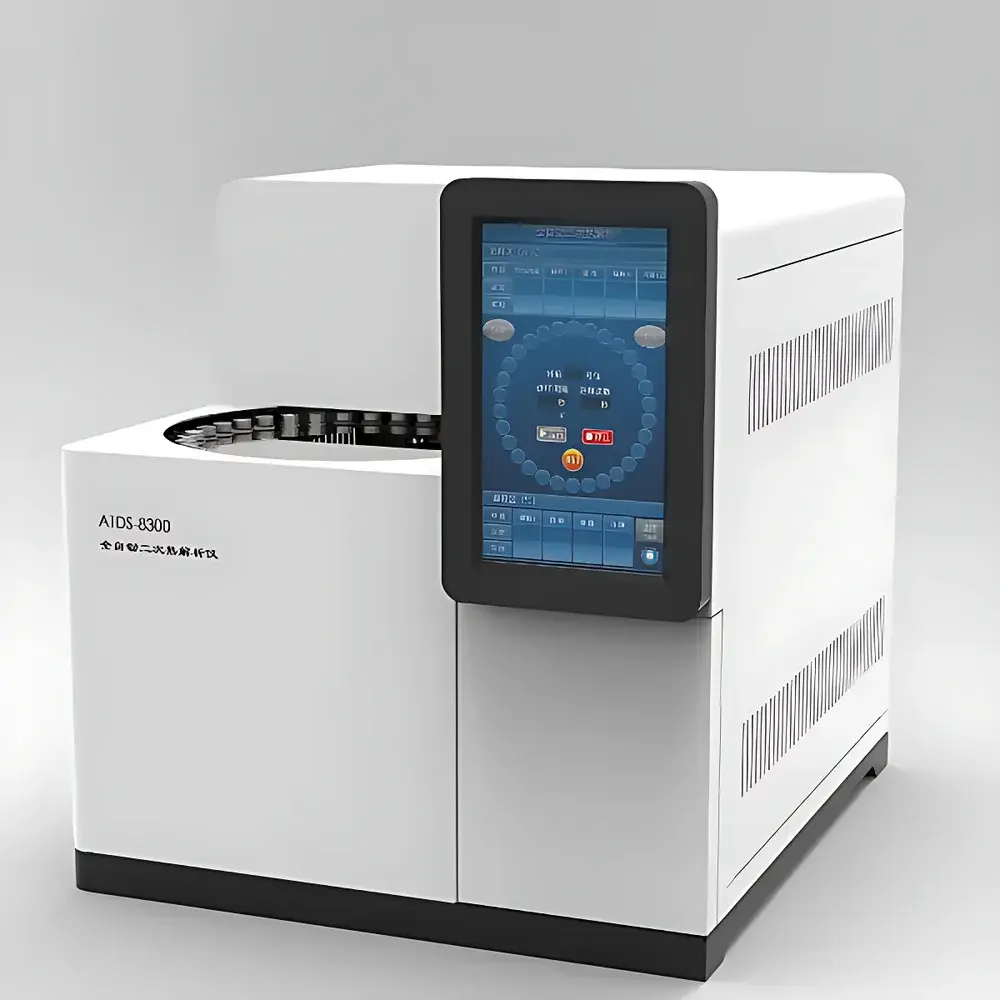
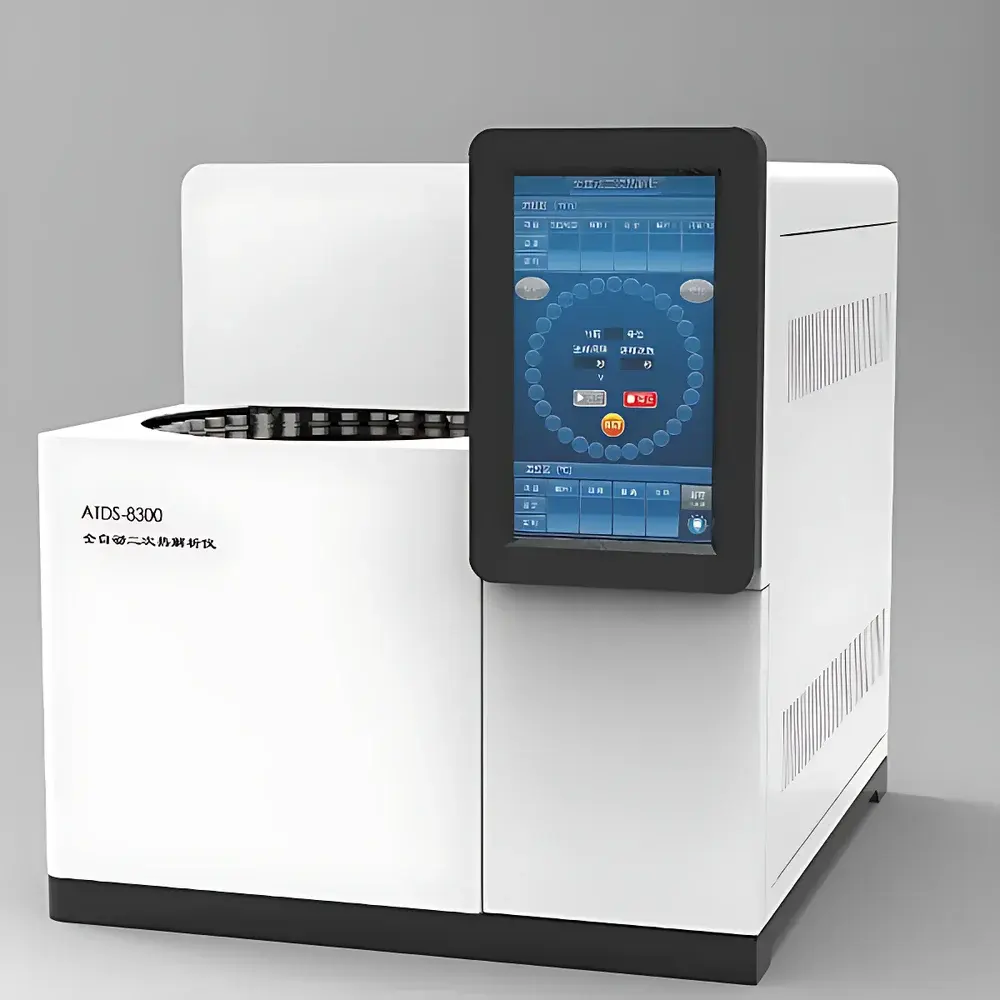
Luchuang ATDS-8300 Fully Automated Thermal Desorber (20-Position)
| Brand | Luchuang |
|---|---|
| Origin | Shandong, China |
| Manufacturer Type | OEM Manufacturer |
| Instrument Type | Dual-Stage Thermal Desorber |
| Automation Level | Fully Automated |
| Primary Desorption Temp Range | 50–380 °C |
| Secondary Desorption Temp Range | 150–380 °C |
| Valve & Transfer Line Temp Range | Ambient to 260 °C / Ambient to 220 °C |
| Cryo-Trap Temp Range | −30 to 30 °C |
| Temperature Control Accuracy | ±0.1 °C |
| Desorption Recovery Rate | ≥90% |
| Sample Positions | 20 |
Overview
The Luchuang ATDS-8300 is a fully automated, dual-stage thermal desorber engineered for high-fidelity volatile organic compound (VOC) and semi-volatile organic compound (SVOC) analysis in environmental, occupational hygiene, and forensic laboratories. It operates on the principle of sequential thermal desorption—first releasing analytes from sorbent tubes under controlled heating (primary desorption), then refocusing them onto a cryogenically cooled trap (−30 °C), followed by rapid flash-heating (secondary desorption) directly into the gas chromatograph (GC) or GC–MS inlet. This two-step process eliminates band broadening, enhances sensitivity, and delivers sharp, symmetrical peaks—critical for trace-level quantification per EPA Method TO-17, ISO 16017-1, and ASTM D6196. The system is designed for seamless integration with any make or model of GC or GC–MS without requiring modification to the chromatograph’s injection port.
Key Features
- 10.2-inch industrial-grade capacitive touchscreen interface with intuitive workflow navigation and method-driven operation—no command-line input required.
- Dual-stage desorption architecture with electronically cooled cryo-trap (Peltier-based, no liquid nitrogen or refrigerants), enabling precise low-temperature trapping down to −30 °C and ultra-fast secondary desorption (>3000 °C/min).
- Five-zone independent temperature control: adsorbent tube oven, six-port valve, transfer line, focusing trap, and secondary heater—ensuring zero cold spots across the entire sample path.
- Full inert flow path (siliconized stainless steel and fused silica-lined components) minimizes adsorption losses and carryover, supporting detection limits below 10 pg for target VOCs.
- Integrated leak-check protocol prior to each run: automatic pressure decay test verifies tube and valve integrity; samples with detected leaks are skipped to preserve analytical validity and avoid cross-contamination.
- Expandable dual-channel configuration: optional hardware and firmware upgrade allows simultaneous connection to two GC/GC–MS systems, doubling throughput without compromising method reproducibility.
- Programmable flow control (desorption, backflush, and simulated sampling flows) with mass-flow sensor feedback—insensitive to ambient temperature or carrier gas pressure fluctuations.
- Non-invasive GC coupling: dedicated transfer interface bypasses the GC’s standard inlet, eliminating interference with split/splitless operation and preserving original instrument calibration.
Sample Compatibility & Compliance
The ATDS-8300 accepts standard 6 mm OD × 90 mm sorbent tubes (e.g., Tenax TA, Carbopack B/C, Carboxen series) and supports multi-bed configurations for broad volatility range coverage. Its design conforms to key regulatory frameworks including EPA TO-17 (Determination of Volatile Organic Compounds in Ambient Air Using Active Sampling Onto Sorbent Tubes), ISO 16017-1 (Indoor, ambient and workplace air — Sampling and analysis of volatile organic compounds by sorption on solid sorbents, thermal desorption and gas chromatography), and EU EN 16755. All temperature ramps, hold times, and flow profiles are fully programmable and auditable—supporting GLP/GMP environments where 21 CFR Part 11-compliant electronic records and user access controls can be implemented via external LIMS integration.
Software & Data Management
Embedded firmware provides complete method storage (≥100 protocols), real-time status monitoring, and event logging with time-stamped timestamps. Each run generates a metadata-rich audit trail—including actual vs. setpoint temperatures, pressure readings, valve actuation events, and leak-test results—exportable as CSV or XML for QA/QC review. Synchronization signals (two TTL-compatible outputs, 1–2 s pulse width) enable precise timing coordination with GC oven start, detector trigger, or data acquisition software. Remote diagnostics and firmware updates are supported via Ethernet or USB, ensuring long-term maintainability without on-site service visits.
Applications
- Environmental monitoring: indoor air quality (IAQ), ambient air VOC profiling, landfill and remediation site emissions.
- Occupational health: personal and area sampling for OSHA/NIOSH-permissible exposure limit (PEL) compliance testing.
- Materials emission testing: VOC screening of building products (carpets, adhesives, paints) per ISO 16000-9 and ASTM D5116.
- Forensic toxicology: detection of ignitable liquids in fire debris analysis (NFPA 921, ASTM E1492).
- Pharmaceutical stability studies: residual solvent analysis in active pharmaceutical ingredients (APIs) per ICH Q2(R2) guidelines.
FAQ
Is the ATDS-8300 compatible with my existing Agilent 8890 GC and Thermo ISQ LT GC–MS?
Yes—the system uses universal pneumatic and electrical interfaces and includes configurable synchronization logic for all major GC platforms.
Does it require liquid nitrogen or other cryogens for cold trapping?
No—solid-state Peltier cooling achieves −30 °C without consumables, reducing operational cost and safety hazards.
Can I validate method performance per ISO/IEC 17025 requirements?
Yes—temperature accuracy (±0.1 °C), flow precision (<1% RSD), and desorption recovery (≥90%) are documented in factory calibration reports; full traceability is maintained across all operational parameters.
What maintenance intervals are recommended for routine operation?
Valve seals and sorbent tube o-rings should be inspected every 500 runs; transfer lines require annual passivation; no routine column or detector servicing is needed on the desorber itself.
Is remote operation possible via network or LIMS integration?
Yes—Ethernet connectivity supports TCP/IP command sets and SCADA-compatible polling; CSV export enables direct ingestion into laboratory information management systems (LIMS).
Related Products






