
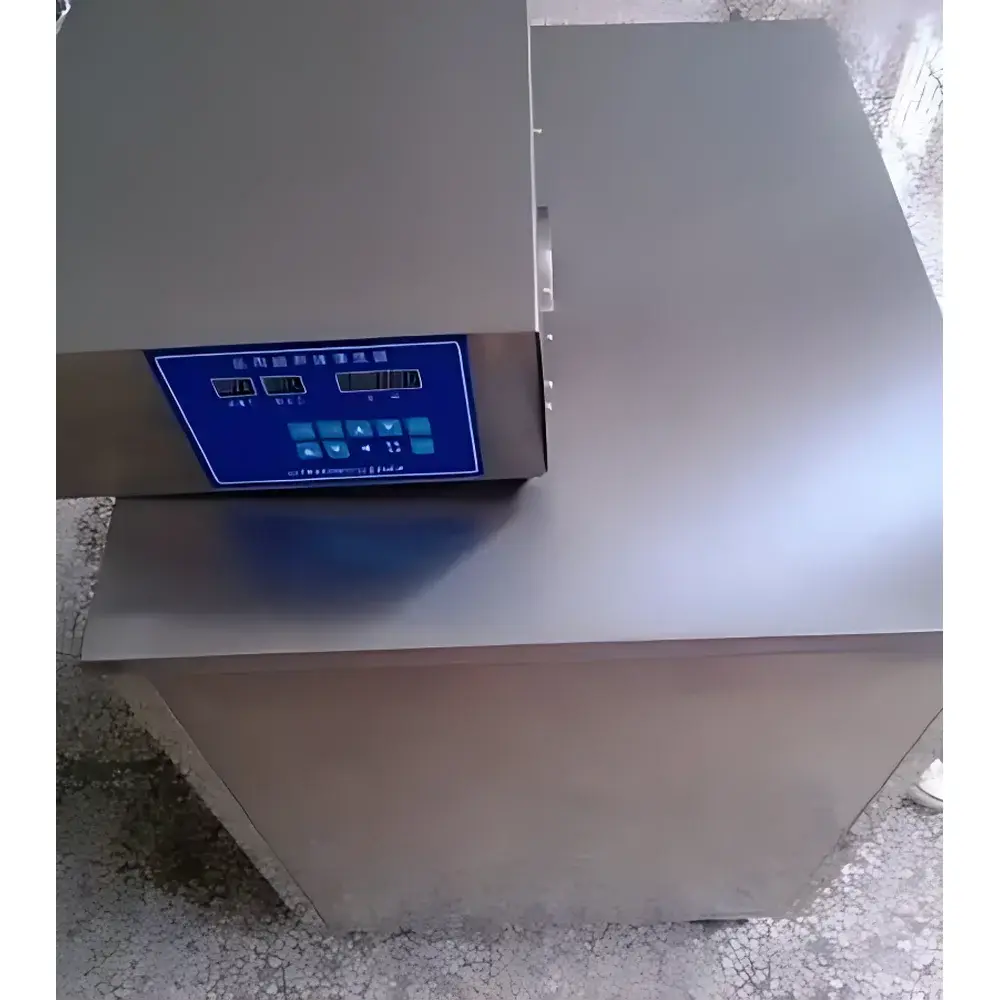
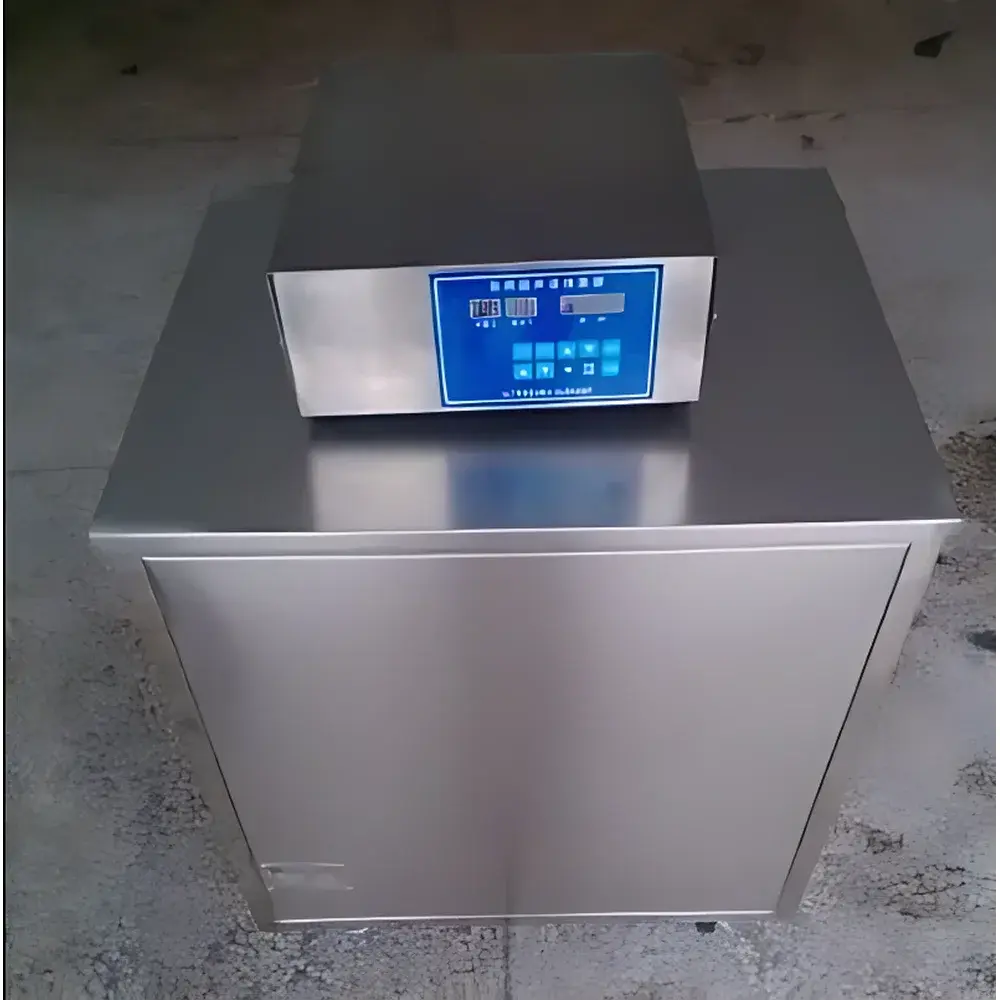
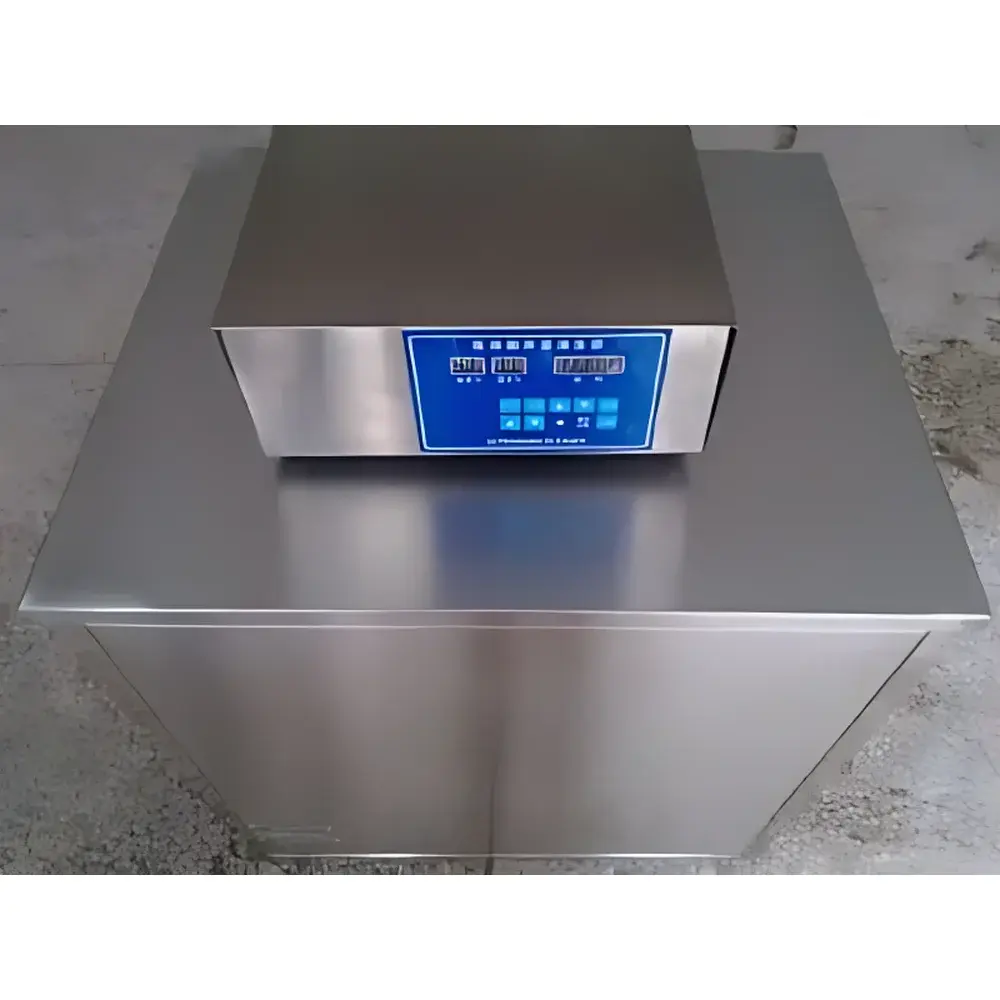
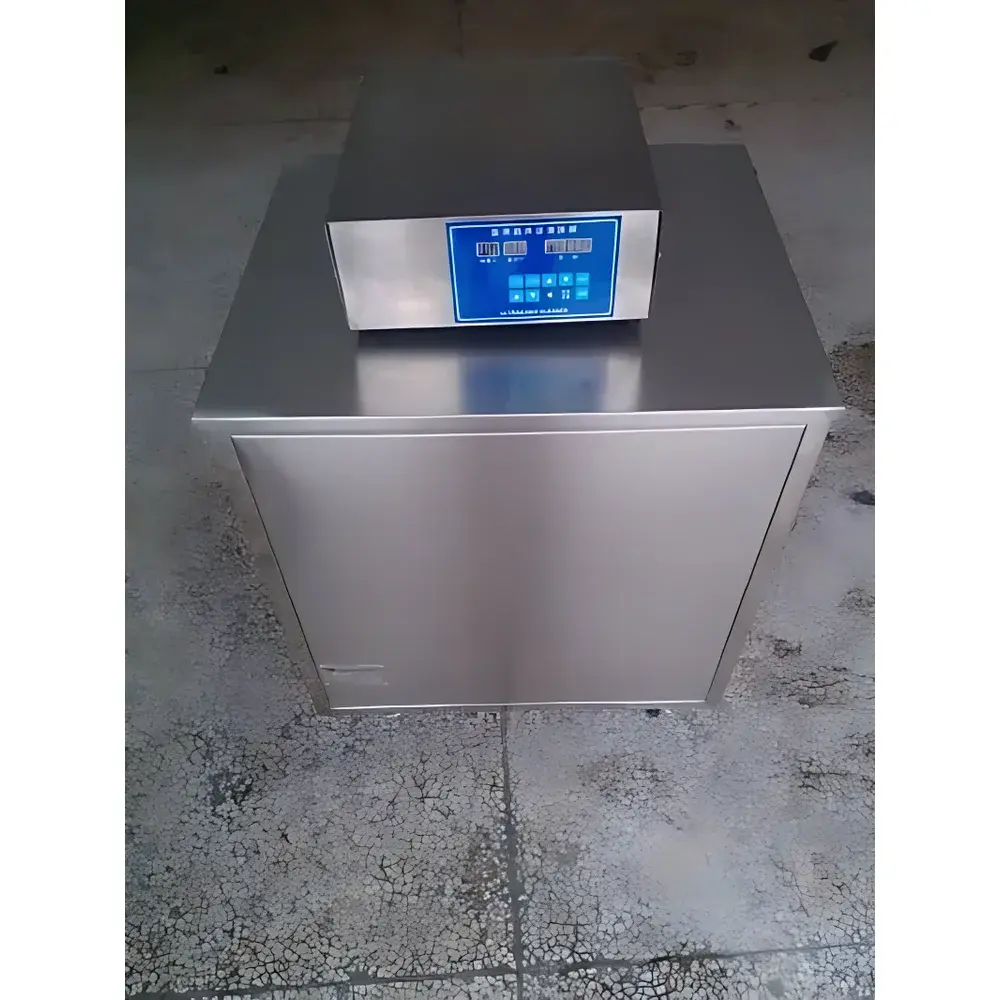
Lucky SCQ-E3000 Medical-Grade Ultrasonic Cleaner
| Brand | Lucky (Sycs) |
|---|---|
| Origin | Shanghai, China |
| Model | SCQ-E3000 |
| Capacity | 176 L |
| Ultrasonic Frequency | 25 / 28 / 40 / 60 kHz (selectable) |
| Ultrasonic Power | 3000 W |
| Power Adjustment Range | 10–100% |
| Heating Temperature Range | Ambient to 80 °C |
| Timer Range | 1–600 min |
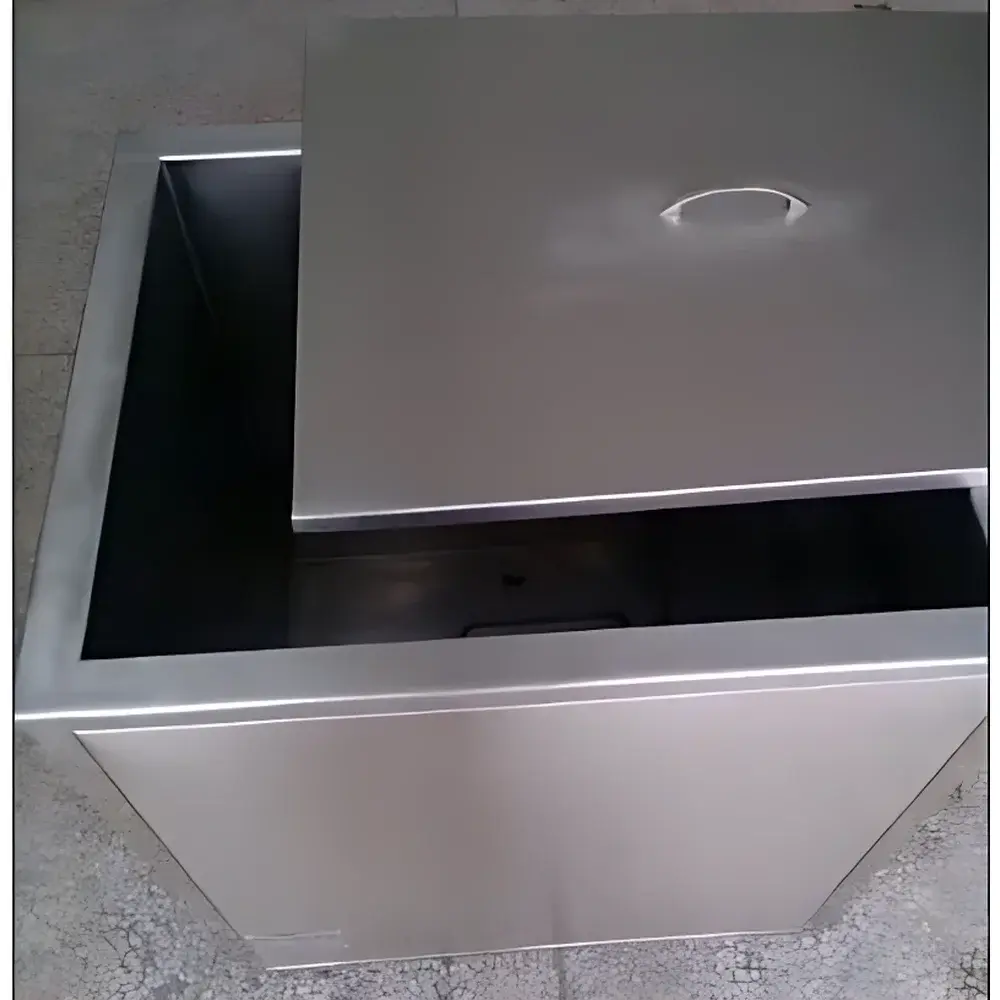
| Sound-Dampening Lid | Yes |
| Manual Fill/Drain | Yes |
| Power Supply | 220 V / 50 Hz |
| Internal Tank Dimensions | 830 × 530 × 400 mm |
| Overheat & Overload Protection | Yes |
| Auto-Dry-Safe Shutdown (for tanks ≥10 L) | Yes |
Overview
The Lucky SCQ-E3000 Medical-Grade Ultrasonic Cleaner is a high-capacity, programmable benchtop ultrasonic cleaning system engineered for reproducible, validated cleaning of critical medical devices, laboratory glassware, and precision instrumentation. It operates on the principle of cavitation—generating controlled acoustic pressure waves in liquid media that induce microbubble formation and collapse, delivering mechanical energy to dislodge particulate matter, biofilms, organic residues, and inorganic deposits from complex geometries—including lumens, blind holes, serrations, and textured surfaces. Designed specifically for compliance-sensitive environments such as pharmaceutical quality control laboratories, hospital central sterile supply departments (CSSD), and ISO 13485-certified medical device manufacturing facilities, the SCQ-E3000 supports documented cleaning validation protocols and integrates seamlessly into GLP/GMP workflows.
Key Features
- Robust 176 L stainless steel tank (304 grade) with precision-welded seams and corrosion-resistant finish, suitable for aqueous and mild solvent-based cleaning solutions.
- Selectable ultrasonic frequencies (25, 28, 40, or 60 kHz) to optimize cleaning efficacy across diverse substrate types—from delicate optical lenses and endoscopic components to heavily soiled surgical instruments and stainless steel hardware.
- Adjustable ultrasonic power output (10–100% in 1% increments) enables fine-tuned energy delivery for sensitive parts without erosion or pitting.
- Digital temperature control (ambient to 80 °C ±1 °C) with independent 3000 W heating element ensures consistent thermal activation of enzymatic or alkaline detergents during multi-stage cleaning cycles.
- Precision timer (1–600 minutes) with audible end-cycle alert and automatic shutdown; supports repeatable cycle definition for SOP-driven operations.
- Integrated sound-dampening lid reduces ambient noise to ≤65 dB(A) at 1 m distance, meeting occupational health requirements for continuous lab operation.
- Comprehensive safety architecture includes dual thermal cutoffs, current-sensing overload protection, and dry-run detection (auto-shutdown if liquid level falls below transducer array).
Sample Compatibility & Compliance
The SCQ-E3000 accommodates a wide range of load configurations via its standard mesh basket and optional custom fixtures. Compatible substrates include stainless steel, titanium, anodized aluminum, borosilicate glass, silicone tubing, polymeric catheters, and ceramic components. Cleaning performance aligns with ASTM F3127–18 (Standard Guide for Ultrasonic Cleaning Validation in Healthcare Facilities) and supports AAMI ST79:2017 Annex E requirements for ultrasonic pre-cleaning verification. The unit’s sealed electronics, IP22-rated enclosure, and non-sparking transducer design meet IEC 61000-6-3 EMC standards and are suitable for use in Class D cleanrooms when operated with validated detergent formulations and water quality (≥15 MΩ·cm resistivity). Documentation packages include factory calibration records, electrical safety test reports (IEC 61010-1), and material traceability for wetted components.
Software & Data Management
While the SCQ-E3000 features a standalone microprocessor-based controller with LED display and membrane keypad, it supports external data logging via RS-232 interface (optional USB-to-serial adapter). All operational parameters—including frequency selection, power setpoint, temperature setpoint, elapsed time, and fault codes—are timestamped and retainable for audit trail generation. When integrated with laboratory information management systems (LIMS) or electronic batch record (EBR) platforms, the device complies with FDA 21 CFR Part 11 requirements for electronic signatures and audit trail integrity, provided user access controls and change management procedures are implemented at the host system level. Firmware updates are performed offline using manufacturer-provided utilities and require formal version control documentation per ISO 13485 clause 7.5.2.
Applications
This system serves as a primary cleaning station in regulated biomedical laboratories for: decontamination of reusable surgical instruments prior to sterilization; removal of proteinaceous residue from HPLC columns and autosampler vials; cleaning of microfluidic chips and MEMS devices; degassing of cell culture media and reagent solutions; sonication-assisted extraction of genomic DNA from tissue samples; and dispersion of nanomaterial suspensions for physicochemical characterization. Its scalability and frequency flexibility also support R&D applications in biomaterial surface modification, dental prosthesis finishing, and ophthalmic lens coating preparation.
FAQ
What cleaning validation support documentation is available?
Lucky provides a Validation Support Package including IQ/OQ templates, transducer performance verification protocol, and cavity mapping report upon request.
Can the unit be connected to a continuous drain or recirculating filtration system?
Yes—though standard configuration uses manual drain, the tank base includes 1/2″ NPT threaded ports compatible with third-party plumbing kits for closed-loop operation.
Is the 40 kHz frequency option recommended for medical instrument cleaning?
40 kHz offers optimal balance between penetration depth and surface agitation for most stainless steel and titanium instruments; lower frequencies (25/28 kHz) are preferred for heavy carbon or rust removal, while 60 kHz suits delicate optics and microelectronics.
Does the unit comply with EU Medical Device Regulation (MDR 2017/745) essential requirements?
As a Class I non-sterile ancillary equipment under Annex VIII, the SCQ-E3000 meets essential requirement 10.1 (safety of equipment used in cleaning/disinfection processes) and carries CE marking per EN 61000-6-2/-6-3 and EN 61010-1.
What maintenance intervals are recommended for sustained GMP compliance?
Daily visual inspection of tank integrity and lid seal; quarterly verification of temperature accuracy and timer repeatability; annual transducer impedance testing and acoustic output calibration using hydrophone-based methodology per IEC 61847.



