
MBS Fitlylab-L02 Microbial Rapid Detection System
| Brand | MBS.SRL |
|---|---|
| Origin | Italy |
| Model | Fitlylab-L02 |
| Price Range | USD 14,000 – 70,000 |
| Certification | ISO 16140:2003 (Alternative Method Validation), ISO/IEC 17025:2005 (Internal Accreditation) |
| Detection Principle | Multi-modal Oxidative-Reductive Kinetic Assay with Tri-wavelength Photometric Monitoring |
| Sample Throughput | 8 Independent Channels |
| Detection Limit | 1 CFU per test |
| Specificity | ≥99.999% |
| Sample Types | Liquid, Solid, Surface Swab, Paste, Aerosol Condensate |
| Regulatory Compliance | Validated for Food, Water, Environmental & Clinical Surveillance per ISO, EN and FDA-aligned protocols |
Overview
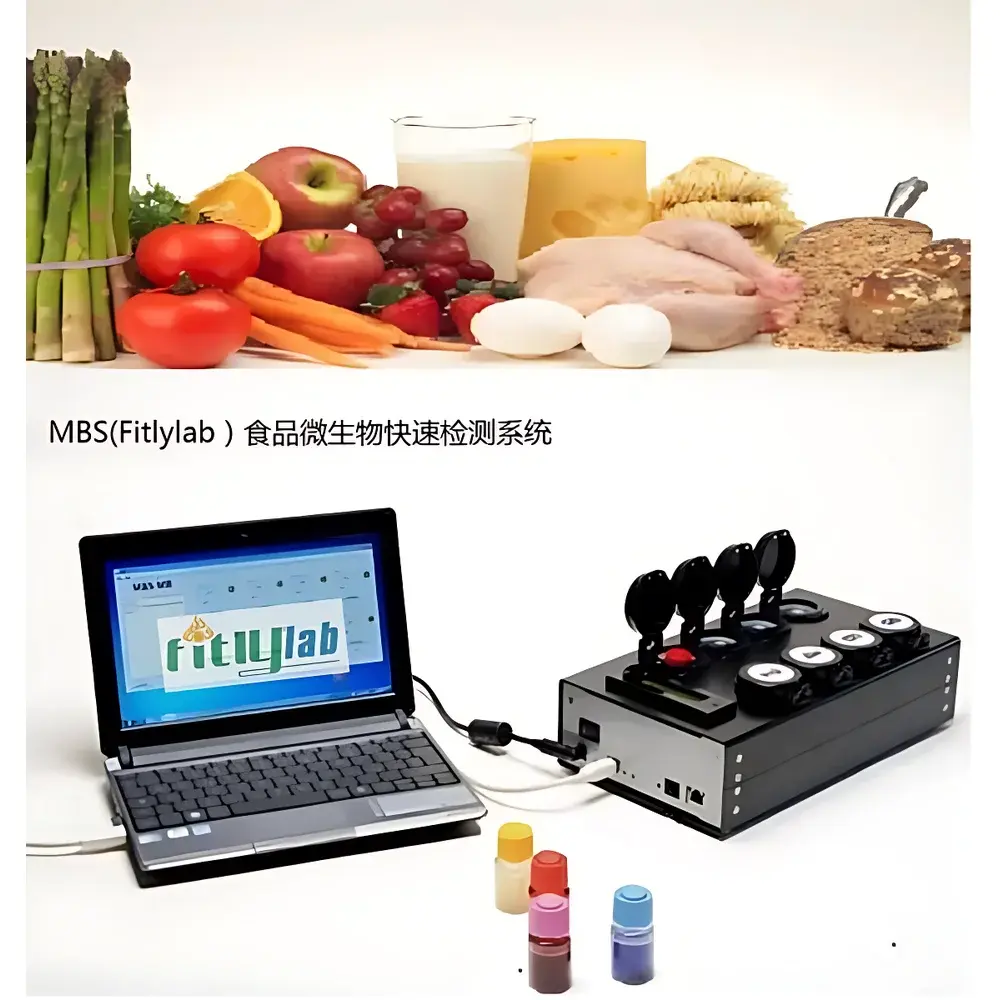
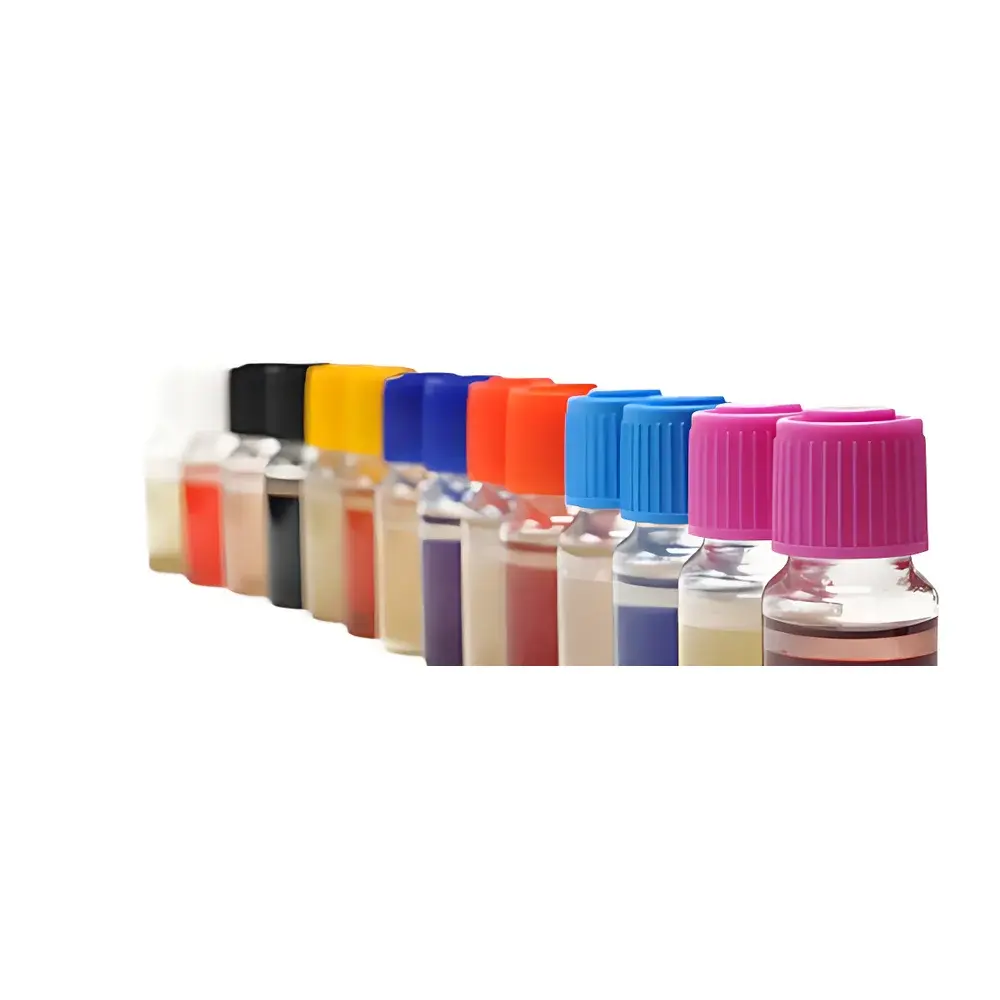
The MBS Fitlylab-L02 Microbial Rapid Detection System is an integrated, portable platform engineered for quantitative detection of viable microorganisms—including total viable count, Escherichia coli, coliforms, fecal coliforms, Enterobacteriaceae, Staphylococcus aureus, Pseudomonas aeruginosa, Salmonella spp., Listeria monocytogenes, Enterococcus faecalis, and yeasts—directly from raw, unprocessed samples. Unlike conventional culture-based or PCR-driven methods, the Fitlylab-L02 employs a proprietary multi-modal detection principle grounded in real-time monitoring of microbial metabolic activity. Each VL detection vial contains a tailored growth medium, selective inhibitors, and a redox-sensitive chromogenic substrate that undergoes wavelength-specific color transition upon enzymatic reduction by target organisms. The MBS-MR instrument quantifies this transition via synchronized photometric measurement across blue (450 nm), green (530 nm), and red (630 nm) spectral bands—enabling robust discrimination against turbidity, particulate interference, or non-specific background reactions. This kinetic assay correlates the time-to-threshold (TTT) of optical density change with initial microbial concentration, delivering CFU/mL or CFU/g results without colony isolation or DNA extraction. Developed jointly by the Physics Institute of Roma Tre University, the INFN Quantum Laboratory (Rome), and the Department of Biology at Roma Tre University, the system meets ISO 16140:2003 requirements as a validated alternative method for food and feed microbiology and operates under internal accreditation to ISO/IEC 17025:2005.
Key Features
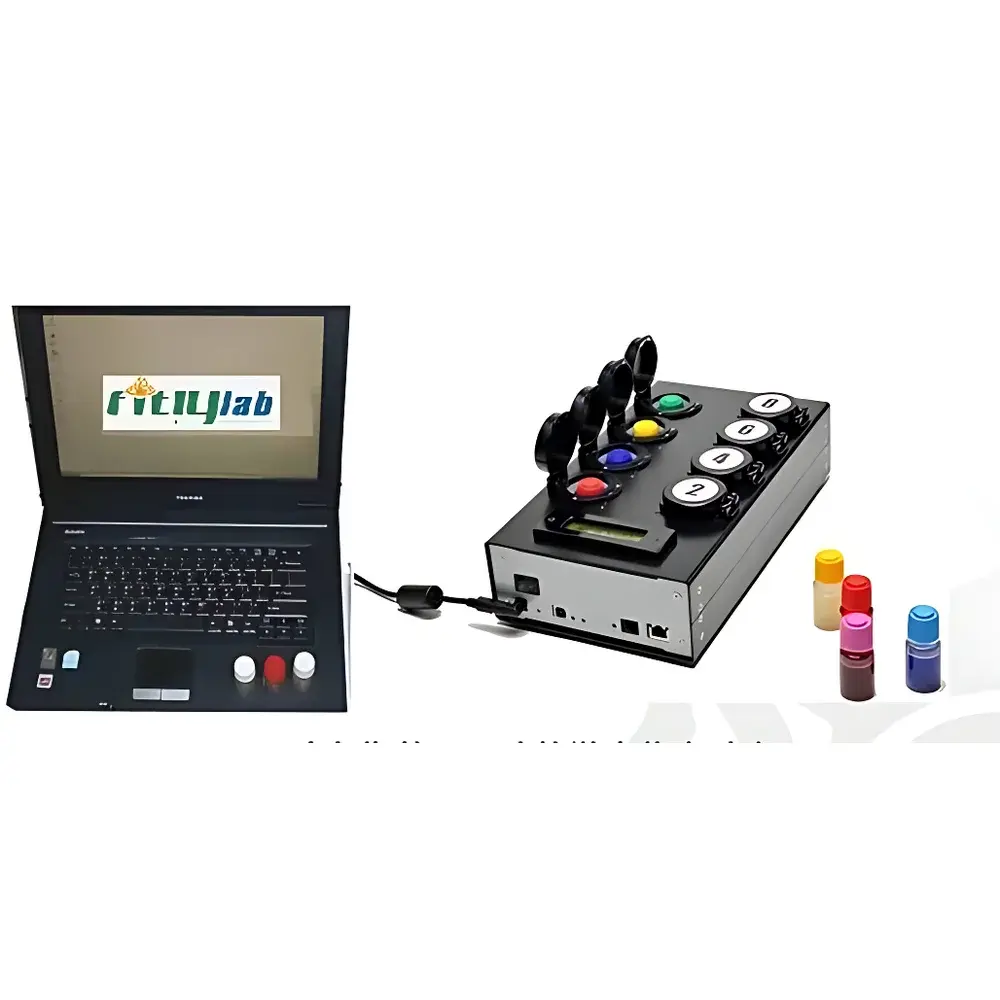
- Eight thermally regulated, optically isolated detection channels—each independently programmable for temperature (25–45 °C), incubation duration, and target microbe profile
- Tri-wavelength photometric engine (450/530/630 nm) with differential intensity curve analysis to identify inflection points with sub-minute temporal resolution
- VL detection vials certified to ISO 16140:2003; self-contained, sterile, single-use format with integrated biocidal post-assay deactivation
- No sample pre-enrichment, centrifugation, filtration, or dilution required for >90% of routine matrices (water, milk, homogenized food, swab eluates)
- Quantitative detection limit of 1 CFU per assay with analytical specificity ≥99.999% confirmed via inter-laboratory validation studies
- Automated report generation (PDF/CSV) with timestamped audit trail, user-defined pass/fail thresholds, and GLP-compliant metadata tagging
- Embedded Fitlylab software (English & Chinese UI) supporting remote data export, LIMS integration, and version-controlled firmware updates
- Portable form factor (12.5 kg, 38 × 32 × 24 cm) suitable for field deployment, mobile labs, HACCP checkpoints, and point-of-use environmental monitoring
Sample Compatibility & Compliance
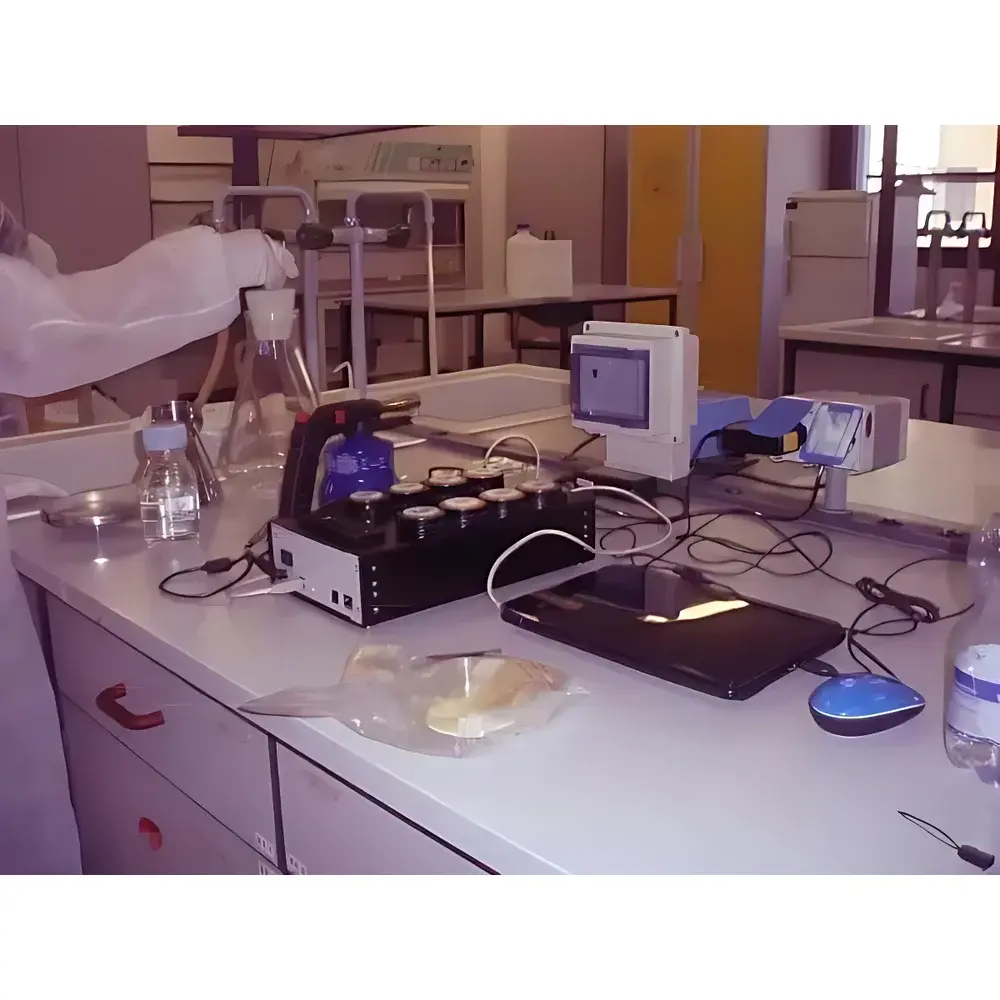
The Fitlylab-L02 accommodates diverse sample types without modification: liquid (drinking water, dairy, beverages), solid (meat, produce, cheese), semi-solid (pasteurized sauces, infant formula), surface swabs (stainless steel, plastic, ceramic), and aerosol condensates. Surface sampling follows ISO 18593:2018 methodology using neutralizing swabs; water analysis complies with ISO 9308-1:2014 via optional filtration kits. All VL vials are manufactured under ISO 13485-certified conditions and validated per EN ISO 11133:2014 for culture media performance. The system satisfies regulatory expectations for method equivalence under FDA Bacteriological Analytical Manual (BAM) Chapter 4 (Coliforms) and Chapter 5 (E. coli), and supports compliance with EU Regulation (EC) No 2073/2005 on microbiological criteria for foodstuffs. Internal validation reports—including third-party verification by the Nanjing National Light Industry Food Quality Supervision & Testing Station—are available upon request for GMP, HACCP, and ISO 22000 implementation.
Software & Data Management
Fitlylab Control Software v4.2 provides full instrument orchestration, real-time kinetic visualization, and automated result interpretation. Each assay generates a traceable digital record including operator ID, sample ID, vial lot number, ambient temperature/humidity, optical curves per channel, TTT values, CFU calculations, and statistical confidence intervals. Data files conform to ASTM E2500-13 (Standard Guide for Specification, Design, and Verification of Pharmaceutical and Biopharmaceutical Manufacturing Systems) metadata schema. Audit trails comply with FDA 21 CFR Part 11 requirements for electronic records and signatures when deployed with network authentication and role-based access control. Raw data exports support CSV, XML, and PDF formats compatible with enterprise LIMS platforms (e.g., LabWare, STARLIMS, Thermo Fisher SampleManager). Software updates are delivered over secure HTTPS and validated prior to installation; lifetime free upgrades are included with hardware purchase.
Applications
The Fitlylab-L02 serves as a primary or confirmatory tool across regulated and operational environments: routine water quality surveillance (distribution systems, bottling plants, recreational waters); raw material screening in dairy, meat, and produce processing; environmental monitoring in pharmaceutical cleanrooms (ISO 14644-1 Class 5–8); sanitation verification in food service (restaurants, cafés, catering facilities); import/export border inspection (customs, port health authorities); consumer protection agency field testing; and rapid response during outbreak investigations. Its portability and minimal infrastructure requirements make it ideal for decentralized testing in rural clinics, mobile food safety units, and disaster-response laboratories. Applications extend to cosmetics (ISO 11930:2022), animal feed (ISO 6888-3:2017), and non-sterile pharmaceutical manufacturing (USP <61>).
FAQ
What regulatory standards does the Fitlylab-L02 meet?
It holds formal validation under ISO 16140:2003 as an alternative method for food and feed microbiology and maintains internal accreditation to ISO/IEC 17025:2005. It supports compliance with FDA BAM, EU Regulation (EC) No 2073/2005, ISO 9308-1, ISO 18593, and USP <61>.
Can the system detect multiple pathogens simultaneously in one run?
No—each VL vial is configured for a single target organism or group (e.g., total coliforms or S. aureus). However, eight independent channels allow concurrent analysis of eight different samples or eight different targets using dedicated vial lots.
Is calibration required before each use?
No daily calibration is needed. The system performs automatic optical self-checks at startup and references factory-characterized vial baselines stored in encrypted vial RFID tags.
How is data integrity ensured during offline operation?
All assays generate locally stored, tamper-evident SQLite databases with SHA-256 checksums. Synchronization with central servers occurs upon reconnection, preserving chronological order and cryptographic audit continuity.
Are VL vials reusable?
No—VL vials are single-use, sterilized consumables with integrated post-assay thermal/chemical deactivation. They may be disposed of as non-hazardous laboratory waste after deactivation confirmation.



