
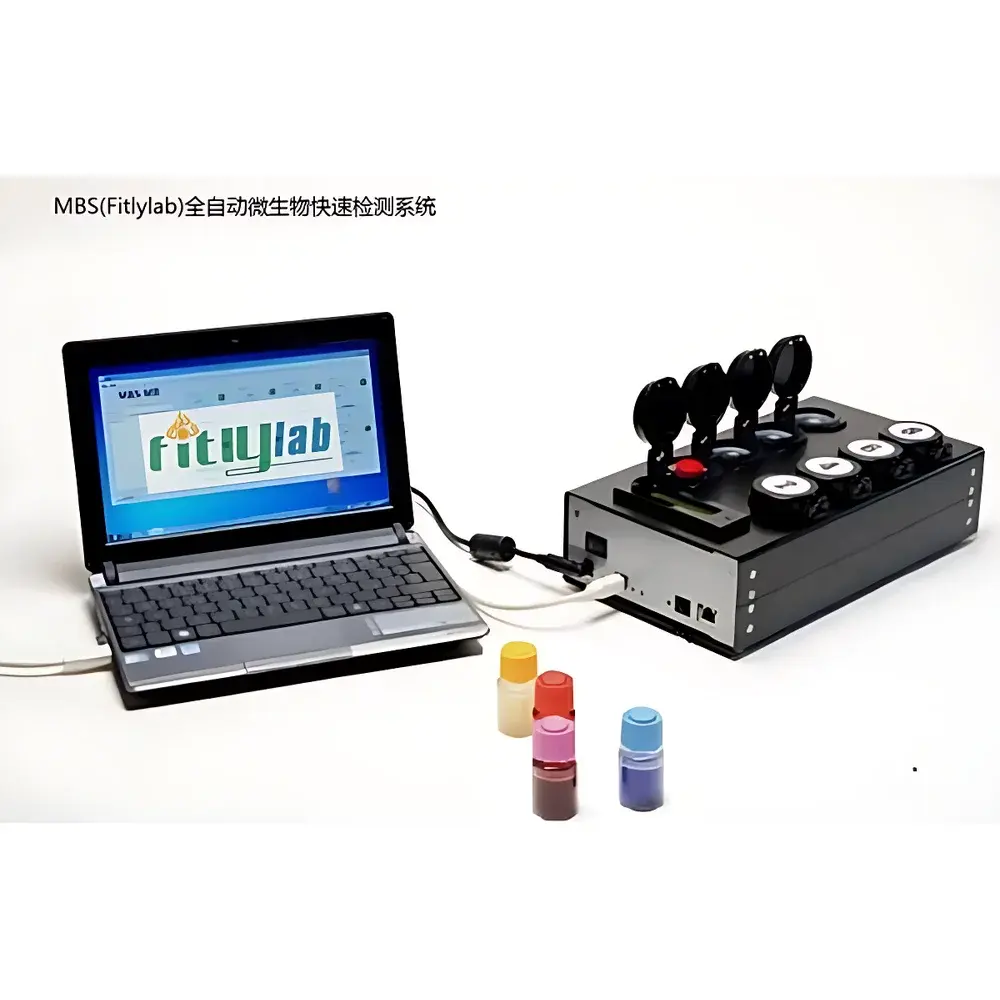
MBS Fitlylab-L22 E. coli / Escherichia coli Rapid Microbial Detection System
| Brand | MBS.SRL |
|---|---|
| Origin | Italy |
| Model | Fitlylab-L22 |
| Certification | ISO 16140:2003 (Alternative Method Validation), ISO/IEC 17025:2005 (Internal Accreditation) |
| Detection Principle | Multi-modal optical biosensing based on real-time redox-mediated chromogenic kinetics |
| Sample Throughput | 8 independent, temperature-controlled channels |
| Detection Sensitivity | ≥1 CFU per test |
| Specificity | >99.999% for target analytes |
| Sample Types | Liquid, solid, surface swab, aerosol (via impinger collection), semi-solid (e.g., dairy, paste, slurry) |
| Readout Method | Simultaneous tri-wavelength photometric monitoring (450 nm, 530 nm, 630 nm) |
| Report Output | PDF with audit trail, timestamped raw kinetic curves, and quantitative CFU/mL or CFU/g results |
| Software | Fitlylab v5.x (Windows-based, multilingual, GLP-compliant data management) |
Overview
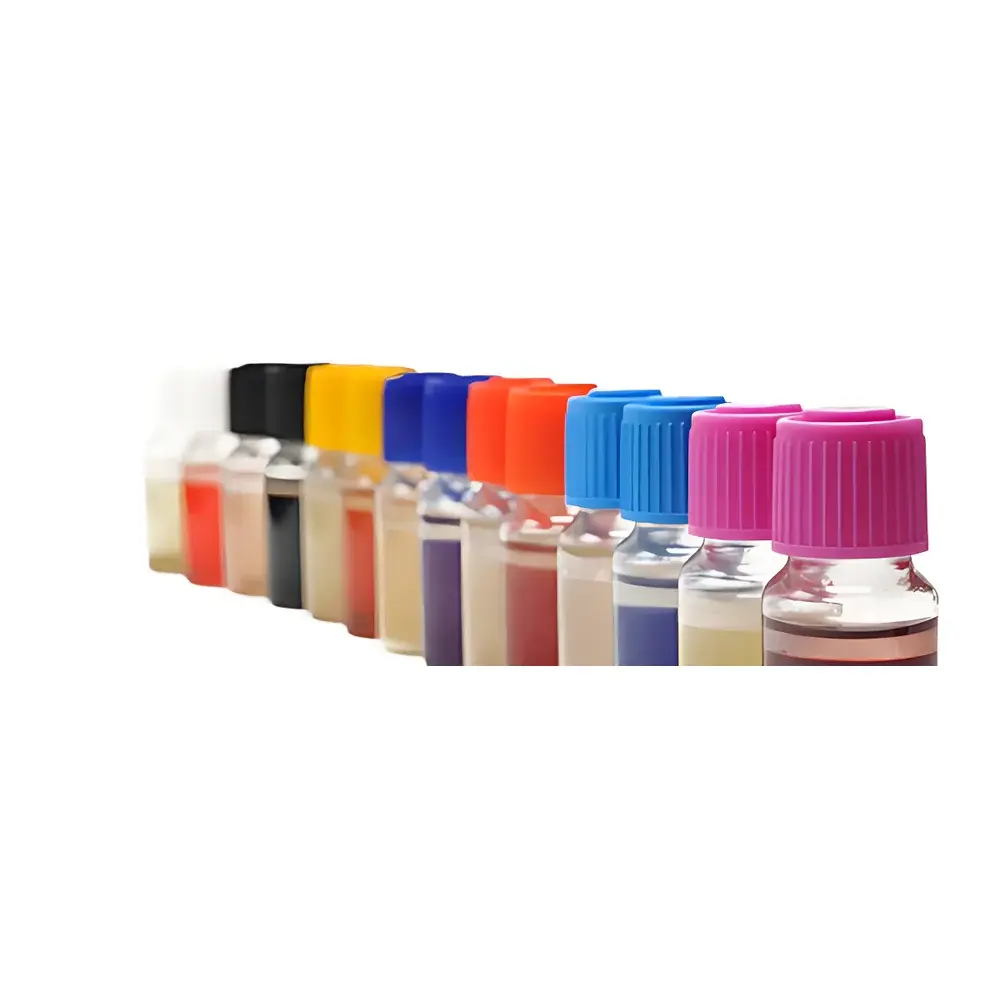
The MBS Fitlylab-L22 is a fully integrated, portable microbial detection system engineered for rapid, quantitative enumeration of Escherichia coli and other priority food- and environment-associated microorganisms. Unlike conventional culture-based or single-modality assays, the Fitlylab-L22 employs a patented multi-parametric optical biosensing platform that concurrently leverages metabolic activity (respiratory electron flux), enzymatic activity (β-glucuronidase hydrolysis), immunorecognition (antigen capture), and nucleic acid hybridization (target-specific probe binding) within a single sealed detection vessel (VL Bottle). The system quantifies viable cells by measuring time-resolved, wavelength-specific absorbance shifts—driven by redox-sensitive chromogens whose reduction kinetics correlate directly with viable biomass concentration. This principle enables precise, real-time monitoring of microbial growth dynamics without reliance on colony formation or PCR amplification cycles. Designed in collaboration with the Physics Institute of Roma Tre University, the INFN Quantum Laboratory (Rome), and the Department of Biology at Roma Tre University, the Fitlylab-L22 meets the stringent validation criteria defined in ISO 16140:2003 for alternative methods in food and feed microbiology and operates under an internally accredited quality framework compliant with ISO/IEC 17025:2005.
Key Features
- Eight independent, thermally regulated detection channels—each programmable for individual incubation profiles (25–45 °C, ±0.3 °C stability) to support parallel analysis of diverse microorganisms across heterogeneous sample matrices.
- Tri-wavelength photometric acquisition (450 nm, 530 nm, 630 nm) mitigates interference from turbidity, particulate scatter, and non-specific coloration—enabling robust performance with raw milk, minced meat, leafy produce homogenates, and surface swabs.
- Detection limit of ≥1 CFU per assay with analytical specificity exceeding 99.999% for E. coli, confirmed via inter-laboratory ring trials and third-party verification by the Nanjing National Light Industry Food Quality Supervision and Inspection Station.
- Self-contained VL detection bottles integrate selective nutrients, metabolic inhibitors, redox mediators, and chromogenic substrates—eliminating pre-enrichment, centrifugation, plating, or DNA extraction steps.
- Automated report generation with embedded audit trail: timestamps, operator ID, instrument serial number, calibration status, raw kinetic curves, and quantitative CFU/mL or CFU/g output—all exportable as password-protected PDFs compliant with FDA 21 CFR Part 11 requirements.
- Portable form factor (32 × 28 × 24 cm; 8.2 kg) with integrated battery backup supports field-deployable operation in food processing lines, retail kitchens, border inspection posts, and mobile environmental monitoring units.
Sample Compatibility & Compliance
The Fitlylab-L22 accommodates liquid (water, milk, juice), solid (meat, cheese, produce), semi-solid (yogurt, sauces), and surface-collected samples (swabs, filters, impinger fluids). Surface sampling follows ISO 18593:2018 guidelines using sterile cotton or polyester swabs immersed in neutralizing buffer; water analysis adheres to ISO 9308-1:2014 principles via membrane filtration (0.45 µm pore size) followed by direct filter insertion into VL bottles. All detection protocols are validated per ISO 16140:2003 Annex A for equivalence against reference methods (e.g., ISO 16649-2 for E. coli). The system’s internal quality management system conforms to ISO/IEC 17025:2005 requirements for testing laboratories—including documented calibration procedures, uncertainty estimation for quantitative outputs, and personnel competency records. Data integrity safeguards include write-protected database architecture, user-level access controls, and immutable electronic signatures.
Software & Data Management
Fitlylab v5.x software provides a Windows-native interface supporting multilingual operation (English, Italian, Chinese, Spanish), method library management, and customizable reporting templates. All measurement data—including raw photometric time-series, derivative curves, inflection point identification, and threshold-based quantification—are stored in an encrypted SQLite database with automatic daily backups. Audit logs record every user action (login, method selection, result export, software update) with SHA-256 hashing and digital time stamping. The software supports GLP/GMP workflows through configurable electronic signature workflows, role-based permissions (admin, analyst, reviewer), and integration-ready APIs for LIMS synchronization. Remote firmware and algorithm updates are delivered over HTTPS with cryptographic signature verification—ensuring continuous compliance with evolving regulatory expectations.
Applications
The Fitlylab-L22 serves as a primary or confirmatory tool across regulated and operational environments requiring rapid, actionable microbial intelligence. In food safety management systems (HACCP, HARPC), it enables real-time verification of sanitation efficacy on production surfaces, incoming raw material screening (e.g., raw milk, poultry carcasses), and finished product release testing. Public health laboratories use it for outbreak response—quantifying E. coli O157:H7 in clinical stool filtrates or environmental water sources within 6–12 hours. Regulatory agencies (e.g., customs labs, national food authorities) deploy it for border surveillance of imported commodities, verifying compliance with EU Regulation (EC) No 2073/2005 and US FDA Food Code criteria. Additionally, pharmaceutical and cosmetic manufacturers apply it for environmental monitoring (ISO 14644-1 Grade D cleanrooms) and non-sterile product bioburden assessment per USP and Ph. Eur. 2.6.12.
FAQ
What regulatory standards does the Fitlylab-L22 comply with?
The system is validated per ISO 16140:2003 for alternative method equivalence and operates under an ISO/IEC 17025:2005–aligned internal quality system. It supports data integrity requirements of FDA 21 CFR Part 11 and EU Annex 11.
Can the VL detection bottles be reused?
No—VL bottles are single-use, sterilizable consumables. Post-assay, they undergo integrated UV-C irradiation (254 nm, ≥15 mJ/cm²) within the MBS-MR host unit prior to disposal as non-hazardous laboratory waste.
Is method validation required before routine use?
Yes—users must perform site-specific verification per ISO 16140:2003 Clause 7, including precision, trueness, and ruggedness assessments using matrix-matched reference materials.
Does the system require external calibration standards?
No—each VL bottle contains built-in optical reference zones and internal control curves; instrument calibration is performed automatically during startup using embedded LED and photodiode references.
How is cross-contamination prevented between samples?
Each of the eight detection chambers is physically isolated, pneumatically sealed, and independently temperature-regulated. The VL bottle design ensures complete containment—no aerosol or liquid transfer occurs during operation.




