
MBS.SRL Fitlylab-L04 Staphylococcus aureus Rapid Detection System
| Brand | MBS.SRL |
|---|---|
| Origin | Italy |
| Manufacturer Type | Authorized Distributor |
| Origin Category | Imported |
| Model | Fitlylab-L04 |
| Price Range | USD 13,500 – 68,000 |
Overview
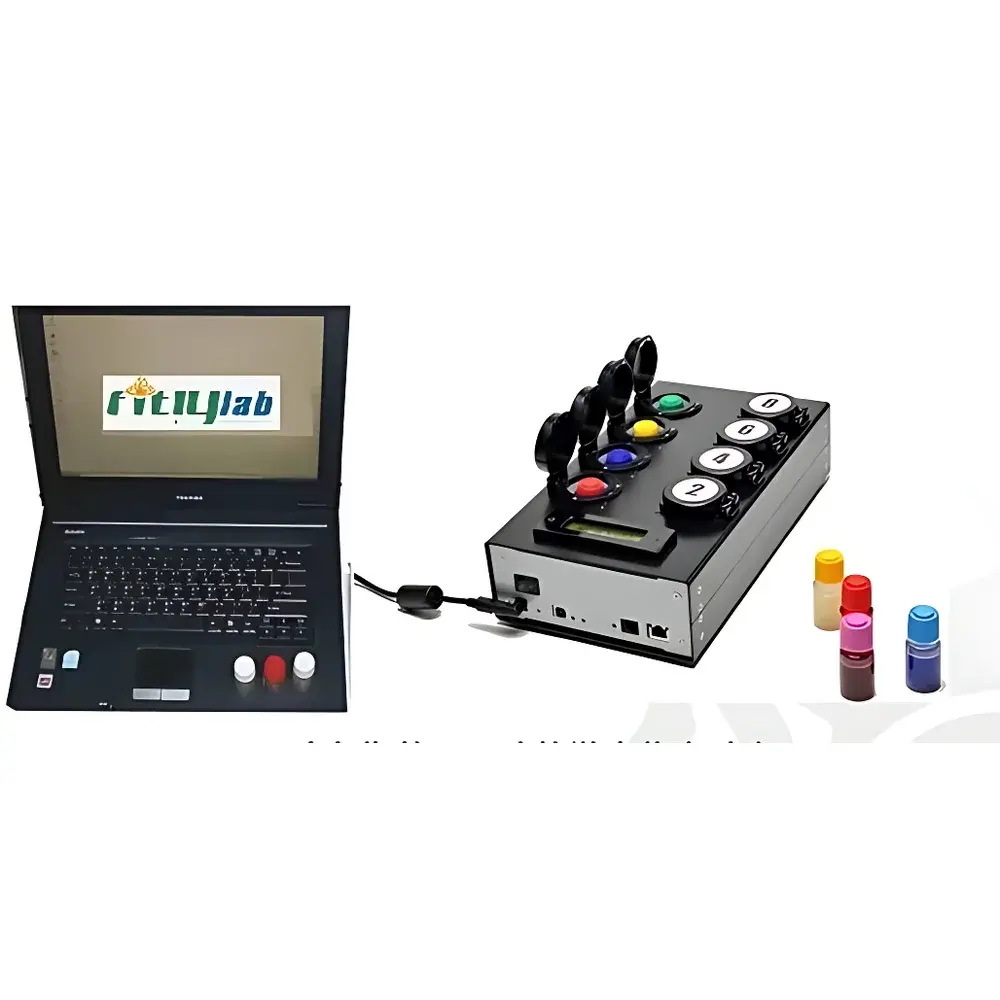
The MBS.SRL Fitlylab-L04 Staphylococcus aureus Rapid Detection System is a fully integrated, portable microbial quantification platform engineered for real-time, culture-independent enumeration of viable Staphylococcus aureus and up to 10 additional priority microorganisms in food, water, environmental surfaces, dairy, feed, and air samples. Unlike conventional plate-count or PCR-based methods, the system employs a proprietary multi-modal detection principle grounded in dynamic redox kinetics: target microorganisms metabolically reduce a chromogenic redox mediator within the sealed VL detection vial; this reduction alters the optical absorbance profile across three discrete wavelengths (450 nm blue, 530 nm green, 630 nm red). The MBS-MR host instrument continuously monitors time-resolved spectral shifts using high-stability photodiodes and calculates microbial concentration via kinetic inflection point analysis—specifically, the time-to-threshold (Tt) derived from the first derivative maxima of normalized absorbance curves. This approach enables quantitative detection at single-CFU sensitivity (1 CFU per test unit) with >99.999% analytical specificity for S. aureus, validated against ISO 16140:2003 as an alternative method for microbiological testing in food and animal feed.
Key Features
- Eight independent, thermally regulated detection channels—each programmable for distinct incubation profiles (25–45 °C, ±0.3 °C stability) to accommodate diverse microbial growth kinetics.
- Tri-wavelength optical sensing (450/530/630 nm) eliminates interference from turbidity, particulates, or pigment-rich matrices—critical for raw meat homogenates, milk, or surface swab eluates.
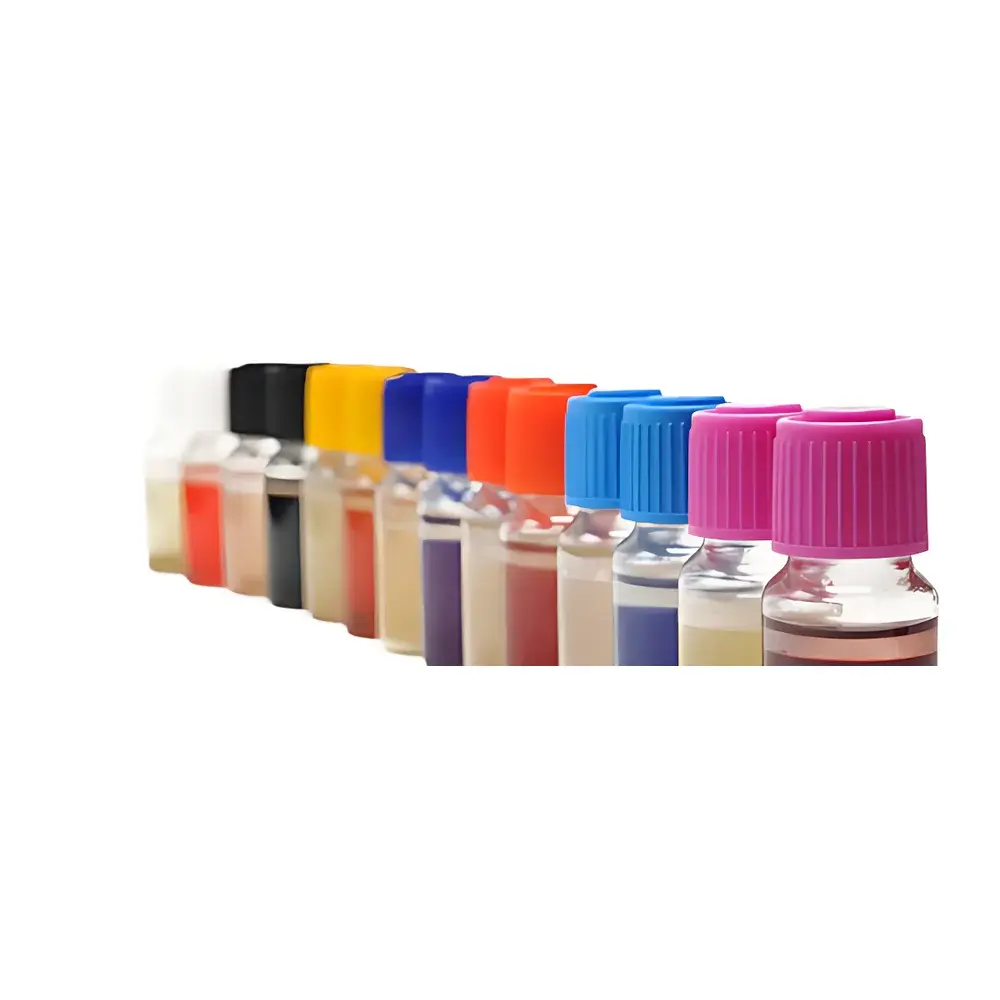
- Viable-cell-selective detection: VL vials contain species-specific selective agents, optimized nutrient formulations, and a non-toxic, oxygen-insensitive redox shuttle that responds exclusively to enzymatic activity of metabolically active S. aureus.
- No sample pre-enrichment, centrifugation, filtration, or DNA extraction required—direct inoculation of 1 g solid, 1 mL liquid, or swab-eluate into VL vial suffices.
- Automated reporting: Onboard data acquisition, kinetic curve fitting, Tt calculation, and PDF report generation—including sample ID, test parameters, pass/fail status against user-defined thresholds, and audit-trail metadata.
- Reusable MBS-MR host with field-upgradable firmware and Fitlylab software (English & Chinese UI); full GLP-compliant electronic record retention including operator login, timestamped events, and change history.
Sample Compatibility & Compliance
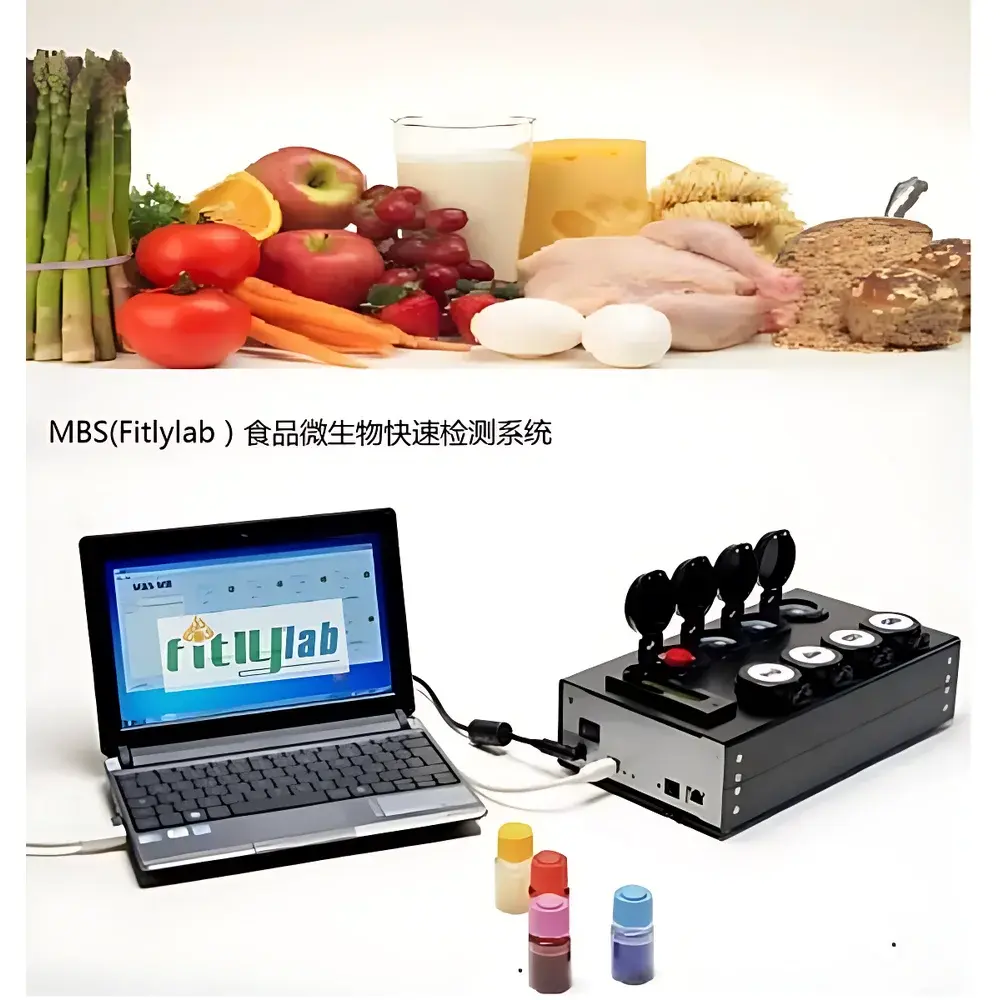
The Fitlylab-L04 accepts undiluted, unprocessed samples across physical states: liquids (raw milk, drinking water, process rinse water), solids (ground meat, cheese, pet food), semi-solids (yogurt, sauces), environmental swabs (stainless steel, plastic, ceramic), and aerosol-collected filters. It complies with ISO 16140:2003 for validation of alternative microbiological methods and meets internal accreditation to ISO/IEC 17025:2005 requirements for testing laboratories. All VL vials are sterilized by gamma irradiation (25 kGy), feature integrated heat-activated sterilization post-assay (121 °C, 15 min), and are classified as non-hazardous waste after deactivation—eliminating biosafety containment needs. The system supports HACCP monitoring, FDA Food Safety Modernization Act (FSMA) verification, and EU Regulation (EC) No 2073/2005 compliance workflows.
Software & Data Management
Fitlylab software (v5.2+) runs on Windows-based notebook computers bundled with the system. It provides role-based access control (administrator/operator), 21 CFR Part 11–compliant electronic signatures, automated backup to network drives or cloud storage, and customizable report templates compliant with ISO/IEC 17025 documentation requirements. Raw kinetic data (time vs. absorbance per channel) is stored in open CSV format; curve-fitting algorithms use Levenberg–Marquardt nonlinear regression to determine Tt with ≤±2.5% CV across replicate runs. Audit logs record all user actions, parameter modifications, and instrument calibration events—retained for ≥7 years per internal QA policy.
Applications
- Food safety labs: Rapid S. aureus quantification in ready-to-eat foods, dairy products, and processed meats per ISO 6888-2.
- Environmental monitoring: Surface swab testing in production lines, cleanrooms, and retail kitchens per ISO 18593.
- Water quality assurance: Detection in potable water, cooling towers, and wastewater effluents per ISO 9308-1.
- Feed and pet food manufacturing: Verification of hygiene control points during HACCP implementation.
- Pharmaceutical and cosmetic QC: Bioburden assessment of non-sterile products per USP & Ph. Eur. microbiological guidelines.
- Public health surveillance: Field-deployable screening for outbreak investigation support.
FAQ
What regulatory standards does the Fitlylab-L04 satisfy for official testing?
It holds formal validation per ISO 16140:2003 as an alternative method to ISO 6888-2 for Staphylococcus aureus in food matrices, and its internal quality management system conforms to ISO/IEC 17025:2005.
Can the system detect other pathogens simultaneously with S. aureus?
Yes—eight parallel channels allow concurrent quantification of S. aureus, Salmonella, Listeria monocytogenes, Pseudomonas aeruginosa, coliforms, E. coli, enterobacteria, yeasts, and total viable count—all using matrix-specific VL vials.
Is operator training required?
No formal microbiology certification is needed; the interface guides users through three intuitive steps (load vial → select assay → start), and onboard diagnostics prevent incorrect operation.
How is data integrity ensured during remote deployment?
All measurements are time-stamped, digitally signed, and stored with immutable audit trails; optional VPN-enabled remote diagnostics and software updates preserve traceability without compromising cybersecurity.
What is the shelf life and storage condition for VL vials?
Unopened VL vials retain performance for 18 months when stored at 2–8 °C; no reconstitution or refrigerated transport is required—ambient shipping is permitted.
Related Products



