
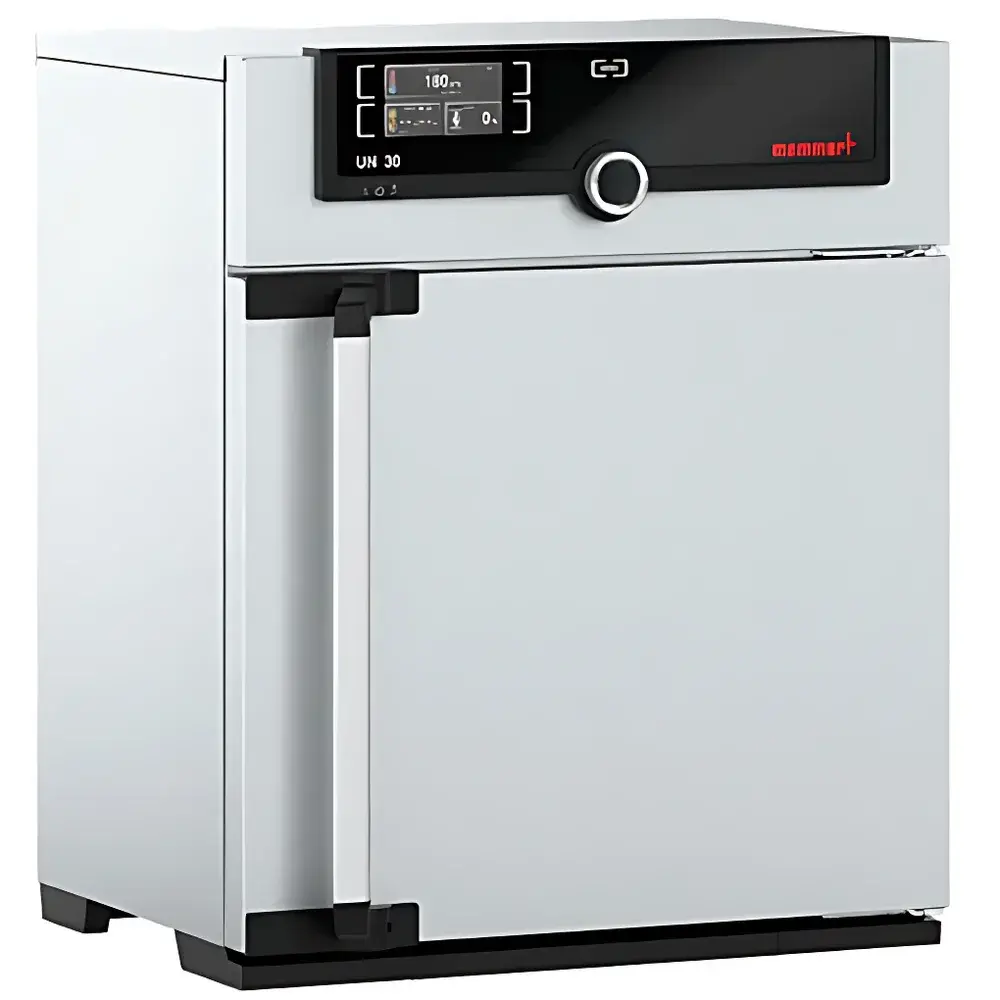
Memmert UNpa Paraffin Bath Oven
| Brand | Memmert |
|---|---|
| Model | UNpa |
| Type | Paraffin Bath Oven (Laboratory-Scale, Sealed-Cavity Design) |
| Origin | Germany |
| Construction | Stainless Steel Interior (ASTM 304 / 1.4301), Four-Side U-Groove Heaters |
| Temperature Control | Touchscreen Interface with PID Algorithm |
| Chamber Sealing | Near-Hermetic Enclosure |
| Heating Method | Conduction-Only (No Forced Air Convection) |
| Compliance | Designed for GLP/GMP-Compliant Histology & Pathology Labs |
| Connectivity | USB Port, Ethernet Interface |
| Accessories | Adjustable Stainless Steel Grid Inserts (1–2 per chamber size), Optional Mounting Feet |
Overview
The Memmert UNpa Paraffin Bath Oven is a precision-engineered, sealed-cavity thermal system specifically developed for the safe, uniform, and repeatable melting and maintenance of paraffin wax in histopathological tissue processing workflows. Unlike conventional forced-air drying ovens or open-bath paraffin melters, the UNpa operates on a conduction-dominant heating principle: its fully enclosed stainless steel chamber eliminates air exchange, preventing oxidation, vapor loss, and contamination while enabling exceptional thermal homogeneity. The unit leverages Memmert’s proprietary four-side U-groove heater architecture—embedded within pressed stainless steel walls—to deliver symmetrical heat flux across all interior surfaces. This design, combined with a high-stability PID-controlled touchscreen interface, ensures temperature deviations of ≤ ±0.3 °C across the entire working volume—even during extended hold periods (>24 h) at typical paraffin phase-change temperatures (56–62 °C). Its near-hermetic construction addresses a critical safety gap in traditional paraffin handling: by suppressing volatile organic compound (VOC) accumulation and eliminating pathways for oil mist ingress into control electronics, the UNpa mitigates ignition risk and extends service life under continuous laboratory operation.
Key Features
- Four-side conduction heating via U-shaped stainless steel heating elements integrated into chamber walls—ensuring zero thermal gradients and eliminating hot/cold spots
- Near-hermetic chamber design (1.4301 / ASTM 304 stainless steel) with gasket-sealed door and minimized venting—prevents paraffin oxidation, residue formation, and VOC exposure to internal electronics
- Touchscreen HMI with intuitive menu navigation, real-time temperature logging, and user-defined profile storage (up to 10 programs)
- Integrated overtemperature protection with independent mechanical safety cutoff (DIN 12880-compliant), activated at +5 °C above setpoint
- Modular grid system: one stainless steel insert for chamber volumes 30–55 L; two inserts for 75–160 L—optimized for standardized cassette and mold placement
- Full thermal insulation with mineral wool core and double-wall construction—reducing surface temperature rise to <40 °C at ambient 23 °C
- Connectivity suite including USB-A port (for firmware updates and data export) and RJ45 Ethernet interface (supporting remote monitoring via Memmert LabManager software)
Sample Compatibility & Compliance
The UNpa accommodates standard histology cassettes (e.g., Leica, Sakura, Milestone formats), metal embedding molds (aluminum, brass), and glass or polymer specimen containers without dimensional interference. Its sealed architecture inherently complies with IEC 61010-1:2010 safety requirements for laboratory equipment and aligns with ISO 15190:2020 (medical laboratories — requirements for safety) regarding containment of flammable media. While not classified as a Class II medical device, the UNpa supports quality systems adhering to CLIA, CAP, and ISO 15189 accreditation standards through audit-ready temperature stability records, electronic signature support (via optional LabManager license), and full traceability of calibration events per ISO/IEC 17025 guidelines.
Software & Data Management
The embedded controller logs temperature every 10 seconds and stores up to 30 days of historical data locally. When connected to Memmert LabManager (v3.2+), users gain access to FDA 21 CFR Part 11-compliant features: role-based user accounts, electronic signatures, change tracking, and automated PDF report generation—including min/max/mean deviation analysis against setpoint. All data exports are timestamped, digitally signed, and compatible with LIMS integration via HL7 or CSV protocols. Audit trails capture operator ID, parameter modifications, alarm triggers, and door-opening events—enabling full compliance with GLP and GMP documentation requirements.
Applications
- Tissue infiltration and embedding in diagnostic histopathology laboratories
- Controlled paraffin conditioning prior to microtomy to minimize section compression artifacts
- Long-term holding of molten paraffin during high-throughput slide preparation
- Calibration reference environment for paraffin-phase thermometers and RTDs
- Research applications requiring stable, oxygen-free thermal environments for low-volatility organic melts (e.g., beeswax, polyethylene glycols)
FAQ
Does the UNpa require ventilation or external exhaust ducting?
No. Its sealed cavity and absence of forced convection eliminate the need for fume hoods or dedicated exhaust—reducing installation complexity and facility overhead.
Can the UNpa be validated per IQ/OQ/PQ protocols?
Yes. Memmert provides a comprehensive validation package including factory-issued calibration certificates (traceable to DKD/DAkkS), temperature mapping templates, and PQ test scripts aligned with ASTM E2251-22.
Is the stainless steel interior resistant to long-term paraffin residue buildup?
The 1.4301 grade stainless steel surface is passivated and electropolished, minimizing adhesion of degraded paraffin polymers. Routine cleaning with hot ethanol or isopropanol is sufficient—no abrasive agents required.
What is the maximum recommended operating duration at 60 °C?
Unlimited. The UNpa is rated for continuous operation at temperatures up to 120 °C; paraffin-specific use at 56–62 °C falls well within its thermal endurance specification (MTBF > 25,000 hours).



