Merck Millipore Mobius® Single-Use Magnetic Stirring System
| Brand | Merck |
|---|---|
| Origin | USA |
| Manufacturer | Merck KGaA |
| Product Category | Imported |
| Model | Mobius® |
| Pricing | Available Upon Request |
Overview
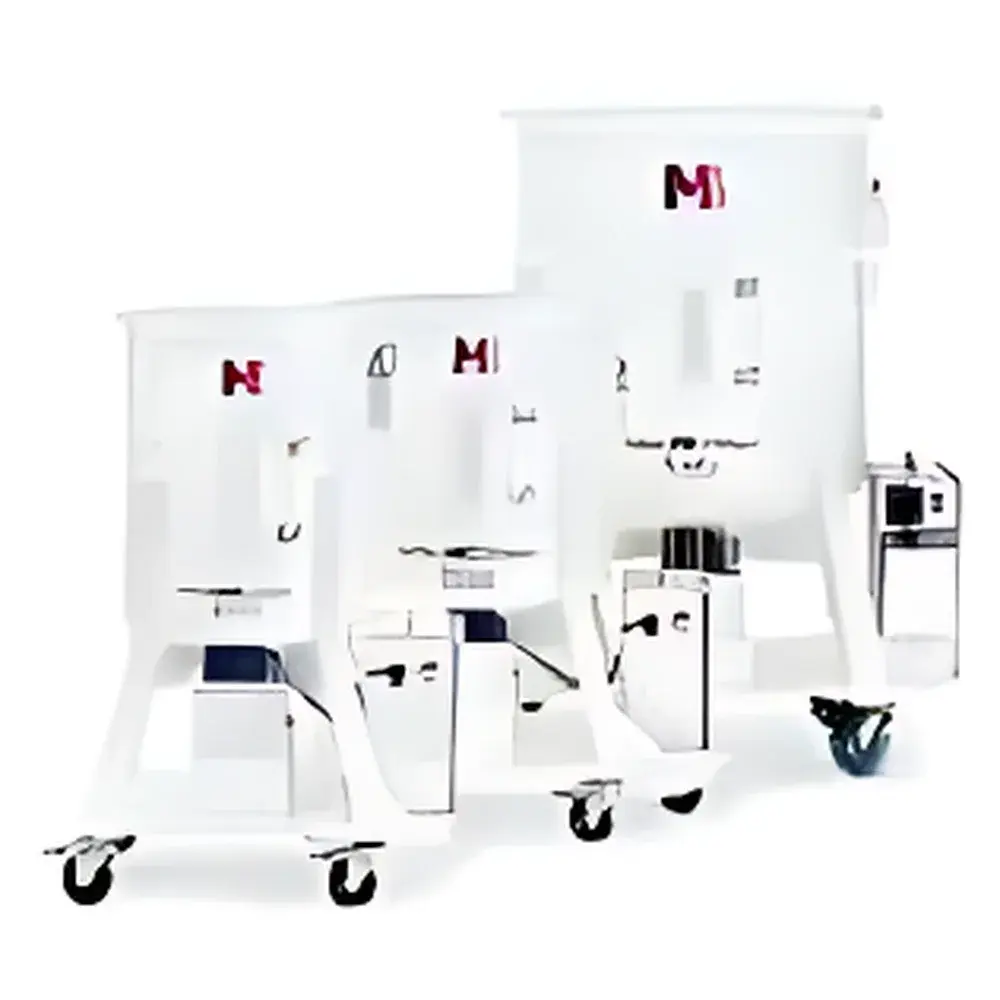
The Merck Millipore Mobius® Single-Use Magnetic Stirring System is an engineered solution for aseptic liquid handling in biopharmaceutical manufacturing. Based on contactless magnetic coupling and single-use fluid path architecture, it eliminates the need for sterile connections, shaft seals, or dynamic gaskets—thereby mitigating bioburden ingress risk and reducing cleaning-in-place (CIP) and sterilization-in-place (SIP) validation burden. The system operates via a precisely controlled permanent magnet drive beneath a reusable stainless-steel platform, which rotates an integrated magnetic impeller sealed within a gamma-irradiated, pre-sterilized polymeric mixing bag. This design conforms to the fundamental principles of single-use technology (SUT): process isolation, reduced cross-contamination potential, and rapid changeover between batches or products. It is validated for use across the entire biomanufacturing workflow—from cell culture media and buffer preparation through upstream bioreactor seed train expansion, intermediate hold steps, and final formulation prior to fill-finish.
Key Features
- Reusable electromagnetic stirring platform with precision speed control (0–300 rpm, typical range), available in six scalable capacities: 10 L, 50 L, 100 L, 200 L, 500 L, and 1000 L
- Pre-sterilized, gamma-irradiated (25–45 kGy), double-bagged single-use mixing bags made from USP Class VI-certified multilayer films (e.g., EVA/PE/EVOH/PE), with integrated bottom-mounted magnetic impeller and optimized geometry for low-shear mixing
- Handheld controller with intuitive interface supporting programmable ramp profiles, real-time RPM monitoring, and event logging (audit trail enabled)
- No moving parts in contact with product; no wetted metal surfaces—ensures compliance with extractables and leachables (E&L) assessment per ICH Q5C and USP <665>
- Validated mixing performance for Newtonian fluids up to 40 cP at maximum working volume; mixing homogeneity verified per ISO 8573-1 and ASTM E2500-13 guidelines
- Fully compatible with standard aseptic connectors (e.g., CPC, AseptiQuik®, Flange), tubing manifolds, and filter housings for seamless integration into closed processing systems
Sample Compatibility & Compliance
The Mobius® system supports aqueous solutions, cell culture media, buffers (e.g., PBS, Tris-HCl), and low-viscosity formulations common in bioprocessing. It is not intended for high-solids slurries, non-Newtonian gels, or solvents incompatible with ethylene-vinyl acetate (EVA)-based films. All single-use components are manufactured under ISO 13485-certified conditions and supplied with full Certificate of Analysis (CoA), Certificate of Conformance (CoC), and irradiation validation report. The system meets requirements for GMP-compliant environments and supports regulatory submissions referencing FDA Guidance for Industry: Process Validation (2011), EMA Annex 1 (2022), and PIC/S PI 007-6. Traceability includes lot-specific documentation for all critical components, enabling full batch record linkage and facilitating 21 CFR Part 11-compliant electronic records when paired with validated data acquisition software.
Software & Data Management
While the handheld controller provides local operation and basic parameter logging, full data integrity is achieved when interfaced with Merck’s proprietary Mobius® Connect software or third-party SCADA/MES platforms via Modbus RTU or Ethernet/IP protocols. The system supports configurable alarm thresholds (e.g., RPM deviation >±5%, timeout detection), time-stamped event logs with user ID attribution, and export of CSV-formatted datasets compliant with ALCOA+ principles. Audit trails are immutable and retain metadata including firmware version, calibration status, and bag lot traceability—meeting requirements for GLP/GMP audits and FDA 21 CFR Part 11 electronic signature readiness.
Applications
- Preparation and conditioning of cell culture media and process buffers in cleanroom environments (Grade A/B/C)
- Intermediate storage and gentle homogenization of harvest streams prior to clarification
- Formulation and dilution of monoclonal antibodies, viral vectors, and mRNA-LNP complexes
- Blending of excipients and active pharmaceutical ingredients (APIs) in non-sterile and sterile formulation suites
- Scale-down modeling for process characterization studies and comparability assessments
- Supporting Quality by Design (QbD) initiatives through consistent, reproducible mixing kinetics across scales
FAQ
Is the Mobius® system suitable for shear-sensitive biologics such as viral vectors or exosomes?
Yes—the impeller geometry and rotational dynamics are designed to minimize hydrodynamic stress; mixing energy input (P/V) is characterized and documented for each bag size to support process-related impurity control.
Can the same platform be used with different bag sizes?
No—each platform is mechanically and thermally calibrated for its designated bag volume; interchangeability is not supported due to torque and thermal dissipation constraints.
What validation support is provided for regulatory filings?
Merck supplies vendor qualification packages including IQ/OQ protocols, mixing uniformity test reports, extractables data summaries, and gamma irradiation validation dossiers—customizable for client-specific URS and risk assessments.
How is bag integrity confirmed post-irradiation and prior to use?
Each bag undergoes helium leak testing (≤1 × 10⁻⁹ mbar·L/s sensitivity) and visual inspection per ISO 11607-1; integrity verification can be repeated in-house using pressure decay or dye ingress methods.
Does the system comply with environmental sustainability standards?
Merck offers optional take-back programs for used bags in select regions; life cycle assessment (LCA) data is available upon request to quantify carbon footprint versus stainless-steel alternatives.
Related Products