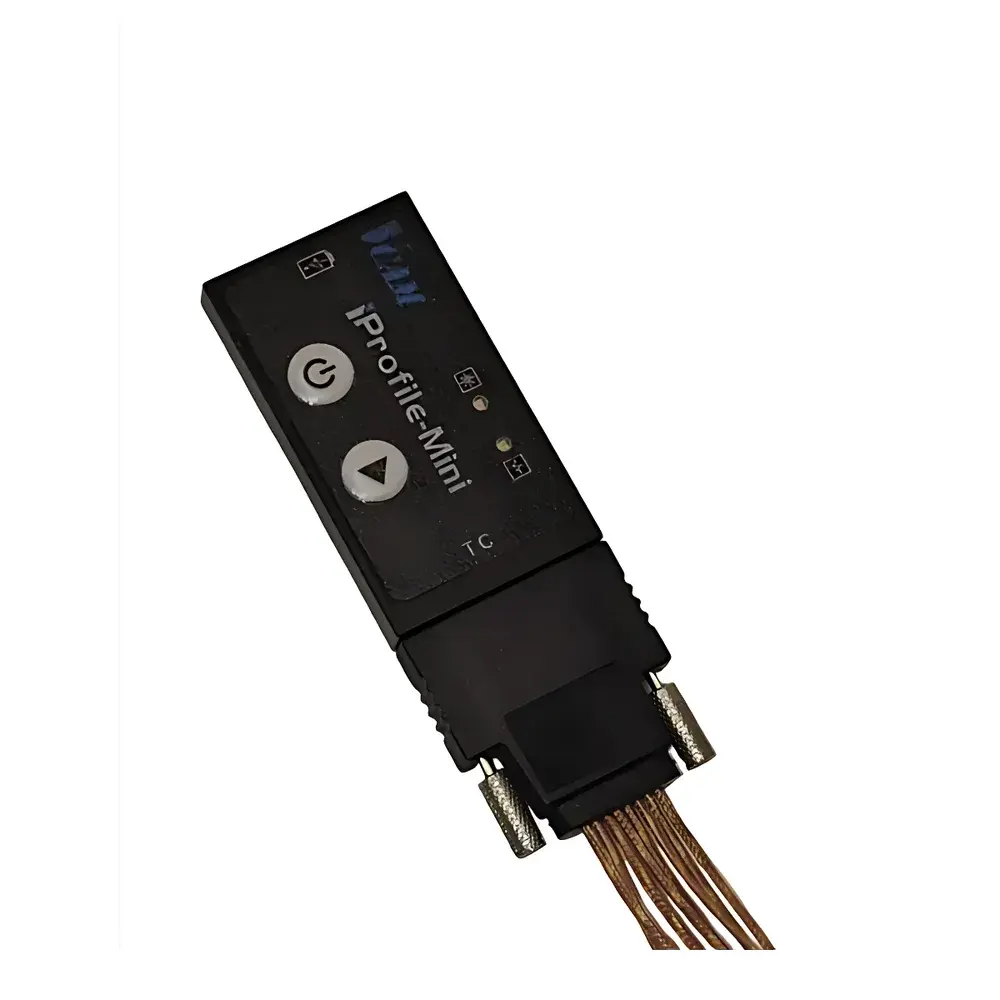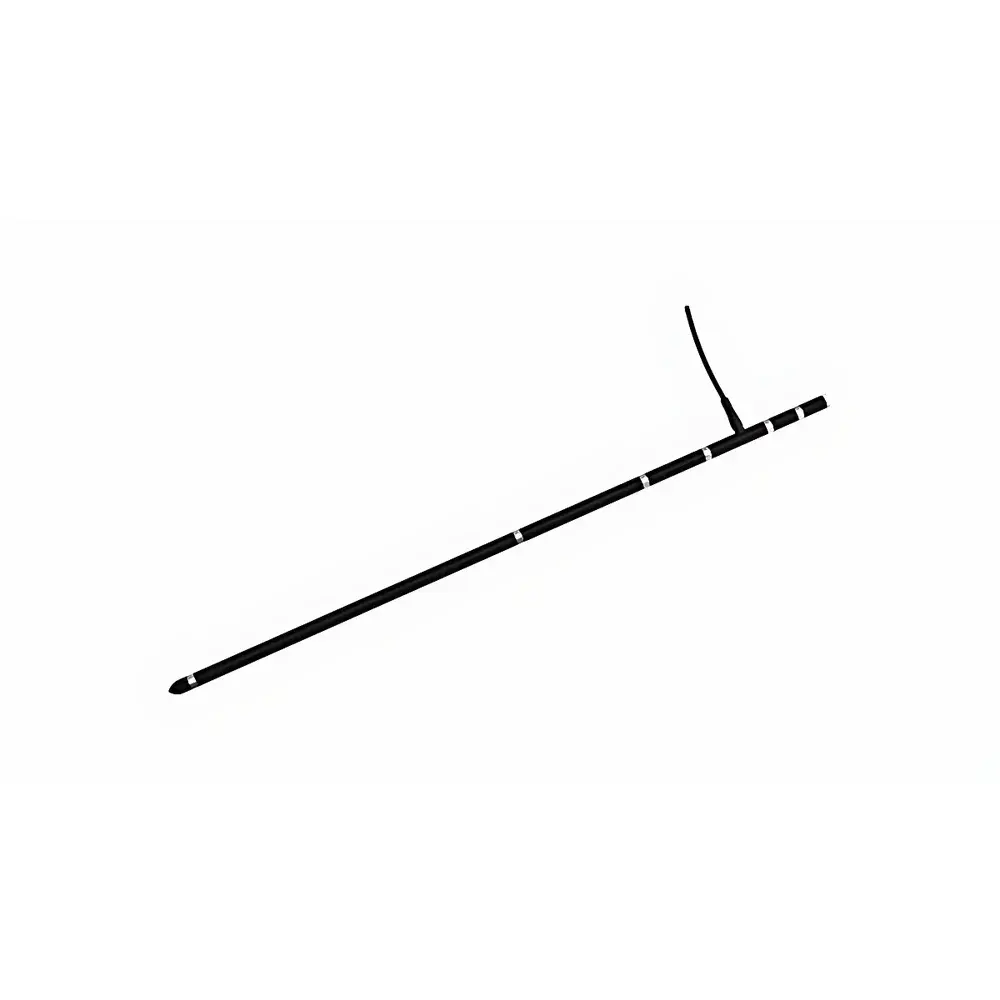
METER TEROS 06 Multi-Depth Soil Temperature Profiling Sensor
| Brand | METER |
|---|---|
| Origin | Germany |
| Model | TEROS 06 |
| Temperature Range | –20 to 50 °C |
| Accuracy | ±0.1 °C (0–30 °C), ±0.2 °C (–20 to 50 °C) |
| Resolution | ±0.03 °C |
| Measurement Depths | –5, –10, –20, –30, –50, –100 cm |
| Output Interfaces | SDI-12, RS-485 (Modbus RTU / tensioLINK), DDI |
| Power Supply | 3.9–28.0 VDC |
| Operating Temperature | –30 to 60 °C |
| Probe Diameter | 20 mm |
| Length | 1040 mm |
| Housing Material | PA66GF30 |
| Sensing Element | Stainless Steel |
| Cable Standard | 4.5 m (custom up to 75 m) |
| Compliance | ISO 9001:2015, CE (EMC per ISO/IEC 17050:2010) |
Overview
The METER TEROS 06 Multi-Depth Soil Temperature Profiling Sensor is an engineered solution for high-fidelity, long-term in situ thermal monitoring across heterogeneous soil profiles. Designed around precision thermistor-based sensing and minimal thermal perturbation principles, the TEROS 06 implements six discrete, individually calibrated temperature measurement points at standardized depths of –5, –10, –20, –30, –50, and –100 cm below the soil surface. Its physics-driven architecture—featuring low-thermal-conductivity polyamide composite (PA66GF30) probe housing and high-thermal-diffusivity stainless steel sensing elements—ensures spatially resolved data acquisition with negligible vertical heat conduction between adjacent nodes. This design directly addresses a key limitation of conventional single-point or bundled sensors: inter-node thermal coupling that distorts vertical gradient interpretation. The sensor operates within a robust environmental envelope (–30 to 60 °C ambient, –20 to 50 °C measurement range), making it suitable for deployment across temperate, arid, and seasonally frozen soils without recalibration.
Key Features
- Research-grade accuracy: ±0.1 °C (0–30 °C) and ±0.2 °C (–20 to 50 °C), validated via point-by-point NIST-traceable calibration
- Minimal soil disturbance: 20 mm diameter probe with optimized aspect ratio reduces installation-induced compaction and preferential flow paths
- Dual-interface digital output: SDI-12 (for compatibility with legacy and low-power loggers) and RS-485 (Modbus RTU or tensioLINK protocol) for deterministic, noise-immune communication over extended distances
- Low-power operation: Typical 2.5 mA during measurement; 80 µA quiescent current enables multi-year deployments on solar-recharged systems
- Robust mechanical construction: PA66GF30 reinforced polymer rod provides structural integrity and chemical resistance in acidic, saline, or organic-rich matrices
- Configurable cabling: Standard 4.5 m shielded cable with 3.5-mm stereo or M12 connector; custom lengths up to 75 m available with impedance-matched extension assemblies
- Fast response dynamics: 210–400 ms wake-up time and 30–240 ms per-measurement cycle support high-temporal-resolution studies of diurnal or event-driven thermal fluxes
Sample Compatibility & Compliance
The TEROS 06 is validated for use in mineral soils, peatlands, agricultural loams, and engineered substrates (e.g., green roof media, landfill cover layers). Its stainless steel sensing junctions resist corrosion in pH 4–9 environments and exhibit no measurable drift under continuous saturation. The sensor conforms to ISO 9001:2015 quality management requirements throughout manufacturing and calibration. Electromagnetic compatibility is certified per ISO/IEC 17050:2010 (CE marking), ensuring reliable operation near radio transmitters, variable-frequency drives, or other industrial EMI sources. While not intrinsically rated for explosive atmospheres, its low-voltage DC operation (3.9–28.0 VDC) and absence of spark-prone components make it suitable for Class I, Division 2 hazardous locations when installed per NEC Article 500 guidelines. Data integrity aligns with GLP-aligned field practices—each unit ships with a unique calibration certificate documenting offset and sensitivity coefficients per depth node.
Software & Data Management
The TEROS 06 integrates natively with METER’s ZL6 series data loggers via plug-and-play SDI-12 or RS-485 interfaces. All configuration, scheduling, and diagnostics are managed through the ZENTRA Cloud platform—a secure, browser-based environment supporting role-based access control, audit trails, and automated firmware updates. Raw sensor values are timestamped with microsecond precision and stored with metadata (probe ID, depth assignment, supply voltage, internal temperature). Export options include CSV (with ISO 8601 timestamps), NetCDF4 (CF-compliant for climate modeling), and direct API integration into Python, R, or MATLAB workflows via RESTful endpoints. For regulated environments, ZENTRA Cloud supports 21 CFR Part 11–compliant electronic signatures, user activity logging, and data immutability controls—enabling traceable, auditable records for USDA NRCS, USGS, or EU Horizon-funded projects.
Applications
- Soil heat flux modeling and latent/sensible energy partitioning in eddy covariance towers
- Permafrost degradation monitoring across Arctic and alpine transects
- Root zone thermal profiling for precision irrigation scheduling and phenological forecasting
- Validation of land surface models (LSMs) in CMIP6 and regional climate simulations
- Long-term ecological research (LTER) sites tracking decadal-scale thermal regime shifts
- Contaminant plume migration studies where temperature serves as a conservative tracer
- Green infrastructure performance assessment (bioswales, rain gardens, permeable pavements)
FAQ
Can the TEROS 06 be used in saturated or flooded conditions?
Yes. All sensing elements and cable terminations are IP68-rated for continuous submersion up to 10 m depth. Stainless steel housings prevent galvanic corrosion in brackish or freshwater environments.
Is factory recalibration required after installation?
No. Each depth node undergoes individual NIST-traceable calibration prior to shipment. Field validation against a reference probe is recommended only if mechanical damage is suspected.
How does the probe minimize thermal bridging between measurement depths?
The PA66GF30 rod exhibits thermal conductivity of ≤0.3 W/m·K—two orders of magnitude lower than aluminum—and is segmented with air gaps between thermistor cavities to suppress axial conduction.
Which data loggers are certified for seamless TEROS 06 integration?
METER ZL6-16, ZL6-32, and ZL6-64 loggers are fully supported. Third-party loggers must provide SDI-12 v1.3 compliance or RS-485 Modbus RTU slave functionality with configurable baud rates (1200–115200 bps).
What is the maximum allowable cable length for RS-485 operation?
Up to 75 m using twisted-pair shielded cable (AWG22) with proper termination resistors (120 Ω) and grounding at one end only—verified per TIA/EIA-485-A standards.