
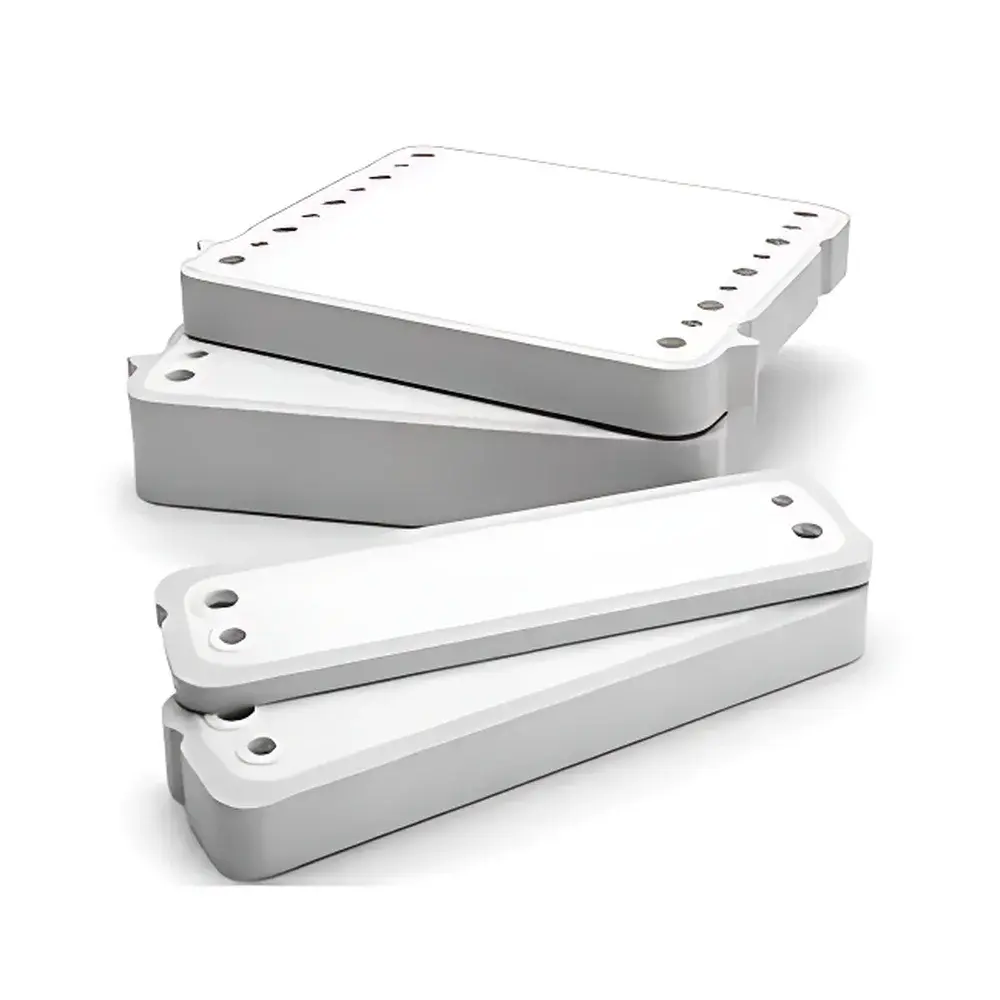
Millipore Pellicon® 3 Biomax® Cassette Ultrafiltration Membrane Module
| Brand | Millipore |
|---|---|
| Origin | USA |
| Model | Pellicon® 3 Biomax® |
| Membrane Material | Modified Polyethersulfone (mPES) |
| Available MWCOs | 10 kDa, 30 kDa, 50 kDa |
| Surface Areas | 88 cm², 0.11 m², 0.57 m², 1.14 m² |
| Max Forward TMP | 80 psi (5.5 bar) @ 4–40 °C (200 h continuous) |
| Max Reverse TMP | 30 psi (2.1 bar) @ 25 °C (10 cycles, 3 min interval) |
| Max NaOH Exposure | 1.0 N NaOH @ 50 °C (2 h for 88 cm² module) |
| pH Range | 2–14 |
| Recommended Feed Flow Rate | 4–8 L/m²/min |
Overview
The Millipore Pellicon® 3 Biomax® Cassette Ultrafiltration Membrane Module is an engineered solution for high-performance tangential flow filtration (TFF) in biopharmaceutical process development and manufacturing. Based on a robust cross-flow architecture, it employs modified polyethersulfone (mPES) membrane chemistry—specifically optimized for low protein binding, high flux stability, and exceptional chemical resistance. Unlike conventional ultrafiltration devices, the Pellicon® 3 Biomax® integrates a thermally fused, defect-free membrane with a monolithic polypropylene housing that eliminates gasket dependency and reduces installation variability. Its design conforms to fundamental TFF principles: laminar-to-turbulent transition enhancement via precision-engineered flow channels, uniform shear distribution across the membrane surface, and minimized concentration polarization—enabling reliable processing of high-titer monoclonal antibody (mAb) harvests, viscous viral vector feeds, and complex upstream clarified lysates.
Key Features
- Monolithic polypropylene cassette body with integrated end caps—eliminates external gaskets and ensures repeatable sealing without operator-dependent torque application
- Defect-free, surface-modified polyethersulfone (Biomax®) membrane offering <0.1% bovine serum albumin (BSA) binding and validated retention performance across all MWCO options (10, 30, and 50 kDa)
- Optimized flow channel geometry featuring A/D mesh screen configuration—enhances mass transfer coefficient (kL) by up to 35% versus prior-generation cassettes while maintaining low pressure drop
- Scalable platform: identical hydraulic path length, channel height, turbulence promoter density, and feed/retentate manifold geometry across all four active surface areas (88 cm², 0.11 m², 0.57 m², 1.14 m²), enabling direct linear scale-up from lab-scale process characterization to clinical or commercial production
- Automated, ISO 13485-certified manufacturing—ensures batch-to-batch consistency in pore size distribution, thickness uniformity, and hydrophilicity profile
- Extended chemical compatibility validated per ASTM D543 and USP , including sustained exposure to 1.0 N sodium hydroxide at 50 °C (2 h for micro-format), 0.5 M sodium hypochlorite, and 30% isopropanol for sanitization
Sample Compatibility & Compliance
The Pellicon® 3 Biomax® cassette is routinely deployed in applications requiring adherence to current Good Manufacturing Practice (cGMP) and Good Laboratory Practice (GLP) frameworks. It supports process validation under ICH Q5A(R2) for viral clearance studies and meets material biocompatibility requirements per ISO 10993-5 (cytotoxicity) and ISO 10993-10 (irritation/sensitization). The mPES membrane demonstrates full compliance with USP Class VI plastic classification and exhibits no leachables above ICH Q3D thresholds when challenged with 0.1 M phosphoric acid or 0.01 M citric acid at 40 °C for 72 h. All configurations are supplied pre-sterilized via gamma irradiation (25–35 kGy) and certified per ISO 11137. Documentation packages include Certificate of Conformance, Extractables Summary Report, and Bioburden Test Results—fully traceable to individual lot numbers.
Software & Data Management
While the Pellicon® 3 Biomax® cassette itself is a passive hardware component, its integration into automated TFF systems (e.g., MilliporeSigma’s Pellicon® 3 TFF Systems or third-party platforms compliant with ISA-88/ISA-95 standards) enables full audit trail generation per FDA 21 CFR Part 11. When used with compatible controllers, operational parameters—including transmembrane pressure (TMP), feed flow rate, retentate pressure, temperature, and total processed volume—are timestamped, digitally signed, and archived with role-based access control. Batch records generated during diafiltration or concentration steps can be exported in CSV or PDF/A-2 format for regulatory submission. System qualification documentation (IQ/OQ/PQ protocols) and risk assessments (per ISO 14971) are available upon request for GMP-compliant deployment.
Applications
- Concentration and buffer exchange of therapeutic proteins, including high-concentration mAbs (>100 g/L) and bispecific antibodies
- Downstream purification of AAV, lentivirus, and adenovirus vectors—leveraging low nonspecific binding and high recovery yields (>95% for IgG1)
- Clarification and polishing of CHO and HEK293 cell culture harvests with high turbidity and viscosity
- Process intermediate hold-step stabilization via sterile filtration-compatible diafiltration
- Lab-scale process development aligned with Quality-by-Design (QbD) principles, supporting Design Space definition per ICH Q8(R2)
- Single-use bioprocessing workflows compliant with ISPE BioPhorum Operations Group (BPOG) extractables guidance
FAQ
What is the maximum allowable forward transmembrane pressure for continuous operation?
For standard modules (0.11 m² and larger), the maximum recommended forward TMP is 80 psi (5.5 bar) at 4–40 °C for up to 200 hours. For the 88 cm² micro-module, the limit is 80 psi for 4 hours continuous operation.
Can the Pellicon® 3 Biomax® cassette be used with acidic cleaning solutions?
Yes—the mPES membrane maintains structural integrity and retention performance within pH 2–14; validated compatibility includes 0.1 M HCl and 0.1 M phosphoric acid at 40 °C for 72 h.
Is the cassette suitable for sterile filtration applications?
No—it is designed for ultrafiltration (not sterilizing-grade filtration); for sterile filtration, refer to Millipore Express® SHF or Durapore® PVDF membrane filters qualified per ASTM F838-22.
How does the integrated gasket design impact system validation?
The absence of discrete gaskets removes a major source of variability in seal integrity testing; users report >99.8% first-pass success rate in leak testing per ASTM F2096, reducing requalification frequency during routine maintenance.
Are extractables data available for regulatory submissions?
Yes—comprehensive extractables profiles (including volatile organic compounds, semi-volatiles, and elemental impurities) are included in the Certificate of Analysis and align with BPOG Tier 1–3 testing expectations.





