
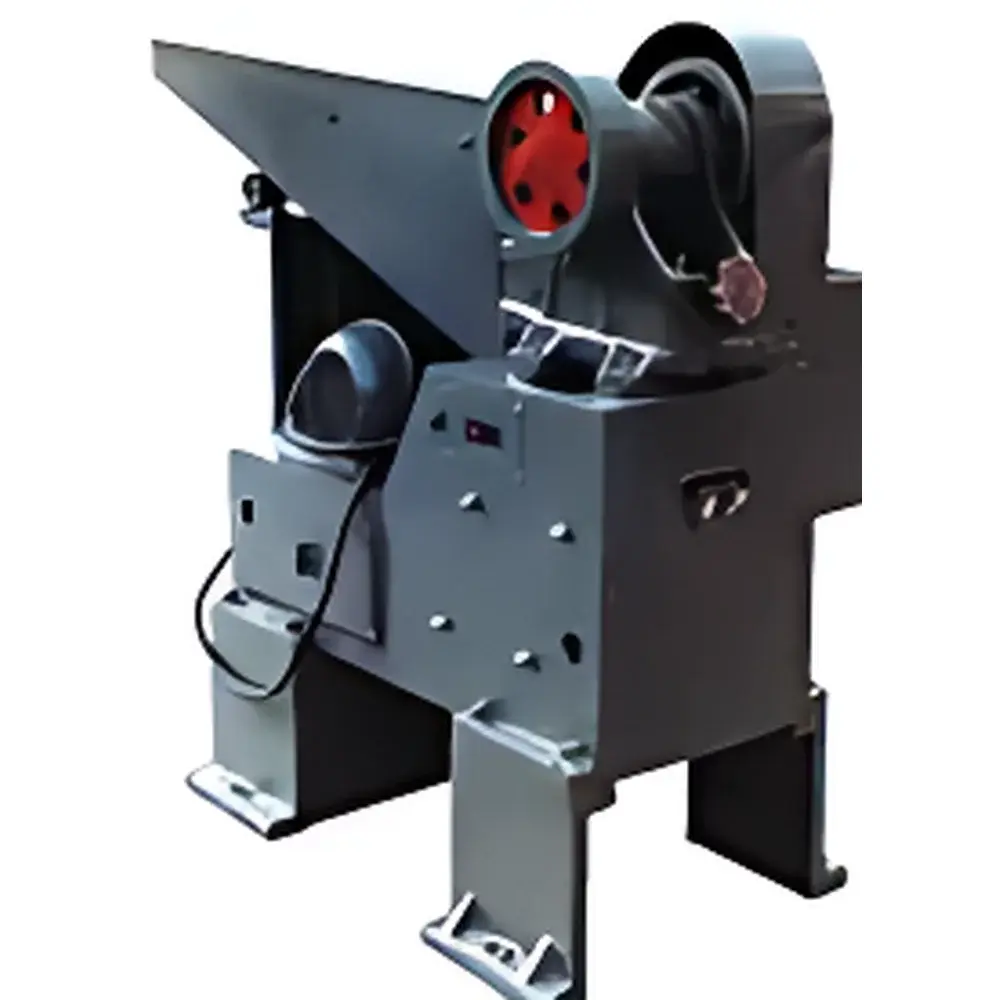
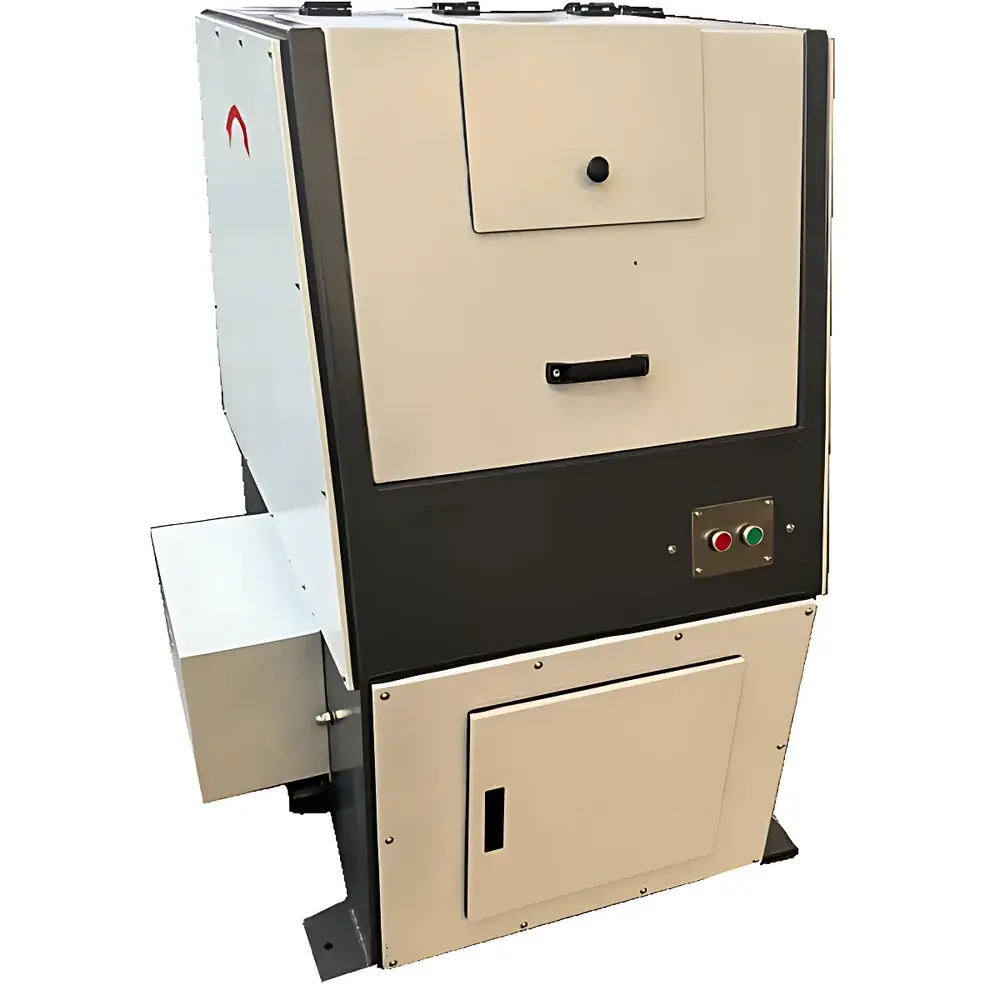
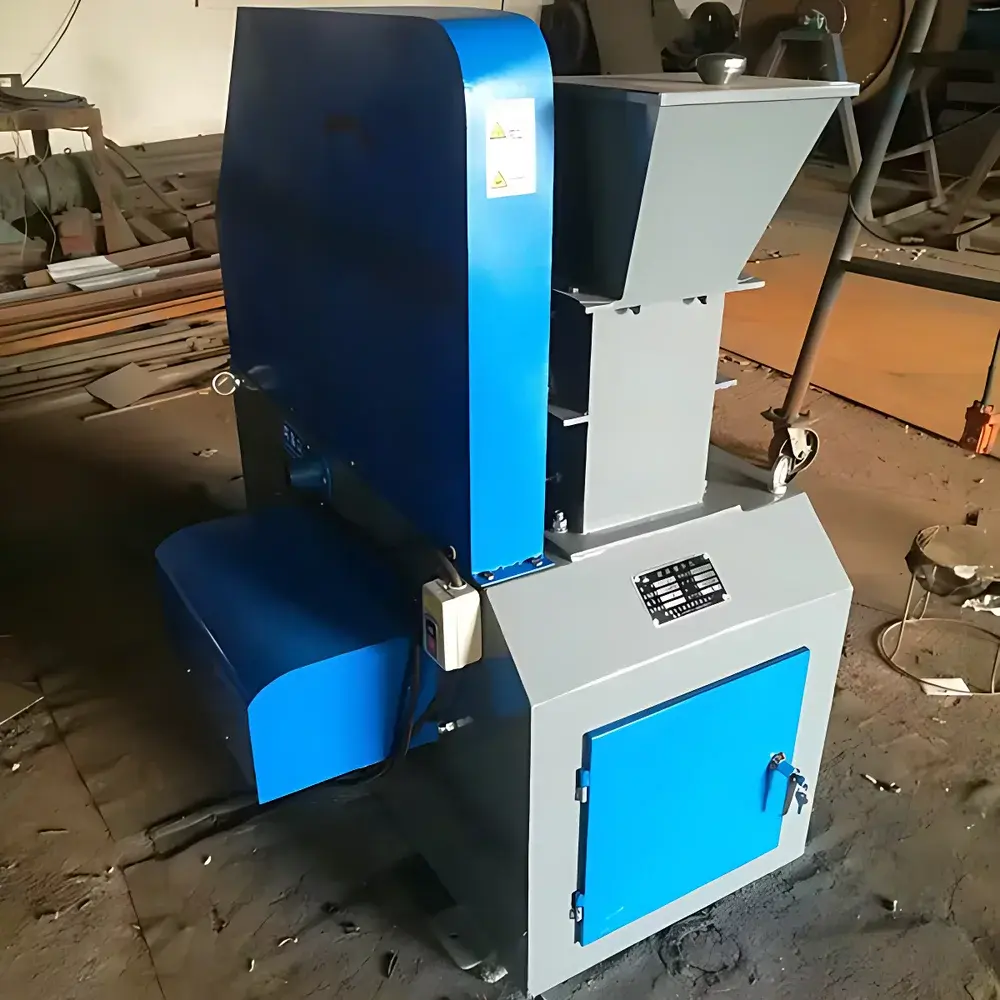
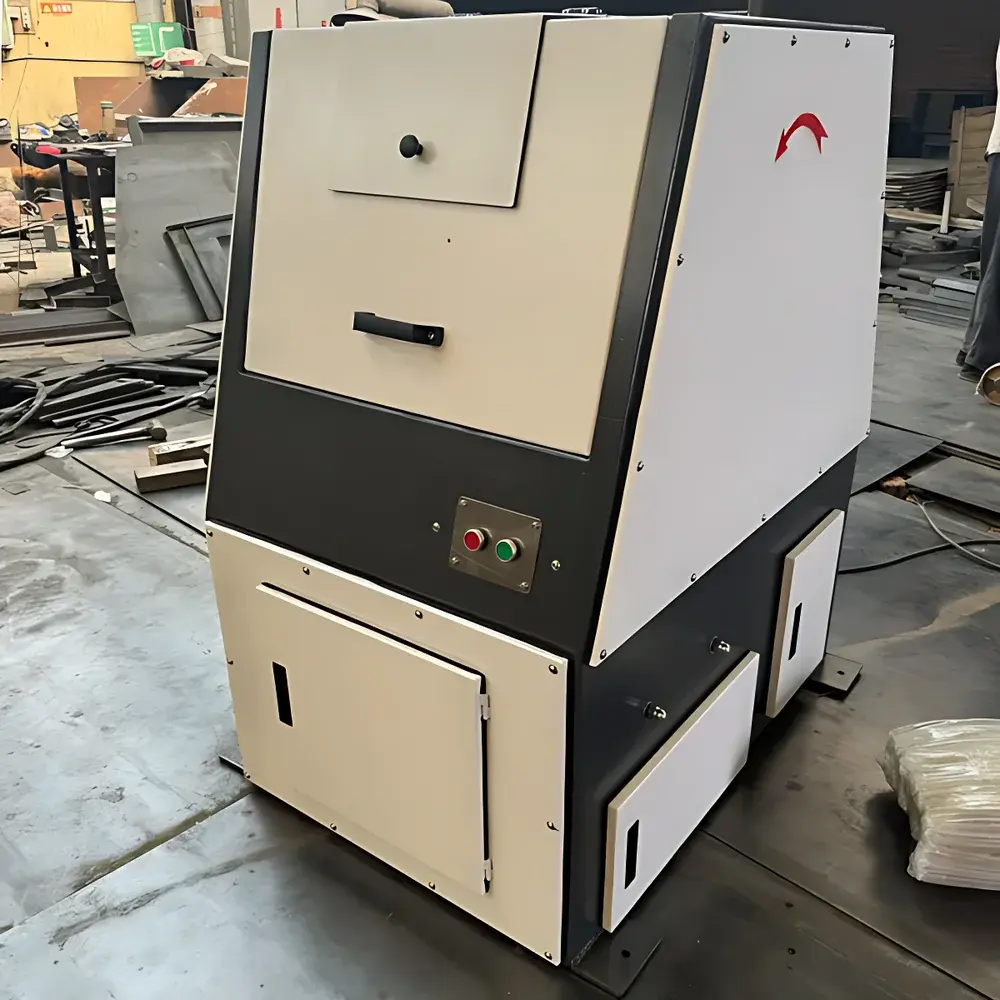
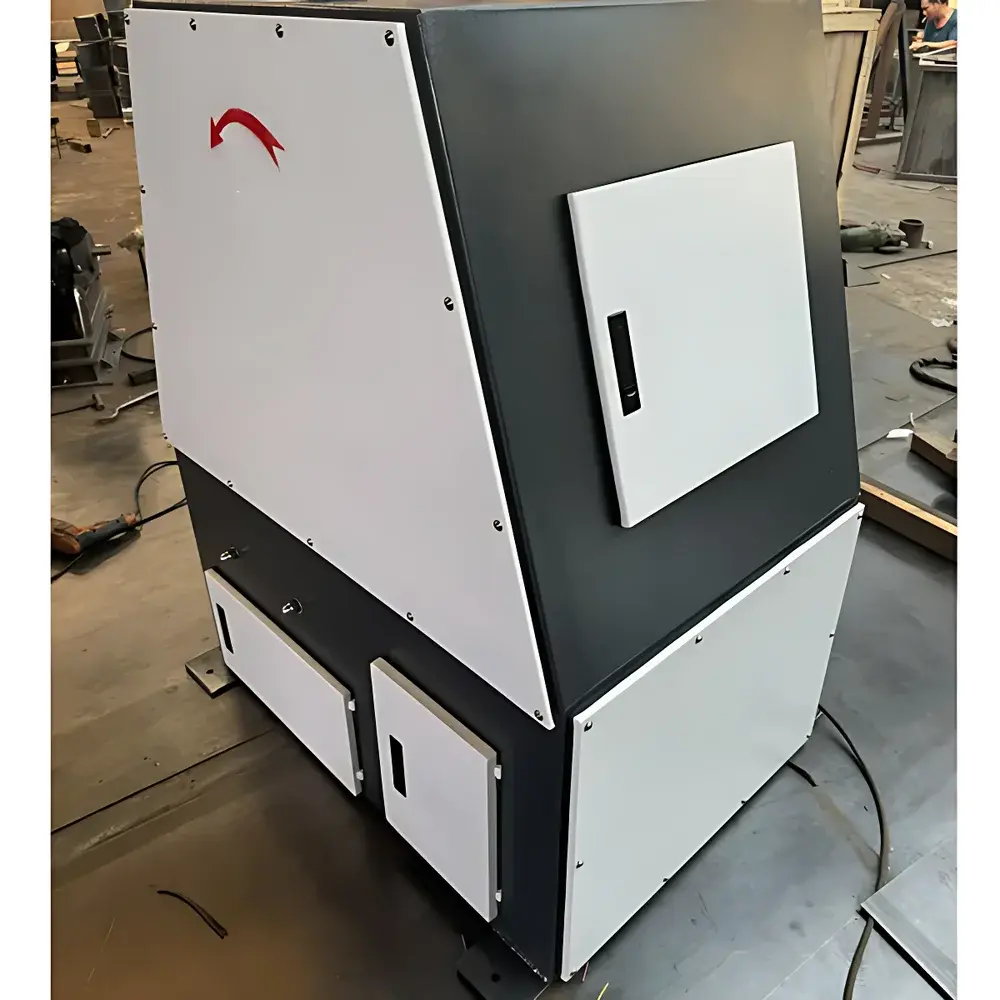
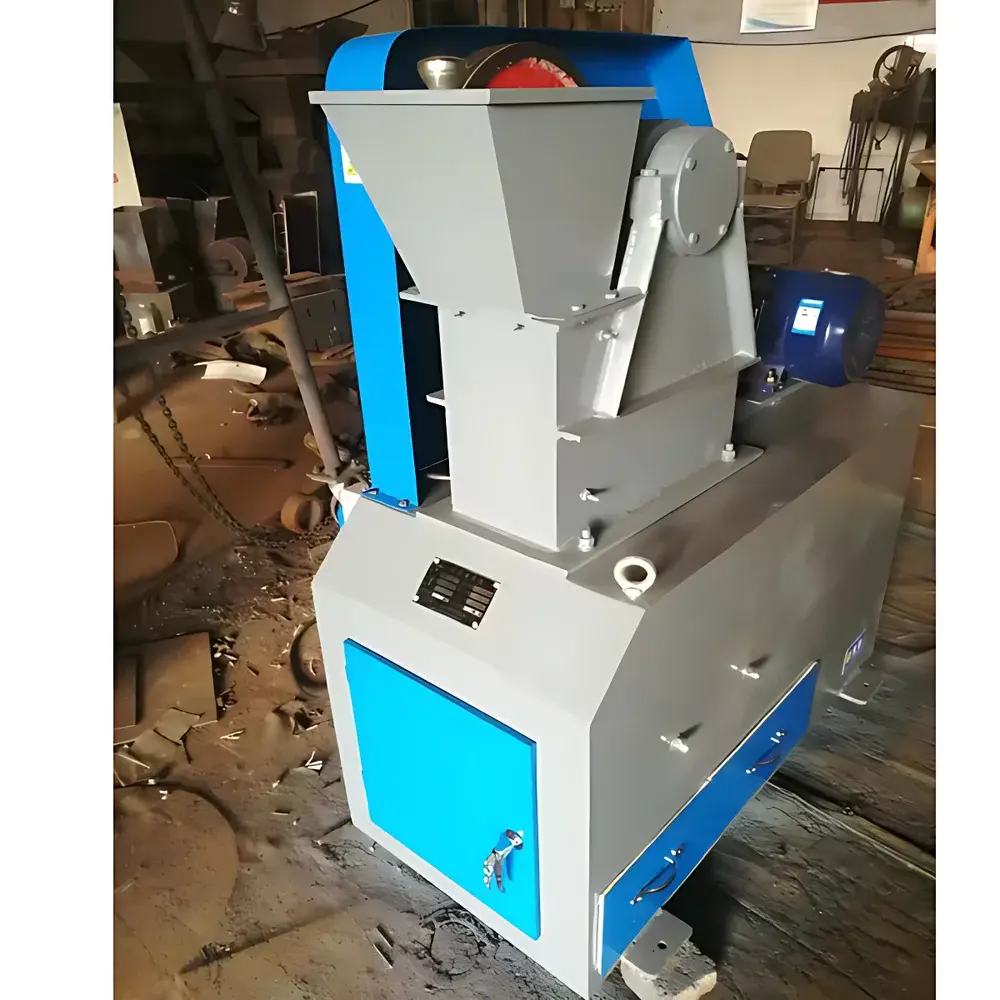
MingShen Science EPS 1/8 Integrated Sample Preparation Crusher and Divider
| Brand | MingShen Science |
|---|---|
| Origin | Henan, China |
| Model | EPS 1/8 |
| Instrument Type | Laboratory Crusher & Mechanical Divider |
| Sample Applicability | Hard, Brittle Bulk Materials (e.g., Coal, Rock, Ore, Clinker) |
| Feed Size | ≤120 mm |
| Adjustable Output Particle Size | 3–25 mm |
| Final Discharge Size | ≥0.5 mm |
| Throughput Capacity | 300–500 kg/h |
| Division Ratio Options | 1:2, 1:4, 1:8 (primary) |
| 1 | 9 (secondary via dual-stage division) |
| Moisture Tolerance (as-received basis) | ≤11% |
| Power Supply | 3-phase AC 380 V, 50 Hz |
| Motor Power | 3 kW |
| Net Weight | ~400 kg |
| Dimensions (L×W×H) | 1100 × 590 × 1160 mm |
| Compliance | Designed per GB/T 474–2008 “Method for Preparation of Coal Samples” |
Overview
The MingShen Science EPS 1/8 Integrated Sample Preparation Crusher and Divider is an engineered solution for high-throughput, standardized sample reduction in bulk solid analysis laboratories. It implements a sequential, fully mechanical workflow—vibratory screening, jaw crushing, and two-stage mechanical division—within a single integrated frame. Its operation adheres to the fundamental sampling principles defined in ISO 13909, ASTM D2013, and GB/T 474–2008, ensuring representative subsampling through controlled mass reduction and spatially uniform material splitting. Unlike standalone crushers or dividers, the EPS 1/8 eliminates manual transfer between unit operations, thereby minimizing handling bias, contamination risk, and operator exposure. The system is specifically validated for coal, mineral ores, geological core fragments, cement clinker, and other moderately abrasive, non-fibrous, hard-brittle feedstocks with moisture content up to 11% (as-received basis). Its rigid cast-steel frame and synchronized drive architecture support continuous duty cycles in QA/QC labs requiring traceable, reproducible sample preparation prior to elemental analysis, calorimetry, proximate/ultimate analysis, or XRF.
Key Features
- Single-motor, gear-coupled drive system powering the vibratory feeder-screener, jaw crusher, and dual-stage mechanical divider simultaneously—ensuring phase-synchronized operation and eliminating timing drift between stages.
- Vibratory screen module functions as both automatic feed regulator and primary size classifier: particles ≤3 mm bypass crushing and enter the first-stage divider directly; oversized fractions are routed to the adjustable-gap jaw crusher.
- Two-stage mechanical division architecture: primary division uses a 5-slot riffle splitter (1:3 ratio), with central slot designated for retained sample; secondary division employs a 3-slot riffle (1:3 ratio), achieving a total theoretical division ratio of 1:9—configurable to 1:2, 1:4, or 1:8 via mechanical linkage adjustment.
- Jaw crusher with manually adjustable discharge gap (3–25 mm range), enabling precise control over intermediate particle size prior to final division—critical for meeting analytical method requirements (e.g., USP <1119>, ASTM D3174).
- Structural alignment verification system: optical reference marks and adjustable connecting rods allow precise calibration of feeder outlet, crusher discharge chute, and divider inlet to ensure laminar, centered material flow—reducing segregation and cross-contamination.
- Robust construction with powder-coated carbon steel housing, sealed bearing assemblies, and grease-lubricated transmission points—designed for >10,000 hours of maintenance-interval operation under industrial lab conditions.
Sample Compatibility & Compliance
The EPS 1/8 is validated for use with hard, dry-to-moderately moist bulk solids exhibiting compressive strength 40 (per ASTM D5744). It is not suitable for fibrous, sticky, highly plastic, or high-moisture (>11% ar) materials, nor for samples containing metallic inclusions or excessive fines (<0.5 mm) in feed stream. All mechanical division pathways comply with the geometric equivalence principle outlined in ISO 13909-2:2013 Annex A, where splitter slot width, travel distance, and feed aperture are dimensionally interlocked to guarantee constant cut fraction regardless of positional phase. The unit’s design supports GLP-compliant documentation: each operational cycle can be logged manually with feed mass, output mass, division ratio selected, and observed throughput—facilitating audit readiness for ISO/IEC 17025-accredited laboratories.
Software & Data Management
The EPS 1/8 operates as a stand-alone electromechanical system without embedded digital controls or connectivity. However, its deterministic mechanical architecture enables full procedural traceability when integrated into laboratory information management systems (LIMS). Users may record operational parameters—including division ratio setting, jaw gap position (mm), feed batch weight (kg), elapsed processing time (min), and final sample mass (g)—in structured electronic logbooks compliant with FDA 21 CFR Part 11 requirements. Optional external load cells and timers can be interfaced via analog outputs (4–20 mA) for automated data capture. No firmware, cloud interface, or proprietary software is included or required.
Applications
- Coal quality assurance: preparation of representative sub-samples from run-of-mine (ROM) or stockpile material for proximate analysis (ASTM D3172), sulfur determination (ASTM D3177), and gross calorific value testing (ASTM D5865).
- Geochemical exploration labs: size reduction and mass reduction of drill core or trench samples prior to ICP-MS or XRF digestion.
- Cement and building materials R&D: homogenization and subdivision of clinker, slag, or limestone feedstocks for fineness testing (Blaine, ASTM C204) and chemical composition profiling.
- Power plant fuel testing labs: routine preparation of boiler feed coal samples in accordance with EN 15407 and IEC 62283 standards.
- Metallurgical assay preparation: primary crushing and division of ore concentrates prior to fire assay or leach testing (ASTM E887).
FAQ
What standards does the EPS 1/8 conform to for sample division accuracy?
It is engineered to meet the mechanical splitter performance criteria in ISO 13909-2:2013 and GB/T 474–2008, including slot width tolerance (±0.2 mm), travel distance precision (±1 mm), and feed aperture alignment (±0.5 mm), verified during factory calibration.
Can the machine handle wet coal or high-moisture biomass?
No—feed moisture must remain ≤11% (as-received basis). Excess moisture causes blinding of the vibratory screen and agglomeration in the divider slots, compromising division fidelity.
Is electrical safety certification provided for international markets?
The unit carries CE marking per Machinery Directive 2006/42/EC and EMC Directive 2014/30/EU. UL/cUL listing is available upon request with region-specific motor and control panel configuration.
How is maintenance access designed for routine lubrication and inspection?
All grease points are externally accessible via sealed zerk fittings; the front divider cover and crusher side panels are hinged and tool-free removable; the vibratory screen deck lifts vertically on gas struts for belt and bearing inspection.
Does the EPS 1/8 support integration with automated sample handling lines?
Yes—standardized 300 mm × 300 mm discharge port dimensions and optional pneumatic interlock signals (NO/NC) enable synchronization with upstream conveyors or downstream pulverizers in semi-automated workflows.
Related Products



