
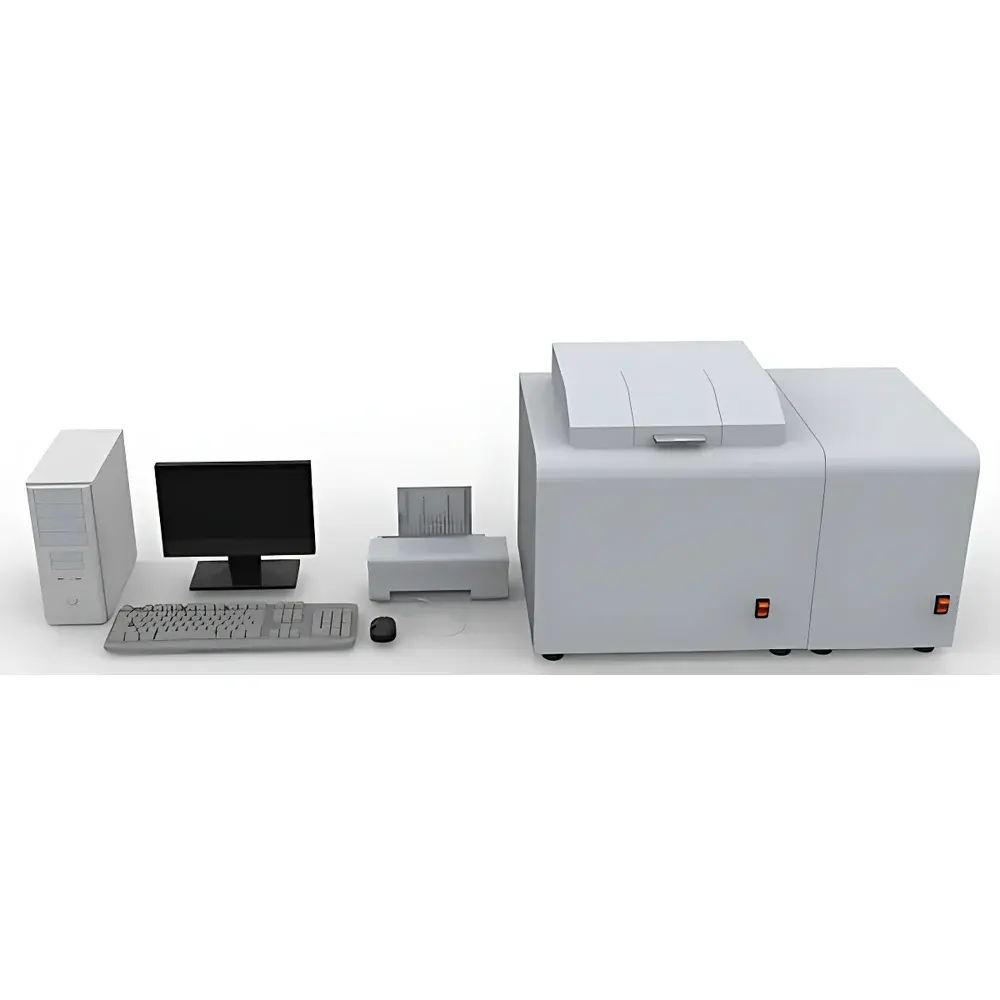
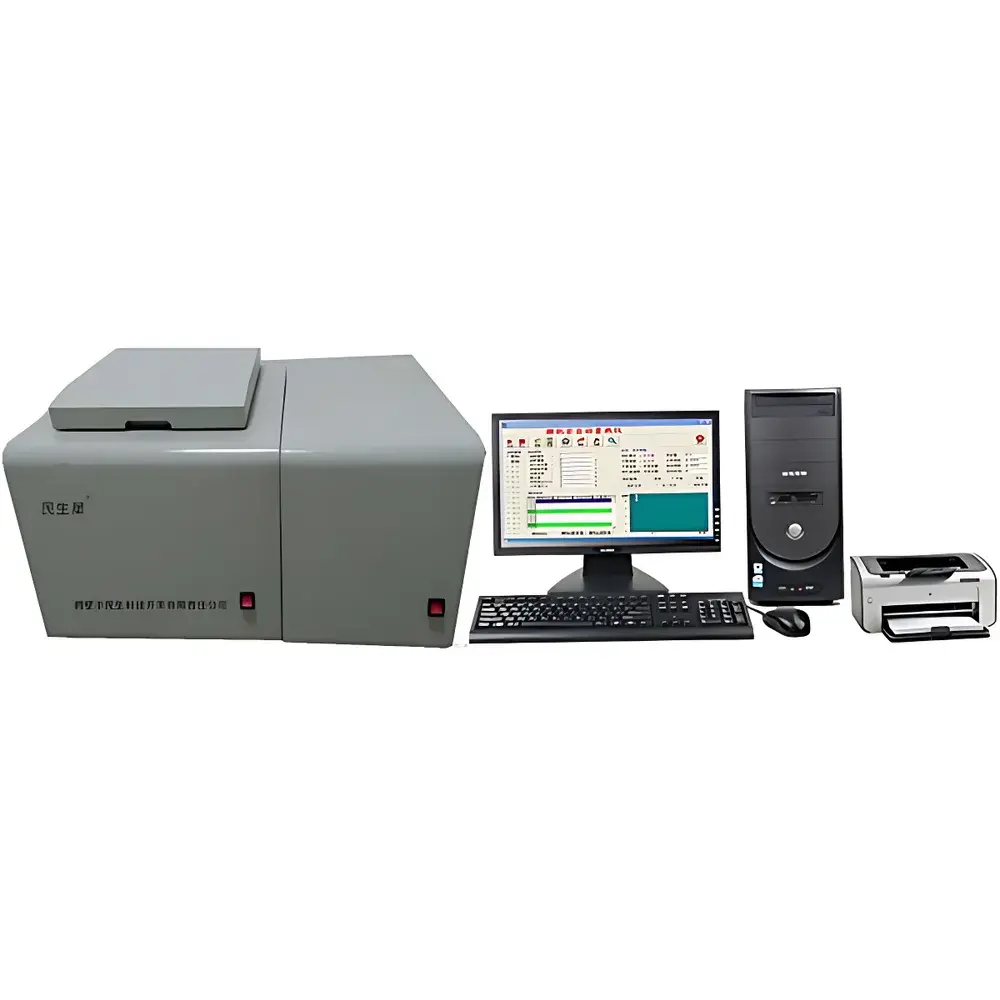
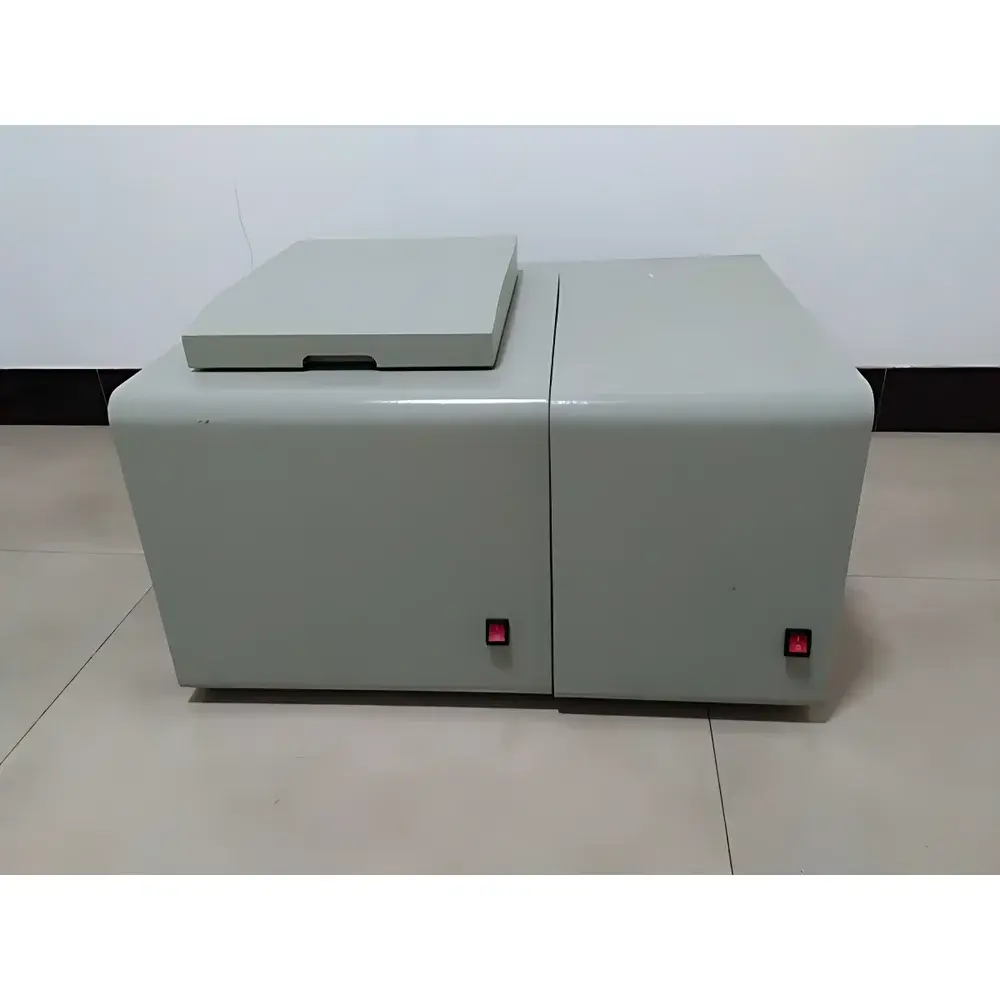
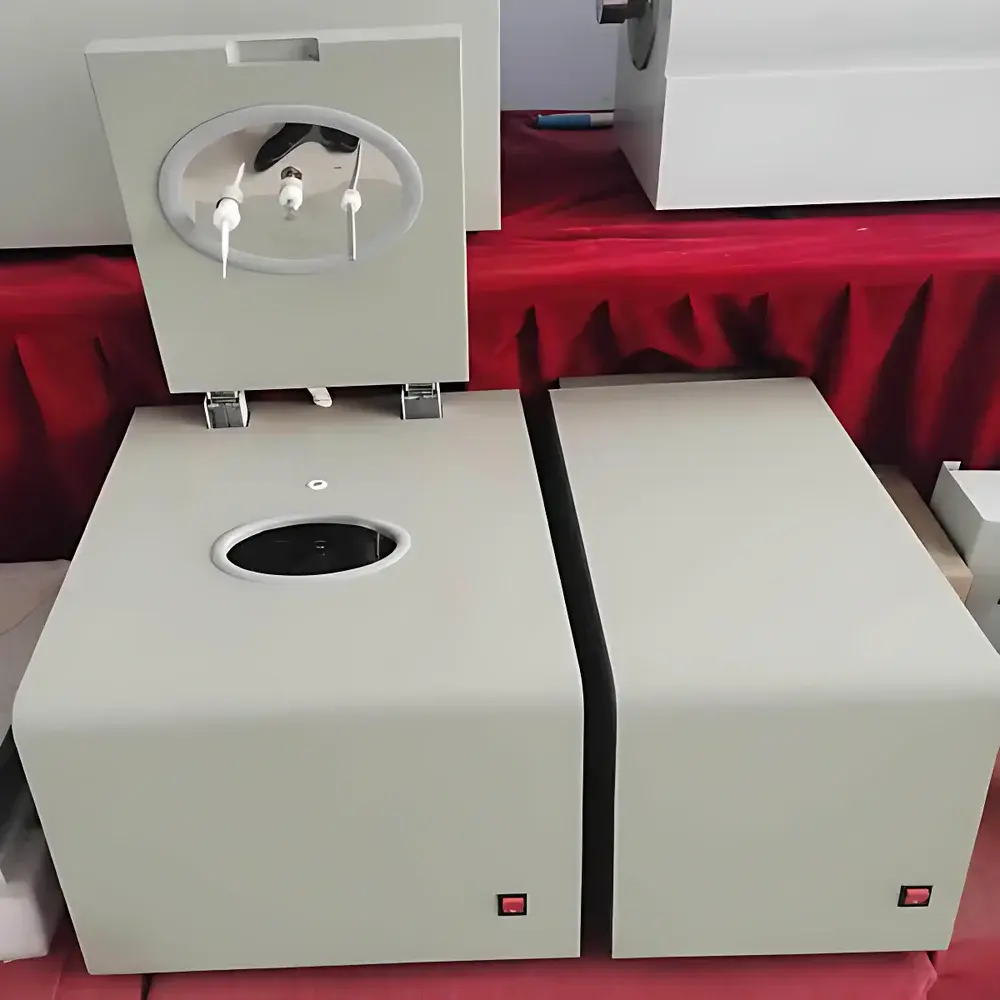
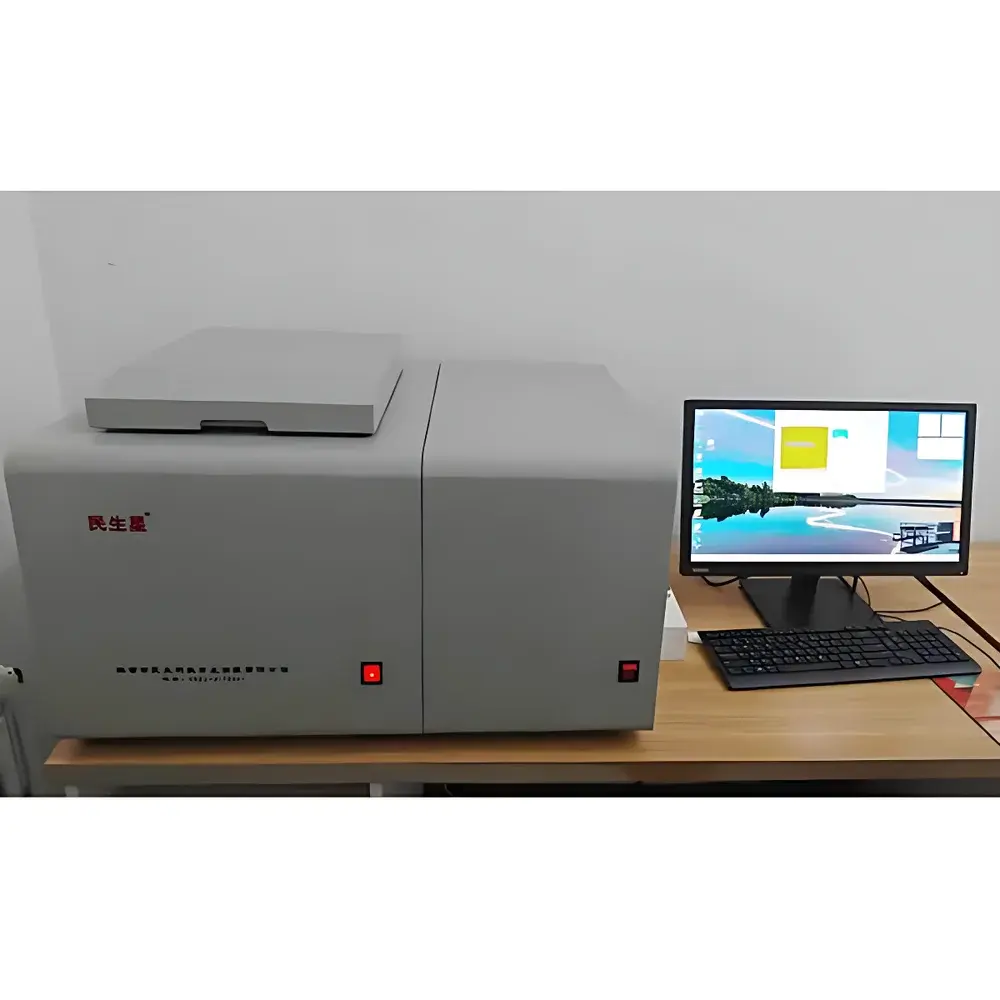
MingShen Science MLR-7000 Microcomputer-Controlled Refrigerated Bomb Calorimeter
| Brand | MingShen Science |
|---|---|
| Origin | Henan, China |
| Manufacturer Type | Authorized Distributor |
| Country of Origin | China |
| Model | MLR-7000 |
| Instrument Type | Oxygen Bomb Calorimeter |
| Measurement Mode | Isoperibol Calorimetry |
| Temperature Range | 0–40 °C |
| Temperature Resolution | 0.0001 K |
| Precision | ±0.1% (RSD) |
| Single-Sample Test Duration | ~15 min |
| Heat Capacity | 10,500–11,000 J/K |
| Outer Water Jacket Volume | 30 L |
| Inner Water Bucket Volume | 2.1–2.3 L |
| Ignition Voltage | 24 V DC |
| Ignition Duration | 6 s |
| Operating Ambient | 5–40 °C |
| Power Supply | AC 220 V, 50 Hz |
| Power Consumption | <80 W |
| Net Weight | 50 kg |
Overview
The MingShen Science MLR-7000 Microcomputer-Controlled Refrigerated Bomb Calorimeter is a precision isoperibol oxygen bomb calorimeter engineered for high-reproducibility determination of gross calorific value (GCV), net calorific value (NCV), and bomb calorific value of solid and liquid fuels. It operates on the fundamental principle of adiabatic compensation via active refrigeration—using a built-in compressor-based cooling system to maintain stable outer jacket temperature during extended measurement cycles. Unlike traditional water-bath calorimeters, the MLR-7000 dynamically regulates thermal equilibrium between inner and outer water jackets, ensuring compliance with the endpoint temperature differential requirement specified in GB/T 213—namely, that the inner bucket temperature exceeds the outer jacket by approximately 1 K at completion. This architecture eliminates drift-induced bias in long-duration tests and supports uninterrupted operation over multi-sample batches in coal quality control labs, power plant QC departments, petrochemical refineries, and biomass R&D facilities.
Key Features
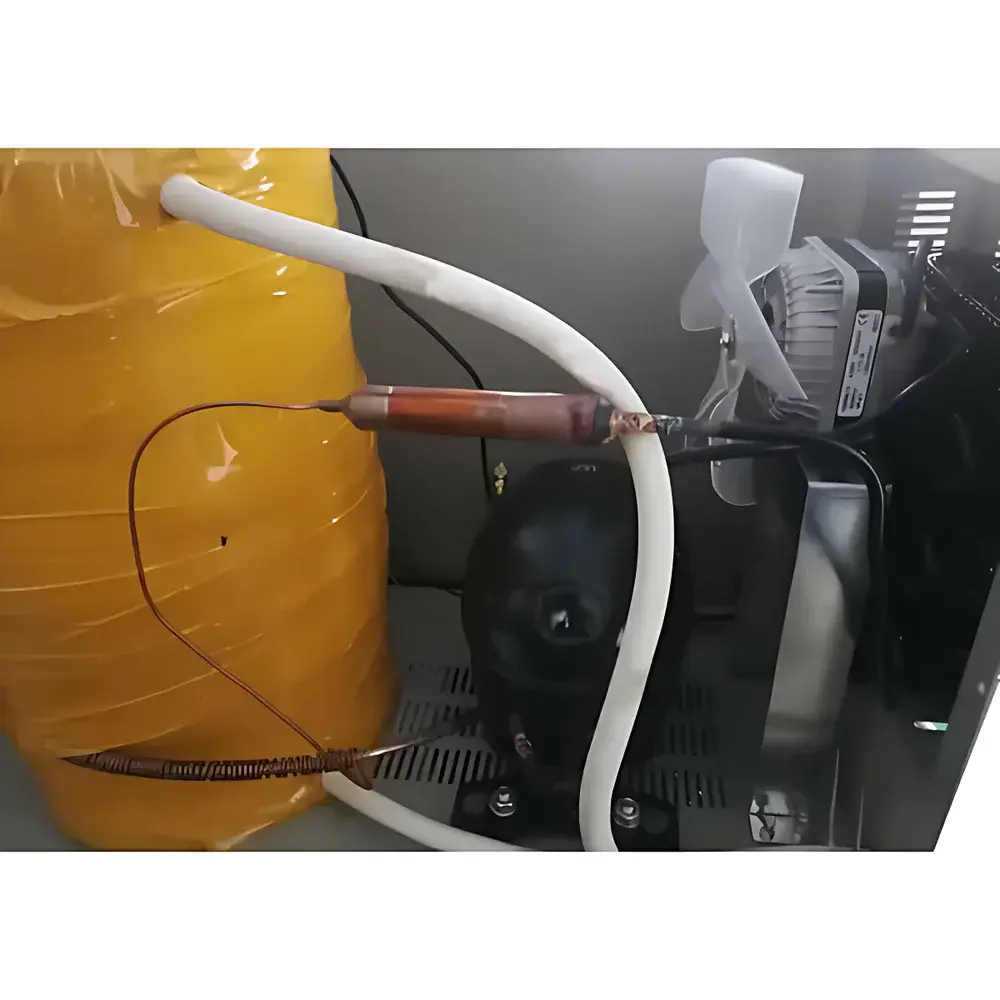
- Integrated vapor-compression refrigeration system enabling continuous operation for >8 hours without manual coolant replenishment or thermal recalibration
- Microprocessor-driven isoperibol control algorithm with real-time PID adjustment of water circulation rate and refrigerant duty cycle
- Dual-stirring configuration: low-torque paddle agitator (inner bucket) and submersible magnetic stirrer (outer jacket) for uniform thermal distribution and minimized convection artifacts
- Fuse-wire ignition system with programmable 24 V DC pulse delivery (6 s duration), compatible with standard ASTM D240 and ISO 1928 ignition protocols
- High-resolution platinum resistance thermometer (PT1000) with 0.0001 K digital resolution and NIST-traceable calibration certificate included
- Automatic heat capacity calibration routine compliant with GB/T 213 Annex A, supporting benzoic acid (NIST SRM 39j) or certified reference materials
- Embedded error compensation module correcting for acid formation, nitric acid correction, and latent heat of vaporization using user-input sulfur, hydrogen, and moisture data
Sample Compatibility & Compliance
The MLR-7000 accommodates standard 1 g–1.2 g pressed pellet samples in stainless-steel oxygen bombs (rated to 30 MPa), suitable for coals (bituminous, anthracite, lignite), coke, biomass pellets, fuel oils, and municipal solid waste-derived fuels. All measurement workflows align with national and international standards including GB/T 213–2008 (China), ASTM D5865–22 (Standard Test Method for Gross Calorific Value of Coal and Coke), ISO 1928:2022 (Solid Mineral Fuels — Determination of Gross Calorific Value), and EN 14918:2010 (Solid Biofuels — Determination of Calorific Value). The instrument’s firmware enforces audit-ready data integrity: all calibration events, sample metadata, raw thermograms, and final report outputs are time-stamped, digitally signed, and stored in immutable binary logs—supporting GLP/GMP traceability requirements and facilitating FDA 21 CFR Part 11-compliant validation when deployed with validated Windows OS configurations.
Software & Data Management
Control and analysis are executed via proprietary Windows-based software (compatible with Windows XP through Windows 11 x64) featuring dual-mode interface: real-time graphical thermogram display with overlay of theoretical curve fitting, and tabular results view with export to CSV, PDF, and XML formats. The software implements automated calculation pathways per GB/T 213, converting raw temperature rise (ΔT) into bomb calorific value (Qgr,v), higher heating value (HHV), lower heating value (LHV), and moisture-corrected values. Audit trails record operator ID, session start/stop timestamps, calibration history, and any manual parameter overrides. Data encryption (AES-128) and role-based access control (administrator, analyst, reviewer) ensure regulatory readiness for third-party audits and internal QA reviews.
Applications
- Coal quality assurance in thermal power generation plants and coking facilities
- Calorific value certification for commercial coal shipments under ISO 1928 or GB/T 213
- Routine energy content testing of alternative solid fuels (wood chips, RDF, SRF)
- Research-grade combustion efficiency studies in academic and industrial energy laboratories
- Compliance verification for environmental reporting (e.g., GHG Protocol Scope 1 fuel emissions accounting)
- Validation of fuel blending ratios in co-firing applications
FAQ
What standards does the MLR-7000 comply with for calorific value determination?
The instrument fully satisfies GB/T 213–2008, ASTM D5865–22, ISO 1928:2022, and EN 14918:2010 for gross calorific value measurement of solid and liquid fuels.
Is the refrigeration system capable of maintaining stability during back-to-back testing?
Yes—the compressor-based cooling subsystem maintains outer jacket temperature within ±0.02 K over 12-hour continuous operation, enabling unattended batch processing of up to 20 samples without recalibration.
Can the software generate reports compliant with ISO/IEC 17025 documentation requirements?
Yes—each test report includes instrument ID, operator credentials, calibration certificate numbers, raw thermogram plots, uncertainty estimates (k=2), and digital signature fields required for accredited laboratory reporting.
What maintenance intervals are recommended for the oxygen bomb and refrigeration unit?
Oxygen bomb components require hydrostatic pressure testing every 2 years per GB/T 213; refrigerant charge and compressor oil inspection are recommended annually or after 1,000 operating hours.
Does the system support remote diagnostics or networked data upload?
The MLR-7000 features Ethernet and RS-232 interfaces; optional OPC UA server module enables integration into LIMS environments and centralized data aggregation platforms.



