
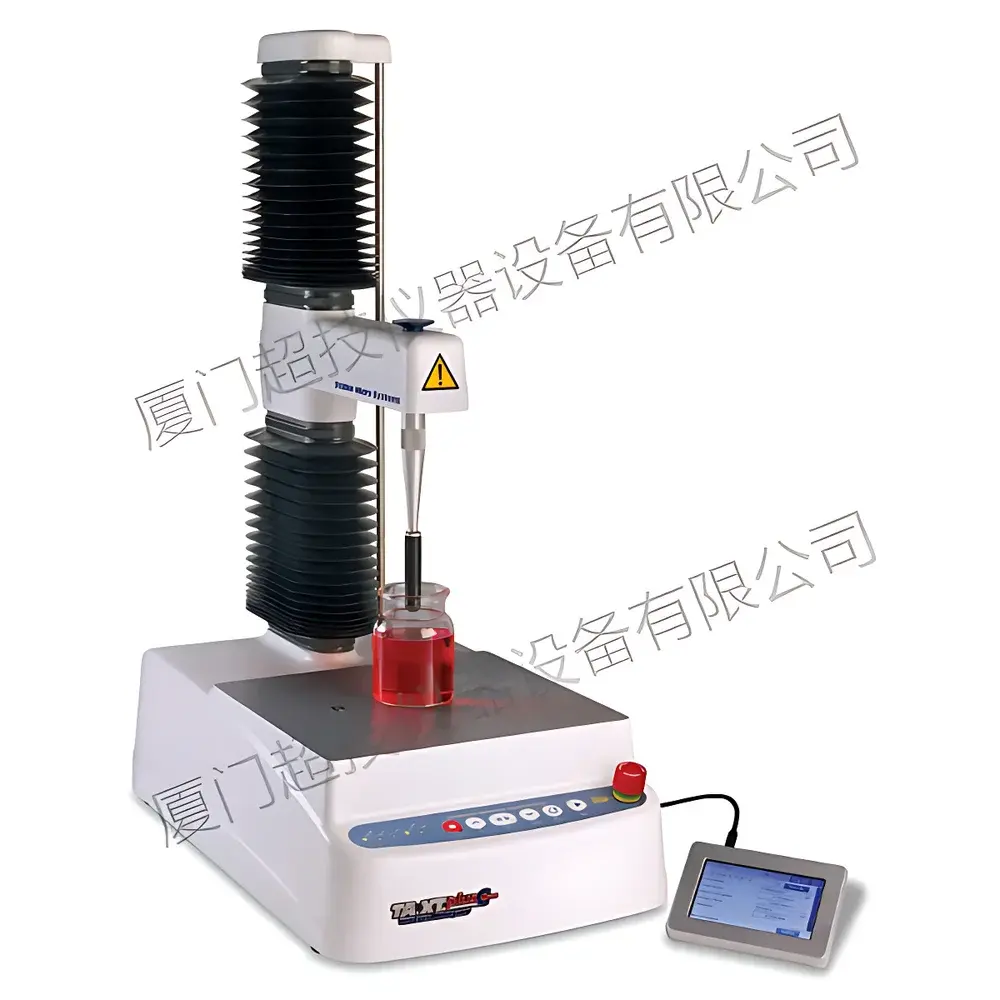
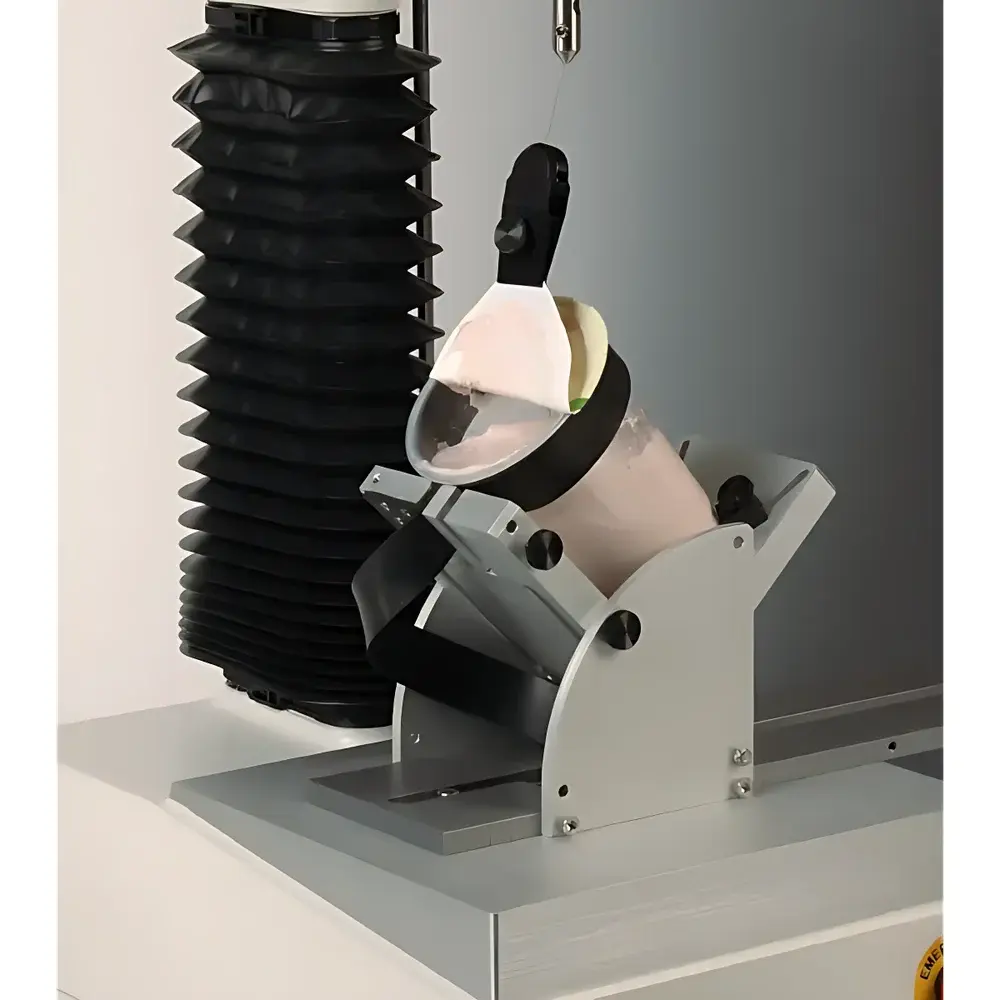
SMS FR Series Coefficient of Friction and Peel Strength Tester for Packaging Materials
| Brand | SMS |
|---|---|
| Origin | United Kingdom |
| Model | FR Series (A/FR) |
| Compliance | ASTM D1894-90 |
| Application Scope | Static & Dynamic COF, Seal Peel Strength, Compression Resistance of Pharmaceutical & Food Packaging |
| Control Interface | Remote Web-Based Software with Mobile/Tablet Support |
| Data Export | Automated Email Delivery |
| Software Features | Programmable Test Methods, Barcode-Triggered Protocol Launch, Audit-Trail Enabled |
| Support | Lifetime Technical Assistance, Embedded Knowledge Base (400+ Peer-Reviewed Papers & Tutorials) |
Overview
The SMS FR Series Coefficient of Friction and Peel Strength Tester is an engineered solution for quantitative mechanical characterization of flexible packaging materials used across pharmaceutical, food, consumer goods, and medical device industries. It operates on standardized tribological principles—measuring the ratio of frictional force to normal load (μ = Ff/FN) under controlled velocity, temperature, and surface contact conditions—to determine both static (μs) and dynamic (μk) coefficients of friction. Simultaneously, it performs peel strength evaluation per ASTM F88 (for seal integrity) and ASTM D903 (for adhesive bond strength), using precision load cells and motorized crosshead displacement systems. Designed for reproducibility in regulated environments, the instrument supports method validation, routine QC release testing, and material qualification against ISO 8295, ASTM D1894-90, and USP guidelines for package integrity.
Key Features
- High-resolution load measurement (±0.1% full scale) with dual-range transducers optimized for low-force peel (0.1–50 N) and high-force friction/compression (0.5–200 N) applications
- Motorized crosshead with programmable speed profiles (0.1–1200 mm/min), enabling compliance with variable-rate test protocols specified in ASTM D1894 and ISO 8295
- Barcode-scanning interface integrated at hardware level: scanning a pre-assigned protocol barcode initiates full test execution—including sample positioning, preload application, data acquisition, and result calculation—without manual navigation
- Web-native software architecture supporting real-time remote operation via secure HTTPS connection; compatible with iOS, Android, and Windows-based tablets and smartphones
- Audit-trail compliant data handling: all user actions, parameter changes, and test events are timestamped and logged in accordance with FDA 21 CFR Part 11 requirements for electronic records
- Modular fixture system accommodating standard 150 mm × 150 mm test specimens, as well as custom jigs for pouch seals, blister lidding, and thermoformed tray compression
Sample Compatibility & Compliance
The FR Series accommodates a broad spectrum of polymeric substrates including BOPP, PET, PE, CPP, aluminum laminates, paperboard composites, and foil-backed films. It supports both flat-on-flat and film-on-metal configurations required by ASTM D1894-90. For peel testing, fixtures conform to ASTM F88 geometry specifications (90° and 180° peel angles), while compression plates meet ISO 12048 dimensional tolerances for rigid packaging evaluation. All test methods are documented in alignment with GLP/GMP frameworks and referenced in internal SOP templates provided with the system. Instrument calibration certificates traceable to UKAS-accredited standards are supplied upon installation.
Software & Data Management
The embedded web application—accessible via any modern browser—features a role-based user interface with configurable permissions (Operator, Supervisor, Administrator). Test methods are stored in a hierarchical database with version control; users may duplicate, edit, or archive protocols without altering master templates. Raw force-displacement curves are saved in .csv and .tdms formats, while summary reports export automatically to PDF with embedded metadata (operator ID, instrument serial number, environmental conditions). Upon test completion, results can be routed to designated email addresses or network folders using TLS-encrypted SMTP or SFTP protocols. The software includes built-in statistical tools for batch trending, Cp/Cpk analysis, and outlier detection per ISO 22514-2.
Applications
- Validation of slip additives (e.g., erucamide, oleamide) concentration effects on COF in blown film extrusion lines
- Comparative assessment of heat-seal integrity between different polymer combinations (e.g., LDPE sealant vs. EVOH barrier layers)
- Stability testing of cold-form blister packs under accelerated aging conditions (40°C/75% RH for 6 months)
- Regulatory submission support for FDA IND/NDA dossiers requiring mechanical performance data per ICH Q5C
- Root cause analysis of packaging line jams linked to excessive static friction between film layers or feed rollers
- Supplier qualification audits where COF repeatability must demonstrate ≤3% RSD across ten consecutive runs
FAQ
Does the FR Series comply with 21 CFR Part 11 for electronic signatures?
Yes—the software implements electronic signature workflows with identity verification, reason-for-change logging, and biometric or token-based authentication options.
Can existing ASTM methods be imported directly into the software?
Method templates for ASTM D1894, ASTM F88, ISO 8295, and ISO 12048 are preloaded; users may also import custom XML-based method definitions.
Is third-party calibration support available globally?
SMS maintains an international network of ISO/IEC 17025-certified service partners; on-site calibration and IQ/OQ documentation packages are available upon request.
How is firmware updated, and does it require downtime?
Over-the-air updates are delivered via encrypted OTA channel; most updates install during idle periods without interrupting scheduled tests.
What training resources are included with purchase?
Each system ships with access to the SMS eLearning Portal—featuring video modules, interactive SOP builders, and quarterly live webinars led by packaging science specialists.





