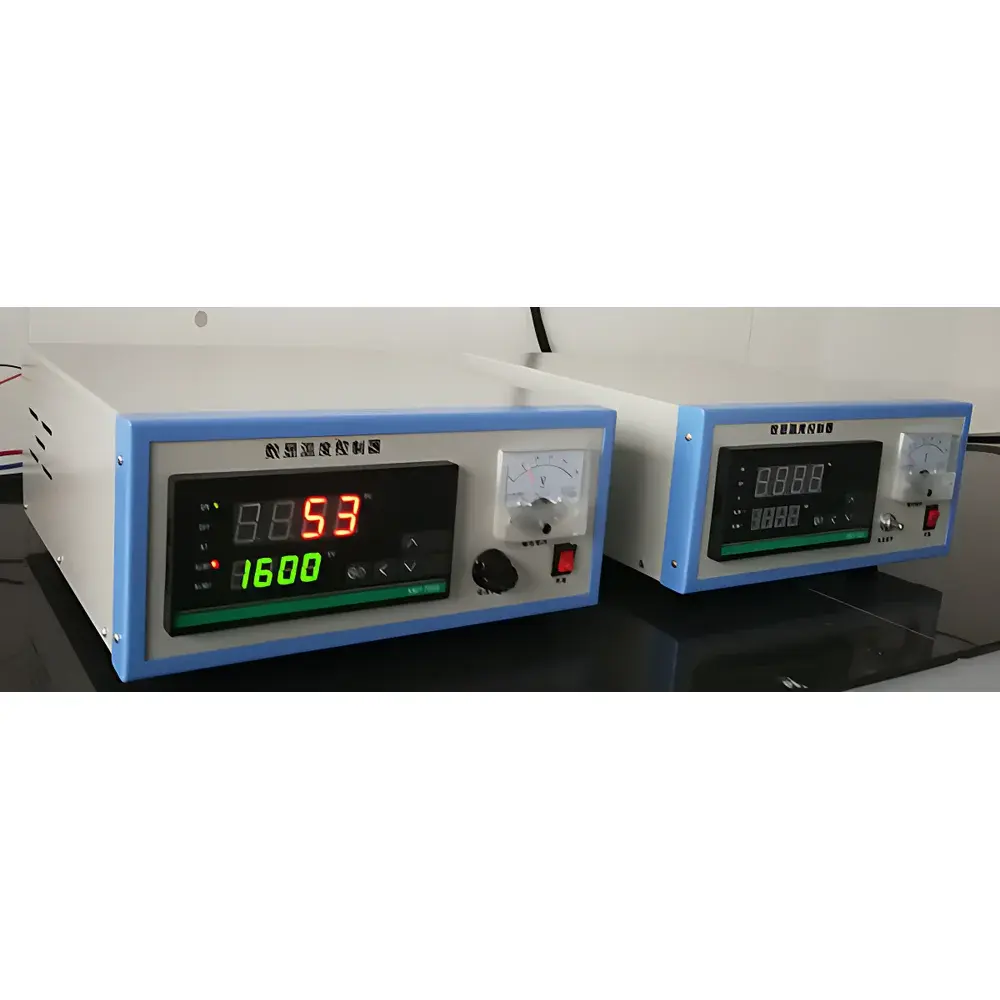
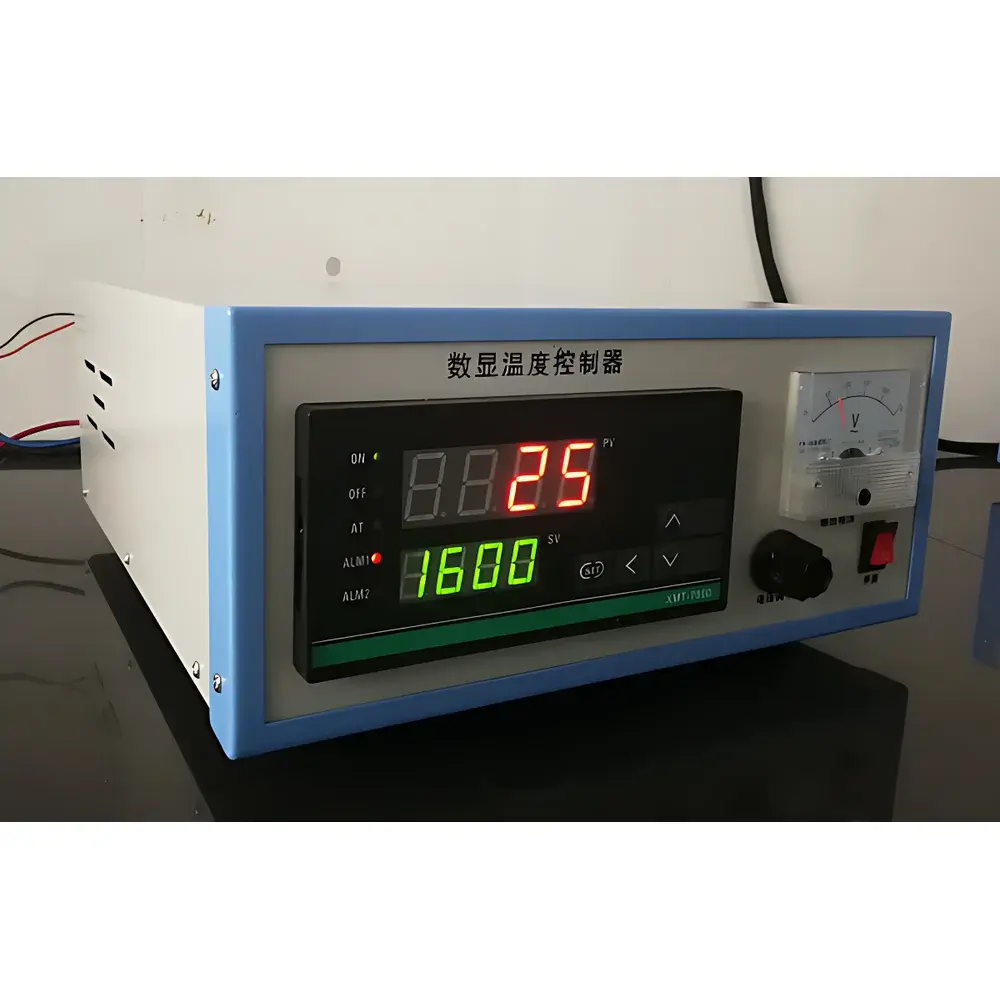
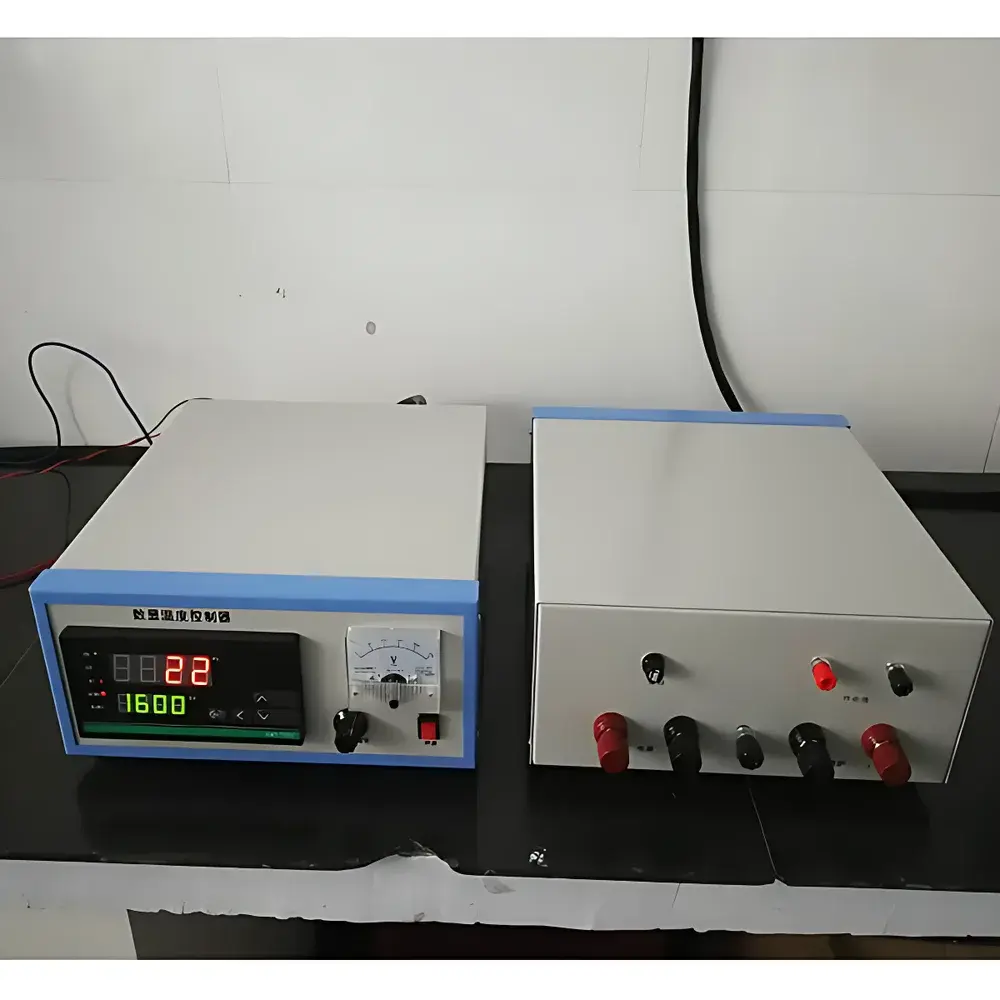
MingShen Science SWK-S High-Temperature Digital Temperature Data Logger and Controller (1600 °C Rated)
| Brand | MingShen Science |
|---|---|
| Origin | Henan, China |
| Manufacturer Type | Authorized Distributor |
| Country of Origin | China |
| Model | SWK-S |
| Channel Count | Single-Channel |
| Dimensions (L×W×H) | 330 × 290 × 120 mm |
| Mounting | Benchtop Fixed Installation |
| Enclosure Material | Cast Iron |
| Input Voltage | 220 V AC, 50 Hz |
| Output Voltage Range | 0–220 V AC (Continuously Adjustable) |
| Maximum Load Capacity | 5 kW |
| Accuracy Class | 1.0 |
| Compatible Thermocouple | Type S (Platinum/Rhodium), 0–1600 °C |
| Operating Ambient Temperature | 0–40 °C |
| Control Algorithm | PID with Auto-Tuning Capability |
| Output Switching Device | Solid-State Relay (SSR), Contactless |
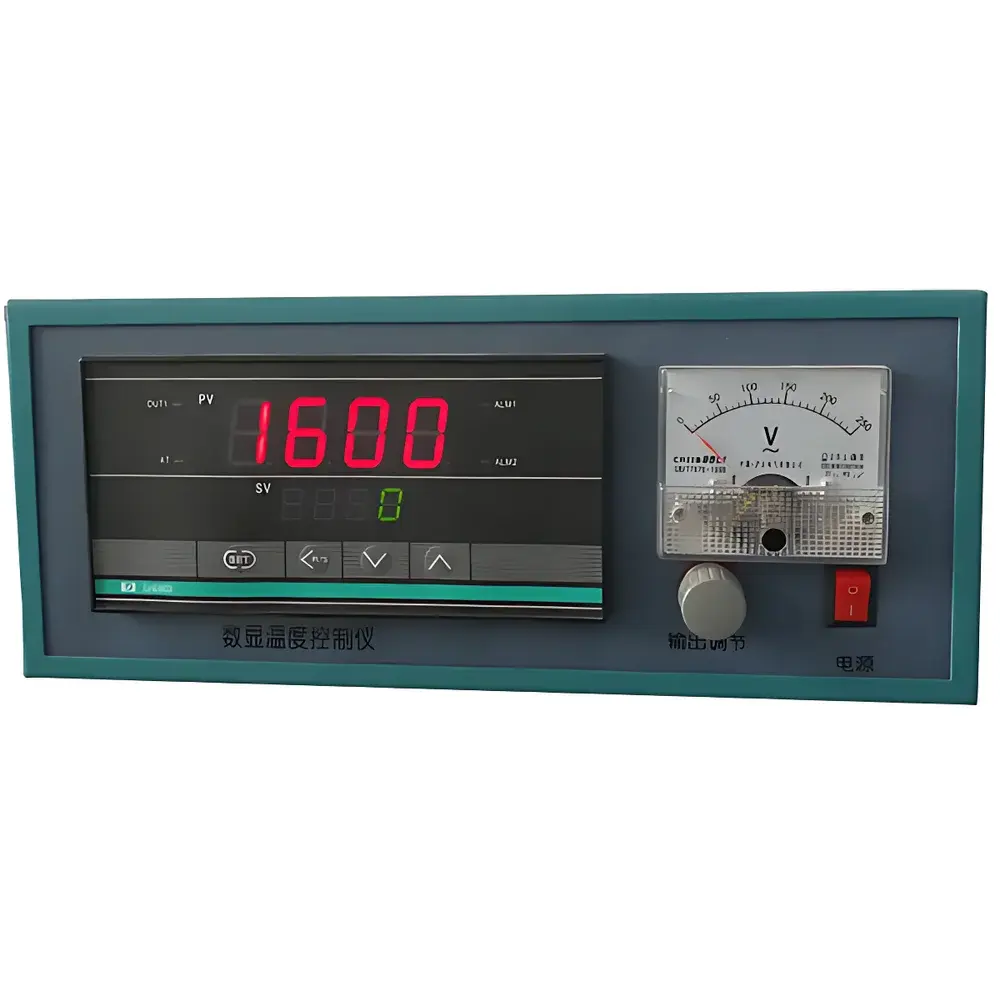
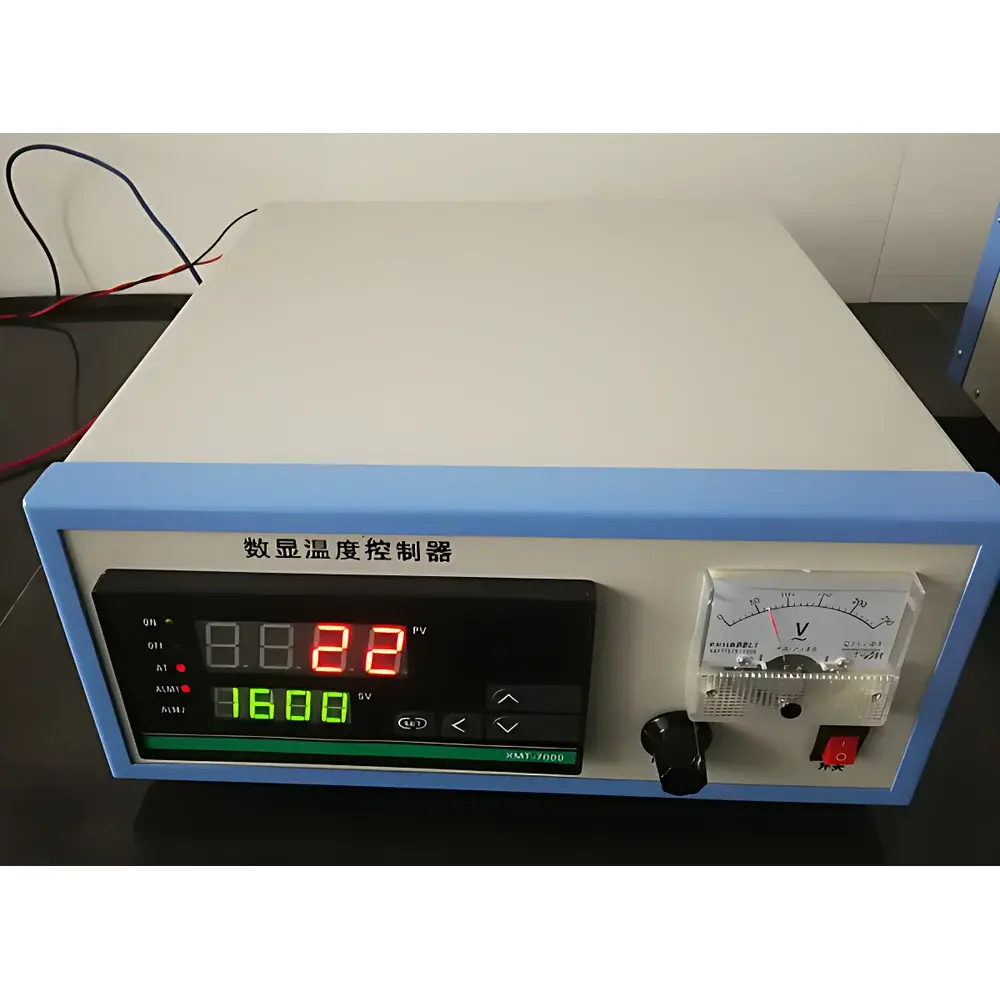
| Display | Dual-Digital LED (Setpoint & Process Value) |
Overview
The MingShen Science SWK-S High-Temperature Digital Temperature Data Logger and Controller is an industrial-grade benchtop temperature management system engineered for precise, stable, and repeatable thermal control in high-temperature laboratory and materials processing environments. Designed specifically for integration with box-type high-temperature resistance furnaces, sulfur analyzers (e.g., coal/ash sulfur determinators), and other resistive heating apparatuses, the SWK-S implements closed-loop feedback control based on real-time input from a calibrated Type S thermocouple (Pt–10% Rh / Pt). Its core architecture supports continuous monitoring, logging, and proportional-integral-derivative (PID) regulation up to 1600 °C — a critical capability for ceramic sintering, metallurgical heat treatment, refractory testing, and ASTM E1113-compliant ash fusion analysis. Unlike basic on/off controllers, the SWK-S delivers smooth, overshoot-suppressed ramp-soak profiles via analog voltage modulation and SSR-based zero-crossing switching, ensuring thermal stability within ±10 °C across its full operating range (per 1.0 accuracy class per IEC 60584-2).
Key Features
- True dual-digit LED display showing simultaneous setpoint and actual process temperature — eliminating operator misreading and enabling rapid verification during thermal cycling.
- Integrated PID controller with auto-tuning function; user-adjustable P, I, and D parameters allow optimization for diverse thermal mass configurations (e.g., lightweight crucibles vs. heavy muffle bricks).
- 0–220 V AC continuously variable output enables fine-grained control over heating rate — essential for compliance with ISO 5667-21 (water quality sampling) furnace ramp protocols or USP pyrogen test thermal validation.
- Cast iron enclosure provides mechanical rigidity, electromagnetic interference (EMI) shielding, and thermal mass buffering — critical for long-term drift stability in shared lab environments with variable ambient airflow.
- Contactless solid-state relay (SSR) output ensures silent operation, zero arc generation, and >1 million cycle service life — significantly reducing maintenance intervals compared to electromechanical contactors.
- Compliance-ready design: Supports manual calibration verification via front-panel access; all displayed values traceable to NIST-traceable Type S reference junctions when used with certified thermocouple extension wire (IEC 60584-3).
Sample Compatibility & Compliance
The SWK-S is validated for use with standard Type S thermocouples meeting ASTM E230/E230M specifications, including mineral-insulated metal-sheathed (MIMS) variants rated for continuous operation at 1600 °C. It accommodates both bare-wire and protected probe configurations typical in furnace linings, kiln shelves, and combustion chamber monitoring. The instrument meets CE-marked EMC Directive 2014/30/EU requirements for conducted/radiated emissions and immunity in laboratory settings. While not FDA 21 CFR Part 11-certified out-of-the-box, its deterministic control logic and non-volatile setpoint storage support GLP/GMP-aligned documentation practices when paired with external audit-trail-capable data acquisition systems.
Software & Data Management
As a standalone hardware controller, the SWK-S does not include embedded firmware-based data logging or USB/RS-485 communication ports. However, its analog output signal (0–5 V or 4–20 mA optional via external module) is compatible with third-party SCADA platforms (e.g., LabVIEW, Ignition, or Siemens SIMATIC S7) for time-stamped temperature archival, alarm event logging, and CSV export. Users may implement compliant electronic records by connecting the SWK-S’s process value output to a validated data logger meeting ISO/IEC 17025 clause 5.9 requirements for measurement uncertainty propagation.
Applications
- Control and profiling of high-temperature resistance furnaces per ISO 8501-3 (surface preparation standards) and ASTM C20 (bulk density testing of refractories).
- Thermal conditioning of catalyst samples prior to BET surface area analysis (ASTM D3663).
- Calibration verification of thermocouple reference junctions in metrology labs.
- Ramp-hold sequences for ash fusion temperature determination (ASTM D5373, ISO 697).
- Stabilization of graphite crucible zones in elemental analyzer ovens (e.g., LECO SC-132).
FAQ
What thermocouple types are supported beyond Type S?
Only Type S (Platinum-10% Rhodium / Platinum) thermocouples are factory-calibrated and supported. Substitution with Type K or R requires hardware modification and invalidates accuracy certification.
Can the SWK-S be integrated into a networked lab infrastructure?
No native Ethernet or Wi-Fi interface exists; integration requires external analog-to-digital conversion and middleware configuration per IEEE 1451.2 standards.
Is the 1.0 accuracy class maintained across the entire 0–1600 °C range?
Yes — per IEC 60584-2, the 1.0 class specifies maximum permissible error of ±(0.0025 × |t|) °C, where t is the measured temperature in °C, verified at three points (300 °C, 900 °C, 1500 °C) during factory calibration.
Does the cast iron enclosure meet IP rating requirements?
The enclosure is rated IP20 (IEC 60529) — suitable for dry, indoor laboratory use only; no protection against dust ingress or water exposure.
What is the recommended recalibration interval?
Annual verification against a NIST-traceable dry-block calibrator (e.g., Fluke 9142) is advised under GLP conditions, especially after exposure to thermal shock or mechanical vibration.