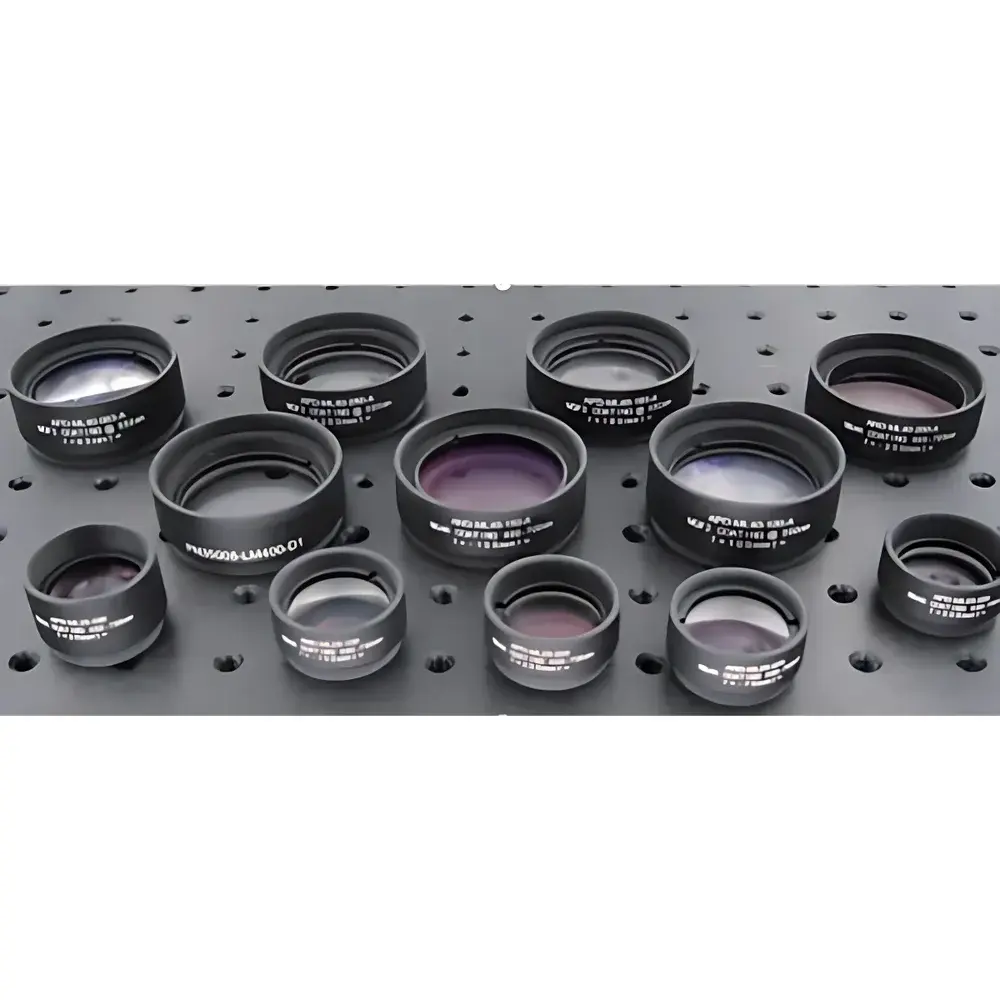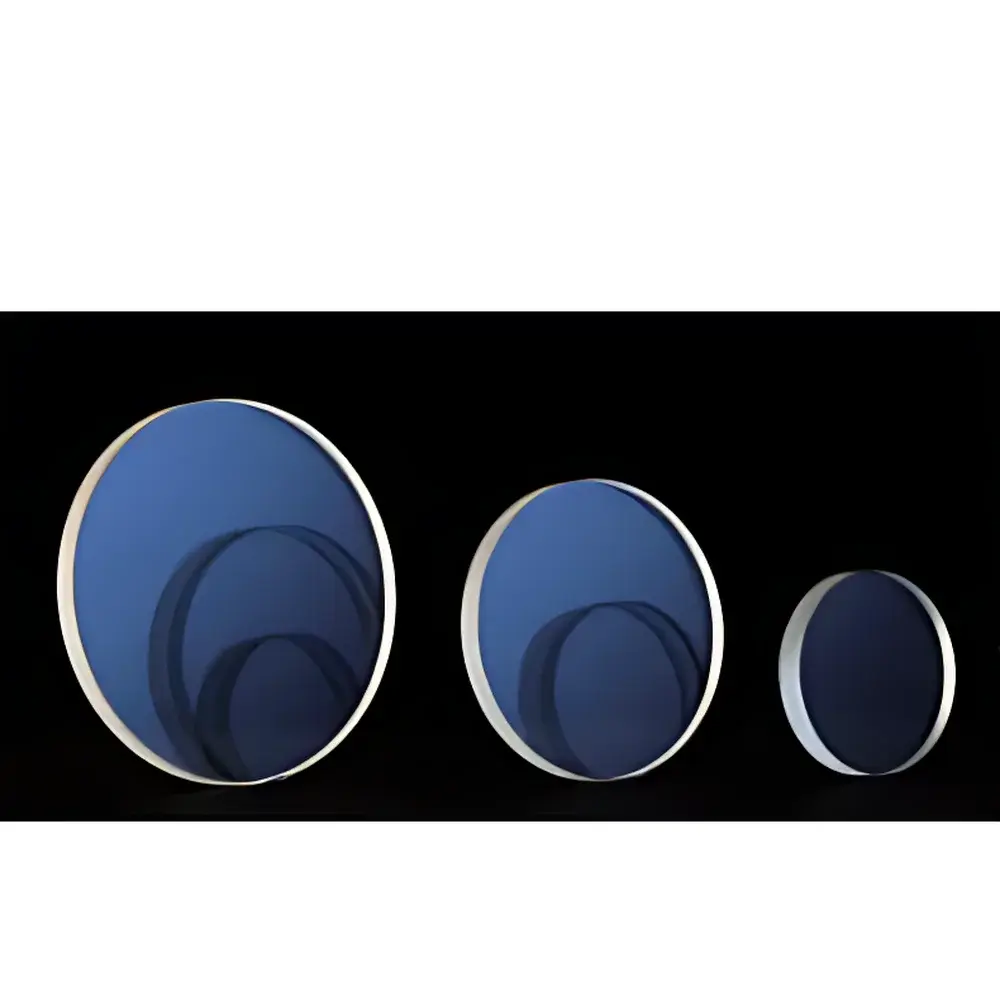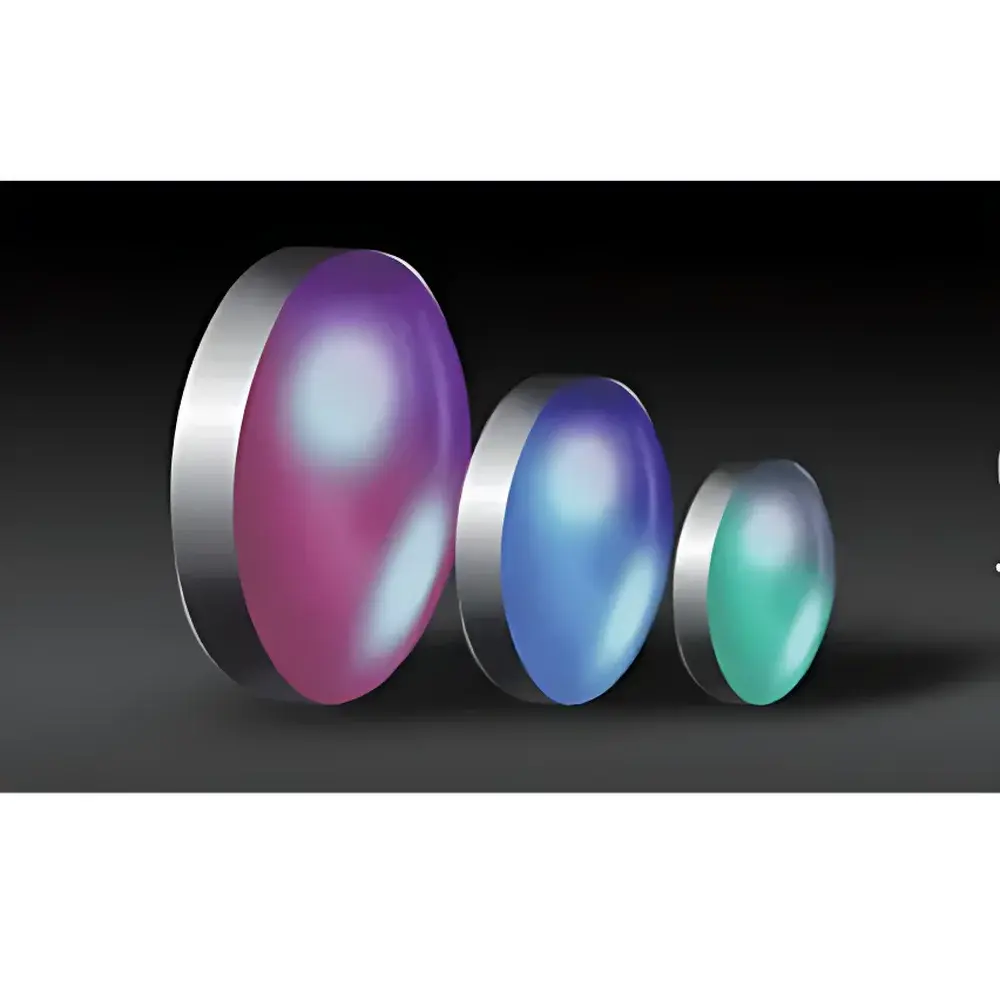
MiXran Meg1039 UV-Fused Silica Aspheric Lens

| Brand | MiXran |
|---|---|
| Model | Meg1039 |
| Material | UV-grade fused silica |
| Surface | Uncoated or AR-coated (250–400 nm) |
| Diameter | 12.5 mm / 25 mm / 50 mm |
| EFL | 10 mm / 20 mm / 40 mm |
| Center Thickness | 1.9 mm / 3.6 mm / 5.7 mm |
| Edge Thickness | 4.9 mm / 9.9 mm / 19.7 mm |
| Clear Aperture | Ø11.43 mm / Ø22.86 mm / Ø45.72 mm |
| Effective Focal Length Tolerance | ±1% |
| Surface Irregularity | λ/4 @ 633 nm |
| Surface Quality | 40-20 scratch-dig |
| Aspheric Coefficient Accuracy | ≤±0.5 µm PV deviation from design |
Ask about pricing, availability and specifications.
Overview
The MiXran Meg1039 is a precision-engineered UV-grade fused silica aspheric lens designed for demanding optical applications requiring high transmission in the deep ultraviolet spectral range (250–400 nm). Unlike conventional spherical lenses, the Meg1039 employs a rotationally symmetric aspheric surface profile to eliminate spherical aberration and significantly improve wavefront fidelity—enabling diffraction-limited performance in compact beam collimation, focusing, and imaging systems. Constructed from synthetic fused silica (SiO₂) with <1 ppm metallic impurities and OH content 5 J/cm² at 355 nm, 10 ns pulse). Its monolithic structure ensures long-term stability under vacuum, humidity cycling, and thermal load—making it suitable for integration into spectroscopic instrumentation, UV lithography alignment optics, excimer laser delivery systems, and space-qualified optical benches.
Key Features
- UV-optimized fused silica substrate with transmission >99.5% per surface (uncoated) and >99.8% per surface (AR-coated) across 250–400 nm
- Precision diamond-turned or magnetorheological finished aspheric surface with residual error ≤0.5 µm PV relative to ideal polynomial fit (e.g., Q-type or even-asphere)
- Strict conformance to ISO 10110-5:2018 for surface form accuracy and ISO 10110-7:2017 for surface quality (40–20 scratch-dig)
- Three standard configurations: Ø12.5 mm × f = 10 mm, Ø25 mm × f = 20 mm, and Ø50 mm × f = 40 mm—each with calibrated effective focal length (EFL) tolerance of ±1%
- Optional broadband anti-reflection coating optimized for 250–400 nm (R < 0.25% avg per surface), deposited via ion-assisted e-beam evaporation with environmental durability per MIL-C-48497A
- Center thickness tolerance ±0.05 mm; edge thickness tolerance ±0.1 mm; centration error < 3 arcmin
Sample Compatibility & Compliance
The Meg1039 lens is compatible with standard kinematic and flexure-based lens mounts (e.g., Thorlabs SM-series, Newport KM-series) and supports integration into both air- and nitrogen-purged optical enclosures. It complies with RoHS 2011/65/EU and REACH SVHC regulations. For regulated environments—including ISO/IEC 17025-accredited calibration labs and FDA-regulated analytical instrument platforms—the lens meets traceability requirements when supplied with NIST-traceable dimensional certification (available upon request). Its material composition and coating process are documented per ISO 9001:2015 manufacturing protocols, supporting GLP/GMP audit readiness for optical subsystem validation.
Software & Data Management
While the Meg1039 is a passive optical component, its performance characterization data—including measured wavefront error (via Zygo GPI interferometry), spectral transmittance (PerkinElmer Lambda 950 UV/VIS/NIR spectrophotometer), and surface topography (Bruker ContourGT-K optical profiler)—are archived in standardized XML-based metadata files compliant with ASTM E2812-22 (Standard Practice for Optical Component Data Exchange). These datasets can be imported into Zemax OpticStudio, CODE V, or FRED for tolerance analysis, sensitivity modeling, and system-level stray light prediction. Batch-specific certificates of conformance include full metrology reports with uncertainty budgets aligned to GUM (JCGM 100:2008).
Applications
- Collimation of UV LED and laser diode outputs (e.g., 266 nm, 325 nm HeCd, 355 nm DPSS) in fluorescence microscopy and flow cytometry illumination paths
- Focusing optics in UV Raman spectrometers and time-resolved photoelectron spectroscopy beamlines
- Objective elements in UV inspection systems for semiconductor wafer metrology and photomask defect review
- Beam shaping in excimer laser (ArF, KrF) projection systems and mask aligners
- Primary optics in space-based solar UV radiometers (e.g., heritage-compatible with SDO/AIA filter assemblies)
- Custom relay systems for EUV source conditioning where out-of-band UV filtering is required
FAQ
Is the Meg1039 lens suitable for high-power pulsed UV lasers?
Yes—when used within specified fluence limits (≤5 J/cm² at 355 nm, 10 ns) and with proper beam homogenization to avoid localized thermal stress. AR-coated variants are recommended for multi-pass cavity applications.
Can I request custom aspheric coefficients or non-standard diameters?
Yes. MiXran offers OEM design support per ISO 10110-12:2021, including custom conic constants, higher-order aspheric terms, and hybrid refractive-diffractive profiles. Lead time for custom orders is typically 8–12 weeks.
What documentation accompanies each shipped lens?
Each unit ships with a Certificate of Conformance (CoC), dimensional inspection report, spectral transmittance curve, and interferometric surface map. NIST-traceable calibration reports are available as an optional add-on.
Does the UV AR coating withstand ozone exposure in ambient air?
Yes—the MgF₂/Ta₂O₅ multilayer stack is rated for continuous operation in ambient lab air with ozone concentrations up to 100 ppb, per ASTM D4586-20 accelerated aging testing.
How is centration error controlled during fabrication?
Centration is maintained via precision diamond turning on air-bearing spindles with real-time interferometric feedback, followed by post-polish alignment verification using a Trioptics OptiCentric 100. Final centration error is guaranteed < 3 arcmin.