
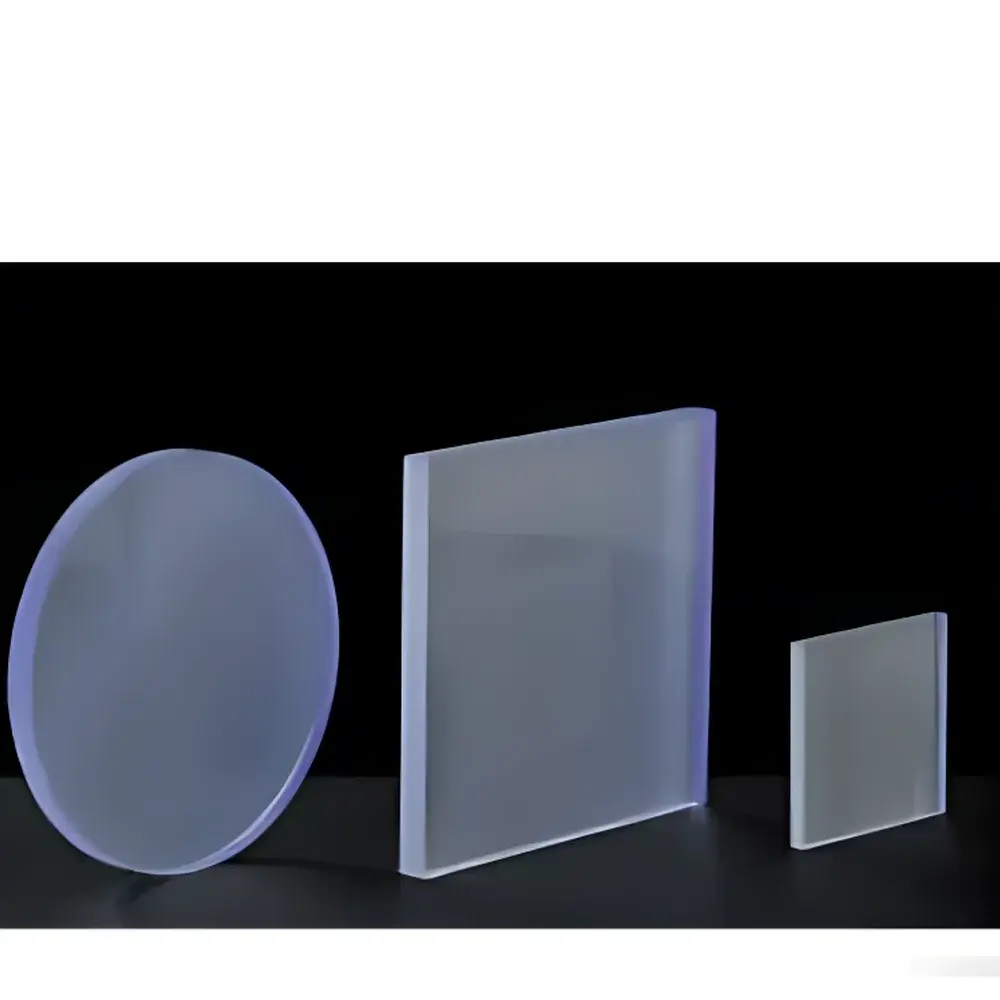
MiXran Meg1083 Precision Fused Silica Flat Mirror
| Brand | MiXran |
|---|---|
| Model | Meg1083 |
| Substrate Material | Fused Silica (SiO₂) |
| Surface Flatness | λ/20 @ 632.8 nm |
| Surface Quality | 20–10 scratch-dig |
| Clear Aperture | ≥90% of nominal diameter/side |
| Thickness Tolerance | ±0.1 mm |
| Coating Options | Protected Aluminum (AL), UV-Enhanced Aluminum (UVAL), Protected Silver (AG), Protected Gold (AU) |
| Operating Wavelength Range | AL (450–2000 nm), UVAL (250–2000 nm), AG (450–20,000 nm), AU (700–20,000 nm) |
| Damage Threshold | >500 MW/cm² (10 ns, 1064 nm, TEM₀₀) |
Overview
The MiXran Meg1083 is a high-precision flat mirror engineered for demanding optical alignment, interferometry, beam steering, and laser cavity applications in research laboratories and industrial metrology environments. Constructed from low-thermal-expansion fused silica (SiO₂), this mirror provides exceptional dimensional stability across temperature fluctuations and superior transmission in the deep ultraviolet (DUV) to far-infrared (FIR) spectral regions. Its λ/20 surface flatness (measured at 632.8 nm HeNe wavelength) ensures minimal wavefront distortion—critical for applications requiring sub-microradian angular accuracy or coherence preservation in Michelson, Mach–Zehnder, or Twyman–Green interferometers. Unlike borosilicate or BK7 substrates, fused silica offers negligible fluorescence, ultra-low hydroxyl content (<1 ppm), and high resistance to UV-induced compaction, making the Meg1083 suitable for excimer laser systems (e.g., ArF at 193 nm) and synchrotron beamlines where long-term irradiation stability is mandatory.
Key Features
- Fused silica substrate with certified CTE of 0.55 × 10⁻⁶ /°C (20–300 °C), minimizing thermal drift during extended operation.
- Surface flatness of λ/20 (≤31.6 nm PV) and surface quality rated 20–10 scratch-dig per MIL-PRF-13830B, verified via phase-shifting interferometry (PSI) and dark-field inspection.
- Four standard coating variants optimized for spectral performance: protected aluminum (AL) for broadband visible–NIR reflectivity (>90% from 450–2000 nm), UV-enhanced aluminum (UVAL) with >85% reflectance down to 250 nm, protected silver (AG) for high IR reflectivity (>95% from 1–20 µm), and protected gold (AU) for stable performance beyond 2 µm with >98% reflectance at 10.6 µm (CO₂ laser line).
- Clear aperture guaranteed ≥90% of nominal dimension, with edge exclusion zone defined per ISO 10110-7; all mirrors undergo full-aperture spectral reflectance mapping using calibrated UV-VIS-NIR spectrophotometry.
- Robust dielectric overcoat architecture applied via ion-assisted electron-beam evaporation, ensuring adhesion strength >10 MPa (ASTM D3359 cross-hatch test), humidity resistance per MIL-C-48497A, and laser-induced damage threshold (LIDT) validated at 500 MW/cm² (10 ns pulse, 1064 nm, TEM₀₀, 10 Hz repetition rate).
Sample Compatibility & Compliance
The Meg1083 series supports standardized mounting configurations including kinematic dowel pin alignment (for Ø12.5 mm and larger round optics) and recessed edge chamfers compatible with commercial mirror mounts (e.g., Thorlabs KM100, Newport UMB1). All coated variants comply with RoHS 2015/863/EU and REACH SVHC regulations. Reflectance data sheets include traceable NIST-traceable calibration certificates for spectral performance. For regulated environments—including ISO/IEC 17025-accredited calibration labs and FDA-regulated optical subsystems—the Meg1083 can be supplied with full manufacturing lot traceability, coating process logs (deposition time, pressure, substrate temperature), and post-coating environmental stress testing (thermal cycling: –40 °C to +85 °C, 5 cycles; humidity exposure: 85% RH, 1000 h per IEC 60068-2-78).
Software & Data Management
Each Meg1083 unit is assigned a unique serial number linked to a digital product dossier accessible via MiXran’s secure portal. This dossier includes interferometric surface map files (ZEMAX-compatible .ZBF format), spectral reflectance curves (.CSV and .SDF), coating deposition chamber log summaries, and certificate of conformance (CoC) with ISO 9001:2015 and ISO 10110-5 compliance statements. For integration into automated optical assembly lines, the dossier supports API-based retrieval via RESTful endpoints compliant with IEEE 1516 HLA standards. Audit trails meet FDA 21 CFR Part 11 requirements for electronic records and signatures when deployed in GMP-compliant photonics manufacturing workflows.
Applications
- Laser resonator end mirrors and folding mirrors for solid-state (Nd:YAG, Ti:sapphire), fiber, and CO₂ lasers.
- Reference optics in gravitational wave detection interferometers (e.g., LIGO-style suspended test masses require λ/20 fused silica flats).
- Beam combiners and pick-off mirrors in hyperspectral imaging spectrometers (e.g., push-broom sensors operating from 250–2500 nm).
- Calibration standards for optical surface metrology systems (e.g., Zygo Verifire™, 4D AccuFiz™).
- Vacuum-compatible optics in EUV lithography tool alignment subassemblies (UVAL-coated variants qualified to <1×10⁻⁹ Torr outgassing per ASTM E595).
FAQ
What is the maximum incident angle for optimal performance?
The Meg1083 is specified for normal incidence (0° AOI); for angles up to ±15°, reflectance deviation remains within ±1.5% of nominal values—verified per ISO 9211-4.
Can these mirrors be cleaned using standard optical protocols?
Yes—fused silica substrate and dielectric overcoats are compatible with Class 100 cleanroom-grade solvent cleaning (acetone/isopropanol wipe, followed by dry nitrogen purge); no ultrasonic cleaning recommended for coated surfaces.
Is custom substrate thickness or diameter available?
Yes—custom diameters from Ø3 mm to Ø100 mm and thicknesses from 2 mm to 25 mm are supported under MiXran’s OEM engineering service (lead time: 6–8 weeks, MOQ: 5 units).
Do you provide wavefront error (WFE) maps for individual units?
Yes—interferometric WFE data (PV and RMS) is included in the digital dossier for all units with diameter ≥Ø12.5 mm; smaller optics receive batch-certified statistical WFE limits.
Are these mirrors suitable for ultra-high vacuum (UHV) applications?
UVAL- and AL-coated variants are UHV-compatible (outgassing rate <1×10⁻¹² Torr·L/s·cm² per ASTM E595); AG- and AU-coated versions require additional bake-out validation for pressures below 1×10⁻⁸ Torr.



