
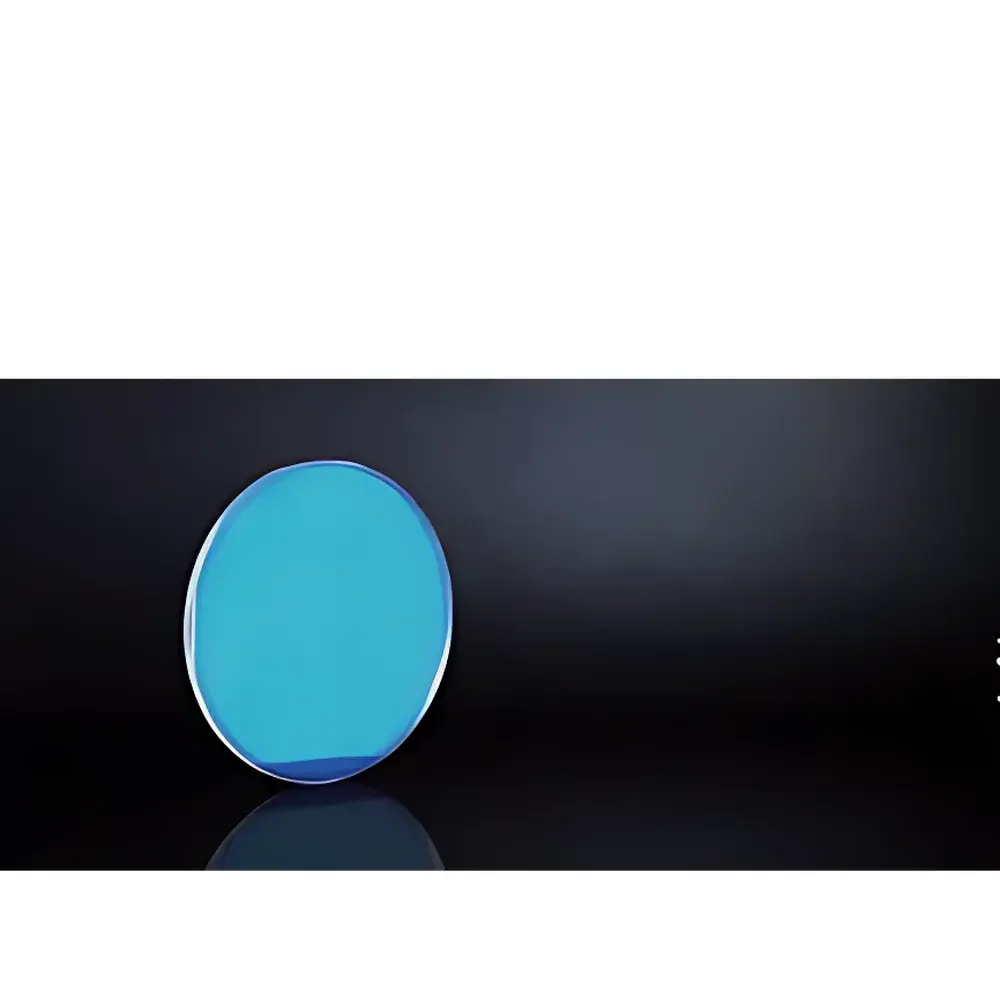
MiXran Meg1122 Multi-Stage Waveplate
| Brand | MiXran |
|---|---|
| Model | Meg1122 |
| Optical Component Type | Retardation Plate |
| Available Configurations | λ/4 and λ/2 waveplates |
| Center Wavelengths (CWL) | 355, 400, 488, 532, 632.8, 670, 780, 808, 850, 980, 1064, 1550 nm |
| Aperture Diameters | 12.7 mm and 25.4 mm |
| Material | UV-grade fused silica or crystalline quartz (depending on CWL) |
| Surface Quality | 20–10 scratch-dig |
| Wavefront Distortion | < λ/8 @ 633 nm |
| Parallelism | < 10 arcsec |
| AR Coating | Broadband or laser-line optimized (R < 0.25% per surface) |
Overview
The MiXran Meg1122 Multi-Stage Waveplate is a precision optical component engineered for high-fidelity polarization state manipulation in demanding laser, interferometric, and quantum optics applications. Unlike single-element retarders, the Meg1122 integrates multiple calibrated waveplate stages—typically two or three—within a rigid, kinematically aligned mount to enable sequential, orthogonal, or cascaded retardation. This architecture supports complex polarization transformations including arbitrary ellipticity control, polarization rotation without beam deviation, and compensation of birefringent path asymmetries. The device operates on the principle of controlled phase delay between orthogonal linear polarization components via birefringent anisotropy, with retardation accuracy maintained across its specified center wavelength (CWL) range from deep UV (355 nm) to mid-infrared (1550 nm). Each stage is individually characterized for retardance uniformity (< ±0.5° over clear aperture) and fast-axis orientation tolerance (< ±0.25°), ensuring reproducible performance under vacuum, cryogenic, or high-power CW/pulsed laser conditions.
Key Features
- Multi-stage configuration: Supports dual or triple waveplate stacks with independent angular alignment capability for compound polarization synthesis
- High-precision mounting: Monolithic aluminum or Invar housing with kinematic adjustment screws (±5° fine-tuning range) and locking mechanism
- Low-wavefront distortion: < λ/8 PV @ 633 nm ensures minimal beam degradation in interferometry and cavity alignment
- Laser-grade coatings: Anti-reflection (AR) coatings optimized for specific CWL bands—e.g., R < 0.15% @ 532 nm or broadband (400–700 nm) coverage—minimizing ghost reflections and power loss
- Thermal stability: Mount design accommodates differential expansion; retardance drift < 0.005λ/°C typical for quartz-based elements
- Traceable calibration: Each unit supplied with individual test report including measured retardance, fast-axis angle, and transmitted wavefront error
Sample Compatibility & Compliance
The Meg1122 is compatible with collimated free-space beams up to 10 mm diameter (for 12.7 mm aperture variants) or 20 mm (for 25.4 mm variants), supporting input polarization states ranging from linear (0°–180°), circular, to arbitrary elliptical. It meets ISO 10110-7 standards for optical component surface quality and complies with RoHS 2015/863/EU for hazardous substance restrictions. For regulated environments—including ISO/IEC 17025-accredited calibration labs and GMP-aligned photonics manufacturing—the Meg1122 can be supplied with full traceability to NIST-traceable interferometric measurement standards. While not intrinsically FDA-regulated, its use in Class II/III medical laser systems (e.g., ophthalmic OCT or dermatological ablation platforms) conforms to IEC 60601-2-22 requirements when integrated into validated optical subassemblies.
Software & Data Management
The Meg1122 is a passive optical element and does not incorporate embedded electronics or firmware. However, MiXran provides optional digital calibration data packages in standardized formats (.csv, .xlsx) containing measured retardance vs. wavelength curves, fast-axis orientation maps, and wavefront error profiles. These datasets are compatible with common optical design software including Zemax OpticStudio, CODE V, and FRED for system-level polarization modeling. For integration into automated test benches, the mechanical interface (SM1 or SM2 threading, Ø1″ or Ø2″ outer diameter) supports compatibility with motorized rotation stages from Thorlabs, Newport, and Sutter Instrument—enabling script-driven polarization sweeps under LabVIEW, Python (via PyVISA), or MATLAB control environments.
Applications
- Laser cavity polarization control: Intracavity half-wave plates for output polarization stabilization in DPSS and fiber lasers
- Quantum optics experiments: State preparation and tomography of photonic qubits using sequential λ/4 and λ/2 stages
- Polarization-sensitive imaging: Enabling Mueller matrix acquisition in biomedical microscopy and remote sensing
- Ellipsometry calibration: Reference retarders for instrument validation across UV–NIR spectral ranges
- Optical coherence tomography (OCT): Compensation of polarization mode dispersion in fiber-based interferometers
- High-power laser systems: Harmonic separation and pulse compression setups requiring low-absorption, high-damage-threshold retarders
FAQ
What is the maximum average power density the Meg1122 can withstand?
For fused silica variants at 1064 nm, the damage threshold exceeds 10 MW/cm² for nanosecond pulses and >5 kW/cm² for CW operation—subject to beam homogeneity and cooling conditions.
Can the Meg1122 be customized with non-standard center wavelengths or retardance values?
Yes. MiXran offers OEM waveplate fabrication services including custom CWLs (±5 nm tolerance), fractional retardances (e.g., λ/8, 3λ/4), and substrate materials (MgF₂, sapphire, or YVO₄) for specialized UV or IR applications.
Is fast-axis orientation marked on the housing?
Yes. A precision-engraved arrow indicates the nominal fast-axis direction relative to the mounting reference edge, verified via rotating analyzer ellipsometry and documented in the calibration certificate.
How is thermal drift compensated in multi-stage configurations?
The housing incorporates matched CTE materials and stress-relieved bonding interfaces; users may apply empirical temperature-dependent retardance correction tables derived from included characterization data.
Do you provide mounting adapters for cage systems or lens tubes?
Standard SM1-threaded (1.035″-40) and SM2-threaded (2.035″-40) versions are available; custom flange mounts (e.g., CF-35, DN25) can be quoted upon request.




