
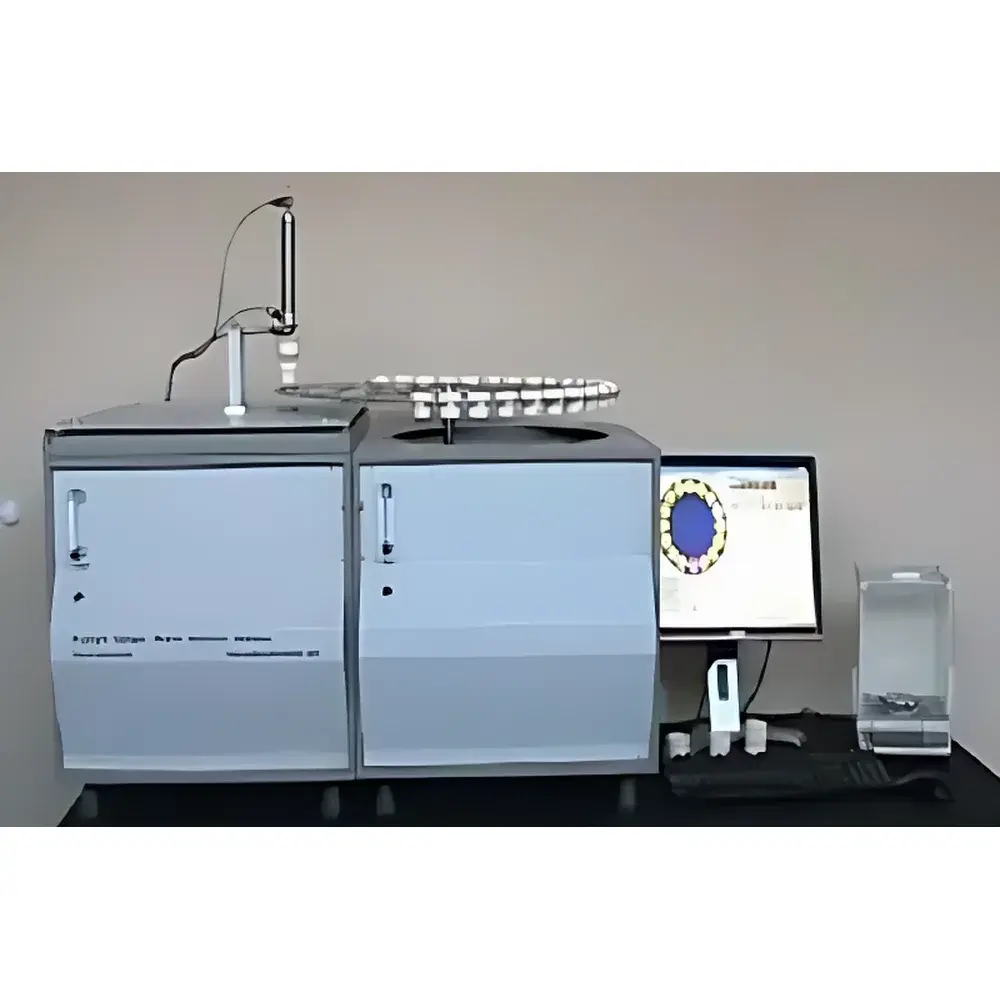
MMS-4000 Automated High-Throughput Infrared Moisture and Ash Analyzer
| Origin | USA |
|---|---|
| Manufacturer Type | Authorized Distributor |
| Origin Category | Imported |
| Model | MMS-4000 |
| Pricing | Available Upon Request |
Overview
The MMS-4000 Automated High-Throughput Infrared Moisture and Ash Analyzer is a thermogravimetric measurement system engineered for rapid, precise, and fully automated determination of moisture content and ash (or loss on ignition, LOI) in solid particulate and powdered samples. Unlike conventional infrared moisture analyzers that rely solely on surface drying kinetics, the MMS-4000 integrates controlled radiant heating with real-time mass monitoring to quantify total volatile loss—including bound water, solvents, and organic volatiles—followed by high-temperature calcination (up to 1000 °C) to determine residual ash or mineral content. Its design adheres to core principles of ASTM E1868 (Standard Test Method for Determining Moisture Content of Solid Waste), ISO 579:2021 (Determination of moisture in animal feeding stuffs), and USP (Water Determination), supporting method validation under GLP and GMP environments where auditability and traceability are required.
Key Features
- Fully automated operation with microprocessor-based control and integrated software—no manual intervention during sample loading, heating, weighing, or data logging.
- 15-position fixed sample carousel; expandable to 77-sample throughput via optional robotic autosampler with barcode-enabled sample tracking.
- High-stability metal construction throughout critical thermal zones: stainless-steel rotating turntable, crucibles, support columns, and lid assemblies—all rated for continuous operation at ≥1000 °C without warping, cracking, or dimensional drift.
- Interchangeable crucible options: corrosion-resistant alloy crucibles standard; alumina ceramic crucibles available for highly aggressive matrices (e.g., halogen-rich coal, acidic catalysts, or alkali-laden cement clinker).
- Dual-display temperature controller: simultaneous readout of setpoint and real-time chamber temperature, calibrated to ±1 °C accuracy across 50–1000 °C range.
- Integrated analytical balance (0.0001 g readability, 210 g capacity) with electromagnetic force restoration sensor—immune to dust accumulation and vibration-induced drift.
- Minimal electronics architecture: only two modular PCBs required; occupies two standard PCI/PCIe slots when interfaced with a Windows-based desktop PC (not included).
- Service-accessible design: full front, rear, side, and bottom panel access enables tool-free replacement of fans, solenoid valves, relays, pneumatic actuators, and EM sensors—all commercially available off-the-shelf components.
Sample Compatibility & Compliance
The MMS-4000 accommodates heterogeneous solids within 0.1–10 g mass range, including granular feeds, milled cereals (wheat, flour), confectionery products (biscuits, crackers), inorganic powders (CaCO₃, cement, limestone), and energy materials (bituminous coal, biomass pellets). It meets regulatory expectations for routine QC in food safety (FDA FSMA), feed hygiene (EC No. 183/2005), and industrial raw material certification (ASTM D3173, ISO 687, EN 15408). All firmware and data acquisition modules comply with FDA 21 CFR Part 11 requirements for electronic records and signatures when deployed with validated software configuration and user access controls.
Software & Data Management
The proprietary MMS-Control Suite provides method scripting, multi-stage thermal ramping (drying → pyrolysis → ash stabilization), real-time mass vs. time curve visualization, and automatic endpoint detection based on mass change rate thresholds (dg/dt ≤ 0.1 mg/min). Raw data files (.csv, .txt) include timestamped metadata: sample ID, operator login, balance calibration status, temperature profile, and environmental humidity/pressure logs (if external sensors are connected). Audit trails record all parameter modifications, user actions, and instrument events with immutable timestamps—supporting full traceability during internal audits or regulatory inspections.
Applications
- Food & Beverage: Rapid moisture specification release testing for snack foods, dairy powders, and starch-based ingredients—reducing assay time from 60+ minutes (TGA) to <25 minutes per sample.
- Animal Feed Manufacturing: Simultaneous moisture and ash quantification per ISO 6496 to verify nutrient dilution and mineral consistency across batch lots.
- Cement & Construction Materials: LOI determination per ASTM C114 in <25 minutes—replacing traditional muffle furnace protocols requiring overnight calcination.
- Fuel & Energy Sector: Proximate analysis of coal and biofuels per ASTM D3172, delivering reproducible moisture, volatile matter, and fixed carbon estimates without manual crucible handling.
- Pharmaceutical Excipients: Compliant moisture assessment for lactose, microcrystalline cellulose, and silicates under ICH Q5C stability guidelines.
FAQ
What standards does the MMS-4000 comply with for moisture and ash analysis?
It supports method implementation aligned with ASTM E1868, ISO 579, USP , ASTM D3173, and EN 15408—with configurable parameters to match specific standard-defined heating rates and dwell times.
Can the instrument be validated for regulated laboratory use?
Yes—when installed with IQ/OQ documentation packages, calibrated reference weights, NIST-traceable temperature probes, and configured with 21 CFR Part 11-compliant software settings, it meets GMP/GLP validation requirements.
Is ceramic crucible compatibility limited to specific sample types?
Ceramic crucibles are recommended only for highly corrosive or halogen-rich samples (e.g., PVC-containing plastics, chlorinated coal, or fluorinated catalysts) where prolonged exposure may degrade alloy crucibles.
What computing hardware is required to operate the MMS-4000?
A Windows 10/11 desktop PC (minimum i5 CPU, 8 GB RAM, 2 free PCIe slots) is mandatory; laptop connectivity is not supported due to power delivery and slot constraints.
How frequently does the balance require recalibration?
Internal auto-calibration occurs before each run; external verification with certified weights is recommended daily or per shift in high-throughput environments.





