
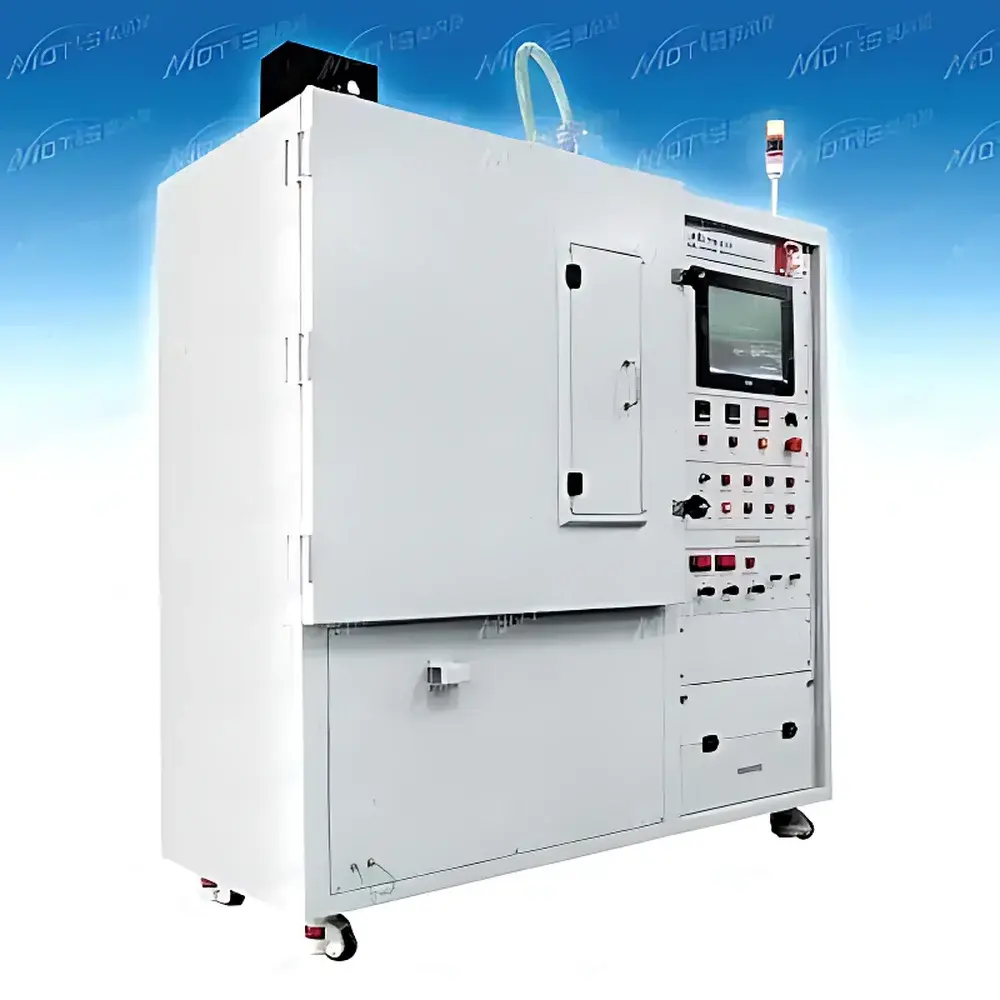
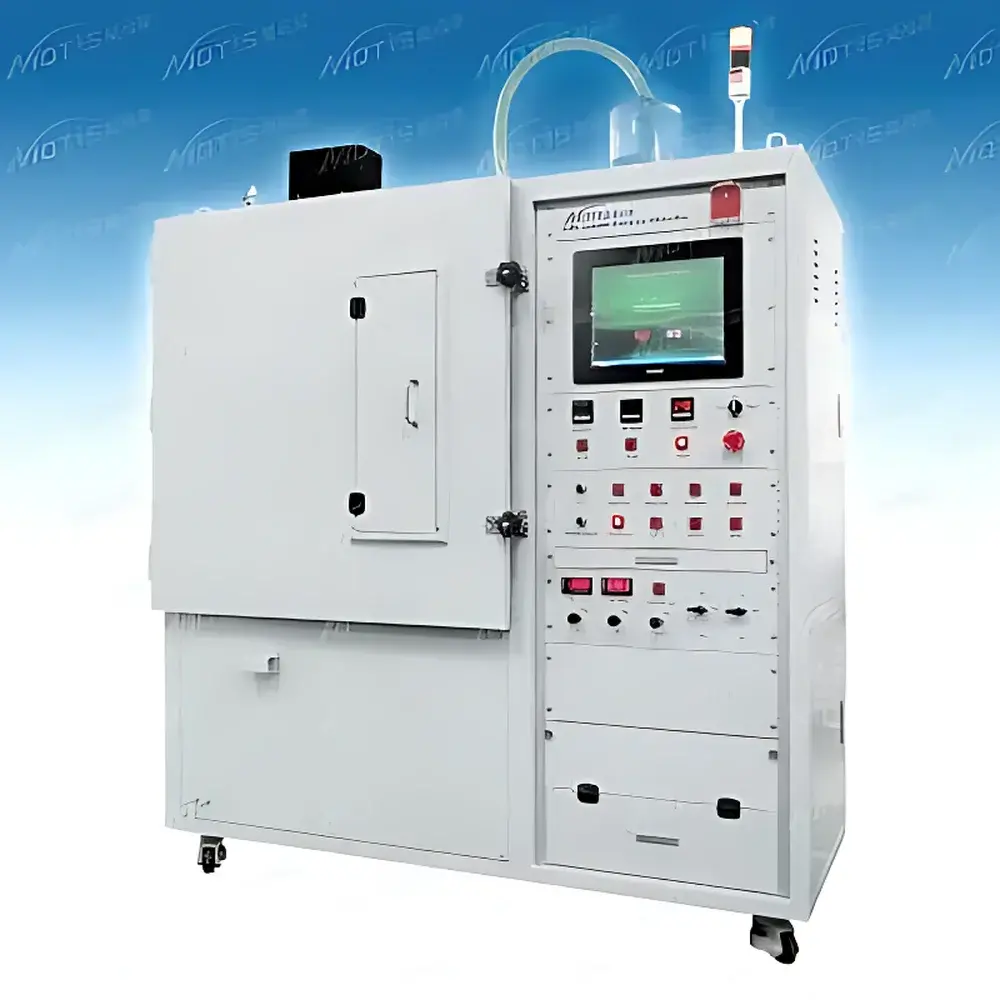
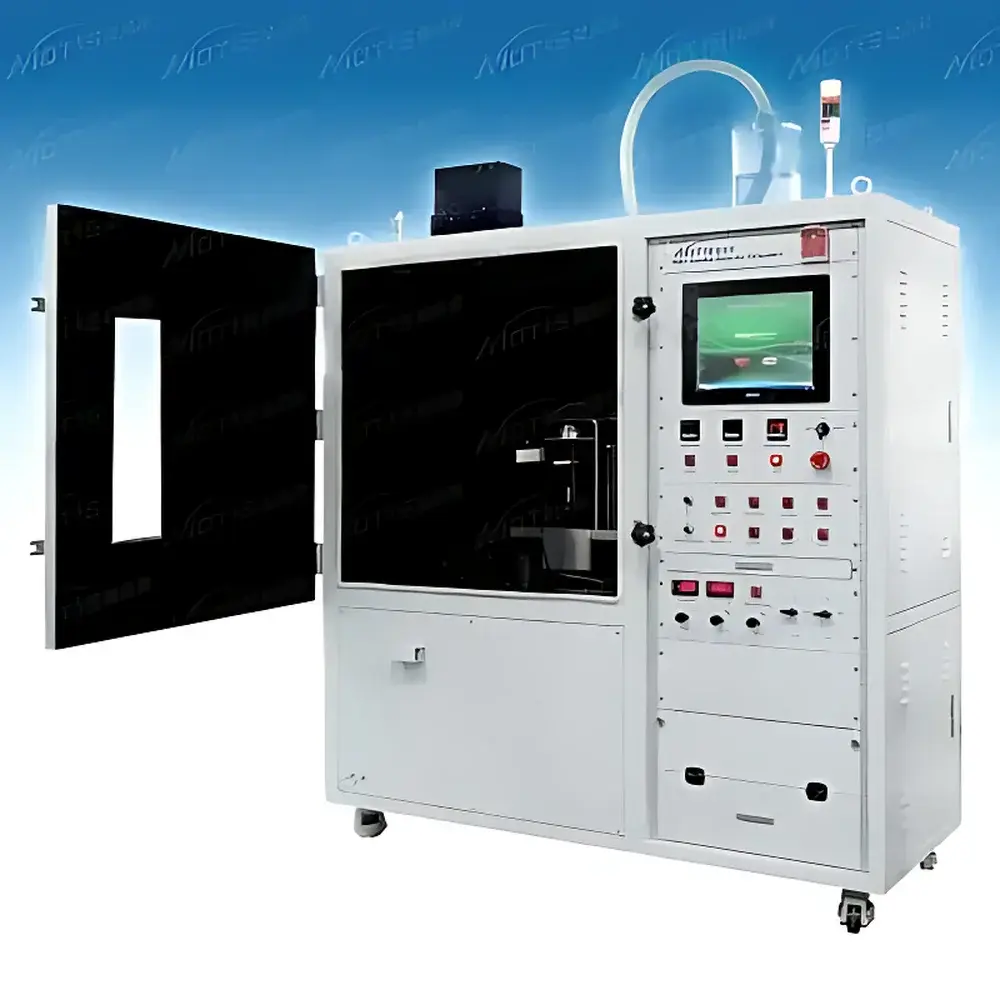
MOTIS SDB Smoke Density Chamber
| Brand | MOTIS |
|---|---|
| Origin | Shanghai, China |
| Model | SDB |
| Compliance Standards | ASTM E662, ISO 5659-2, NES 711 |
| Internal Chamber Dimensions | 914 × 914 × 610 mm |
| Optical System | Side-window photomultiplier tube (PMT), S-4 spectral response, transmittance resolution: 0.0001% |
| Radiation Sources | ASTM E662 radiant heater (25 kW/m²), ISO 5659-2 conical heater (50 kW/m²), dual-standard flame burners |
| Temperature Control | External auxiliary heating jacket |
| Safety Features | Explosive-relief aluminum foil lining, pressure-regulated vent port with capacity bottle, top/bottom pneumatic actuators |
| Cooling | Integrated recirculating water chiller (MEDTHERM water-cooled heat flux meter included, NIST-traceable calibration certificate provided) |
| Weighing System | 0–5000 g capacity, 0.01 g readability |
| Optical Calibration | Motorized ND2 neutral density filter wheel with Clear/Filter/Dark auto-selection |
| Light Source | Uniform incandescent collimated beam |
| Data Interface | Touchscreen PC with integrated reporting and thermal gravimetric analysis (TGA) module |
| Optional Add-ons | Dräger gas detection tubes, FTIR coupling interface for smoke gas speciation |
Overview
The MOTIS SDB Smoke Density Chamber is a fully integrated, standards-compliant optical densitometer engineered for quantitative measurement of specific optical density (Ds) generated during the pyrolysis and combustion of solid materials under controlled radiant or flame exposure. Its operational principle is grounded in the Beer–Lambert law: incident monochromatic light (from a stabilized incandescent source) traverses the smoke-laden test chamber, and attenuation of transmitted intensity is measured by a high-sensitivity side-window photomultiplier tube (PMT) with S-4 spectral response. The resulting transmittance data—resolved to 0.0001%—is converted in real time to smoke density values per ASTM E662, ISO 5659-2, and NES 711 protocols. Designed for laboratories requiring regulatory-grade reproducibility in fire safety evaluation, the SDB chamber supports both radiant and flaming modes, enabling comparative assessment of smoke generation kinetics across material classes including polymeric composites, rail interior linings, marine non-metallics, and low-smoke halogen-free cables.
Key Features
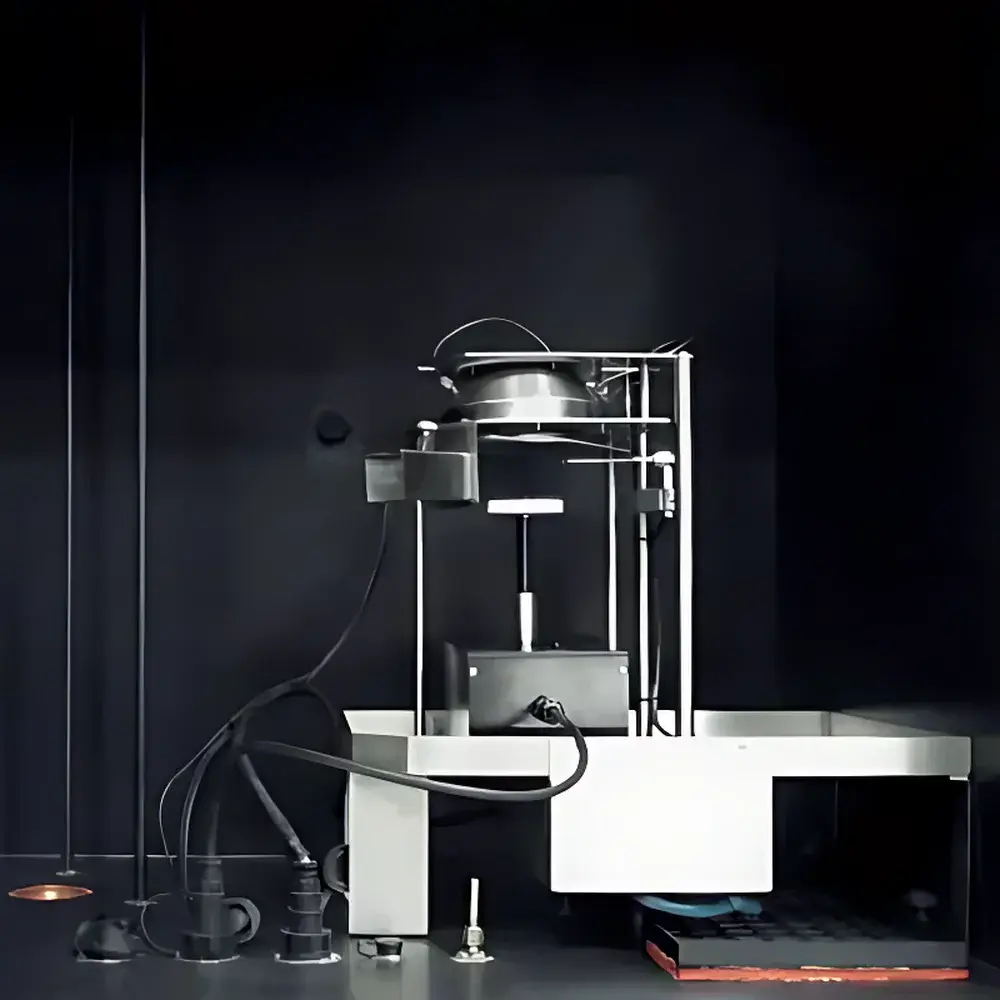
- Modular radiant and flame exposure architecture: Interchangeable ASTM E662 radiant heater (25 kW/m²) and ISO 5659-2 conical heater (50 kW/m²), both certified to NIST-traceable calibration; quick-swap aviation connectors eliminate tooling and alignment recalibration.
- Optically optimized chamber: 914 × 914 × 610 mm internal volume with PTFE-coated stainless steel walls for corrosion resistance against acidic combustion byproducts (e.g., HCl, HF, SO₂).
- Automated optical path management: Motorized filter wheel (Clear / ND2 Neutral Density / Dark) enables dynamic range extension and self-validation without manual intervention.
- Integrated thermal and mass monitoring: Built-in water-cooled MEDTHERM heat flux meter (NIST-certified), recirculating chiller system, and precision balance (0–5000 g, ±0.01 g) support concurrent smoke density and thermogravimetric analysis (MOD method).
- Pressure-stabilized combustion environment: Top-mounted pressure relief port linked to a calibrated capacity bottle ensures consistent atmospheric equilibrium during extended tests, minimizing buoyancy-induced smoke stratification.
- Full-system automation: Industrial touchscreen PC running deterministic real-time control firmware; all parameters—including heater ramp rate, exposure duration, sampling interval, and report generation—are programmable and audit-trail enabled.
Sample Compatibility & Compliance
The SDB chamber accommodates standard specimen geometries defined in ASTM E662 (100 × 100 mm, 3–25 mm thick), ISO 5659-2 (150 × 150 mm, ≤25 mm), and NES 711 (150 × 150 mm). It is routinely deployed for qualification testing of aerospace interior panels, shipboard bulkheads, subway seating foams, and LSZH cable jackets. All hardware and software comply with GLP and GMP documentation requirements. Data acquisition meets FDA 21 CFR Part 11 criteria for electronic records and signatures, including user authentication, immutable audit logs, and version-controlled firmware. Calibration certificates for the heat flux meter and PMT are traceable to NIST SRM 2242 (optical density) and SRM 2257 (radiant flux), satisfying ISO/IEC 17025 accreditation prerequisites.
Software & Data Management
The embedded control software provides synchronized acquisition of optical transmittance, specimen mass loss, surface temperature (via thermocouple input), and radiant heat flux. Raw data streams are stored in HDF5 format with embedded metadata (test standard, operator ID, calibration timestamps, environmental conditions). Reporting modules generate PDF outputs compliant with ASTM E662 Annex A1 and ISO 5659-2 Clause 10, including Ds(t) curves, peak smoke density (Dsmax), and time-to-Dsmax. Export options include CSV for statistical post-processing and XML for LIMS integration. Optional FTIR coupling enables real-time gas-phase speciation when used with compatible spectrometers; Dräger tube interfaces support semi-quantitative toxic gas screening (CO, HCN, HCl) per FAA AC 20-135B.
Applications
- Regulatory compliance testing for EN 45545-2 (railway), IMO FTP Code (marine), and FAR 25.853 (aviation) smoke emission limits.
- Material development R&D: Correlation of polymer formulation (e.g., phosphinate vs. metal hydroxide flame retardants) with smoke suppression efficiency.
- Fire model validation: Generation of time-resolved Ds(t) datasets for CFD fire simulation inputs (e.g., FDS, PyroSim).
- Quality assurance in cable manufacturing: Batch verification of smoke density performance across production lots per IEC 61034.
- Comparative hazard assessment: Dual-mode (radiant/flame) testing to differentiate smoldering vs. flaming smoke yield mechanisms.
FAQ
What standards does the SDB chamber natively support?
ASTM E662, ISO 5659-2, and NES 711 — all implemented via hardware-switchable radiation sources and burner configurations.
Is the optical system validated per NIST protocols?
Yes: The photomultiplier tube’s spectral responsivity and linearity are verified using NIST SRM 2242 reference filters; transmittance accuracy is certified to ±0.0001% over 0–100% range.
Can the system perform simultaneous smoke density and toxic gas analysis?
Yes: With optional Dräger tube adapter or FTIR interface, users can correlate optical density with CO, HCN, or halogen acid yields in real time.
Does the chamber meet GLP audit requirements?
Yes: Full electronic audit trail, role-based access control, and 21 CFR Part 11–compliant electronic signatures are embedded in firmware.
What maintenance is required for long-term optical stability?
Quarterly PM includes PMT dark-current verification, quartz window cleaning with spectroscopic-grade methanol, and ND2 filter transmission check using calibrated reference standards.



