
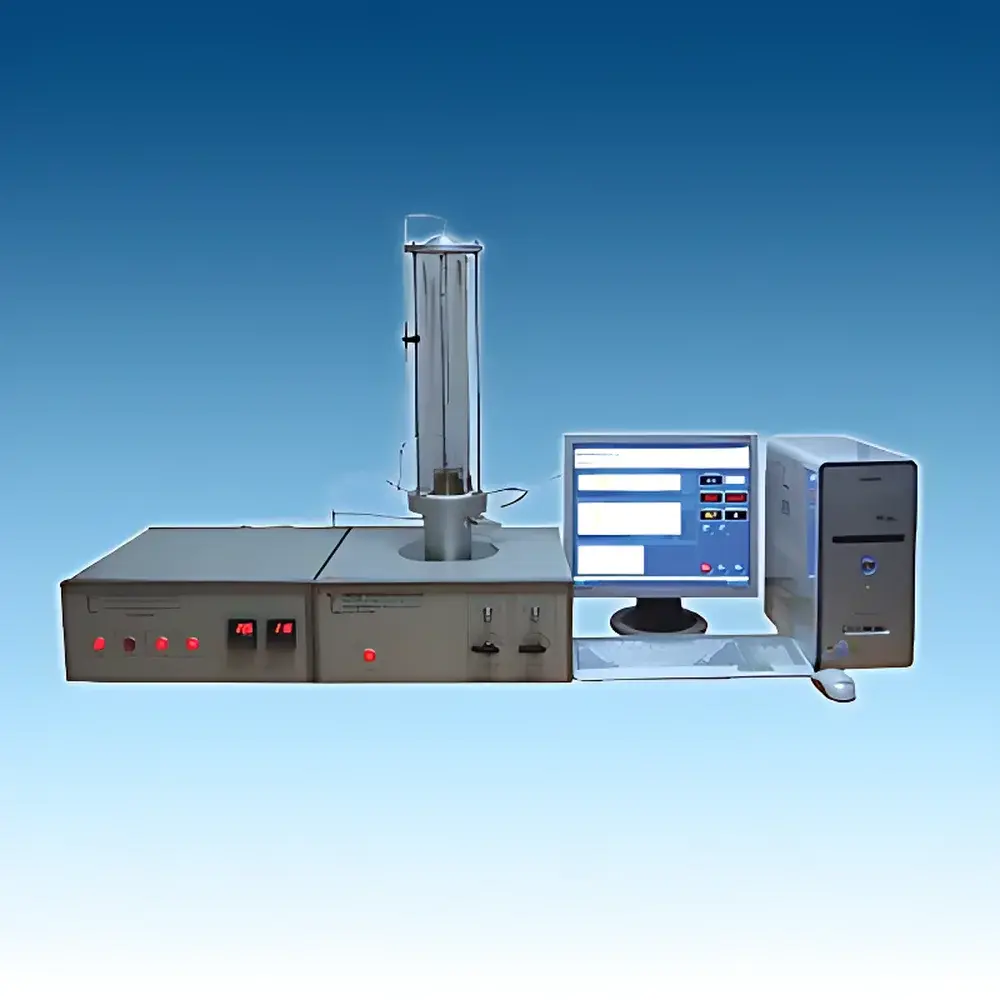
MOTIS TOI High-Temperature Oxygen Index Tester
| Brand | MOTIS |
|---|---|
| Origin | Jiangsu, China |
| Model | TOI |
| Price Range | USD 1,400 – 7,000 |
| Category | Combustion Analyzer / Oxygen Index Tester / Physical Property Testing Instrument |
| Compliance | ASTM D2863, ISO 4589-2, GB/T 2406.2, UL 94 (OI correlation), MIL-STD-2031 (applicable for military-grade material screening) |
Overview
The MOTIS TOI High-Temperature Oxygen Index Tester is an engineered solution for determining the minimum oxygen concentration (expressed as volume percent) required to support candle-like combustion of solid materials under controlled thermal and gaseous conditions. Unlike standard oxygen index testers operating at ambient temperature, the TOI system integrates a programmable high-temperature furnace capable of maintaining specimen environments from 25 °C up to 400 °C—enabling evaluation of thermal degradation thresholds, char stability, and oxidative ignition behavior beyond conventional OI limits. Based on the principle of upward flame propagation in a vertical specimen column within a laminar-flow oxygen–nitrogen mixture, the instrument delivers quantifiable, repeatable LOI (Limiting Oxygen Index) and TOI (Thermal Oxygen Index) values critical for fire safety qualification of polymers, composites, insulation materials, and aerospace-grade thermoplastics.
Key Features
- Integrated high-temperature furnace with PID-controlled heating zone (25–400 °C ±1.5 °C uniformity over 100 mm axial length)
- Dual-gas mass flow control system (O₂/N₂) with digital MFCs calibrated per ISO 6107-3, ensuring gas composition accuracy within ±0.2 vol% across 10–100% O₂ range
- Automated ignition sequence with adjustable pre-heating dwell time and calibrated spark igniter (4–6 kV, 10 ms pulse width)
- Vertical specimen holder compliant with ASTM D2863 geometry (80–150 mm height × 10 mm × 10 mm cross-section), accommodates both rigid and semi-rigid specimens
- Real-time O₂ concentration monitoring via paramagnetic sensor (0–100% O₂, resolution 0.01%, long-term drift <0.1% FS/year)
- Robust stainless-steel chamber with borosilicate viewing window, integrated exhaust manifold, and optional fume hood interface
- Self-diagnostic firmware with sensor health logging, flow calibration reminders, and hardware fault tracing
Sample Compatibility & Compliance
The TOI supports standardized test specimens including molded plaques, extruded rods, foams, fiber mats, and coated substrates—provided dimensional tolerances meet ASTM D2863 and ISO 4589-2 requirements. It is routinely deployed in laboratories subject to GLP (Good Laboratory Practice) and ISO/IEC 17025 accreditation, with full traceability of calibration certificates for gas flow meters, temperature sensors, and O₂ analyzers. The system satisfies reporting requirements for regulatory submissions under UL 94 (correlation to V-0/V-1/V-2 classifications), FAA AC 20-135 (aircraft interior materials), and EN 45545-2 (railway fire safety). Optional audit trail modules support FDA 21 CFR Part 11 compliance for pharmaceutical packaging validation where oxygen-dependent degradation kinetics are assessed.
Software & Data Management
Control and analysis are executed via MOTIS Oxygen Index Suite v3.2—a Windows-based application supporting both manual and automated test sequences. The software implements ASTM D2863 Annex A1 interpolation algorithms for precise LOI/TOI calculation, stores raw sensor time-series data (O₂ %, temperature, flame height), and generates PDF reports with embedded metadata (operator ID, calibration status, environmental conditions). Export options include CSV, XML, and LIMS-compatible ASTM E1384-compliant files. Audit trails record all parameter changes, result edits, and user logins with timestamped digital signatures. Remote monitoring and scheduled calibration alerts are enabled via Ethernet or optional Wi-Fi module.
Applications
- Fire-retardant formulation development for halogen-free flame retardants (e.g., phosphinates, metal hydroxides)
- Quality assurance of cable jacketing compounds (LSZH, PVC, PE, XLPE) per IEC 60332 and BS 6387
- Evaluation of thermal oxidative stability in carbon-fiber reinforced PEEK, polyimide films, and ceramic matrix composites
- Military specification compliance testing (MIL-STD-2031, MIL-STD-810H Method 502.6) for vehicle interior trim and avionics enclosures
- Research into pyrolysis–oxidation coupling mechanisms during early-stage flaming combustion
- Comparative assessment of intumescent coating efficiency under elevated thermal load
FAQ
What is the difference between LOI and TOI?
LOI (Limiting Oxygen Index) measures the minimum O₂ concentration sustaining combustion at ambient temperature; TOI extends this measurement under controlled elevated temperature—revealing how thermal history affects ignition resistance.
Does the TOI comply with international fire safety standards?
Yes—it fully supports test execution and reporting per ASTM D2863, ISO 4589-2, GB/T 2406.2, and provides documented correlation pathways to UL 94, EN 45545-2, and FAA AC 20-135 requirements.
Can the system be integrated into a laboratory information management system (LIMS)?
Yes—via ASTM E1384-compliant XML export or direct ODBC connectivity using optional LIMS Gateway Module.
Is operator training included with purchase?
MOTIS provides on-site installation verification and a two-day certified operator training program covering method validation, preventive maintenance, and troubleshooting per ISO/IEC 17025 Annex A.2.
What calibration documentation is supplied?
Each unit ships with NIST-traceable calibration certificates for O₂ sensor, thermocouples, and mass flow controllers—valid for 12 months under standard usage conditions.



