
MOTIS WFT Window Fire Test Apparatus for External Thermal Insulation Composite Systems (ETICS)
| Brand | MOTIS |
|---|---|
| Origin | Jiangsu, China |
| Manufacturer Type | Authorized Distributor |
| Country of Origin | China |
| Model | WFT |
| Pricing | Available Upon Request |
| Compliance | GB/T 29416–2012 |
| Heat Release Rate Peak | (3.0 ± 0.5) MW |
| Total Energy Release (30 min) | ~4500 MJ |
| Fuel Load | ~400 kg Wood |
| Ignition Delay Alert | Automated 5-min pre-ignition warning |
| Data Acquisition | Real-time temperature, droplet onset, collapse timing, thermal flux, and flame dynamics |
| Sensor Suite | 3 × Medtherm water-cooled heat flux gauges (0–100 kW/m²), 1 × OMEGA anemometer (0–10 m/s, ±0.1 m/s), 30 × OMEGA thermocouples, dual high-resolution CCTV monitoring, Advantech DAQ modules, dedicated control & signal conditioning cabinets |
Overview
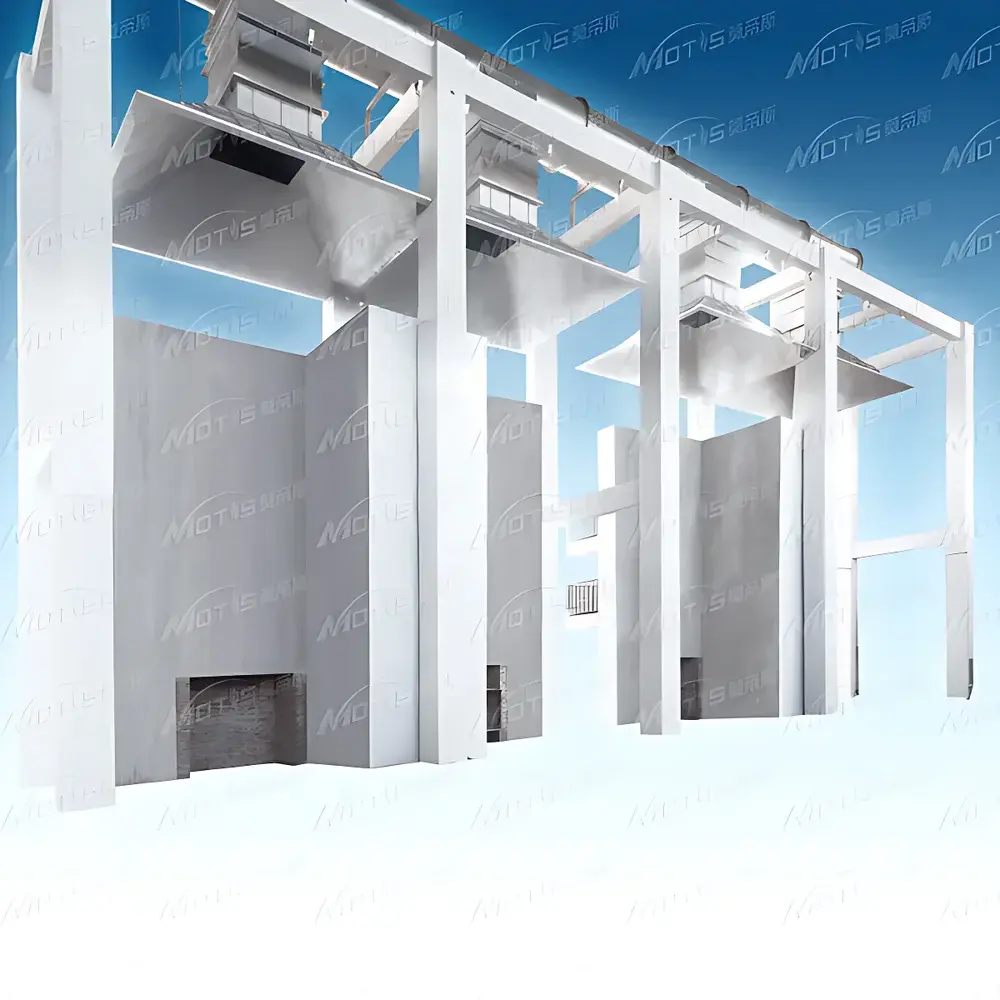
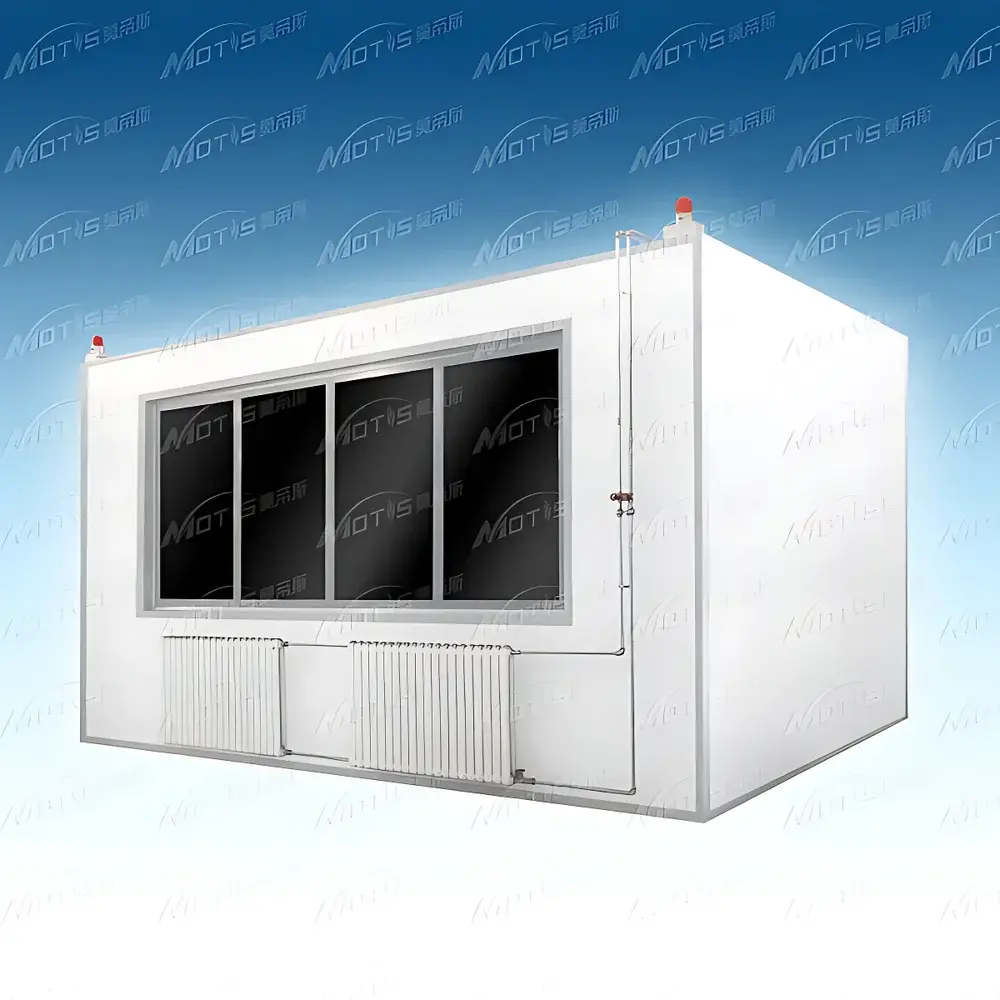
The MOTIS WFT Window Fire Test Apparatus is a full-scale, standardized fire testing system engineered to evaluate the fire performance of External Thermal Insulation Composite Systems (ETICS) under realistic vertical façade exposure conditions. It replicates the critical fire scenario described in GB/T 29416–2012: a compartment fire reaching flashover, followed by flame egress through an opening—simulating a window or door aperture—impinging directly onto the adjacent insulated façade. The apparatus consists of a vertically oriented test wall composed of a primary façade plane and an orthogonal secondary wall, forming a corner configuration that captures three-dimensional flame impingement, lateral flame spread, and convective–radiative heat transfer dynamics. Combustion is initiated using a standardized wood crib fuel load of approximately 400 kg, calibrated to deliver a peak heat release rate (HRR) of (3.0 ± 0.5) MW and a cumulative energy release of ~4500 MJ over 30 minutes—parameters aligned with real-world residential and commercial compartment fire behavior. This controlled yet severe thermal exposure enables quantitative assessment of ETICS integrity, including ignition resistance, flame propagation velocity, melt-dripping behavior, structural collapse onset, and surface charring depth.
Key Features
- Automated pre-test sequence with configurable 5-minute ignition alert, ensuring operator readiness and procedural consistency prior to flame initiation.
- Real-time, synchronized data acquisition of up to 30 thermocouple channels (Type K, OMEGA), capturing spatial–temporal temperature evolution across substrate, insulation, cladding, and air boundary layers.
- Tri-sensor array of Medtherm water-cooled heat flux gauges (0–100 kW/m²), mounted at standardized positions per GB/T 29416–2012 to quantify incident radiant and convective heat flux on the façade surface.
- Dual high-definition CCTV systems with synchronized timestamping and lossless video recording, enabling frame-accurate analysis of flame geometry, sooting, dripping events, and failure progression.
- Integrated wind-speed monitoring via a calibrated OMEGA anemometer (0–10 m/s, ±0.1 m/s), supporting environmental correction and repeatability validation under non-stagnant ambient conditions.
- Modular hardware architecture featuring four Advantech data acquisition boards, isolated signal conditioning cabinets, and a centralized electro-mechanical control panel for safe, repeatable actuation of ignition, ventilation, and emergency shutdown protocols.
Sample Compatibility & Compliance
The WFT apparatus accommodates full-size ETICS assemblies—including mineral wool, EPS, XPS, phenolic foam, and polyurethane-based systems—mounted on representative structural substrates (e.g., concrete, autoclaved aerated concrete, or brickwork) per GB/T 29416–2012 Section 6. Specimen dimensions conform to minimum 3.0 m (height) × 2.0 m (width) requirements, with corner configuration ensuring realistic flame attachment and lateral spread evaluation. All instrumentation—including thermocouple placement, heat flux gauge calibration intervals, and video field-of-view—adheres strictly to the metrological and geometric tolerances defined in the standard. While GB/T 29416–2012 is the primary compliance benchmark, the system’s modular sensor suite and data traceability framework support alignment with supplementary international frameworks such as ISO 13785-2 (Fire testing — Burning behaviour of façade systems — Part 2: Full-scale test using intermediate-scale apparatus) and EN 13501-1 classification prerequisites when used in conjunction with certified third-party verification protocols.
Software & Data Management
The WFT system operates via a proprietary Windows-based acquisition and analysis platform developed in accordance with GLP principles. Software features include automated start-trigger detection upon flame establishment, real-time overlay of temperature curves and heat flux trends, and event-tagged logging of critical milestones: droplet initiation time, first visible deformation, partial collapse, and complete structural failure. All raw sensor data are stored in HDF5 format with embedded metadata (timestamp, channel ID, calibration coefficients, operator ID), ensuring auditability and long-term reproducibility. Video streams are time-synchronized with sensor data using PTPv2-compliant network time protocol, enabling pixel-accurate correlation between visual phenomena and thermal transients. Export options include CSV, PDF test reports compliant with laboratory quality management systems (QMS), and XML schemas compatible with LIMS integration. The software maintains full 21 CFR Part 11–compliant audit trails for user actions, parameter modifications, and report generation.
Applications
- Regulatory certification testing of ETICS products for national building code compliance (e.g., China’s JGJ 144, GB 50016).
- Comparative fire performance benchmarking across insulation material types, bonding methods, and protective render formulations.
- Failure mode analysis for forensic fire investigations involving façade fire spread incidents.
- R&D validation of fire-retardant additives, intumescent coatings, and cavity barrier integration strategies.
- Supporting technical documentation for CE marking, CCC certification, and third-party type-approval submissions.
FAQ
What fire standard does the WFT apparatus specifically implement?
The WFT is engineered and validated for strict conformance with GB/T 29416–2012, “Test method for fire performance of external thermal insulation composite systems — Window fire test method.”
Can the system be configured for gaseous fuel instead of wood cribs?
Yes—the apparatus supports interchangeable combustion modules; gas-fired configurations require optional Medtherm heat flux gauge installation and recalibration per Annex B of GB/T 29416–2012.
Is remote monitoring or networked data access supported?
The system includes Ethernet-enabled DAQ hardware and supports secure remote desktop access for supervised monitoring; however, live cloud streaming is disabled by default to preserve data integrity and cybersecurity compliance.
What is the typical lead time for factory acceptance testing (FAT) and commissioning?
Standard FAT and on-site commissioning—including sensor calibration verification, video synchronization validation, and operator training—require 10–12 working days following shipment.
Does MOTIS provide calibration certificates for all integrated sensors?
Yes—each Medtherm heat flux gauge, OMEGA thermocouple, and anemometer is supplied with NIST-traceable calibration certificates valid for 12 months; annual recalibration services are available under extended support agreements.



