
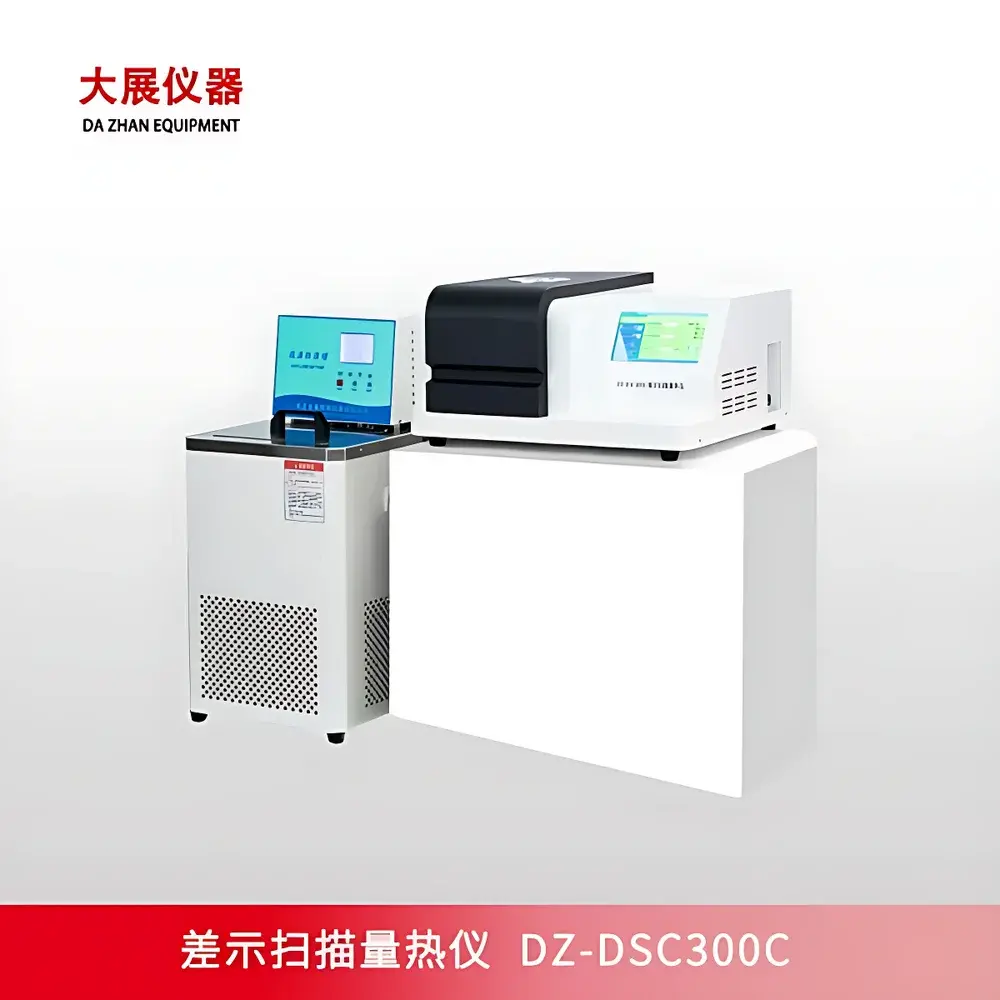
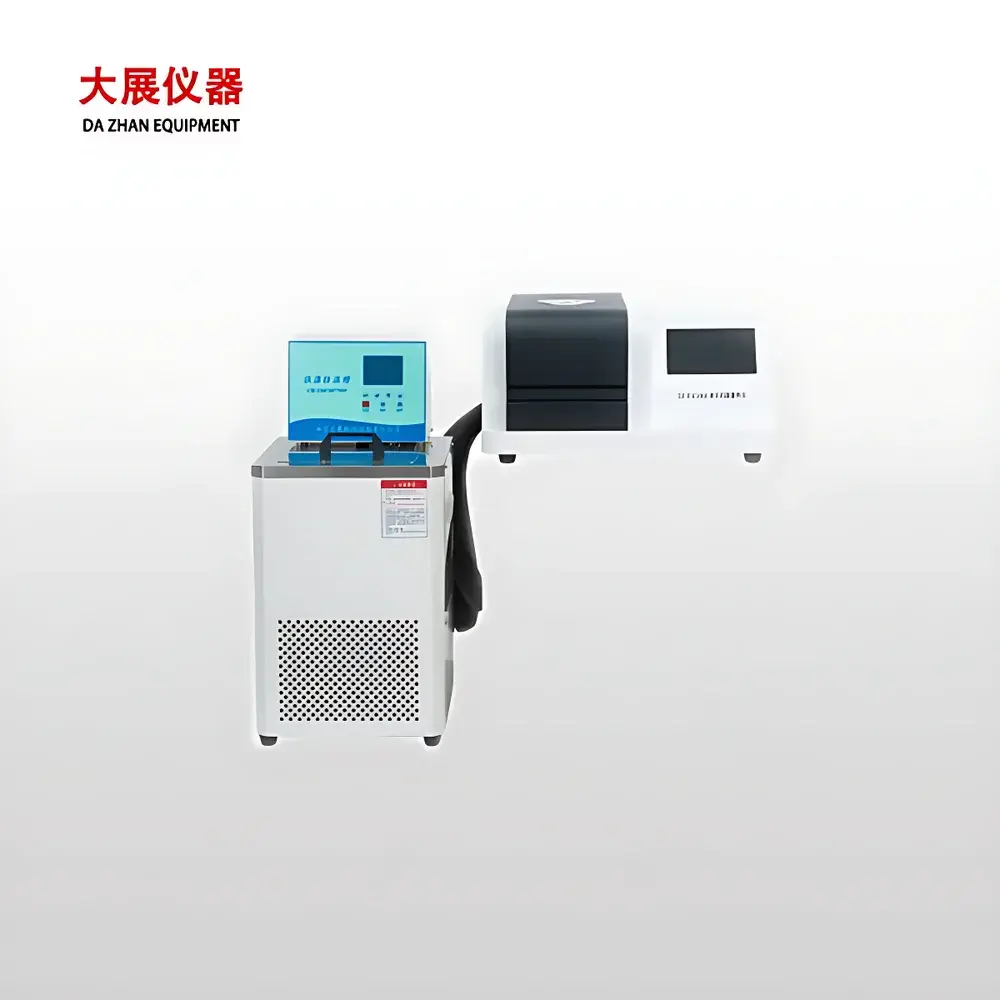
Nanjing Dazhan DSC300C Differential Scanning Calorimeter
| Brand | Nanjing Dazhan |
|---|---|
| Origin | Jiangsu, China |
| Manufacturer Type | Direct Manufacturer |
| Product Category | Domestic |
| Model | DSC300C |
| Sample Capacity | Single |
| Instrument Type | Differential Scanning Calorimeter (DSC) |
| Temperature Range | −40 °C to 600 °C |
| Heating/Cooling Rate | 0.1–100 K/min |
| Temperature Accuracy | ±0.01 °C |
| DSC Signal Range | 0–±600 mW |
| Temperature Stability | ±0.01 °C |
Overview
The Nanjing Dazhan DSC300C Differential Scanning Calorimeter is a precision thermal analysis instrument engineered for high-fidelity measurement of heat flow differences between a sample and an inert reference as a function of temperature or time. Based on the heat-flux DSC principle, it employs a symmetric, dual-sensor furnace architecture with integrated Peltier cooling to achieve true low-temperature capability down to −40 °C—enabling characterization of glass transitions, cold crystallization, melting endotherms, solid-solid phase transformations, and oxidative stability in polymeric, pharmaceutical, and inorganic materials. Its robust metal furnace design ensures exceptional baseline flatness and long-term thermal stability, critical for quantitative enthalpy determination and comparative kinetic studies under ISO 11357 and ASTM E794 compliance frameworks.
Key Features
- Integrated thermoelectric (Peltier) cooling system enabling stable operation from −40 °C to 600 °C without liquid nitrogen dependency
- High-resolution 7-inch industrial-grade capacitive touchscreen interface with intuitive navigation, real-time curve overlay, and multi-step temperature program editing
- Optimized symmetrical furnace geometry with dual platinum resistance temperature detectors (RTDs), delivering baseline reproducibility better than ±0.01 µW over 24-hour continuous operation
- Dual independent gas mass flow control: rapid-switching two-channel purge gas selection (e.g., N₂ and O₂) with sub-second stabilization; dedicated third inlet for inert protective gas (e.g., Ar)
- USB 2.0 communication interface with auto-reconnect protocol—ensuring uninterrupted data acquisition during transient host system events or power recovery cycles
- Modular sensor design supporting optional calibration kits traceable to NIST-certified standards for heat capacity, temperature, and enthalpy
Sample Compatibility & Compliance
The DSC300C accommodates standard aluminum, gold-plated aluminum, and high-pressure stainless-steel crucibles (up to 120 bar), supporting solids, powders, films, gels, and small-volume liquids (≤30 mg typical). It meets essential regulatory requirements for routine QC and R&D environments: full alignment with ISO 11357-1 through -7 (Plastics — Differential Scanning Calorimetry), ASTM E794 (Melting and Crystallization Temperatures), ASTM E2070 (Oxidative Induction Time), and USP (Thermal Analysis in Pharmaceutical Development). Data integrity features—including user-level access control, electronic signatures, and audit-trail-enabled method storage—support GLP and GMP-aligned workflows compliant with FDA 21 CFR Part 11 when deployed with validated software modules.
Software & Data Management
Bundled with DZ-ThermalAnalysis v4.x software, the system provides comprehensive instrument control, real-time visualization, peak deconvolution, baseline correction (tangent, linear, polynomial), and quantitative analysis (ΔH, Tg, Tm, Tonset, OIT, degree of cure). All raw data are stored in vendor-neutral ASCII (.txt) and universal HDF5 formats. The software supports automated report generation with customizable templates (PDF/Excel), batch processing of multiple runs, and integration with LIMS via OPC UA or CSV export. Audit trails record operator ID, timestamp, parameter changes, and calibration events—fully retrievable and exportable for internal review or regulatory submission.
Applications
- Determination of glass transition temperature (Tg) and its dependence on thermal history and moisture content in amorphous polymers and pharmaceuticals
- Quantification of melting enthalpy (ΔHf) and crystallinity in semi-crystalline thermoplastics (e.g., PP, PET, PE) per ISO 11357-3
- Oxidative induction time (OIT) and oxidative induction temperature (OITT) assessment per ASTM D3895 for stabilizer efficiency evaluation in polyolefins
- Cure kinetics modeling of thermosets using dynamic and isothermal DSC protocols (e.g., Kamal model fitting)
- Thermal stability screening of battery electrode materials, catalysts, and energetic compounds under controlled atmospheres
- Phase diagram construction for binary alloy systems and eutectic composition verification
FAQ
Does the DSC300C support modulated DSC (MDSC) functionality?
No—the DSC300C implements conventional heat-flux DSC only. MDSC requires proprietary hardware modulation and signal processing not present in this model.
What crucible types are compatible with the −40 °C low-temperature operation?
Standard hermetically sealed aluminum crucibles (with lid) are recommended for sub-ambient measurements; high-pressure stainless-steel crucibles are required only for volatile or reactive samples above 300 °C.
Is calibration traceable to national metrology institutes?
Yes—optional factory calibration certificates include traceability to NIST SRM 720 (indium), SRM 750 (tin), and SRM 1965 (polyethylene) with uncertainty budgets per ISO/IEC 17025.
Can the instrument be operated remotely via Ethernet or Wi-Fi?
The base configuration uses USB 2.0 only; Ethernet connectivity requires the optional DZ-NetBridge module, which enables TCP/IP-based remote monitoring and limited command execution.
How is baseline drift corrected during extended low-temperature scans?
The instrument’s symmetric furnace design minimizes inherent drift; software-based multi-point baseline correction algorithms (linear, spline, or user-defined reference scan subtraction) are applied post-acquisition per ASTM E1269 guidelines.



