
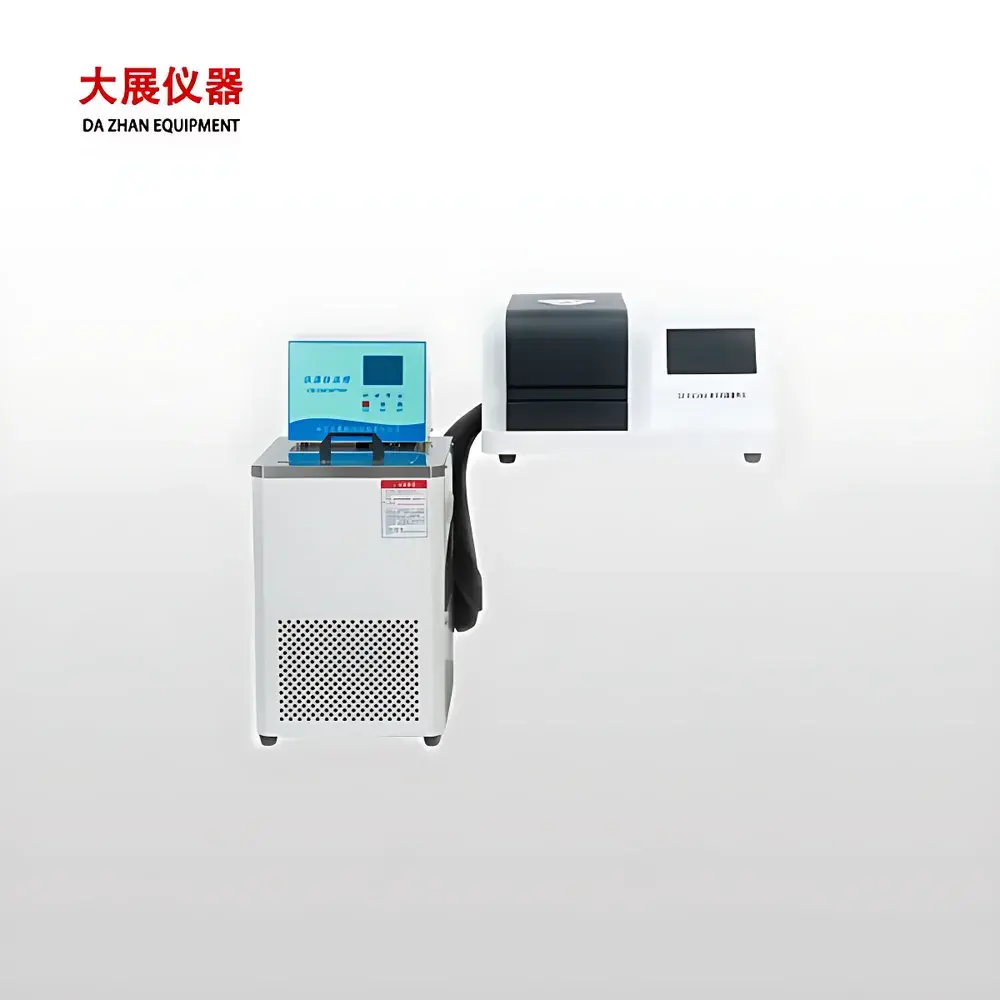
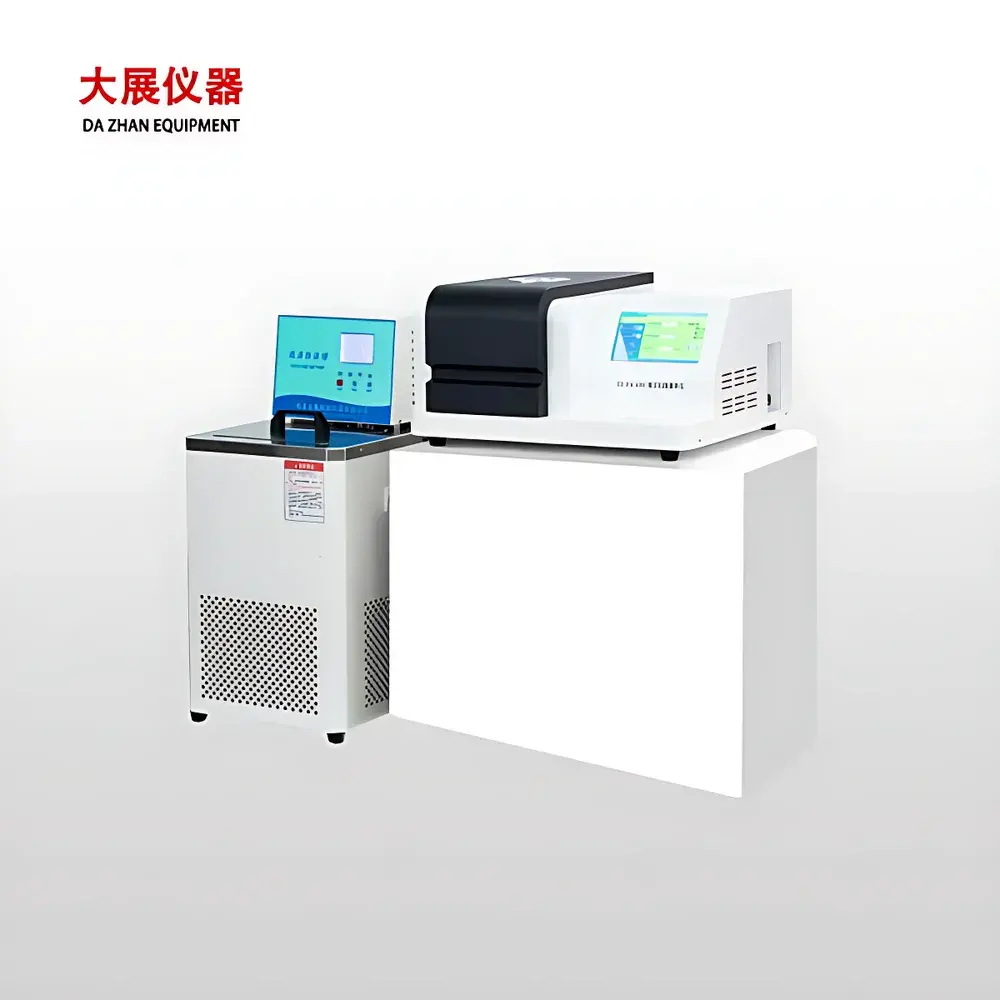
Nanjing Dazhan DSC300C Differential Scanning Calorimeter
| Brand | Nanjing Dazhan |
|---|---|
| Origin | Jiangsu, China |
| Manufacturer Type | Direct Manufacturer |
| Instrument Type | DSC |
| Model | DSC300C |
| Sample Capacity | Single-sample |
| Temperature Range | −40 °C to 600 °C |
| Heating/Cooling Rate | 0.1–100 K/min (heating), 0.1–40 K/min (cooling) |
| DSC Signal Range | 0 to ±600 mW |
| DSC Resolution | 0.01 µW |
| Temperature Resolution | 0.01 °C |
| Temperature Stability | ±0.01 °C |
| Atmosphere Control | Dual-gas auto-switching (up to 300 mL/min, ≤5 MPa), plus dedicated purge gas inlet |
| Power Supply | AC 220 V / 50 Hz (customizable) |
| Display | 7-inch 24-bit color LCD touchscreen |
| Data Interface | Standard USB 2.0 with auto-reconnect capability |
| Calibration Standards Included | Indium, Tin, Lead |
Overview
The Nanjing Dazhan DSC300C Differential Scanning Calorimeter is a precision thermal analysis instrument engineered for quantitative measurement of heat flow differences between a sample and an inert reference as a function of temperature or time. Based on the heat-flux DSC principle, it delivers high reproducibility in detecting endothermic and exothermic transitions—including glass transition (Tg), melting (Tm), crystallization (Tc), solid-solid phase changes, oxidative induction time (OIT), oxidative induction temperature (OITT), and degree of cure—under controlled atmospheric conditions. Its robust metal furnace architecture ensures superior baseline stability and thermal homogeneity across the full operating range of −40 °C to 600 °C, making it suitable for routine QC, materials R&D, polymer characterization, pharmaceutical solid-state analysis, and thermal stability assessment in compliance-driven environments.
Key Features
- Industrial-grade 7-inch full-color LCD touchscreen interface with intuitive navigation, real-time curve overlay, and on-device data review—no external PC required for basic operation.
- Optimized all-metal furnace design delivering enhanced thermal symmetry, reduced thermal lag, and improved baseline flatness—critical for accurate enthalpy integration and low-signal detection.
- Dual independent gas channels with automatic electronic switching (response time < 2 s; stabilization < 8 s), plus dedicated inert purge gas inlet—enabling seamless transition between oxidative (e.g., air, O2) and inert (e.g., N2, Ar) atmospheres during multi-step protocols.
- USB 2.0 interface with hardware-level auto-recovery: maintains stable communication even after transient host disconnection or power cycle—eliminating manual reinitialization during long-duration runs.
- Programmable six-segment temperature profile control (ramp/hold/cool), supporting complex thermal protocols such as step-isothermal oxidation tests, modulated DSC (MDSC®-compatible waveform loading), and multi-cycle aging studies.
- Integrated calibration suite with certified reference materials (indium, tin, lead) traceable to NIST SRMs—enabling user-performed temperature and enthalpy calibration per ASTM E794 and ISO 11357-1 requirements.
Sample Compatibility & Compliance
The DSC300C accommodates standard aluminum, gold-plated aluminum, and high-pressure stainless-steel crucibles (including hermetic and vented variants), supporting solids, powders, films, gels, and small-volume liquids (≤30 mg typical). Its design adheres to core principles outlined in ISO 11357 (Plastics — Differential Scanning Calorimetry), ASTM E1356 (Standard Test Method for Assignment of the Glass Transition Temperature by DSC), and USP <1151> (Thermal Analysis). While not pre-certified for FDA 21 CFR Part 11, the system supports audit-trail-ready data export (CSV, TXT, proprietary .dsc binary) and can be validated under GLP/GMP frameworks via documented IQ/OQ/PQ protocols. All firmware and software logs retain timestamps, operator IDs, and parameter change history—essential for regulatory submissions in pharmaceutical and medical device development.
Software & Data Management
Control and analysis are performed using Dazhan’s native ThermalPro™ software (Windows-compatible, no runtime dependencies), offering real-time signal monitoring, baseline subtraction (tangent, linear, polynomial), peak integration with onset/onset-intersection methods, and comparative overlay of up to 16 curves. Raw data files include embedded metadata: instrument ID, calibration status, gas flow settings, ramp rate, and ambient pressure. Export options include CSV (tabular thermogram), PNG/JPEG (publication-ready plots), and XML (for LIMS integration). The software supports ASTM E1952-compliant reporting templates and allows custom report generation with institutional headers, QA sign-offs, and revision-controlled method storage—facilitating SOP alignment and cross-laboratory data harmonization.
Applications
- Polymer science: Quantification of Tg, crystallinity % (via ΔHf normalization), cold crystallization kinetics, and degradation onset temperatures.
- Pharmaceuticals: Polymorph screening, amorphous content estimation, excipient compatibility testing, and stability-indicating assay development per ICH Q1A–Q5E guidelines.
- Food science: Fat crystallization profiling, starch gelatinization enthalpy, and shelf-life prediction via accelerated oxidation protocols.
- Electrochemical materials: Solid electrolyte thermal stability, SEI layer formation energy, and cathode/anode decomposition thresholds in battery R&D.
- Metallurgy & composites: Precipitation heat effects, eutectic reaction enthalpies, and interfacial reaction onset in solder alloys and MMCs.
FAQ
What reference materials are supplied with the DSC300C, and are they NIST-traceable?
Indium (Tm = 156.60 °C, ΔHf = 28.45 J/g), tin (Tm = 231.93 °C), and lead (Tm = 327.50 °C) are included. Certificates of analysis indicate traceability to national metrology institutes (e.g., NIM China); full NIST SRM equivalents can be procured separately.
Can the DSC300C perform modulated DSC (MDSC®) measurements?
The instrument supports user-defined sinusoidal temperature oscillations superimposed on linear ramps via its programmable controller—enabling quasi-MDSC acquisition for reversing/non-reversing heat flow separation when paired with appropriate post-processing algorithms.
Is remote monitoring or network connectivity supported?
No built-in Ethernet or Wi-Fi; however, USB-connected operation allows full remote control via Windows Remote Desktop or VNC when the host PC is network-accessible—commonly deployed in centralized lab automation setups.
What maintenance intervals are recommended for optimal baseline stability?
Furnace cleaning and sensor inspection every 6 months; crucible replacement after 200 high-temperature cycles (>400 °C); annual recalibration strongly advised for GxP-regulated use.
Does the system comply with ISO/IEC 17025 documentation requirements?
Yes—the instrument’s firmware logs, calibration records, and software-generated reports meet ISO/IEC 17025:2017 clause 7.7 (result reporting) and clause 7.8.2 (record retention) when implemented with defined internal procedures for data archiving and version control.



