
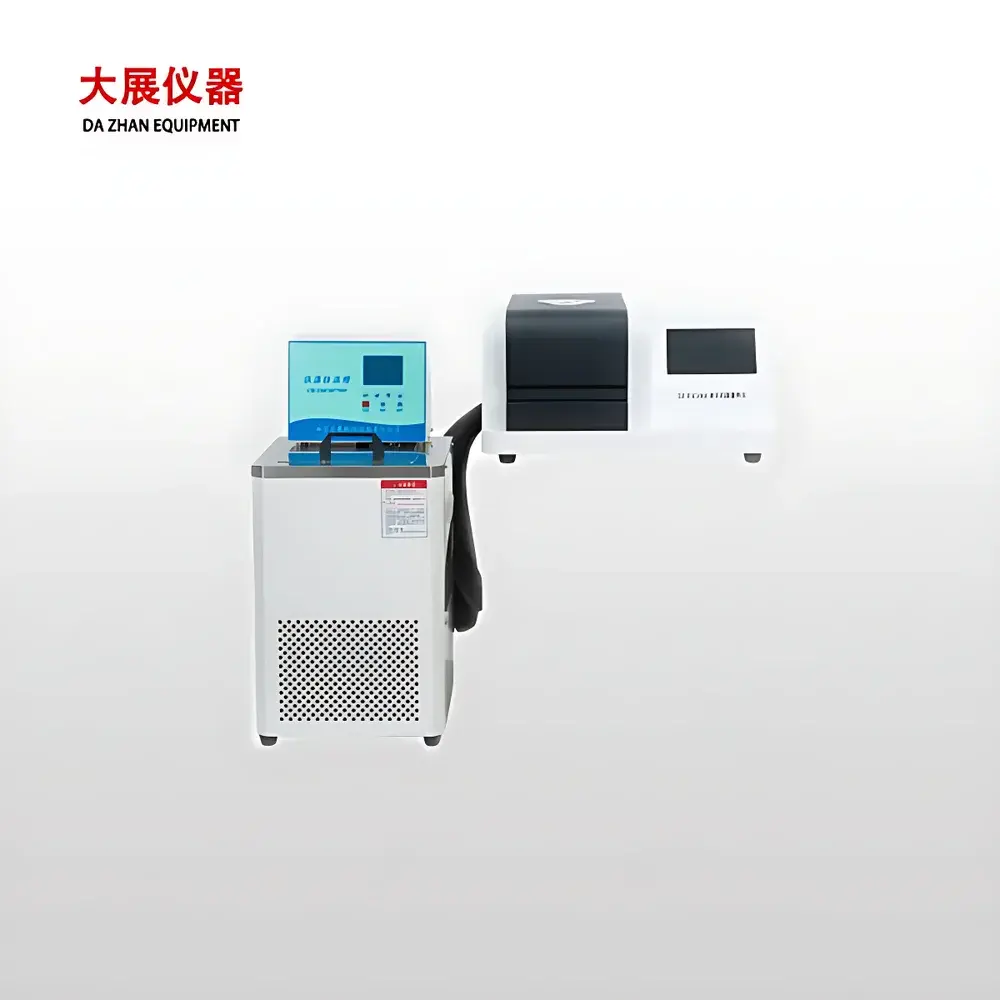
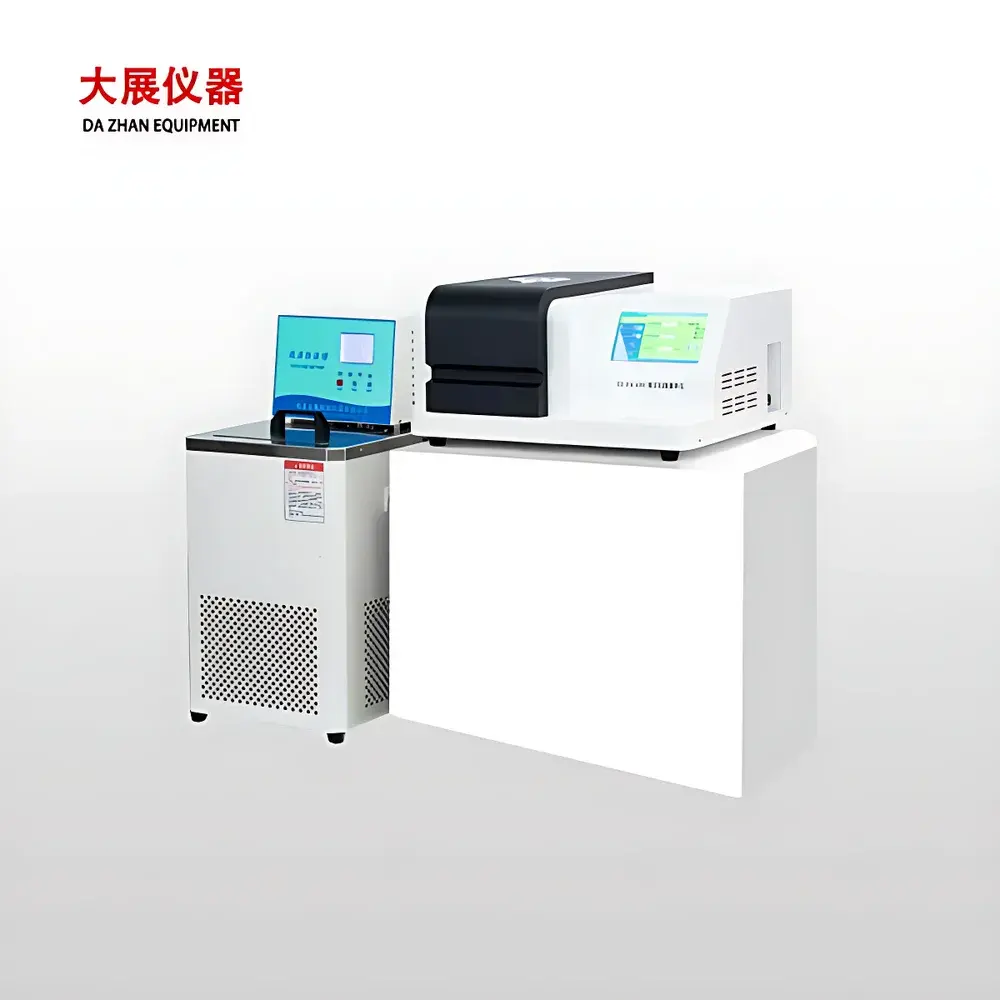
Nanjing Dazhan DSC300L Low-Temperature Differential Scanning Calorimeter
| Brand | Nanjing Dazhan |
|---|---|
| Origin | Jiangsu, China |
| Manufacturer Type | Direct Manufacturer |
| Instrument Type | Differential Scanning Calorimeter (DSC) |
| Model | DSC300L |
| Temperature Range | –170 °C to 600 °C |
| Heating/Cooling Rate | 0.1–100 K/min (heating), 0.1–40 K/min (cooling) |
| DSC Signal Range | 0 mW to ±600 mW |
| DSC Resolution | 0.01 µW |
| DSC Sensitivity | 0.001 mW |
| Temperature Resolution | 0.001 °C |
| Temperature Stability | ±0.01 °C |
| Atmosphere Control | Dual-gas auto-switching (programmable), flow rate 0–300 mL/min, max pressure ≤5 MPa |
| Thermal Program | Up to 6-segment ramp/hold sequences |
| Display | 7-inch 24-bit color LCD touchscreen |
| Interface | Standard USB |
| Calibration Standards Included | Indium, Tin, Lead |
Overview
The Nanjing Dazhan DSC300L Low-Temperature Differential Scanning Calorimeter is a high-precision thermal analysis instrument engineered for quantitative measurement of heat flow differences between a sample and an inert reference as a function of temperature or time. Based on the heat-flux DSC principle, it detects endothermic and exothermic transitions—including glass transition (Tg), cold crystallization, melting (Tm), recrystallization, solid-solid phase changes, oxidative induction time (OIT), cure kinetics, and thermal stability—under controlled atmospheric conditions. Its extended low-temperature capability down to –170 °C enables characterization of cryogenic polymer behavior, low-melting-point pharmaceuticals, battery electrolyte decomposition, and cryopreserved biomaterials. The instrument features a symmetric dual-furnace design with optimized thermal mass distribution, delivering enhanced baseline flatness, improved signal-to-noise ratio, and superior reproducibility across repeated thermal cycles—critical for GLP-compliant material qualification and regulatory submissions.
Key Features
- Extended operational temperature range from –170 °C to 600 °C, achieved via integrated liquid nitrogen cooling and high-efficiency resistive heating elements.
- Programmable heating and cooling rates from 0.1 to 100 K/min (heating) and 0.1 to 40 K/min (cooling), supporting both dynamic and isothermal protocols.
- High-sensitivity thermopile sensor with 0.01 µW resolution and 0.001 mW detection limit, enabling precise quantification of weak thermal events in nanocomposites and amorphous formulations.
- Automated dual-gas switching system (e.g., N2/O2, Ar/N2) with mass-flow-controlled delivery (0–300 mL/min) and pressure regulation up to 5 MPa—compatible with accelerated oxidation testing per ASTM D3895 and ISO 11357-6.
- Embedded 7-inch 24-bit color LCD touchscreen with intuitive icon-driven navigation; supports local operation without PC dependency.
- Real-time temperature control accuracy of ±0.01 °C and thermal resolution of 0.001 °C, validated using certified reference materials (Indium, Tin, Lead) traceable to NIST standards.
- Modular firmware architecture permitting user-defined multi-segment thermal programs (up to six ramps/holds), including custom dwell times, rate transitions, and event-triggered gas switching.
Sample Compatibility & Compliance
The DSC300L accommodates standard aluminum, gold-coated aluminum, and high-pressure stainless-steel crucibles (including hermetic and vented configurations), supporting solid powders, films, fibers, gels, and small-volume liquids (≤30 mg). It complies with core international standards for thermal analysis instrumentation, including ISO 11357 (Plastics — Differential Scanning Calorimetry), ASTM E794 (Melting and Crystallization Temperatures), and USP (Thermal Analysis in Pharmaceutical Development). Data acquisition meets ALCOA+ principles, with full audit trail support, electronic signatures, and secure user access levels—enabling alignment with FDA 21 CFR Part 11 requirements when paired with compliant software modules.
Software & Data Management
The instrument operates natively via embedded firmware but integrates seamlessly with optional Windows-based analytical software for advanced data processing. This software provides baseline correction (tangent, sigmoidal, polynomial), peak deconvolution, kinetic modeling (Ozawa-Flynn-Wall, Kissinger), and comparative overlay of multiple curves. All raw data files are stored in vendor-neutral ASCII format (.csv) with metadata embedding (timestamp, operator ID, method name, calibration status). Export options include PDF reports with embedded graphs, Excel-compatible tables, and image exports (PNG, SVG) suitable for inclusion in regulatory dossiers or peer-reviewed publications.
Applications
- Polymers: Quantification of Tg, degree of crystallinity, melt enthalpy, and degradation onset in thermoplastics, elastomers, and biodegradable polyesters.
- Pharmaceuticals: Solid-state form screening (polymorphs, hydrates, amorphous content), excipient compatibility studies, and stability-indicating assay development per ICH Q1/Q5 guidelines.
- Electrochemical Materials: Electrolyte thermal runaway profiling, SEI layer formation enthalpy, and cathode/anode thermal stability mapping for Li-ion battery R&D.
- Food Science: Starch gelatinization, fat polymorphism, and protein denaturation thermodynamics under controlled humidity and atmosphere.
- Metallurgy & Ceramics: Precipitation kinetics, eutectic reaction temperatures, and sintering onset determination in advanced alloys and oxide systems.
FAQ
What cooling method enables the –170 °C lower limit?
Liquid nitrogen (LN2) cryogenic cooling with automated level monitoring and vapor-phase temperature stabilization.
Is the DSC300L compatible with cGMP laboratory environments?
Yes—when deployed with validated software, calibrated reference standards, and documented maintenance logs, it supports IQ/OQ/PQ protocols and routine system suitability testing.
Can the instrument perform simultaneous modulated DSC (MDSC®)?
No—the DSC300L implements conventional heat-flux DSC; MDSC requires proprietary oscillatory temperature modulation hardware not included in this model.
How is temperature calibration verified during routine use?
Users perform periodic verification using supplied NIST-traceable indium (Tm = 156.60 °C), tin (Tm = 231.93 °C), and lead (Tm = 327.46 °C) standards, with deviation limits defined in internal SOPs.
Does the system support purge gas humidification for moisture-sensitive samples?
Not natively—the dual-gas module delivers dry or pre-humidified gases only when externally conditioned; integration with commercial humidification units is possible via auxiliary gas inlet ports.



