
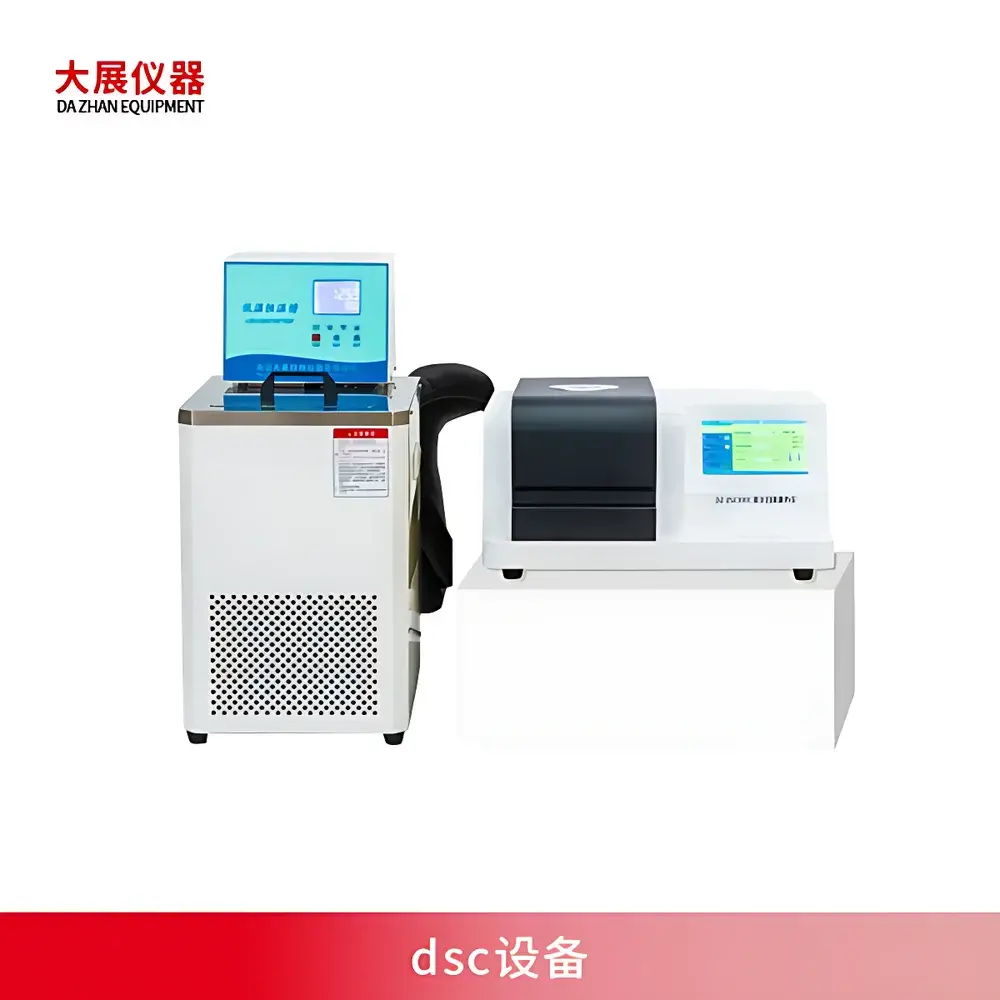
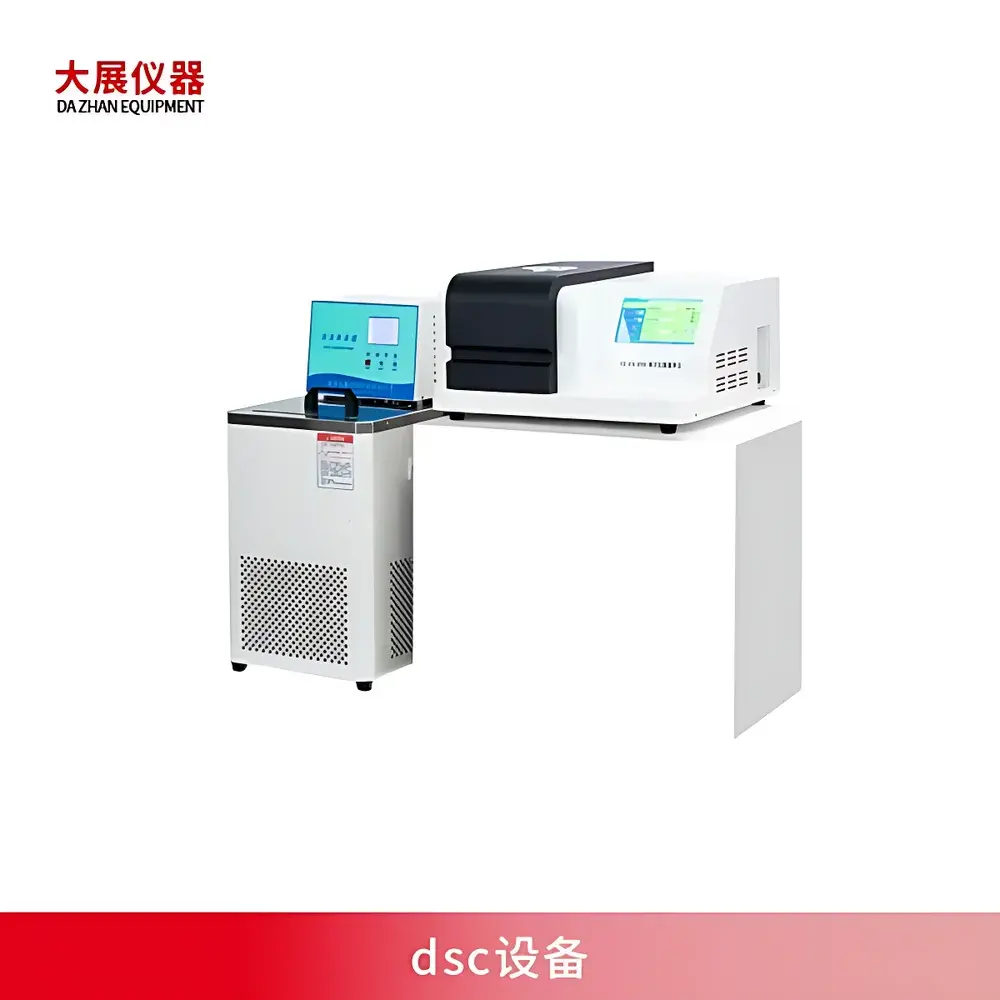
Nanjing Dazhan DZ-DSC300C Differential Scanning Calorimeter
| Brand | Nanjing Dazhan |
|---|---|
| Origin | Jiangsu, China |
| Manufacturer Type | Direct Manufacturer |
| Instrument Type | DSC |
| Sample Capacity | Single-sample |
| Temperature Range | −40 to 600 °C |
| Heating/Cooling Rate | 0.1–100 °C/min (heating), 0.1–40 °C/min (cooling) |
| DSC Signal Range | 0 to ±600 mW |
| Temperature Resolution | 0.01 °C |
| Temperature Stability | ±0.01 °C |
| DSC Sensitivity | 0.001 mW |
| DSC Resolution | 0.01 µW |
| Gas Flow Control | Dual-channel automatic switching (0–300 mL/min, ≤5 MPa), plus dedicated purge gas inlet |
| Control Interface | 7-inch 24-bit color touchscreen |
| Data Interface | Standard USB with auto-reconnect capability |
| Calibration Standards Included | Indium, Tin, Lead |
Overview
The Nanjing Dazhan DZ-DSC300C Differential Scanning Calorimeter is a high-stability, low-temperature-capable thermal analysis instrument engineered for precision measurement of heat flow differences between a sample and an inert reference as a function of temperature or time. It operates on the principle of heat-flux DSC, utilizing a robust all-metal furnace architecture with integrated Peltier-based cooling to achieve rapid, reproducible cooling down to −40 °C — a critical capability for characterizing low-Tg polymers, cryogenic phase transitions, and cold-crystallization behavior. The instrument supports fully automated multi-segment thermal programs, including precise isothermal holds, controlled heating ramps, and active cooling cycles — all executed under programmable dual-gas atmosphere control. Its design prioritizes baseline flatness, thermal homogeneity, and long-term signal stability, making it suitable for routine QC testing as well as method development in regulated environments.
Key Features
- High-performance Peltier-cooled furnace enabling −40 °C to 600 °C operation with ±0.01 °C temperature stability and 0.01 °C resolution
- Wide dynamic DSC range of 0 to ±600 mW, with 0.001 mW sensitivity and 0.01 µW resolution for detecting subtle thermal events
- Programmable six-segment temperature control (heat/hold/cool sequences), supporting complex protocols such as oxidative induction time (OIT), crystallization kinetics, and enthalpy recovery studies
- Dual independent gas channels with fast-acting solenoid valves; automatic switching between reactive (e.g., O2) and inert (e.g., N2, Ar) atmospheres, plus dedicated protective gas inlet for enhanced sample integrity
- Industrial-grade 7-inch full-color LCD touchscreen interface with intuitive navigation, real-time curve overlay, and on-device data review — no external PC required for basic operation
- USB 2.0 interface with fault-tolerant communication protocol, including auto-reconnect functionality to maintain uninterrupted data acquisition during transient host disconnections
- Pre-calibrated with certified reference materials (Indium, Tin, Lead) traceable to NIST standards; user-performed temperature and enthalpy calibration supported via built-in wizard
Sample Compatibility & Compliance
The DZ-DSC300C accommodates standard aluminum, gold-plated aluminum, and high-pressure stainless-steel crucibles (up to 120 bar), enabling analysis of volatile, reactive, or high-boiling-point samples across diverse material classes. It complies with core thermal analysis standards including ASTM E794 (melting point), ASTM E1356 (glass transition), ISO 11357 series (polymers), and USP <1163> (thermal analysis in pharmaceutical development). The instrument’s deterministic thermal control, audit-ready parameter logging, and hardware-enforced gas sequence validation support GLP and GMP-aligned workflows. Optional firmware modules provide 21 CFR Part 11-compliant electronic signatures, role-based access control, and immutable audit trails for regulated laboratories.
Software & Data Management
Bundled with cross-platform DZ-TA software (Windows/macOS/Linux), the system delivers comprehensive data acquisition, baseline correction (tangent, linear, polynomial), peak integration, kinetic modeling (Ozawa-Flynn-Wall, Kissinger), and comparative analysis across multiple runs. Raw data are stored in vendor-neutral ASCII format (.csv) alongside metadata-rich proprietary files (.dzd). Export options include PDF reports with embedded calibration certificates, Excel-compatible tables, and image exports compliant with journal submission requirements (TIFF, PNG at ≥300 dpi). All software updates, method templates, and application notes are accessible via secure manufacturer portal — no dongles or subscription locks.
Applications
- Polymers & Composites: Determination of Tg, melting enthalpy (ΔHm), degree of crystallinity, cold crystallization onset, and curing exotherms
- Pharmaceuticals: Polymorph screening, excipient compatibility assessment, stability-indicating assays, and amorphous content quantification
- Food Science: Fat crystallization profiling, starch gelatinization enthalpy, protein denaturation temperatures, and shelf-life prediction via OIT
- Metals & Alloys: Solid-state transformation temperatures (e.g., martensite start/end), precipitation kinetics, and specific heat capacity (Cp) estimation
- Battery Materials: Thermal runaway onset detection, SEI layer formation analysis, and cathode/anode decomposition thermodynamics
- Adhesives & Coatings: Crosslink density evaluation, pot life determination, and post-cure optimization
FAQ
What reference materials are supplied for calibration?
Indium (Tm = 156.60 °C), Tin (Tm = 231.93 °C), and Lead (Tm = 327.46 °C) are included — all certified to ±0.01 °C accuracy per NIST SRM documentation.
Can the instrument operate under vacuum or high pressure?
Standard configuration supports ambient to 5 MPa gas pressure; vacuum operation requires optional vacuum-rated crucible and sealing kit (part #DZ-VAC-KIT).
Is remote monitoring or network integration supported?
Yes — USB-connected instruments can be accessed via TCP/IP bridge using manufacturer-provided SDK; Ethernet module available as field-upgrade option.
How is baseline drift corrected during long-duration isotherms?
The furnace’s symmetric dual-sensor design and active thermal compensation algorithm minimize drift; software offers post-acquisition multi-point baseline anchoring with spline interpolation.
Does the system meet regulatory requirements for pharmaceutical QA/QC?
With optional 21 CFR Part 11 firmware package, it provides electronic signature enforcement, audit trail generation, and user permission hierarchy — validated for use in FDA-inspected facilities.



