
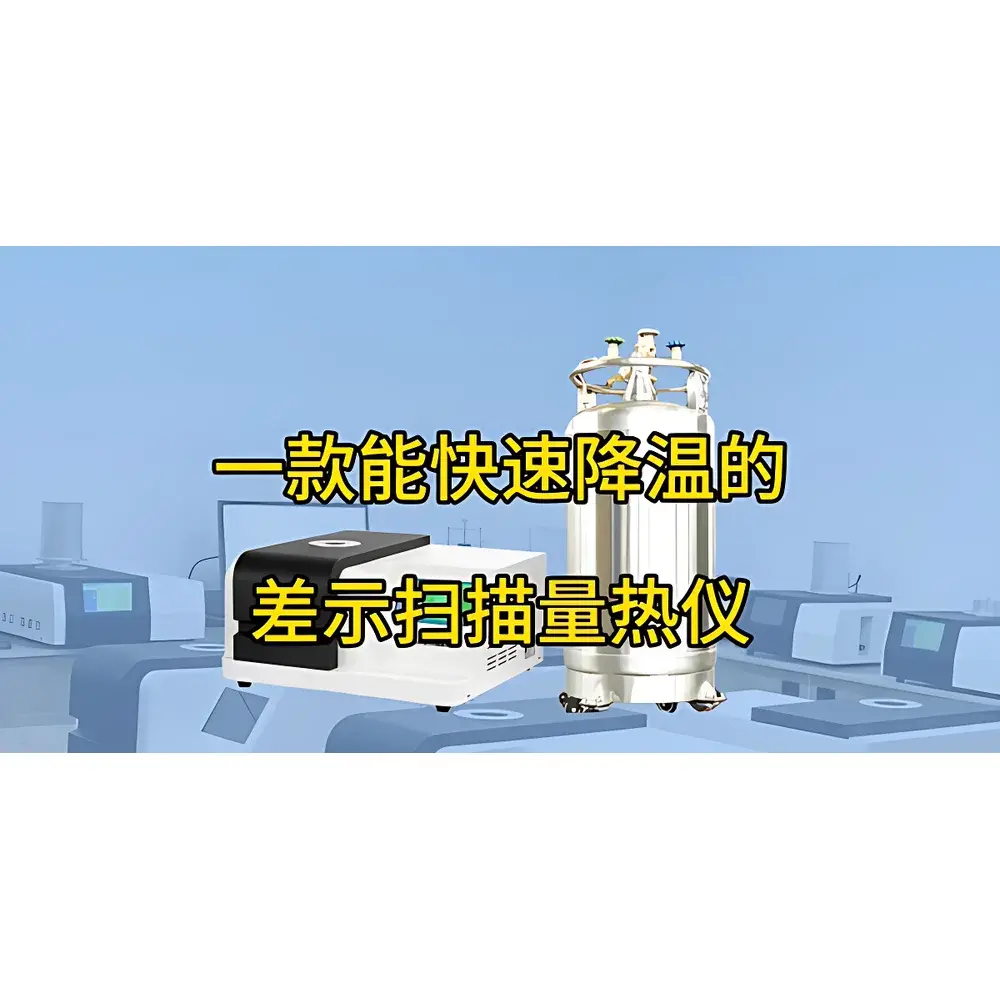
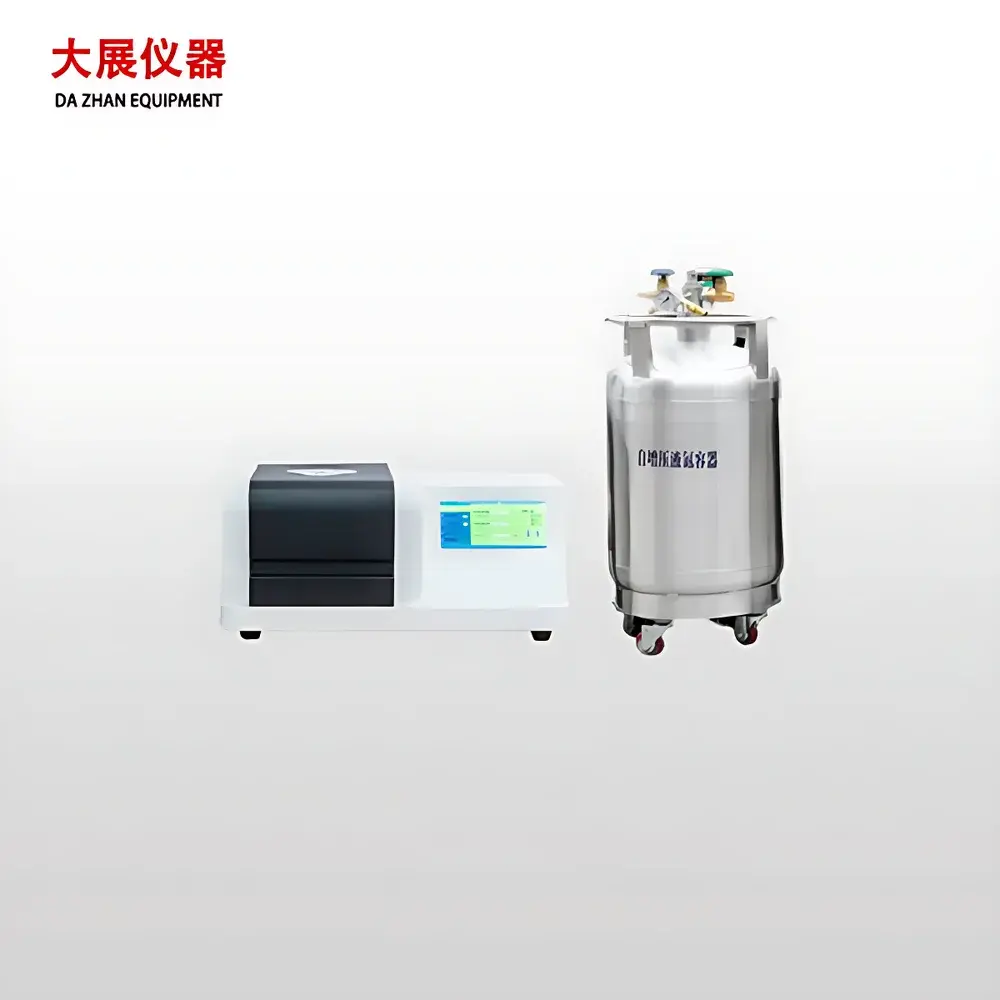
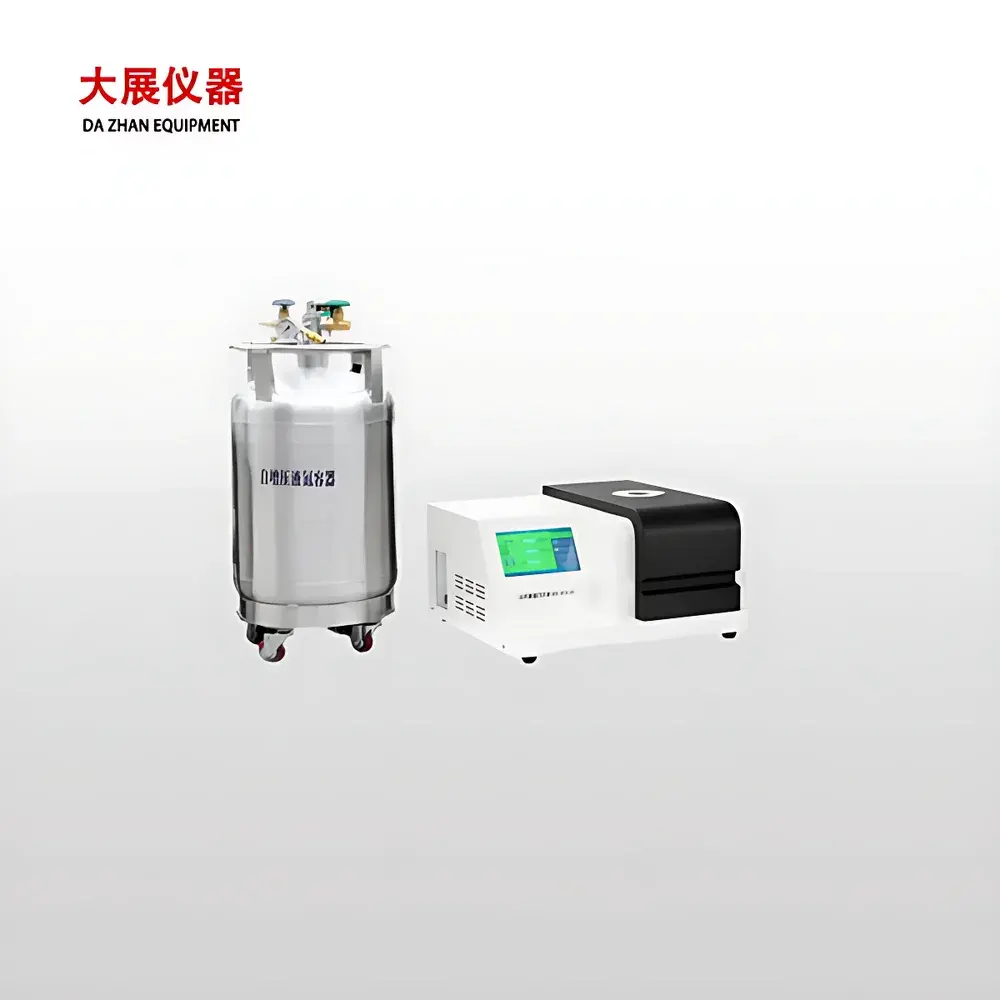
Nanjing Dazhan DZ-DSC300L Low-Temperature Differential Scanning Calorimeter
| Brand | Nanjing Dazhan |
|---|---|
| Origin | Jiangsu, China |
| Manufacturer Type | Direct Manufacturer |
| Country of Origin | China |
| Model | DZ-DSC300L |
| Sample Capacity | Single-sample |
| Instrument Type | Differential Scanning Calorimeter (DSC) |
| Temperature Range | −170 to 600 °C |
| Temperature Accuracy | ±0.001 °C |
| Temperature Precision | ±0.001 °C |
| Temperature Stability (Drift) | ±0.01 °C |
| Heating/Cooling Rate | 0.1–100 K/min (heating), 0.1–40 K/min (cooling) |
| DSC Signal Range | 0 to ±600 mW |
| DSC Resolution | 0.01 µW |
| DSC Sensitivity | 0.001 mW |
| Control Method | PID-based Intelligent Temperature Control |
| Atmosphere Control | Dual-gas automatic switching (programmable), flow rate 0–300 mL/min, max pressure ≤5 MPa |
| Thermal Program | Up to six segments (ramp/hold/cool), user-definable |
| Display | 7-inch 24-bit color LCD touchscreen |
| Data Interface | Standard USB |
| Calibration Standards Included | Indium, Tin, Lead (ASTM E794, ISO 11357 compliant) |
Overview
The Nanjing Dazhan DZ-DSC300L is a high-sensitivity, low-temperature differential scanning calorimeter engineered for precise thermal characterization of solid and semi-crystalline materials across an extended temperature range from −170 °C to 600 °C. Based on the heat-flux DSC principle, the instrument measures the difference in heat flow between a sample and an inert reference as both are subjected to identical, programmable thermal profiles. This enables quantitative determination of endothermic and exothermic transitions—including glass transition (Tg), cold crystallization, melting (Tm), recrystallization, solid-solid phase changes, oxidative induction time (OIT), cure kinetics, and thermal stability—under controlled inert or reactive atmospheres. Its cryogenic capability, supported by a high-efficiency liquid nitrogen cooling system and optimized furnace architecture, ensures stable baseline performance and minimal thermal lag even at sub-ambient temperatures—critical for polymer elastomers, pharmaceutical amorphous dispersions, battery electrolytes, and low-melting-point alloys.
Key Features
- Advanced dual-zone furnace design with symmetric thermal shielding, delivering superior baseline flatness (±0.01 °C drift) and enhanced resolution for overlapping transitions.
- PID-integrated intelligent temperature control system with real-time feedback loop optimization, ensuring reproducible heating/cooling rates from 0.1 to 100 K/min (heating) and 0.1 to 40 K/min (cooling).
- High-resolution detection electronics with 0.01 µW DSC resolution and 0.001 mW sensitivity, enabling accurate quantification of weak thermal events such as secondary relaxations and residual solvent evaporation.
- 7-inch 24-bit color capacitive touchscreen interface supporting standalone operation—full program definition, real-time curve monitoring, and immediate data export via USB without PC dependency.
- Dual-gas manifold with automated switching logic, compatible with N2, O2, Ar, and synthetic air; mass-flow controlled (0–300 mL/min) and pressure-rated to 5 MPa for high-pressure oxidation studies.
- Comprehensive calibration suite included: certified indium (Tm = 156.598 °C, ΔHf = 28.45 J/g), tin (Tm = 231.928 °C), and lead (Tm = 327.462 °C), traceable to NIST standards per ASTM E794 and ISO 11357-1.
Sample Compatibility & Compliance
The DZ-DSC300L accommodates standard hermetic or vented aluminum crucibles (40 µL capacity), platinum, and gold pans for aggressive or high-temperature applications. It supports sample masses from 0.5 mg to 30 mg, with optional high-sensitivity micro-crucibles available for nanogram-level analysis. All thermal programs comply with internationally recognized testing protocols, including ASTM D3418 (polymers), ASTM E2160 (OIT), ISO 11357 series (general DSC), and USP (pharmaceutical thermal analysis). The instrument’s firmware and data handling architecture support audit trails, electronic signatures, and metadata logging—facilitating alignment with GLP, GMP, and FDA 21 CFR Part 11 requirements when integrated with validated laboratory information management systems (LIMS).
Software & Data Management
Optional PC-based analysis software (Windows 10/11 compatible) provides full ICH Q5E-compliant data acquisition, peak deconvolution, kinetic modeling (e.g., Ozawa-Flynn-Wall, Kissinger), and multi-curve comparison. Raw data is stored in ASCII-compatible .CSV and vendor-neutral .QTX formats. Each measurement embeds timestamp, operator ID, gas configuration, calibration status, and thermal history metadata. USB export supports direct transfer to third-party statistical packages (e.g., JMP, OriginLab) or enterprise QA databases. Firmware updates are delivered via signed binary files with SHA-256 verification to maintain integrity throughout the instrument lifecycle.
Applications
- Characterization of polymer Tg, crystallinity %, and melt enthalpy in R&D labs and QC environments.
- Oxidative induction time (OIT) and onset oxidation temperature (OOT) assessment for polyolefins and stabilizer efficacy screening.
- Cure monitoring of thermosets (epoxies, phenolics) and photopolymers using isothermal and dynamic scans.
- Thermal stability profiling of APIs, excipients, and lyophilized formulations per ICH guidelines.
- Phase behavior analysis of shape-memory alloys, metallic glasses, and phase-change materials (PCMs).
- Low-temperature relaxation mapping of cryoprotectants, biologics, and lipid bilayers.
FAQ
What cooling method does the DZ-DSC300L use to achieve −170 °C?
It employs a liquid nitrogen auto-fill Dewar system with integrated two-stage precooling and active vapor-phase temperature regulation to ensure stable sub-ambient operation without mechanical refrigeration.
Is the instrument compliant with ISO 17025 calibration requirements?
Yes—the built-in calibration routine, traceable reference materials, and documented uncertainty budgets (±0.001 °C temperature, ±0.5% heat flow) meet ISO/IEC 17025:2017 clause 6.4.6 for in-house calibration verification.
Can the DZ-DSC300L perform modulated DSC (MDSC®)?
No—it is a conventional heat-flux DSC platform. MDSC functionality requires proprietary oscillatory temperature programming not supported by this model.
How is atmosphere purging validated during operation?
The system logs real-time gas flow rate, pressure, and valve actuation status; purge efficiency can be verified using blank runs with oxygen-sensitive standards such as copper powder (ASTM F2577).
Does the instrument support remote diagnostics or network connectivity?
Standalone operation is standard; Ethernet or Wi-Fi modules are available as factory-installed options for integration into centralized lab networks under IT security policies.
Related Products



