
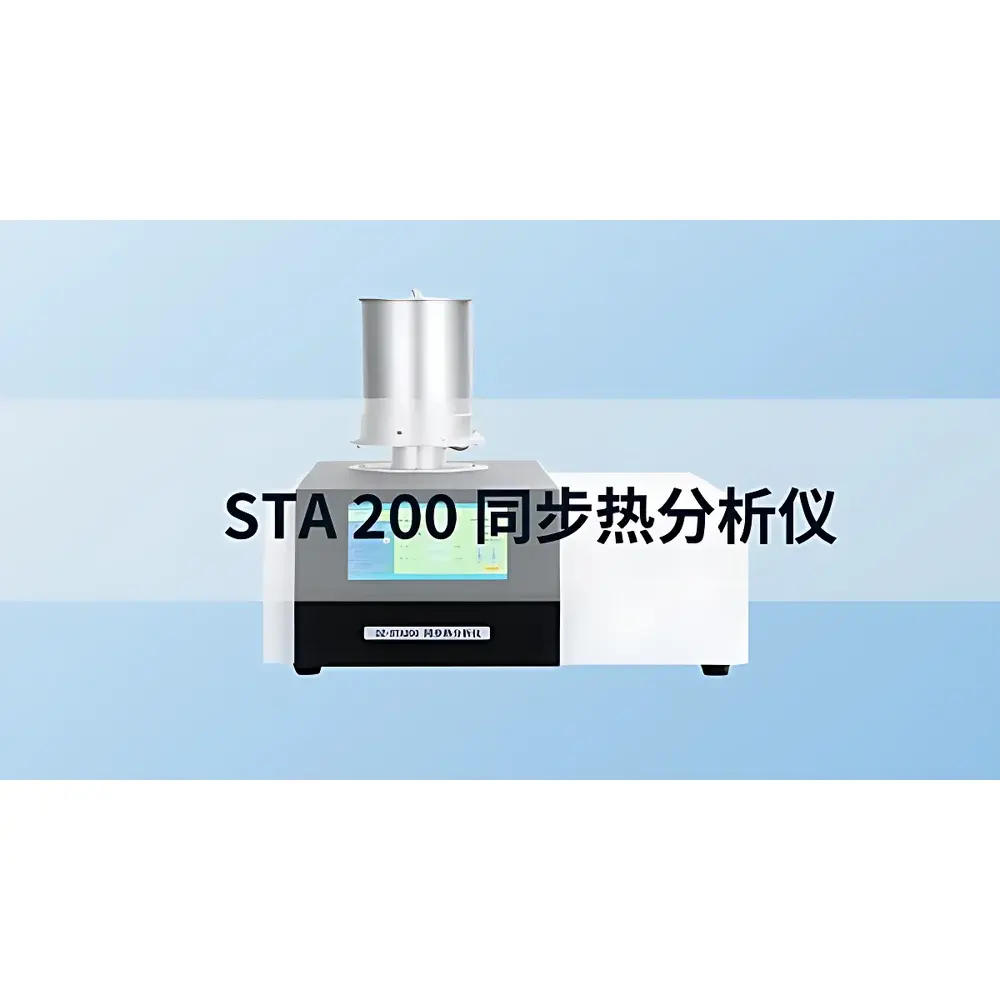
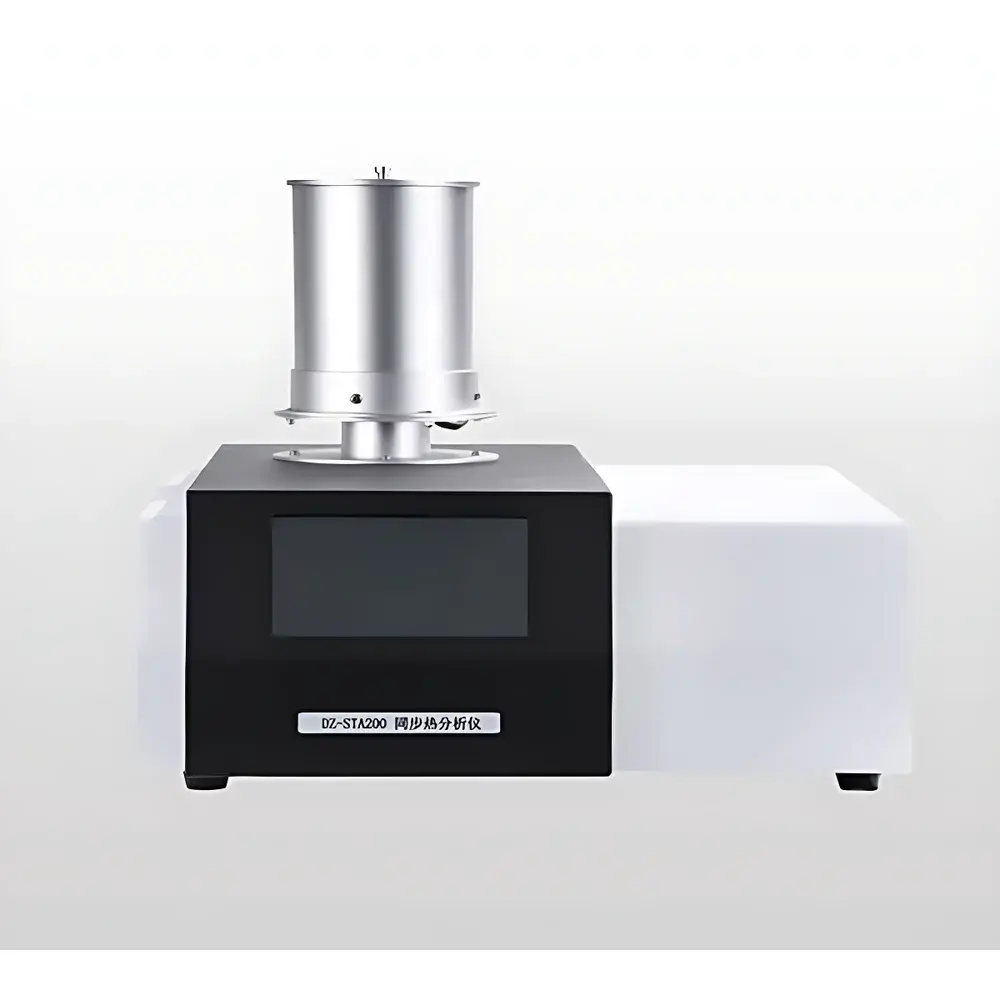
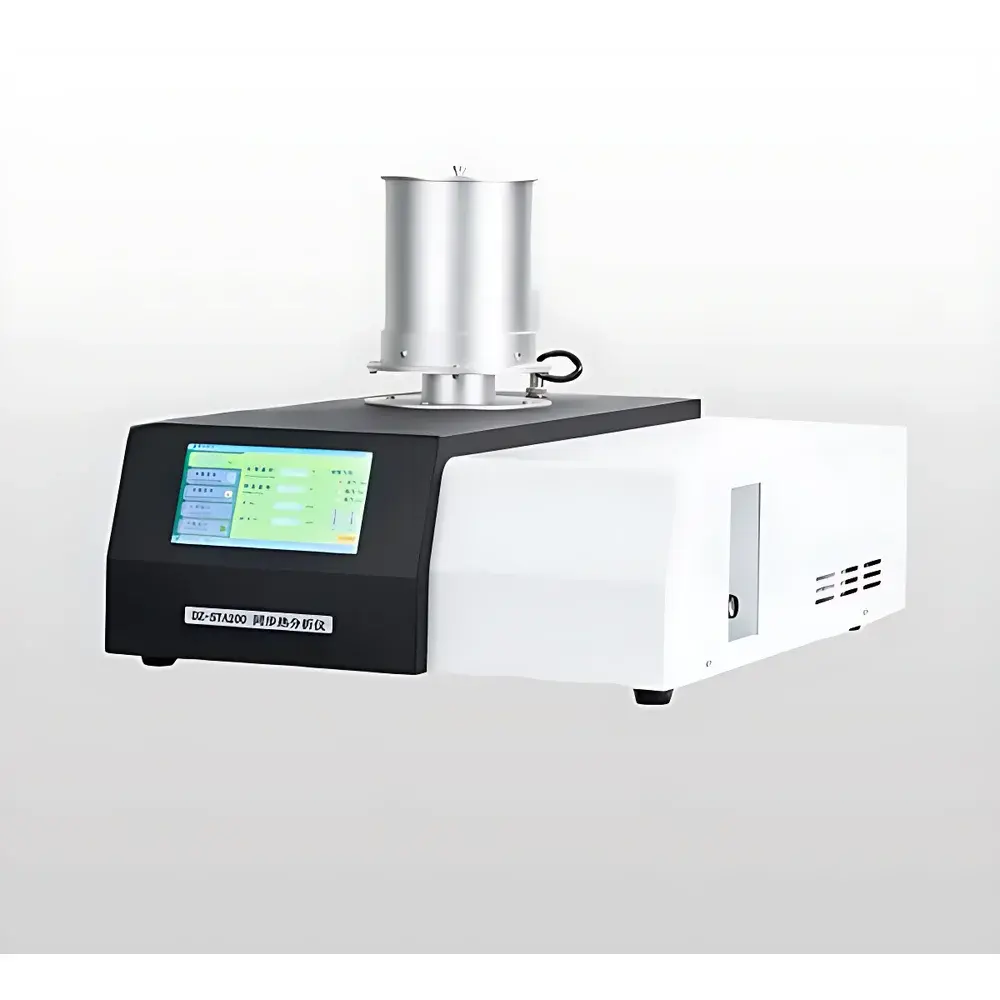
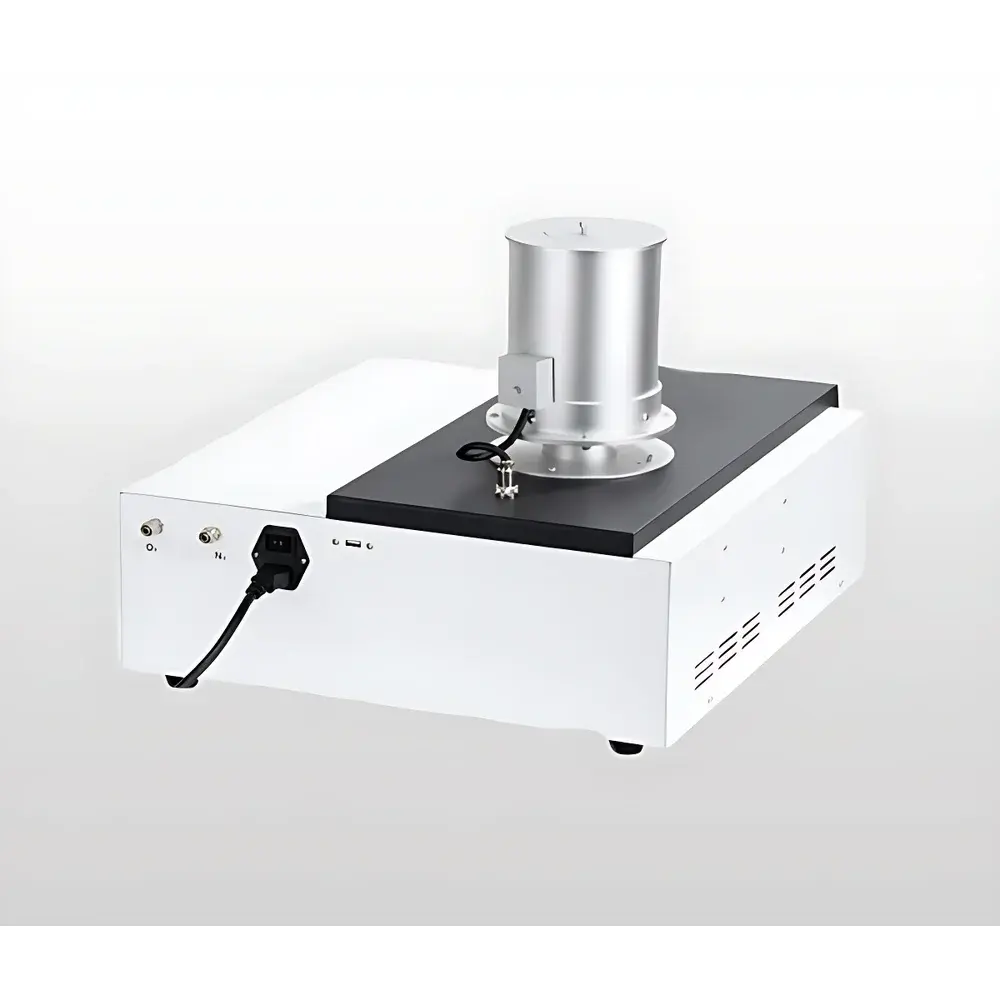
Nanjing Dazhan DZ-STA 200 Simultaneous Thermal Analyzer
| Brand | Nanjing Dazhan |
|---|---|
| Origin | Jiangsu, China |
| Manufacturer Type | Manufacturer |
| Origin Category | Domestic |
| Model | DZ-STA 200 |
| Heating Rate | 1–80 °C/min |
| Temperature Range | Ambient to 1150 °C (extendable to 1350 °C) |
| Temperature Stability | ±0.1 °C |
| Max Sample Weight | 5 g |
| Atmosphere Compatibility | Inert, Oxidizing, Reducing |
Overview
The Nanjing Dazhan DZ-STA 200 Simultaneous Thermal Analyzer integrates thermogravimetric analysis (TG) and differential scanning calorimetry (DSC) — or differential thermal analysis (DTA) — into a single, synchronized measurement platform. By subjecting one sample to simultaneous mass change and heat flow monitoring under precisely controlled temperature programs, the instrument delivers correlated thermal event data with high temporal alignment and instrumental coherence. This dual-signal acquisition is grounded in the fundamental principles of thermal kinetics and phase transition thermodynamics, enabling rigorous characterization of decomposition onset, oxidation/reduction behavior, polymorphic transitions, glass transitions, crystallization enthalpies, and compositional stoichiometry. Designed for laboratories requiring traceable, reproducible thermal data under regulated environments, the DZ-STA 200 supports method development aligned with ASTM E1131, ISO 11358, and USP <1163> guidelines for thermal stability assessment.
Key Features
- High-stability dual-heating furnace with double-row wound noble-alloy (Ni-Cr) resistance wire, engineered for uniform thermal distribution and extended service life at temperatures up to 1350 °C.
- Precision microbalance system featuring a corrosion-resistant Ni-Cr alloy sample pan sensor, optimized for long-term baseline stability and minimal drift during dynamic heating cycles.
- Thermally decoupled architecture: power supply, water-cooling module, and main analyzer chassis are physically separated to suppress mechanical vibration and thermal crosstalk to the microbalance subsystem.
- Top-opening furnace design minimizes operator-induced mechanical stress on the sample rod and crucible assembly — eliminating risk of bending or misalignment common in lift-type loading mechanisms.
- Multi-layer thermal shielding isolates the high-temperature furnace zone from the electronics enclosure and balance chamber, maintaining ambient thermal conditions critical for sub-microgram mass resolution.
- Modular furnace configuration allows field-replacement with alternative high-temperature or vacuum-rated variants, supporting customization for specialized applications including catalytic reaction studies under controlled partial pressures.
Sample Compatibility & Compliance
The DZ-STA 200 accommodates standard ceramic, alumina, and aluminum crucibles (including hermetic and vented types), supporting solid powders, granules, thin films, and small-volume liquids (≤50 µL). Sample mass range spans 0.1 mg to 5 g, with mass resolution of 0.1 µg and repeatability ≤±0.01 mg under GLP-compliant operating conditions. Atmosphere control includes dual independent mass flow controllers (MFCs) for inert (N₂, Ar), oxidizing (air, O₂), and reducing (H₂/N₂, CO) gas streams, configurable for static hold or dynamic purge modes (flow rates 0–200 mL/min). All hardware and firmware comply with CE electromagnetic compatibility (EMC) directives and support audit-ready operation per FDA 21 CFR Part 11 when paired with validated software configurations.
Software & Data Management
The embedded control system employs a 32-bit ARM Cortex-M3 processor with real-time multi-channel acquisition (24-bit ADC for TG, DSC, and T signals), synchronized at 10 Hz sampling rate. A dedicated 8-bit microcontroller manages active cooling and power regulation independently — ensuring zero interference with thermal signal integrity while maintaining tight coordination via internal CAN bus. The 7-inch 24-bit color touchscreen provides local calibration (TG zero/mass, DSC baseline, temperature), method setup, and real-time curve visualization. USB 2.0 interface enables full remote operation, parameter scripting, and automated sequence execution via PC-based software. Data processing includes derivative (DTG), peak deconvolution, kinetic modeling (e.g., Kissinger, Ozawa-Flynn-Wall), and multi-point temperature/enthalpy calibration. Export formats include CSV, Excel (.xlsx), PDF reports with embedded metadata (operator ID, timestamp, instrument serial number), and print-ready experimental logs compliant with ISO/IEC 17025 documentation requirements.
Applications
- Pharmaceutical solid-state characterization: hydrate/dehydrate transitions, polymorph screening, excipient compatibility, and thermal degradation kinetics.
- Materials science: ceramic sintering profiles, polymer thermal stability (TGA onset, char yield), metal oxide reduction pathways, and nanocomposite decomposition mechanisms.
- Energy research: battery cathode/anode thermal runaway profiling, catalyst thermal aging, and hydrogen storage material desorption thermodynamics.
- Geochemistry and metallurgy: mineral dehydration sequences, slag melting behavior, and ore calcination stoichiometry.
- Quality control labs: batch-to-batch consistency verification, raw material identity testing, and shelf-life prediction via accelerated thermal aging protocols.
FAQ
What is the maximum operating temperature, and can it be extended beyond 1150 °C?
The standard configuration supports up to 1150 °C; optional high-temperature furnace modules extend the upper limit to 1350 °C with recalibrated temperature sensors and enhanced insulation.
Does the instrument support quantitative DSC calibration using certified reference materials?
Yes — the software includes multi-point calibration routines for temperature (In, Sn, Zn, Al) and enthalpy (KCl, KNO₃, sapphire) using NIST-traceable standards, with automatic correction tables applied per test segment.
Is the system compatible with GMP/GLP-compliant data integrity workflows?
When operated with validated software and enabled audit trail logging, the DZ-STA 200 meets core ALCOA+ principles (Attributable, Legible, Contemporaneous, Original, Accurate) and supports electronic signatures per 21 CFR Part 11 Annex 11 requirements.
Can the instrument perform isothermal holds and multi-step temperature programs?
Yes — programmable temperature profiles include ramp/hold/cool segments, with isothermal durations configurable from 0 to 72 hours and cooling rates controllable down to 0.1 °C/min.
What maintenance is required for long-term microbalance stability?
Routine maintenance includes quarterly crucible cleaning, annual MFC recalibration, biannual furnace insulation inspection, and semi-annual balance zero-drift verification using certified reference weights — all documented in the built-in maintenance log.



