
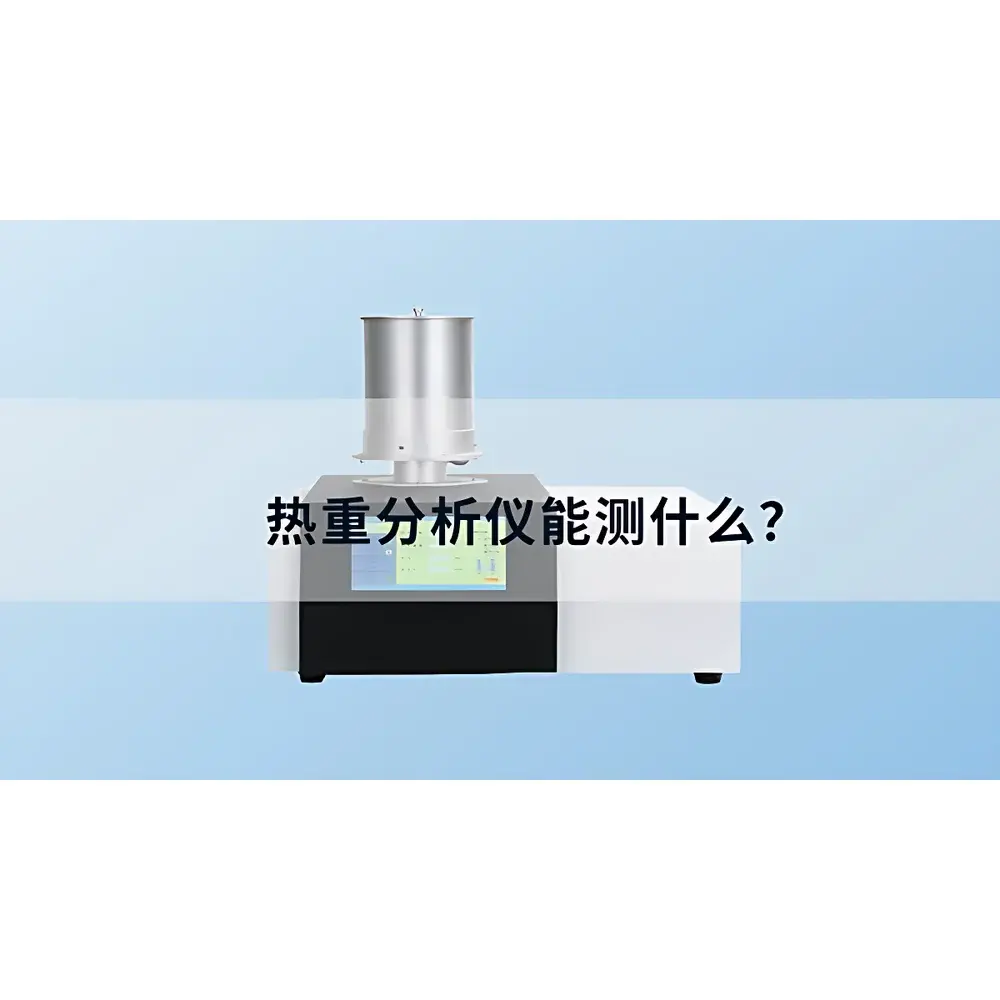
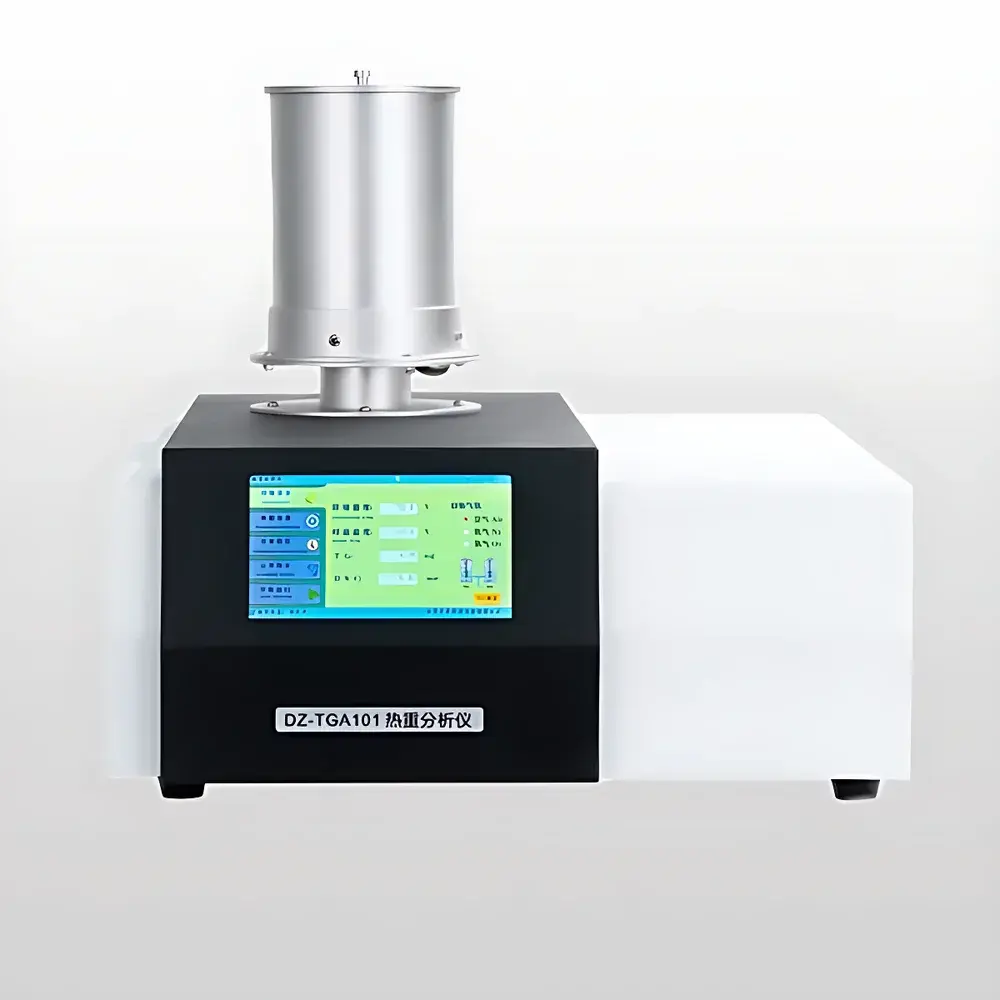
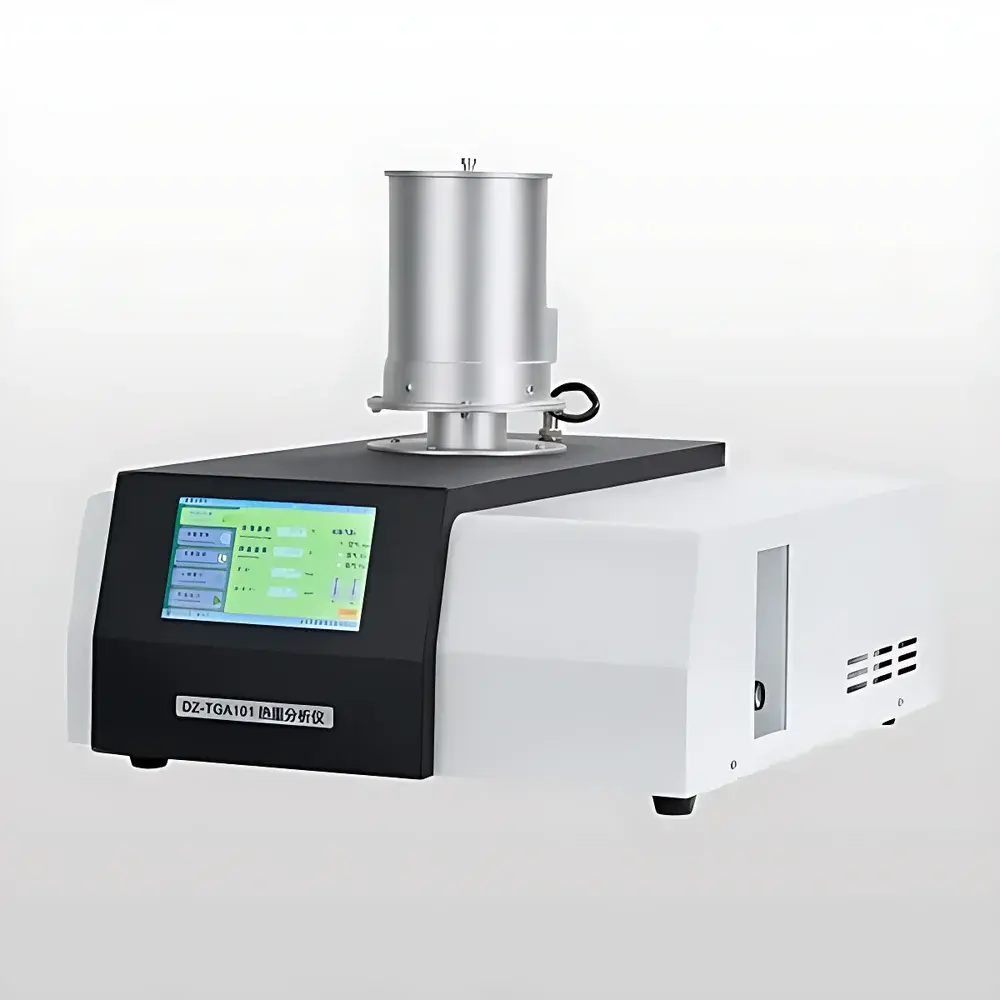
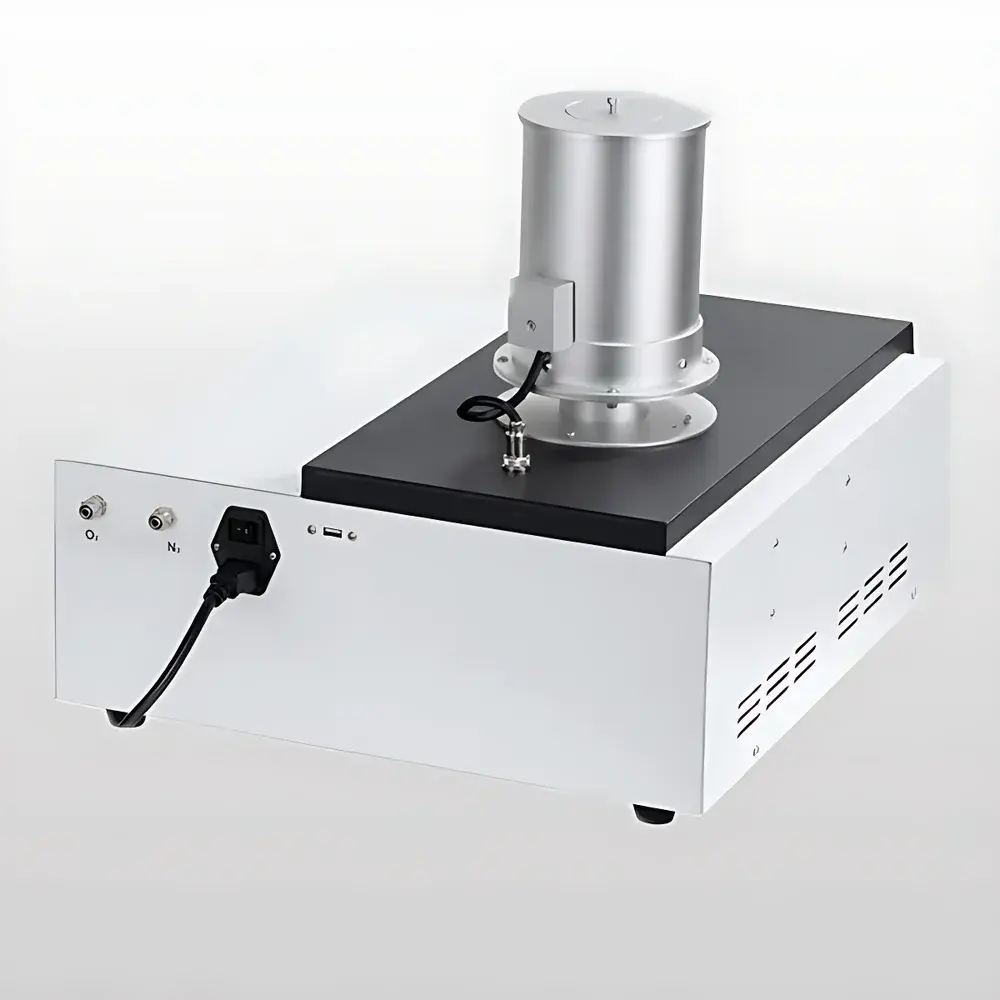
Nanjing Dazhan DZ-TGA 101 Thermogravimetric Analyzer
| Brand | Nanjing Dazhan |
|---|---|
| Origin | Jiangsu, China |
| Manufacturer Type | Direct Manufacturer |
| Origin Category | Domestic (China) |
| Model | DZ-TGA 101 |
| Structure Type | Top-loading / Upper-mounted |
| Operating Environment | Ambient Pressure |
| Sample Capacity | Single-sample |
| Instrument Type | General-purpose |
| Temperature Range | Room Temperature to 1200 °C |
| Temperature Accuracy | ±0.01 K |
| Balance Sensitivity | 0.01 mg |
| Heating/Cooling Rate | 1–80 °C/min |
| Maximum Sample Mass | 30 g |
| Baseline Drift | ≤0.1 mg |
| Temperature Resolution | 0.01 °C |
| Temperature Stability | ±0.01 °C |
| Mass Range | 0.1 mg–30 g |
| Atmosphere Control | Dual-gas channel with integrated mass flow meters and manual flow regulation |
| Data Interface | Standard USB |
| Power Supply | AC 220 V, 50 Hz |
| Dimensions (L×W×H) | 500×400×430 mm |
Overview
The Nanjing Dazhan DZ-TGA 101 Thermogravimetric Analyzer is a precision-engineered, general-purpose thermal analysis instrument designed for quantitative measurement of mass change as a function of temperature or time under controlled atmospheric conditions. Based on the fundamental principle of thermogravimetry—monitoring real-time mass variation during programmed thermal treatment—the DZ-TGA 101 delivers high reproducibility in decomposition kinetics, moisture/volatile content quantification, oxidative stability assessment, and compositional analysis of polymers, ceramics, pharmaceuticals, catalysts, and inorganic materials. Its top-loading furnace architecture minimizes mechanical stress on the microbalance system while enabling rapid sample insertion and removal without compromising thermal isolation integrity. The instrument operates at ambient pressure and supports inert (N₂, Ar), oxidizing (air, O₂), or reducing (H₂, CO) atmospheres via dual-channel gas switching and calibrated flow control.
Key Features
- High-temperature furnace with dual-row precious-metal alloy heating wire, engineered for uniform thermal distribution, extended service life (>10,000 h at 1200 °C), and minimal electromagnetic interference.
- Top-mounted microbalance system featuring a platinum-rhodium alloy sample holder and sensor assembly, optimized for thermal stability, oxidation resistance, and corrosion resilience up to 1200 °C.
- Thermally decoupled design: power supply, cooling fan assembly, and main electronics are physically isolated from the furnace chamber and balance unit to suppress vibration- and conduction-induced noise.
- Advanced temperature control using PID algorithm with multi-segment ramp-hold-cool profiles; programmable heating rates from 1 to 80 °C/min with ±0.01 K accuracy and <0.01 K short-term fluctuation.
- Integrated 7-inch 24-bit color touchscreen HMI with ARM-based embedded controller; enables full local operation including TG calibration, parameter configuration, real-time curve monitoring, and method storage.
- Four-channel simultaneous analog-to-digital acquisition (24-bit resolution) for synchronized recording of mass (TG), derivative mass (DTG), temperature (T), and furnace power signals.
Sample Compatibility & Compliance
The DZ-TGA 101 accommodates standard ceramic or platinum crucibles (up to 30 g total mass) and supports both solid powders and granular specimens. It complies with core thermal analysis methodology standards including ASTM E1131 (standard test method for compositional analysis by thermogravimetry), ISO 11358-1 (polymer thermogravimetry—general principles), and USP residual solvents testing workflows. While not pre-certified for FDA 21 CFR Part 11, the system’s audit-trail-capable software architecture—including user access logs, electronic signatures, and immutable data export—supports implementation within GLP/GMP environments when paired with validated SOPs and periodic instrument qualification (IQ/OQ/PQ).
Software & Data Management
The proprietary TGAControl software (Windows-compatible, USB-connected) provides full bidirectional communication for remote instrument control, method development, real-time data visualization, and post-run analysis. Functions include automatic baseline correction, peak identification (DTG maxima), derivative curve smoothing, mass loss step integration, and kinetic modeling (e.g., Kissinger, Ozawa-Flynn-Wall). All raw data (.tdf binary format) and processed reports (.pdf/.xlsx) are timestamped and stored with metadata (operator ID, method name, gas flow settings, calibration history). Software updates are provided free-of-charge via secure download portal, ensuring continued alignment with evolving analytical requirements and regulatory expectations.
Applications
- Quantitative determination of filler content (e.g., CaCO₃, SiO₂) in polymer composites per ISO 3451.
- Decomposition onset temperature and activation energy calculation for energetic materials and battery cathode precursors.
- Residual solvent and moisture content verification in pharmaceutical active ingredients (APIs) per ICH Q5C guidelines.
- Oxidation induction time (OIT) evaluation of polyolefins under dynamic air flow.
- Char yield and ash content measurement in coal, biomass, and carbonaceous materials per ASTM D3174.
- Thermal stability profiling of catalysts and supported metal oxides during calcination cycles.
FAQ
What is the maximum operating temperature and certified accuracy at 1000 °C?
The furnace is rated for continuous operation up to 1200 °C; temperature accuracy is maintained at ±0.01 K across the full range, verified via NIST-traceable PtRh/Pt thermocouple calibration.
Can the instrument perform simultaneous TG-DTA or TG-DSC measurements?
No—the DZ-TGA 101 is a dedicated thermogravimetric platform. Differential thermal analysis requires a separate DTA/DSC module or hybrid instrument configuration.
Is the microbalance internally calibrated? How often is recalibration required?
Yes—full internal mass calibration (zero and span) is accessible via the touchscreen interface. Recalibration is recommended before each analytical session or after ambient temperature shifts >5 °C.
Does the system support purge gas switching during a single run?
Yes—dual independent mass flow controllers allow automated or manual switching between two gases (e.g., N₂ → air) at user-defined time/temperature points within a single method.
What documentation is provided for IQ/OQ validation?
A comprehensive validation protocol package—including equipment specification sheet, factory calibration certificates, test scripts, and blank acceptance records—is supplied with each unit to facilitate site-specific qualification.



