
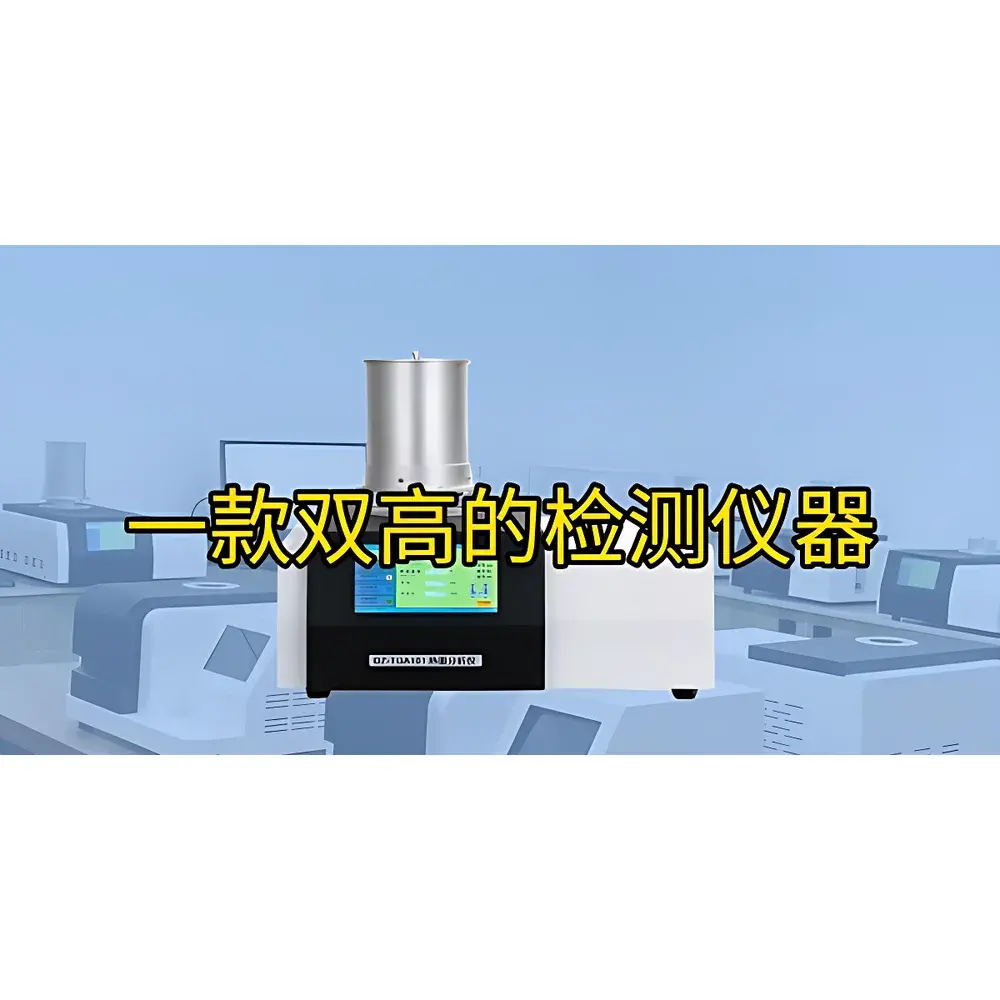
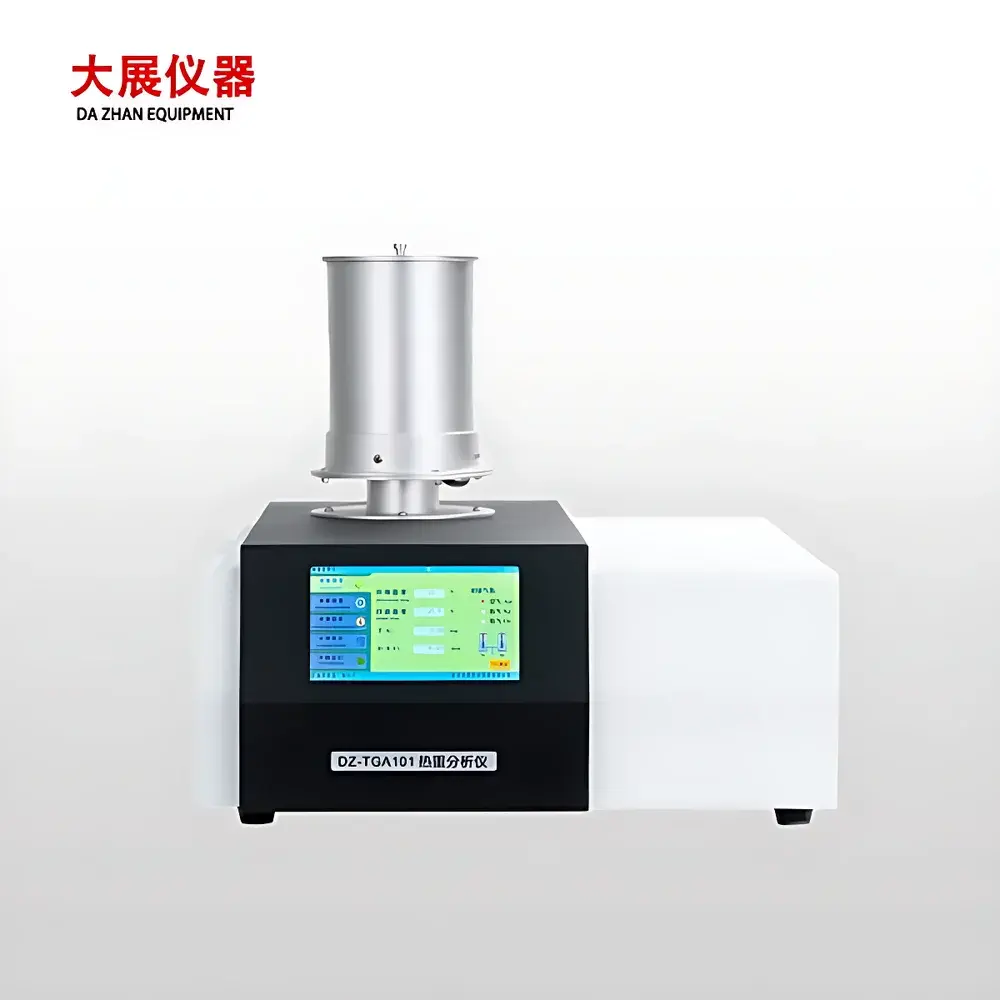

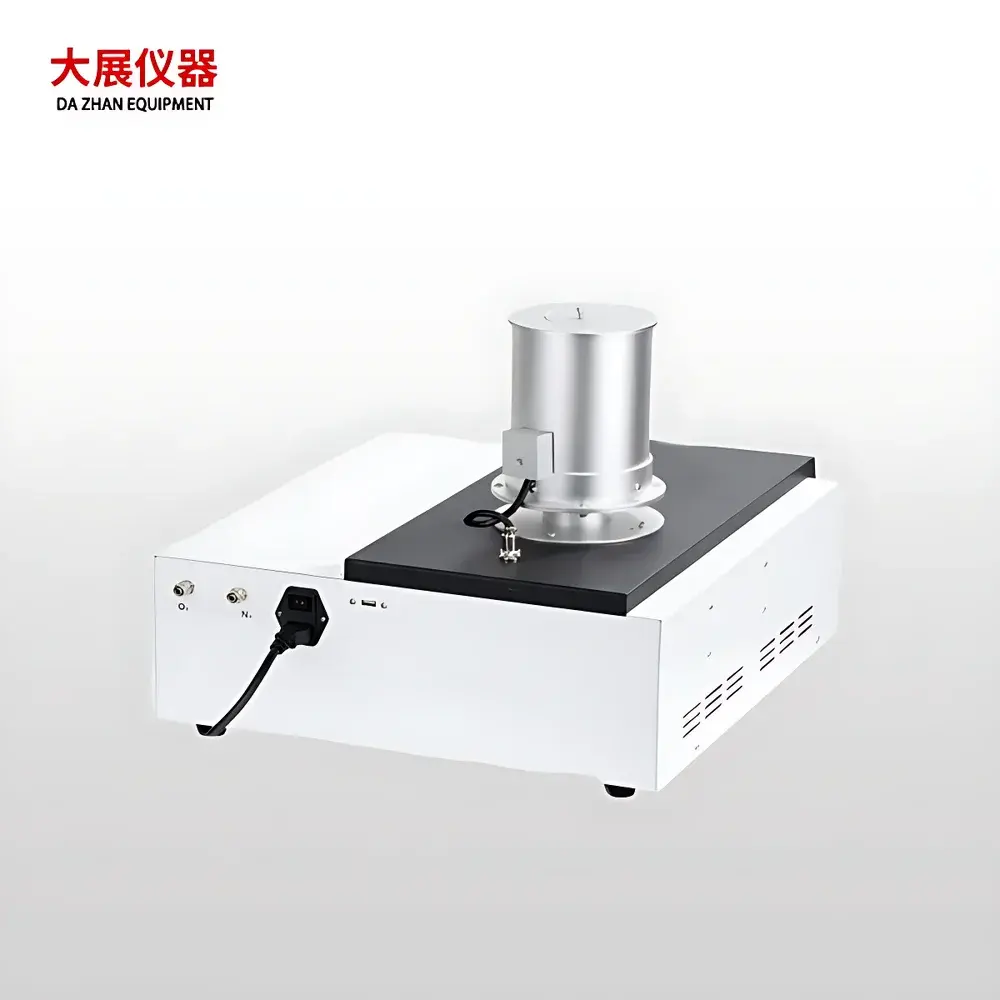
Nanjing Dazhan DZ-TGA101 High-Precision Thermogravimetric Analyzer with Extended Temperature Range
| Brand | Nanjing Dazhan |
|---|---|
| Origin | Jiangsu, China |
| Manufacturer Type | Direct Manufacturer |
| Origin Category | Domestic |
| Model | DZ-TGA101 |
| Test Environment | Ambient Pressure |
| Sample Capacity | Single Sample |
| Instrument Type | General-Purpose |
| Temperature Range | Room Temperature to 1200 °C |
| Temperature Resolution | 0.01 °C |
| Temperature Accuracy | ±0.01 °C |
| Dynamic Weighing Range | 0.01 mg to 3 g |
| Heating/Cooling Rate | 0.1–100 °C/min |
| Maximum Sample Mass | 30 g |
| Baseline Repeatability | Excellent |
| Baseline Drift | Negligible |
Overview
The Nanjing Dazhan DZ-TGA101 is a high-precision, general-purpose thermogravimetric analyzer engineered for rigorous thermal stability and compositional analysis under controlled atmospheric conditions. Based on the fundamental principle of thermogravimetry (TGA), the instrument continuously monitors mass change as a function of temperature or time during programmed heating, isothermal holding, or controlled cooling. This enables quantitative characterization of decomposition kinetics, volatilization behavior, oxidative/reductive reactions, adsorption-desorption equilibria, and filler/additive contributions in solid and powdered materials. Designed for laboratory environments requiring reproducible, traceable, and GLP-compliant data acquisition, the DZ-TGA101 integrates a dual-zone nickel-chromium alloy furnace, a high-stability microbalance system, and active thermal isolation architecture to minimize environmental interference—ensuring measurement integrity across its full operational range from ambient to 1200 °C.
Key Features
- Extended temperature capability: Continuous operation from room temperature up to 1200 °C, supported by dual-row wound noble-metal heating elements for uniform thermal distribution and long-term stability.
- High-resolution microbalance: Dynamic weighing range of 0.01 mg to 3 g (expandable to 30 g), with resolution down to 0.1 µg and repeatability validated under ISO 11358-1:2014 guidelines.
- Thermally decoupled mechanical design: Separated power supply, forced-air cooling module, and water-jacketed mainframe housing eliminate conductive and convective thermal coupling between furnace and balance assembly.
- Top-opening furnace configuration: Enables safe, ergonomic sample loading without risk of probe misalignment or crucible rod deformation—critical for maintaining long-term calibration fidelity.
- Programmable thermal control: Linear and non-linear ramp rates from 0.1 to 100 °C/min; isothermal hold duration configurable from 0 to 500 minutes (extendable to 72 hours); rapid cooling ≤15 minutes from 1000 °C to 100 °C.
- Dual-gas atmosphere management: Integrated mass flow controllers support two independent gas lines (inert, oxidizing, reducing, static, or dynamic) with real-time digital flow adjustment and automated switching logic.
Sample Compatibility & Compliance
The DZ-TGA101 accommodates standard ceramic, alumina, and aluminum crucibles—compatible with ASTM E1131, ISO 11358, and USP <631> methodologies for thermal decomposition profiling. Its inert-atmosphere capability supports ASTM D3850 (plastics), ASTM E2550 (nanomaterials), and ISO 11358-2 (polymer degradation kinetics). The instrument meets essential requirements for GMP-relevant thermal analysis workflows, including audit-trail-enabled software logging, user-access controls, and electronic signature readiness per FDA 21 CFR Part 11 when operated with validated software configurations. Baseline drift remains below 0.5 µg over 60 minutes at 1000 °C—verified per ISO 11358-1 Annex B protocols.
Software & Data Management
The included intelligent TGA analysis suite provides native support for TG and derivative thermogravimetric (DTG) curve generation, peak identification, onset/endpoint determination, and multi-step kinetic modeling (e.g., Kissinger, Ozawa-Flynn-Wall). All data export formats comply with laboratory informatics standards: CSV and Excel-compatible .xlsx files, PDF report generation with embedded metadata (operator ID, timestamp, calibration certificate ID), and direct USB interface for seamless integration into LIMS environments. The software features multi-point temperature calibration routines traceable to NIST-certified reference materials, automatic baseline correction algorithms, and customizable report templates aligned with internal QA/QC documentation requirements.
Applications
- Quantitative residue analysis in pharmaceutical excipients and active ingredients (e.g., loss-on-drying, hydrate/dehydrate transitions).
- Thermal degradation profiling of polymers, composites, and elastomers—including char yield estimation and flame-retardant efficacy assessment.
- Composition verification of catalysts, battery electrode materials, and metal-organic frameworks (MOFs) via stepwise mass loss correlation with stoichiometric models.
- Oxidation kinetics studies of metallic alloys and corrosion-resistant coatings under controlled O2/N2 mixtures.
- Quality control of inorganic pigments, fillers, and nanoscale additives where thermal purity and volatile content are specification-critical.
- Process development support for pyrolysis, calcination, and sintering parameter optimization in ceramic and metallurgical R&D.
FAQ
What is the maximum recommended sample mass for optimal sensitivity and resolution?
For highest mass resolution (0.1 µg), samples should be loaded within the 0.01–2 g range. The extended 30 g capacity is intended for low-sensitivity screening applications where absolute mass accuracy is secondary to thermal profile fidelity.
Can the DZ-TGA101 operate under vacuum or reduced pressure?
No—the system is configured for ambient-pressure operation only. Vacuum compatibility requires optional furnace modification and is not covered under standard warranty or regulatory validation.
Is the software compliant with 21 CFR Part 11 for regulated pharmaceutical laboratories?
The base software includes electronic signature, audit trail, and user-role assignment features. Full Part 11 compliance requires site-specific validation documentation and may necessitate third-party IQ/OQ/PQ protocols.
How frequently should temperature calibration be performed?
We recommend quarterly calibration using certified reference materials (e.g., Ni, Cu, Al, KCl) and annual full-system verification against ISO 11358-1 Annex A procedures.
Does the instrument support simultaneous DTA or DSC measurements?
No—the DZ-TGA101 is a dedicated thermogravimetric platform. For combined TG-DTA or TG-DSC functionality, please consult the DZ-TGAD series, which shares identical furnace and balance architecture but adds differential thermal sensing capability.



