
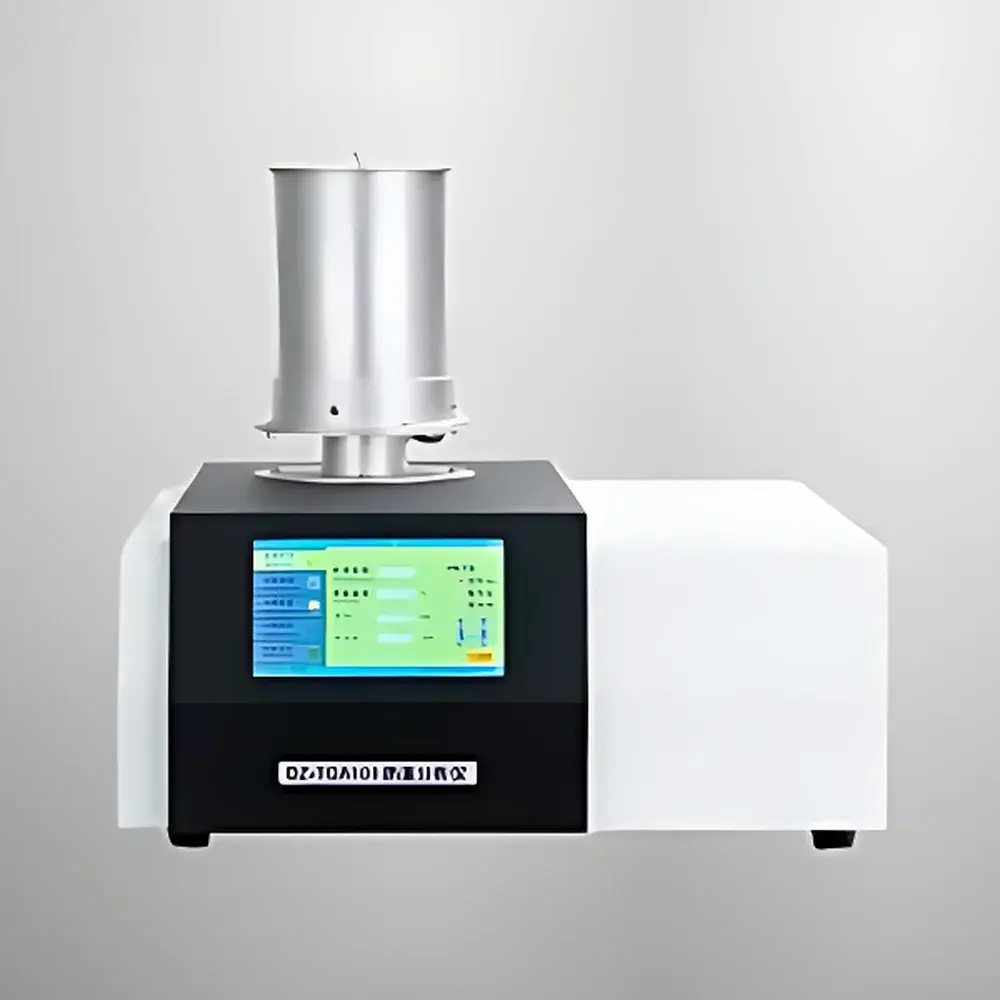
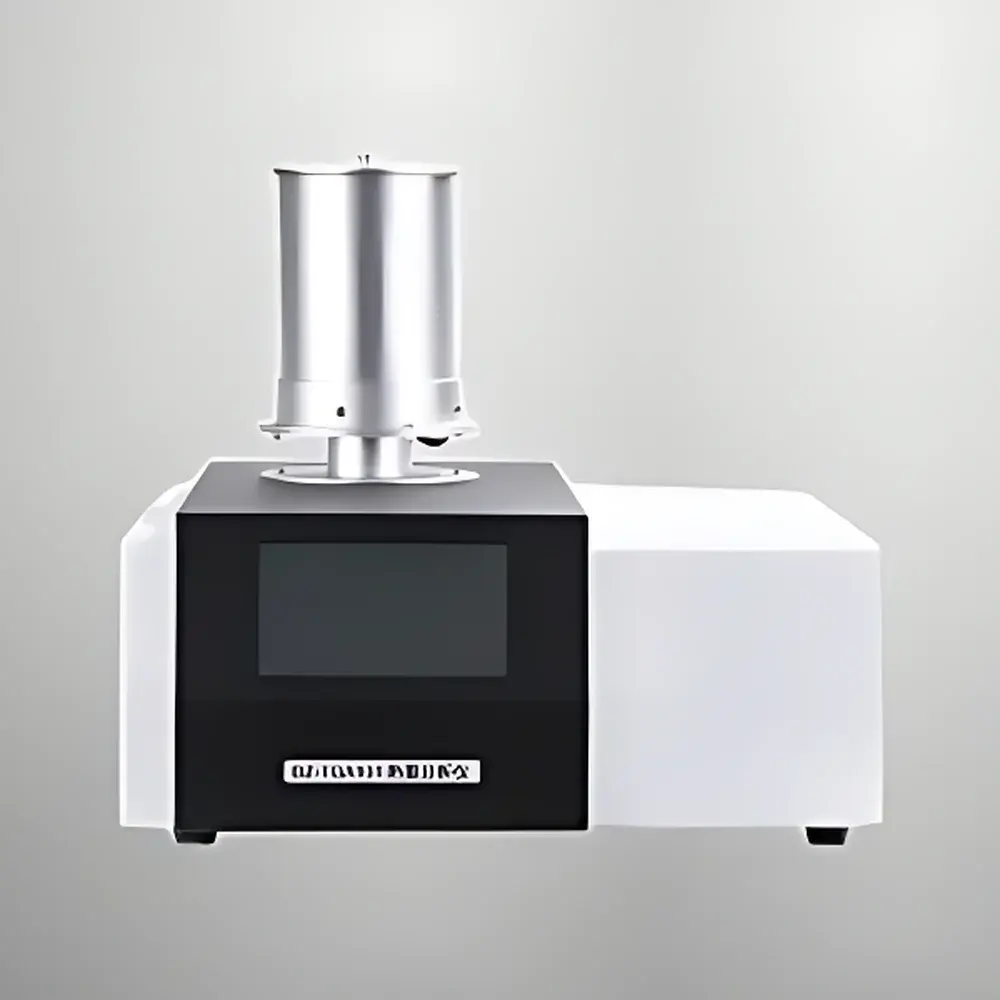
Nanjing Dazhan DZ-TGA101 Thermogravimetric Analyzer
| Brand | Nanjing Dazhan |
|---|---|
| Origin | Jiangsu, China |
| Manufacturer Type | Direct Manufacturer |
| Country of Origin | China |
| Model | DZ-TGA101 |
| Price Range | USD 7,000–14,000 (FOB) |
| Operating Environment | Ambient Pressure |
| Sample Capacity | Single Sample |
| Instrument Type | General-Purpose TGA |
| Temperature Range | Room Temperature to 1200 °C |
| Balance Sensitivity | 0.1 µg (Resolution), 0.01 mg (Accuracy) |
| Mass Range | 0.01 mg–2 g (expandable to 30 g) |
| Heating/Cooling Rate | 0.1–100 °C/min |
| Temperature Resolution | 0.01 °C |
| Temperature Stability | ±0.1 °C |
| Cooling Time (1000 °C → 100 °C) | ≤15 min |
| Isothermal Hold Duration | 0–500 min (extendable to 72 h) |
| Atmosphere Control | Dual-gas inlet with mass flow control (inert, oxidizing, reducing, static, dynamic) |
| Display | 7-inch 24-bit color capacitive touchscreen |
| Data Interface | Standard USB 2.0 |
| Software | Proprietary Windows-based TGA analysis suite with ASTM/ISO-compliant reporting, Excel export, PDF report generation, multi-point temperature calibration, and full remote instrument control |
Overview
The Nanjing Dazhan DZ-TGA101 Thermogravimetric Analyzer is a precision-controlled, general-purpose thermal analysis system designed for quantitative measurement of mass change as a function of temperature or time under controlled atmospheric conditions. Based on the fundamental principle of thermogravimetry (TG), the instrument continuously monitors sample mass loss or gain during programmed thermal cycles—enabling rigorous characterization of thermal stability, decomposition kinetics, moisture/volatile content, filler loading, oxidation behavior, and compositional stoichiometry. Its robust architecture integrates high-stability microbalance technology with a dual-zone furnace design and active thermal isolation, ensuring minimal thermal drift and mechanical interference during extended measurements up to 1200 °C. The DZ-TGA101 complies with core methodology standards referenced in ASTM E1131, ISO 11358, and USP <467> for residual solvents and thermal degradation profiling.
Key Features
- High-precision dual-channel microbalance with 0.1 µg resolution and 0.01 mg accuracy, calibrated in situ via touchscreen interface
- Double-wound noble-metal (Ni–Cr alloy) furnace with uniform axial heating profile and optimized thermal inertia for reproducible ramp rates from 0.1 to 100 °C/min
- Thermally decoupled mechanical design: water-jacketed instrument chassis isolates the balance and electronics from furnace radiation and convection heat
- Top-opening furnace configuration with vertical sample insertion—eliminates lateral stress on the sample rod and prevents mechanical damage during loading
- Dual independent gas lines with integrated digital mass flow controllers (MFCs), supporting inert (N₂, Ar), oxidative (air, O₂), reductive (H₂, forming gas), static, and dynamic atmospheres
- STM32-based embedded controller with 48-bit quadruple-sampling ADC for simultaneous acquisition of TG, DTG, and temperature signals at configurable sampling intervals
- 7-inch full-color capacitive touchscreen with intuitive GUI for real-time curve monitoring, parameter setup, calibration, and local operation without PC dependency
Sample Compatibility & Compliance
The DZ-TGA101 accommodates standard ceramic, alumina, and aluminum crucibles (including hermetic and vented variants), enabling safe analysis of polymers, pharmaceuticals, catalysts, metal oxides, composites, and carbonaceous materials. Its single-sample configuration ensures optimal signal-to-noise ratio and eliminates cross-contamination risks in regulated environments. The system supports GLP/GMP-aligned workflows through audit-trail-enabled software, electronic signature capability, and 21 CFR Part 11–compliant data integrity features—including immutable raw data storage, user access logs, and version-controlled method files. All thermal profiles and mass transitions are traceable to NIST-traceable reference materials (e.g., calcium oxalate monohydrate, nickel oxide) per ISO/IEC 17025 laboratory practice guidelines.
Software & Data Management
The included TGA Analysis Suite provides comprehensive post-run processing: baseline correction, derivative (DTG) calculation, peak integration, kinetic modeling (e.g., Flynn–Wall–Ozawa, Kissinger), and multi-step decomposition deconvolution. Data export conforms to ASTM E1447 and ISO 14644-1 reporting templates, with one-click generation of PDF reports containing annotated TG/DTG overlays, metadata stamps (operator, date, instrument ID, calibration status), and Excel-compatible .csv outputs. Remote operation is fully supported via USB 2.0—allowing complete instrument control (start/stop, parameter modification, real-time data streaming) from Windows PCs. Firmware and software updates are distributed free-of-charge and validated against IEC 62304 medical device software lifecycle requirements.
Applications
- Quantification of polymer degradation onset temperature, char yield, and filler content in thermoplastics and elastomers (ASTM D3850, ISO 11358-1)
- Residual solvent and moisture analysis in active pharmaceutical ingredients (APIs) and excipients per USP <467> and ICH Q5C
- Thermal stability assessment of battery cathode/anode materials (LiCoO₂, NMC, Si-C composites) under air and argon
- Catalyst support decomposition and metal dispersion studies in heterogeneous catalysis
- Oxidation kinetics of metallic alloys and corrosion product formation under controlled O₂ partial pressures
- Carbon black and ash content determination in rubber compounds (ASTM D1604, ISO 247)
- Decomposition enthalpy and stoichiometric hydration/dehydration steps in inorganic hydrates and MOFs
FAQ
What is the maximum recommended operating temperature for continuous use?
The DZ-TGA101 is rated for sustained operation up to 1200 °C using its standard Ni–Cr furnace; prolonged exposure above 1100 °C requires periodic verification of thermocouple calibration and crucible integrity.
Can the instrument perform simultaneous TG-DSC measurements?
No—the DZ-TGA101 is a dedicated thermogravimetric platform. For combined TG-DSC, users should consider Nanjing Dazhan’s complementary DZ-DSC series or hybrid modules compatible with third-party DSC sensors.
Is nitrogen purge mandatory during all tests?
No—gas selection is fully programmable per method step. Static air, dynamic synthetic air, pure argon, or custom gas mixtures can be configured via the dual-MFC interface.
How is temperature calibration performed across the full range?
The software includes multi-point calibration using certified reference materials (e.g., Cu, Ag, Al₂O₃) at defined transition temperatures; calibration data is stored per instrument ID and applied automatically during subsequent runs.
Does the system meet regulatory requirements for pharmaceutical QC laboratories?
Yes—when deployed with validated methods, electronic signatures, and audit-trail logging enabled, the DZ-TGA101 satisfies FDA 21 CFR Part 11, EU Annex 11, and WHO TRS 992 data integrity expectations for release testing.



