
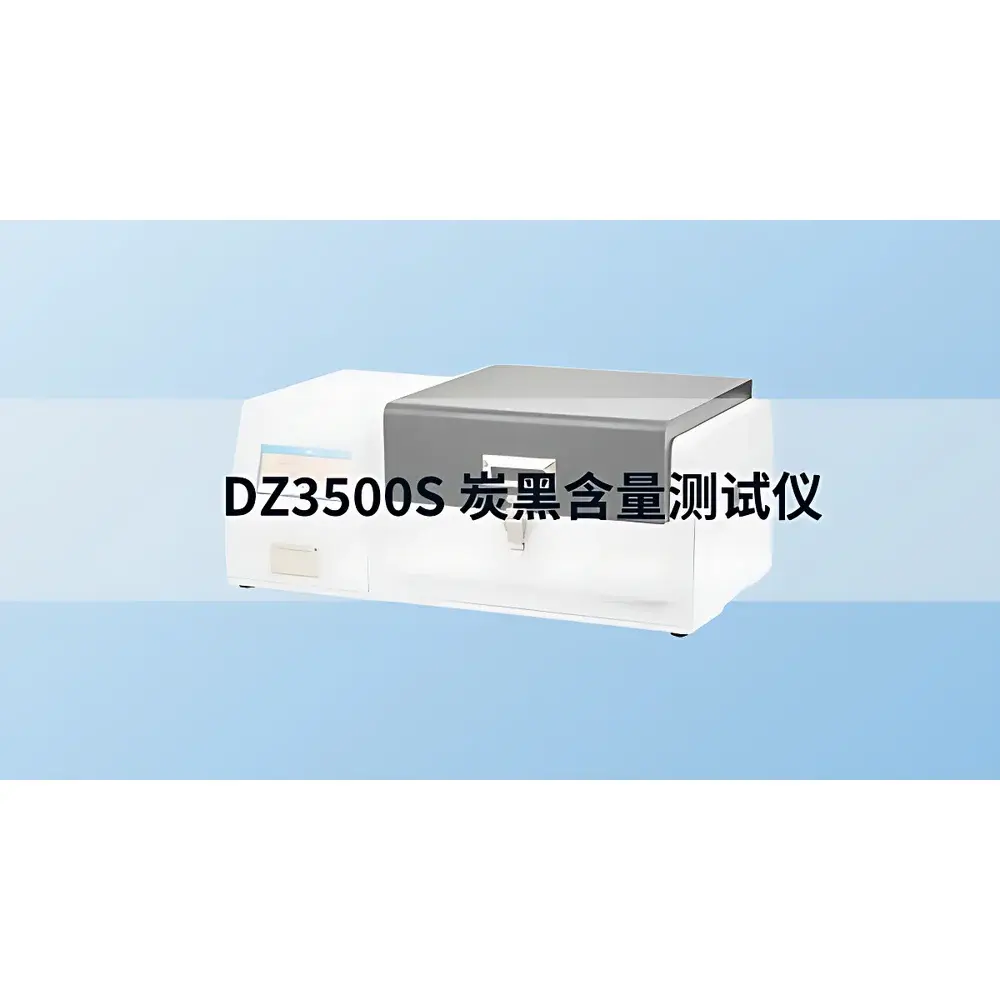
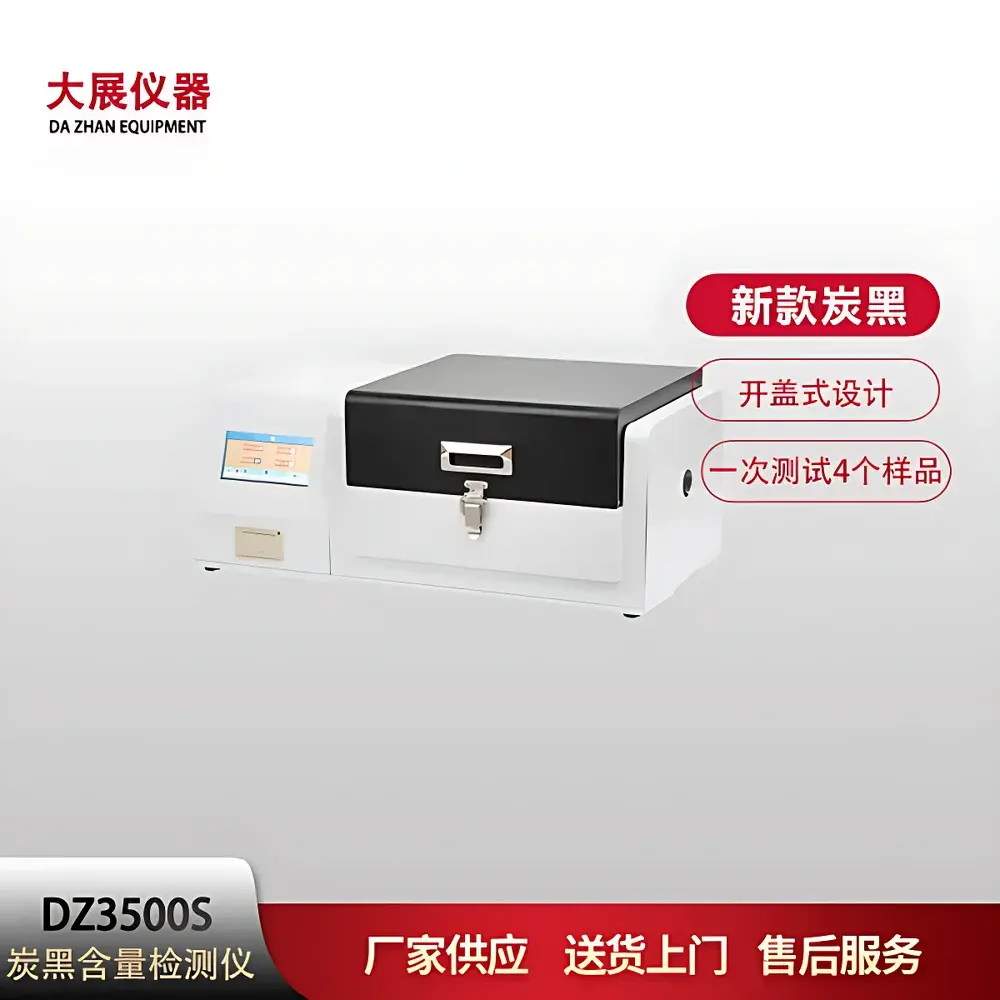
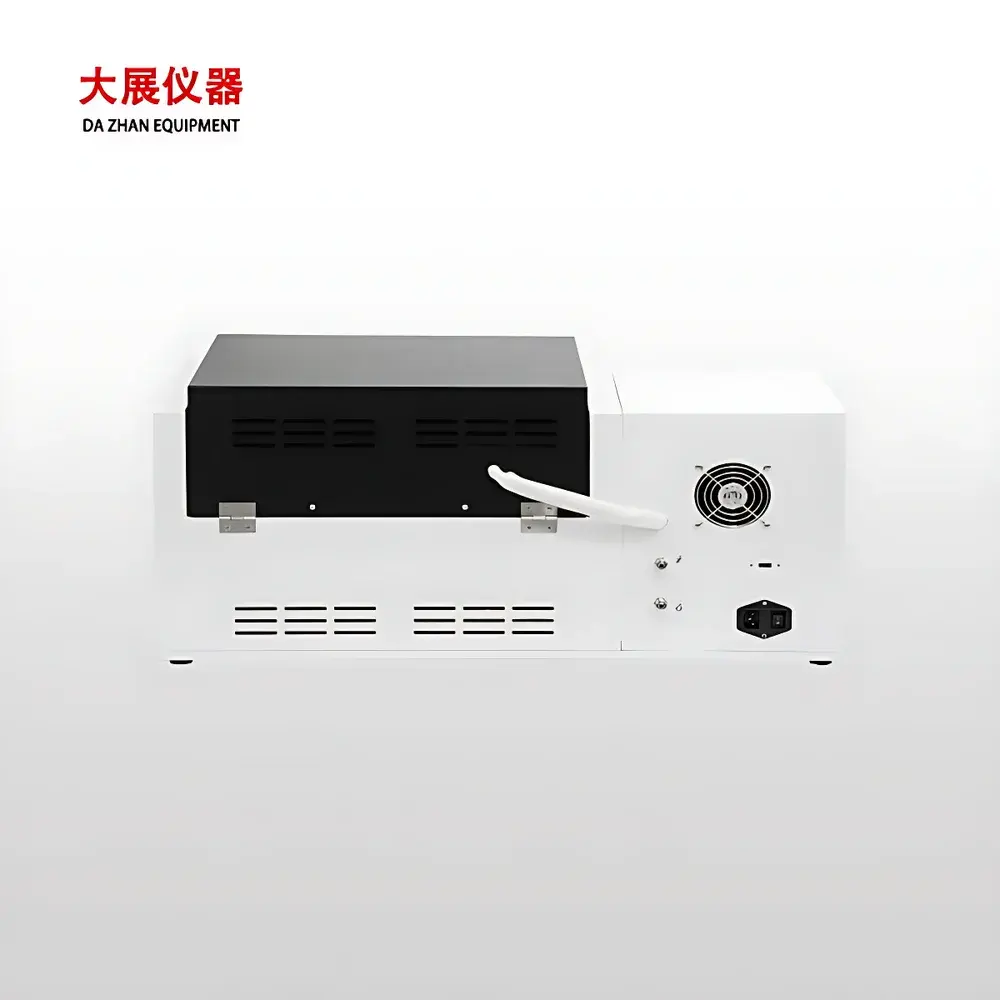
Nanjing Dazhan DZ3500S Carbon Black Content Analyzer
| Brand | Nanjing Dazhan |
|---|---|
| Origin | Jiangsu, China |
| Manufacturer Type | Direct Manufacturer |
| Country of Origin | China |
| Model | DZ3500S |
| Display | 7-inch capacitive touchscreen |
| Quartz Tube Dimensions | φ44 × 600 ± 5 mm |
| Furnace Chamber Dimensions | φ45 × 360 ± 5 mm |
| Heating Element | High-temperature alloy wire |
| Heating Zone Length | 300 mm |
| Operating Temperature Range | Ambient to 1200 °C |
| Temperature Control | Intelligent programmable controller with multi-segment ramp/soak profiles |
| Power Supply | AC 220 V / 50 Hz or 60 Hz |
| Temperature Sensor Sensitivity | 0.1 °C |
| Gas Flow Control | Dual-channel, software-automated switching |
| Cooling Method | Forced-air rapid cooling (≤20 min from 900 °C to ambient) |
| Sample Capacity | 4 samples per run |
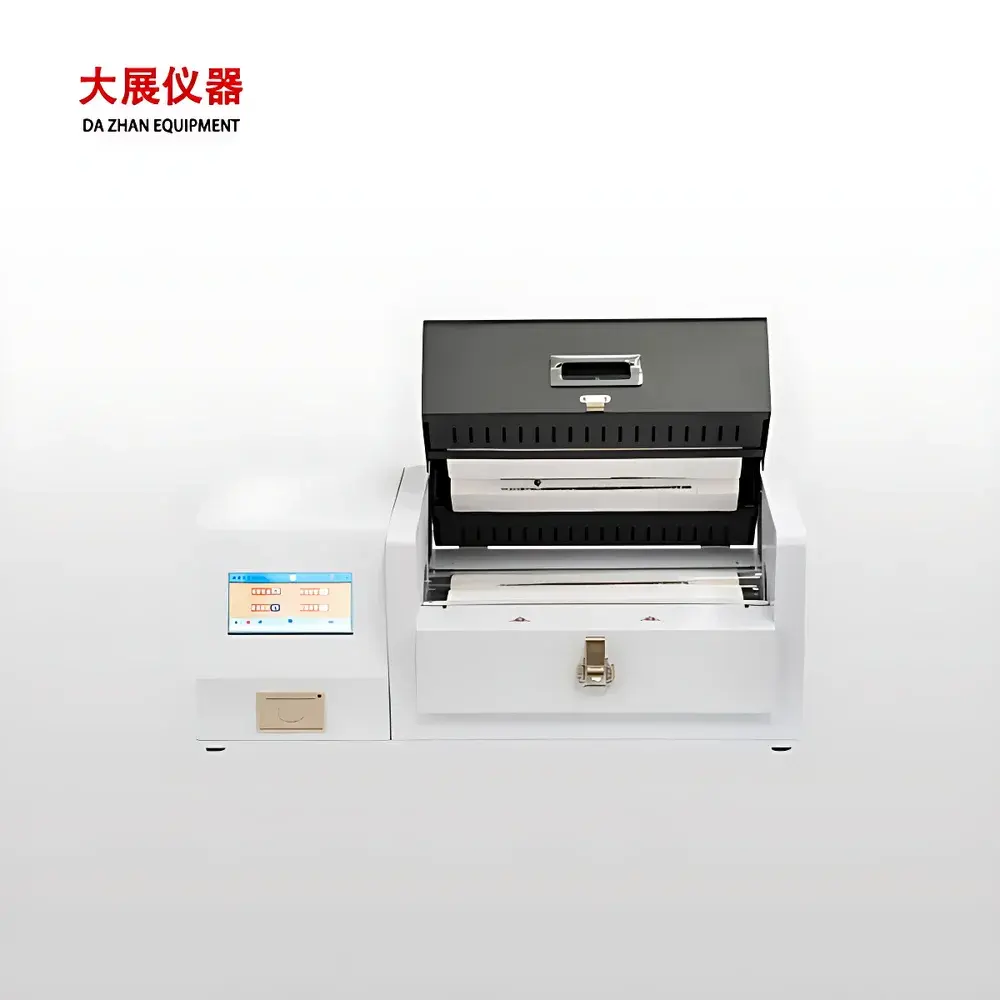
| Sample Handling | Rail-mounted sample holder with top-opening furnace design |
| Exhaust Treatment | Optional particulate and acidic gas filtration unit |
| Data Output | Integrated calculation algorithm for carbon black content and ash content |
Overview
The Nanjing Dazhan DZ3500S Carbon Black Content Analyzer is a dedicated thermal gravimetric instrument engineered for precise quantification of carbon black loading in polymer matrices—primarily polyethylene (PE), polypropylene (PP), polybutene (PB), and elastomeric compounds used in cable insulation, optical fiber sheathing, and industrial rubber products. It operates on the principle of controlled pyrolysis under inert atmosphere followed by oxidative ash residue determination, conforming to standardized test methods including ASTM D1606, ISO 6964, and GB/T 3512. The system employs a dual-atmosphere gas management architecture: nitrogen purging during pyrolysis (to volatilize organic polymer without oxidizing carbon black), followed by automatic switch to air/oxygen for combustion of residual char and measurement of inorganic ash. This sequential thermal decomposition protocol ensures high reproducibility and traceable mass-loss resolution at sub-milligram levels.
Key Features
- Simultaneous 4-position sample processing with independent crucible positioning—increases throughput by 300% versus single-sample analyzers while maintaining inter-sample thermal uniformity.
- Top-opening furnace design with rail-guided ceramic sample tray enables rapid loading/unloading and minimizes operator exposure to thermal hazards during routine operation.
- Intelligent programmable temperature controller supports up to 8-segment heating/cooling profiles, allowing method customization for diverse polymer degradation kinetics (e.g., low-density PE vs. crosslinked EPDM).
- Integrated dual-gas manifold with solenoid-valve actuation and real-time flow monitoring ensures precise atmospheric transition between pyrolysis and oxidation phases—critical for minimizing carbon black oxidation error.
- Rapid forced-air cooling system reduces cycle time from 900 °C to ambient in ≤20 minutes, enabling ≥6 complete analyses per 8-hour shift without thermal soak delay.
- Capacitive 7-inch touchscreen interface provides intuitive navigation, real-time mass curve visualization, and on-device data validation prior to export.
Sample Compatibility & Compliance
The DZ3500S accommodates standard ceramic or quartz crucibles (max. 30 mL volume) and accepts solid granules, pellets, extruded strips, or molded test specimens up to 2.5 g mass. Its validated application scope covers thermoplastic polyolefins (PE, PP, PB), halogen-free flame-retardant compounds, silicone rubbers, and nitrile-butadiene rubber (NBR). Instrument design aligns with GLP laboratory requirements: all temperature setpoints, gas switching events, mass readings, and user actions are timestamped and stored locally with audit trail capability. While not pre-certified for FDA 21 CFR Part 11, the firmware architecture supports electronic signature integration and secure user role assignment (operator, supervisor, administrator)—facilitating internal validation for regulated environments.
Software & Data Management
The embedded analysis engine performs real-time differential mass loss computation using ISO 6964–defined equations: Carbon Black (%) = [(m₁ − m₂) / m₀] × 100, where m₀ = initial sample mass, m₁ = mass after pyrolysis, and m₂ = mass after oxidation. Ash content is derived as [(m₂ − m₃) / m₀] × 100 (m₃ = post-ignition residue). All raw TGA curves, intermediate mass values, and final reports are exportable via USB to CSV or PDF. Optional thermal printer support enables immediate hardcopy generation of QA/QC certificates compliant with internal SOPs. Data files include embedded metadata: operator ID, calibration date, furnace serial number, and environmental chamber temperature/humidity (if external sensor integrated).
Applications
- Quality control of carbon black–filled PE jackets in power transmission cables—verifying filler consistency across production batches to ensure UV resistance and mechanical aging performance.
- Raw material verification for automotive EPDM seals, where carbon black dispersion directly influences compression set and ozone cracking resistance.
- R&D screening of novel conductive composites, enabling rapid comparison of surface-treated vs. untreated carbon black grades under identical thermal protocols.
- Regulatory compliance testing for RoHS and REACH declarations—quantifying total carbonaceous residue in recycled polymer streams prior to reprocessing.
- Failure analysis of degraded cable insulation, distinguishing between thermal degradation (mass loss in pyrolysis zone) and filler migration (abnormal ash composition).
FAQ
What standards does the DZ3500S comply with for carbon black content determination?
It implements test principles aligned with ASTM D1606, ISO 6964, and Chinese national standard GB/T 3512. Full method validation documentation is provided for laboratory accreditation submissions.
Can the instrument distinguish between carbon black and other carbonaceous fillers (e.g., graphite or carbon nanotubes)?
No—the method quantifies total non-volatile carbon residue under specified pyrolysis conditions. Differentiation requires complementary techniques such as Raman spectroscopy or TEM.
Is calibration traceable to NIST or equivalent national metrology institutes?
Yes. The integrated analytical balance subsystem supports external calibration using Class M1 weights traceable to national standards; furnace temperature calibration is performed using certified Pt/Pt–Rh thermocouples.
What maintenance intervals are recommended for the heating elements and gas delivery system?
Heating alloy wires require inspection every 500 operating hours; gas lines and solenoid valves should be checked quarterly for leakage and response latency using manufacturer-provided diagnostic routines.
Does the system support remote monitoring or network data upload?
Local Ethernet port enables LAN-based file transfer and remote desktop access via secure SSH; cloud synchronization requires on-premise IT infrastructure configuration and is not enabled by default.






