
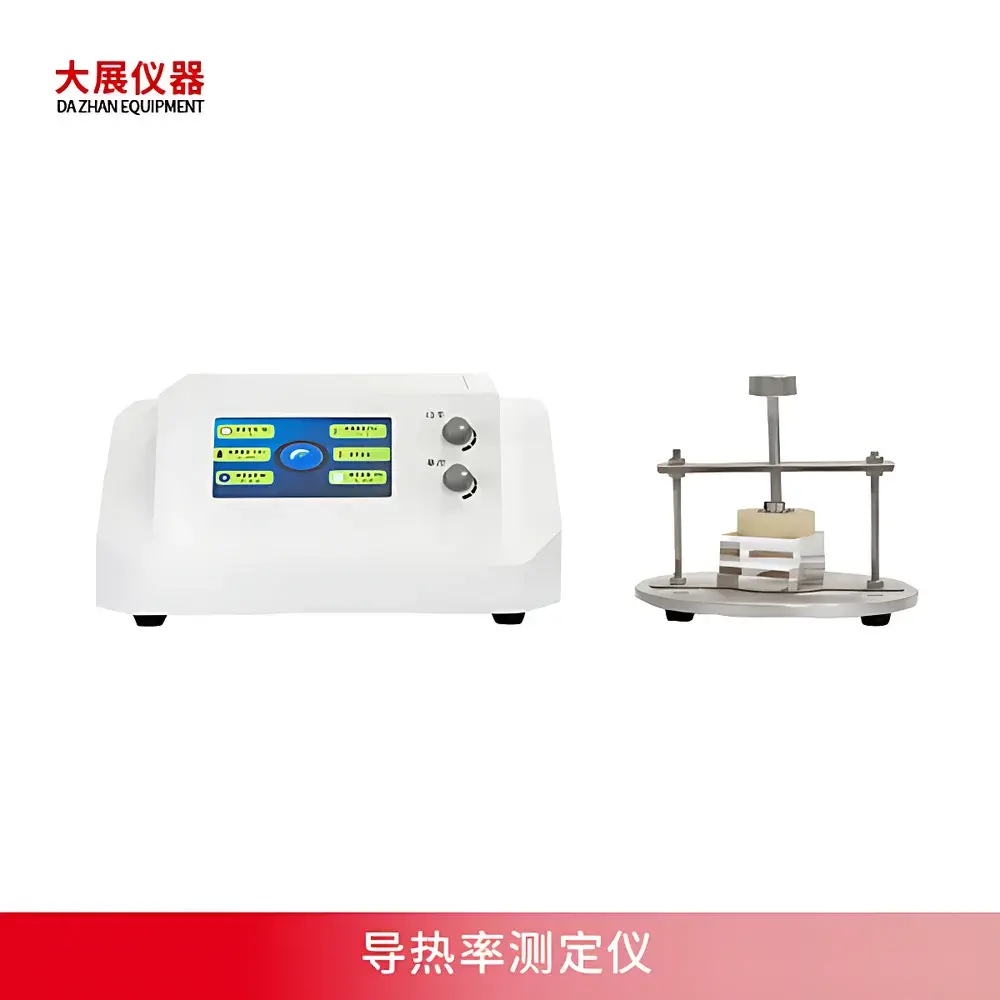
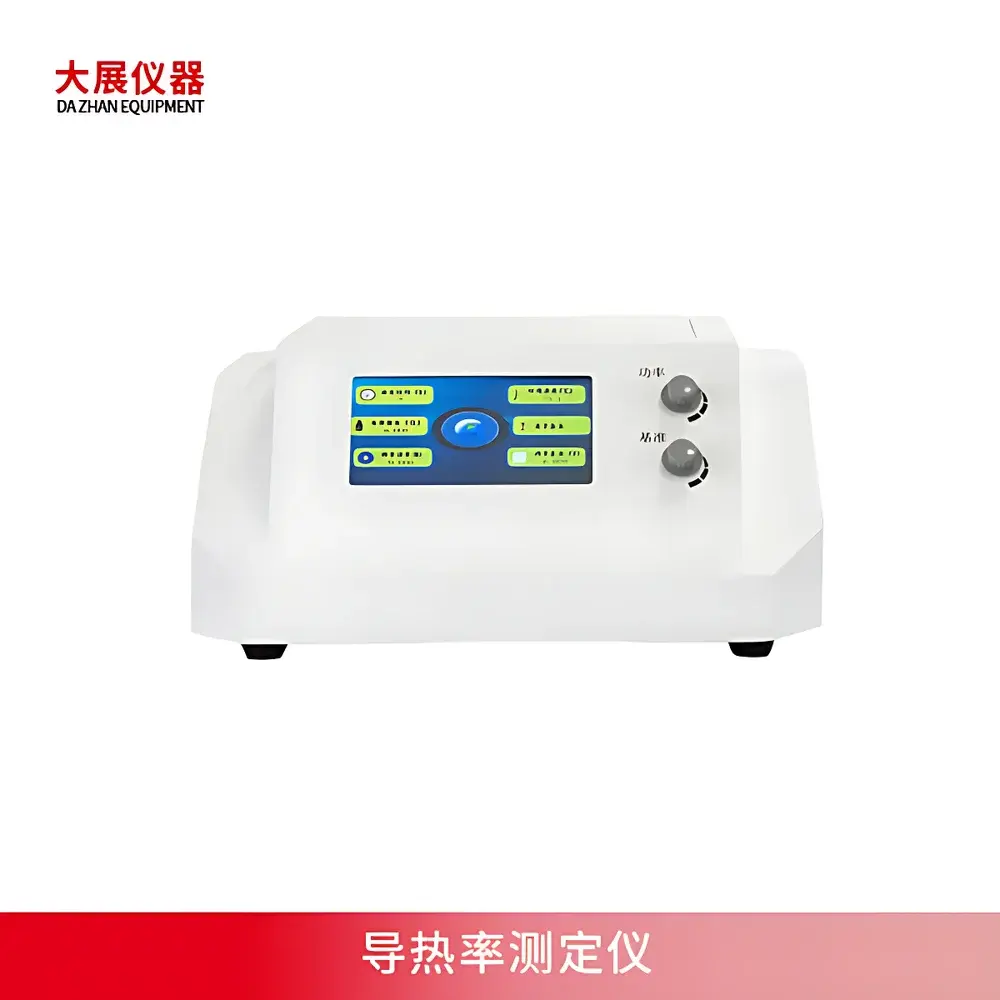
Nanjing Dazhan DZDR-S Transient Plane Source (TPS) Thermal Conductivity Analyzer
| Brand | Nanjing Dazhan |
|---|---|
| Origin | Jiangsu, China |
| Manufacturer Type | Direct Manufacturer |
| Instrument Type | Transient Plane Source (TPS) Method |
| Thermal Conductivity Range | 0.0001–300 W/(m·K) |
| Measurement Time | 5–160 s |
| Sample Forms | Solid, Liquid, Powder, Paste, Gel, Thin Film, Coating, Foam, Metallic & Composite Materials |
| Operating Temperature | Ambient to 130 °C |
| Probe Diameters | 7.5 mm, 15 mm, 50 mm (optional) |
| Accuracy | ±3% |
| Repeatability | ≤3% |
| Power Supply | AC 220 V, <500 W |
| Sample Dimensions (min.) | 15×15×3.75 mm (for 7.5 mm probe) |
Overview
The Nanjing Dazhan DZDR-S Transient Plane Source (TPS) Thermal Conductivity Analyzer is a precision-engineered instrument designed for rapid, non-destructive determination of thermal conductivity across a broad spectrum of materials—from low-conductivity insulators (e.g., aerogels, polymer foams) to high-conductivity metals and composites. Based on the ISO 22007-2 standard for transient plane source methods, the system applies a thin, sandwiched sensor—comprising dual-spiral heating and sensing elements—to the surface or interior of a sample. A controlled current pulse generates a transient temperature rise, while simultaneous voltage response is recorded with microsecond-level temporal resolution. Using analytical solutions to the heat diffusion equation in semi-infinite media, the instrument calculates thermal conductivity directly from the slope of the log(ΔT) vs. log(t) curve—eliminating reliance on steady-state equilibrium and minimizing errors associated with interfacial contact resistance. This principle enables robust, first-principle-based measurements without calibration against reference standards for most homogeneous or isotropic samples.
Key Features
- Direct measurement of thermal conductivity in 5–160 seconds per test—no pre-equilibration required
- Three interchangeable TPS probes (7.5 mm, 15 mm, 50 mm diameter) optimized for different sample geometries and thermal diffusivities
- Non-invasive, non-destructive testing: samples remain intact and reusable post-measurement
- No special sample preparation: flatness requirement limited to surface roughness <10 µm; minimum lateral dimensions defined relative to probe size
- Integrated ARM-based embedded controller ensures deterministic real-time data acquisition and onboard computation
- High-resolution analog front-end with 24-bit ADC and synchronized sampling for precise transient signal capture
- Modular sample stage accommodates variable thicknesses (up to 50 mm), with adjustable clamping force and alignment guides
- Included powder test cell kit enables reproducible bulk conductivity measurement of granular and porous media under controlled compaction
Sample Compatibility & Compliance
The DZDR-S supports heterogeneous material classes—including rigid solids (ceramics, metals, composites), soft solids (elastomers, gels), viscous liquids (oils, molten polymers), particulates (metal powders, battery cathode materials), pastes (thermal interface materials), thin films (<100 µm), and low-density insulation foams. Its TPS methodology conforms to ISO 22007-2:2015 and ASTM D5930–22 for thermal conductivity measurement of plastics and electrical insulating materials. While not certified for GMP or GLP environments out-of-the-box, the system’s deterministic firmware architecture, timestamped raw data logging, and audit-ready output files support integration into validated laboratory workflows compliant with FDA 21 CFR Part 11 when paired with appropriate IT governance controls.
Software & Data Management
The DZDR-S operates via Windows-compatible control software featuring intuitive workflow-driven interface, real-time thermal response visualization, and automated parameter optimization. All raw voltage-time datasets are stored in open binary format (.dzt) with embedded metadata (probe ID, timestamp, ambient temperature, operator ID). Export options include CSV, Excel, and PDF reports containing calculated thermal conductivity, thermal diffusivity, volumetric heat capacity, standard deviation across replicates, and goodness-of-fit metrics (R² > 0.998 typical). Software supports batch processing, statistical trend analysis across multiple samples, and user-defined pass/fail thresholds aligned with internal QC protocols or industry specifications such as IEC 60252-1 for capacitor dielectrics.
Applications
- Quality control of thermal interface materials (TIMs) in electronics packaging
- R&D screening of battery electrode slurries and solid-state electrolytes
- Thermal characterization of aerospace composites and ceramic matrix materials
- Insulation performance validation for building materials (aerogels, mineral wool, vacuum panels)
- Process development support for additive manufacturing powders and sintered parts
- Academic research in nanofluids, phase-change materials, and thermoelectric compounds
- Regulatory documentation for UL 94 flame-retardant polymers and EN 13501 fire classification
FAQ
Does the DZDR-S require calibration with reference standards?
For routine testing of homogeneous materials within its specified range, no primary calibration is required—the TPS method is absolute. However, NIST-traceable reference materials (e.g., SRM 1450c, Pyroceram® 9606) may be used for verification or drift monitoring.
Can it measure anisotropic materials like graphite or layered composites?
Yes—by orienting the probe normal to the expected heat flow direction and using directional sample mounting fixtures (available as optional accessories).
Is vacuum or inert gas testing possible?
The base configuration operates at ambient pressure and atmosphere. Optional environmental chambers (−40 °C to 200 °C, N₂-purged or vacuum-capable) can be integrated upon request.
How is contact resistance mitigated in TPS measurements?
Unlike guarded-hot-plate or laser-flash methods, TPS inherently minimizes contact resistance error because the sensor serves simultaneously as heat source and thermometer—ensuring identical thermal pathways for excitation and detection.
What sample thickness is required for accurate measurement?
Minimum thickness must exceed 0.5 × √(α·tmax), where α is estimated thermal diffusivity and tmax is max test duration (160 s). For most polymers (α ≈ 1×10⁻⁷ m²/s), ≥3 mm suffices; for metals (α ≈ 1×10⁻⁵ m²/s), ≥10 mm is recommended.



