
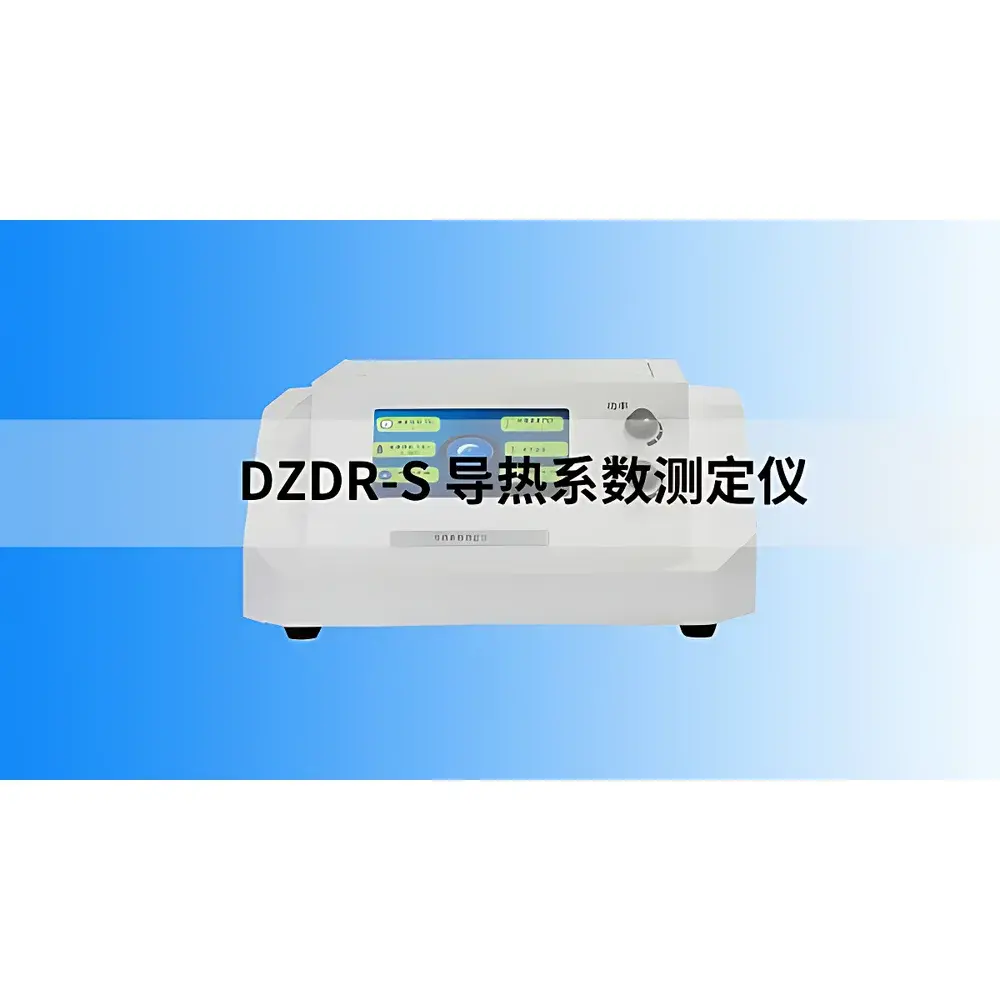
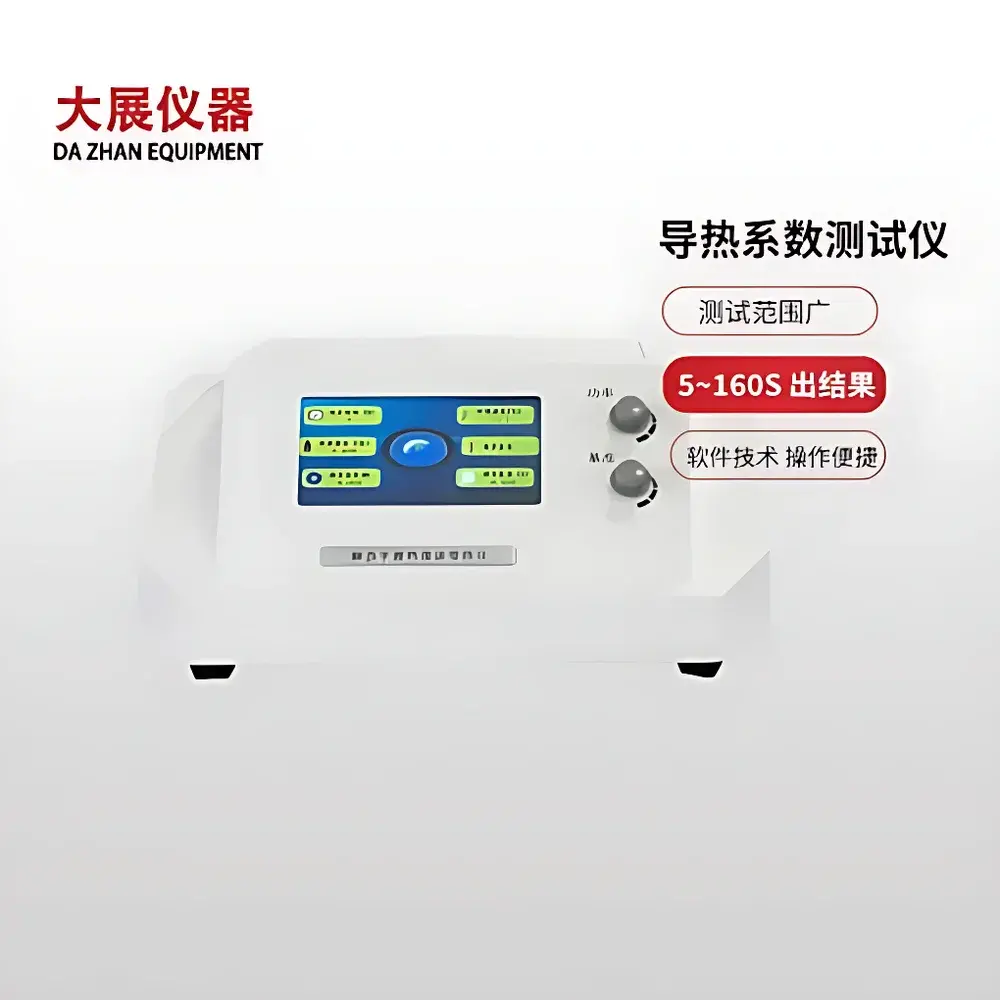
Nanjing Dazhan DZDR-S Transient Plane Source (TPS) Thermal Conductivity Analyzer
| Brand | Nanjing Dazhan |
|---|---|
| Origin | Jiangsu, China |
| Manufacturer Type | Manufacturer |
| Product Category | Domestic |
| Model | DZDR-S |
| Instrument Type | Transient Plane Source Method |
| Sample Throughput | Single sample per test |
| Test Environment | Ambient temperature |
| Thermal Conductivity Range | 0.0001–300 W/(m·K) |
| Accuracy | ±3% |
| Dimensions (L×W×H) | 440 × 390 × 220 mm |
| Repeatability | ≤3% |
| Sample Forms | Solids (bulk, granular, paste, film, coating), powders, liquids, gels, foams, and insulating materials |
Overview
The Nanjing Dazhan DZDR-S Transient Plane Source (TPS) Thermal Conductivity Analyzer is a precision instrument engineered for direct, non-destructive measurement of thermal conductivity and thermal diffusivity across a broad spectrum of materials. Based on the ISO 22007-2 standard for transient plane source methods, the DZDR-S employs a dual-spiral sensor probe acting simultaneously as both heat source and temperature sensor. During operation, a constant electrical current is applied to the probe, generating a controlled step increase in temperature; the resulting time-dependent temperature rise is recorded and analyzed using an embedded physical model derived from Fourier’s law of heat conduction in isotropic media. This principle eliminates dependency on interfacial contact resistance—unlike guarded hot plate or steady-state techniques—and enables reliable characterization of heterogeneous, anisotropic, or low-conductivity materials without requiring extensive sample preparation.
Key Features
- Triple-probe configuration (7.5 mm, 15 mm, and 50 mm diameter options) supports scalable testing—from small laboratory specimens to industrial-grade insulation samples—while maintaining consistent measurement fidelity.
- ARM-based embedded control system delivers high-speed data acquisition and real-time signal processing, reducing computational latency and enhancing result reproducibility.
- High-resolution analog-to-digital conversion circuitry (imported ADC IC) ensures precise capture of microsecond-scale thermal transients, critical for accurate modeling of short-duration heat diffusion events.
- Modular sample stage accommodates variable thicknesses and geometries; no machining or surface polishing required—only minimal planarity (flatness tolerance ±0.1 mm over probe footprint) is necessary for valid contact.
- Non-invasive testing protocol preserves sample integrity: all tested materials—including polymers, ceramics, composites, aerogels, pastes, and slurries—remain fully reusable post-analysis.
- Configurable test duration (5–160 s) allows optimization between measurement speed and signal-to-noise ratio, particularly beneficial for quality control environments with high throughput demands.
- Comprehensive thermal range coverage (0.0001–300 W/(m·K)) spans insulating foams (e.g., polyurethane, phenolic) to metallic alloys and graphite-based composites.
Sample Compatibility & Compliance
The DZDR-S is validated for use with solid blocks, films, coatings, powders (via optional custom containment vessel), gels, liquids, granular media, and porous insulators. Its operational methodology conforms to ISO 22007-2:2015 for transient plane source measurements and aligns with ASTM D5470 (thermal transmission properties of thermally conductive electrical insulation materials) in application scope. While not certified for GLP or GMP environments out-of-the-box, the instrument’s deterministic algorithm, audit-ready test logs, and timestamped raw-data export support integration into regulated workflows compliant with FDA 21 CFR Part 11 when paired with appropriate LIMS or electronic lab notebook (ELN) systems.
Software & Data Management
Bundled Windows-compatible software provides intuitive test setup, real-time thermal curve visualization, automatic parameter fitting, and export of calibrated thermal conductivity (λ), thermal diffusivity (α), and volumetric heat capacity (ρcp) values. All raw voltage vs. time datasets are saved in open CSV format; metadata—including ambient temperature, probe ID, sample dimensions, and user-defined notes—is embedded in each file header. Software supports batch reporting, statistical trend analysis across multiple runs, and customizable pass/fail thresholds aligned with internal QC specifications.
Applications
- Quality assurance of thermal interface materials (TIMs) in electronics packaging and battery module design.
- R&D evaluation of novel insulation formulations, including vacuum-insulated panels (VIPs), aerogels, and bio-based foams.
- Characterization of phase-change materials (PCMs) and thermal energy storage composites under ambient conditions.
- Validation of additive manufacturing build parameters via thermal property mapping of printed polymer or metal matrix parts.
- Academic research in heat transfer physics, material science, and sustainable construction material development.
FAQ
What standards does the DZDR-S comply with?
The instrument implements the transient plane source method in accordance with ISO 22007-2:2015 and is functionally compatible with ASTM D5470 test principles for thermal resistance measurement.
Can the DZDR-S measure anisotropic materials?
Yes—when used with directional sample orientation and multi-axis probe placement (e.g., through optional fixture kits), it supports comparative assessment of in-plane versus through-plane conductivity in layered composites and textiles.
Is calibration traceable to national standards?
The system includes factory calibration using NIST-traceable reference materials (e.g., Pyroceram 9606, copper, and compressed cork); users may perform periodic verification using supplied calibration standards.
Does the software support automated report generation for ISO/IEC 17025 compliance?
Raw data export and metadata logging meet foundational requirements; full accreditation readiness depends on site-specific validation of software configuration, change control, and electronic signature implementation.
What maintenance is required for long-term accuracy?
Annual verification of probe resistance drift and ADC linearity is recommended; no consumables or routine mechanical servicing are required under normal operating conditions.



