
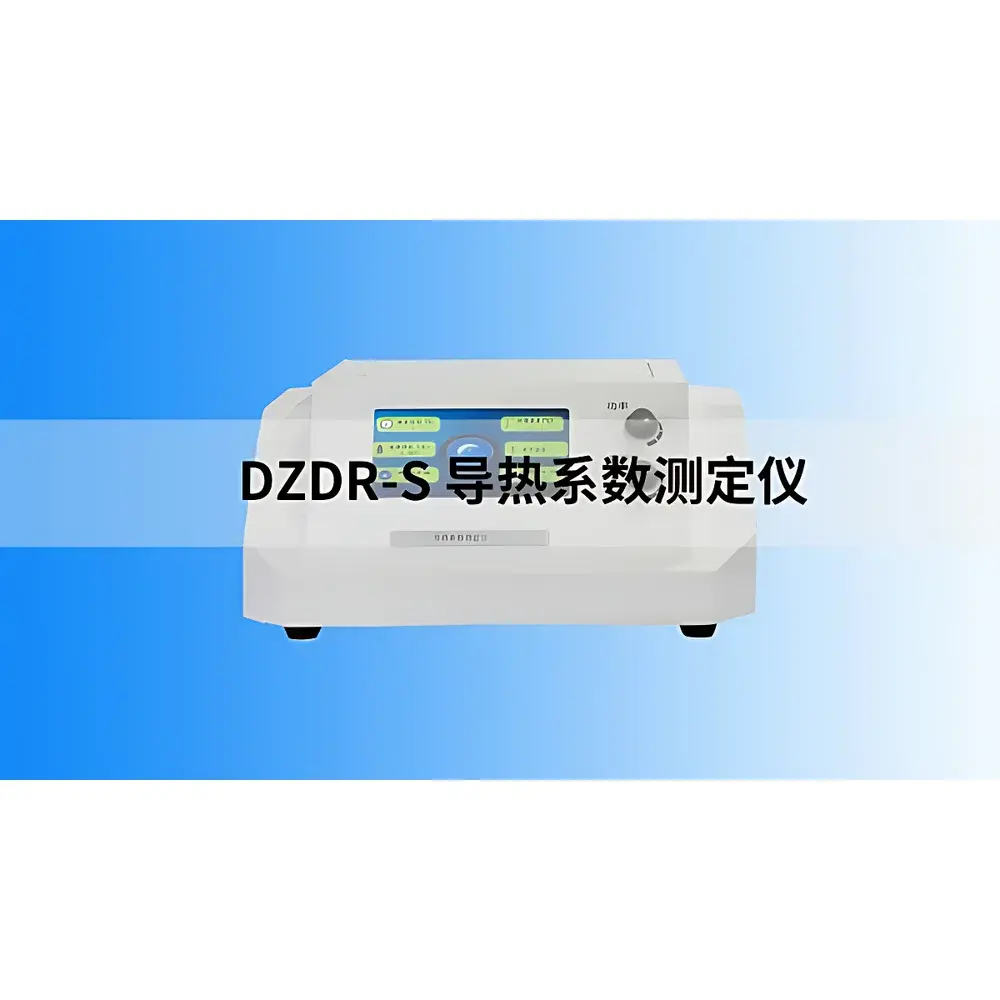
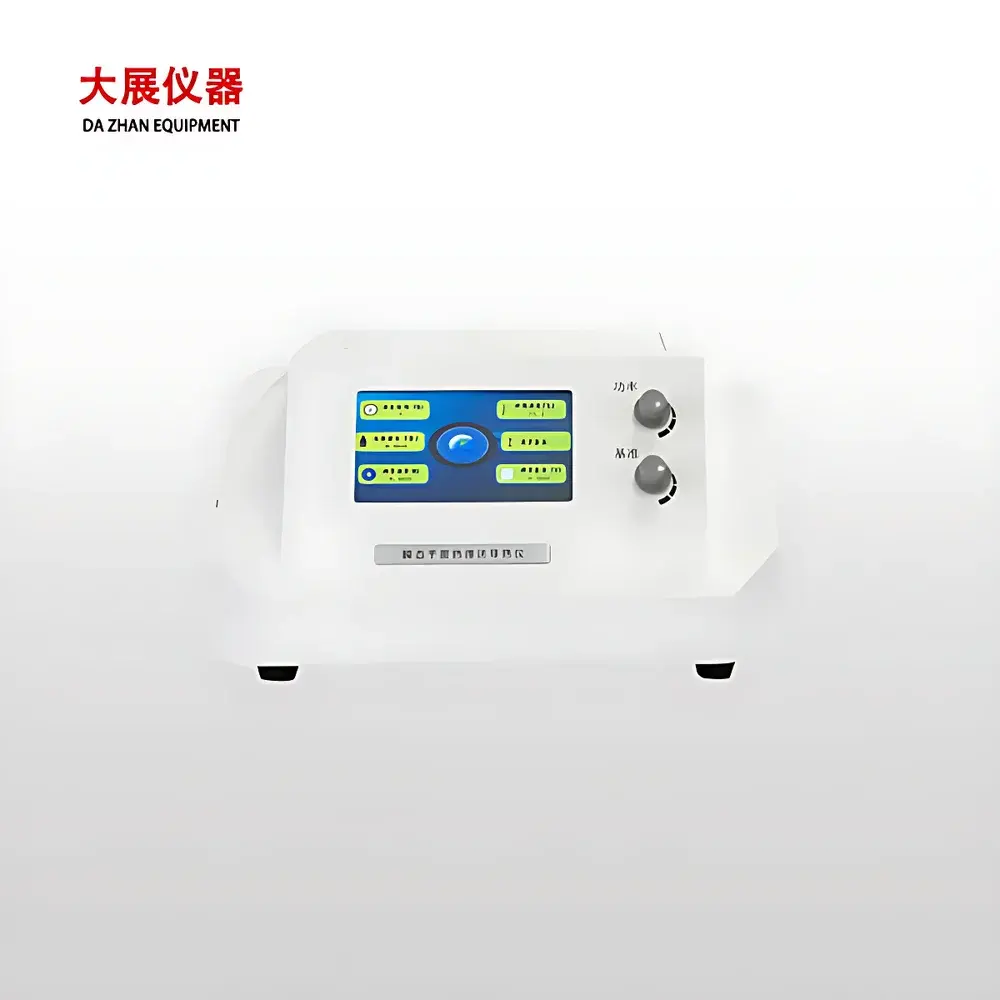
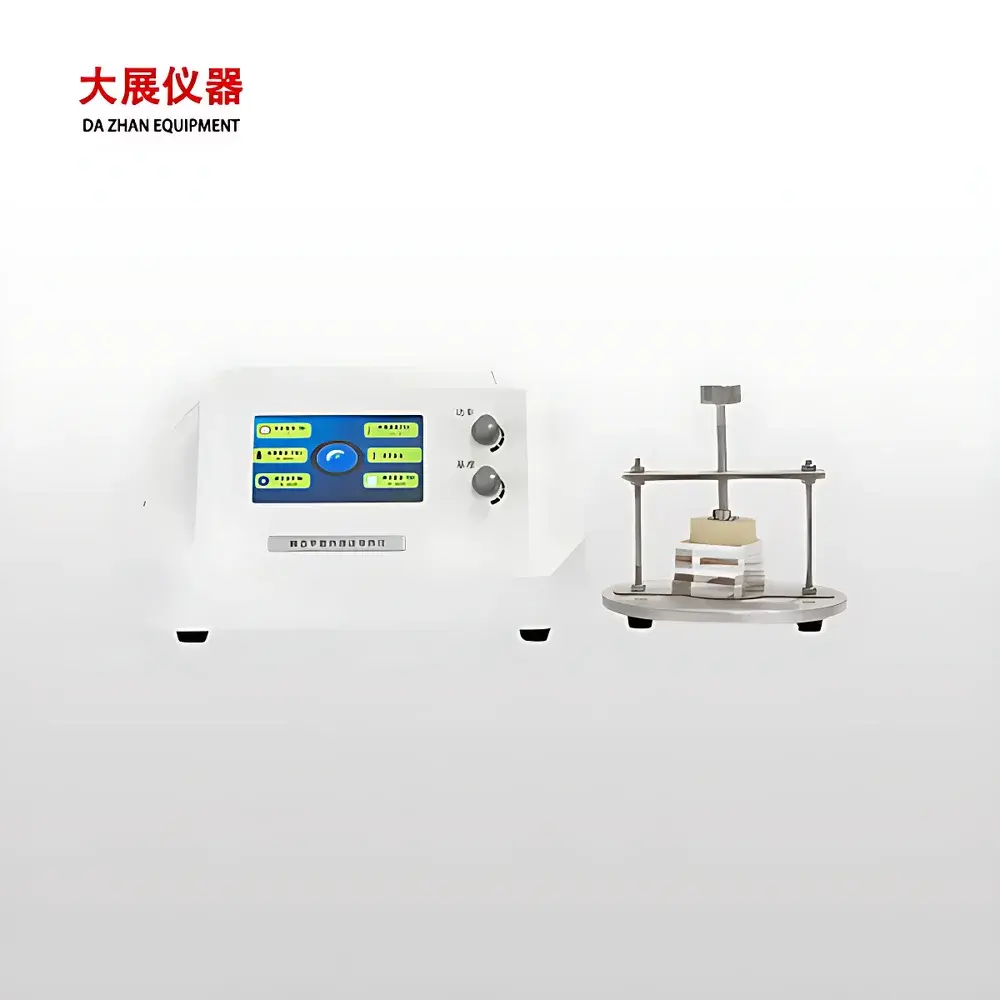
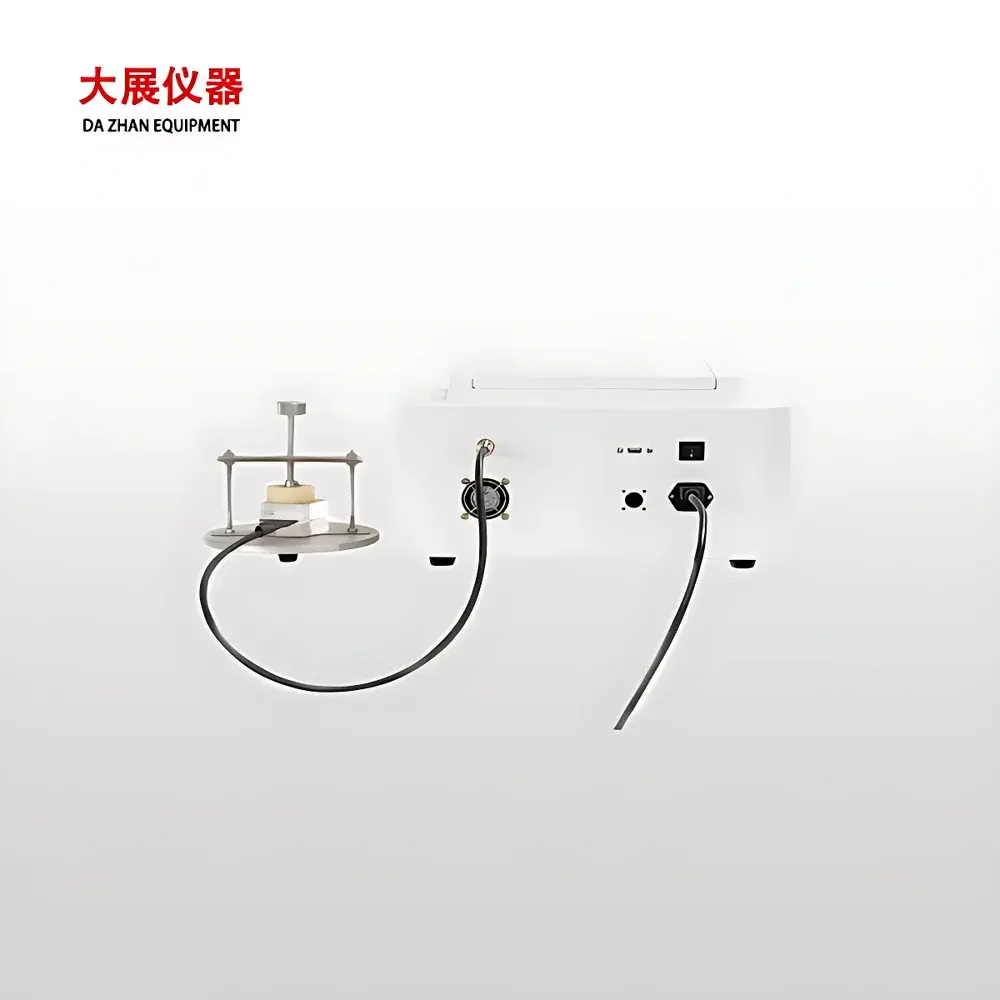
Nanjing Dazhan DZDR-S Transient Plane Source (TPS) Thermal Conductivity Analyzer
| Brand | Nanjing Dazhan |
|---|---|
| Origin | Jiangsu, China |
| Manufacturer Type | Direct Manufacturer |
| Country of Origin | China |
| Model | DZDR-S |
| Instrument Principle | Transient Plane Source (TPS) Method |
| Sample Throughput | Single sample per test |
| Test Environment | Ambient temperature (20–30 °C) |
| Dimensions (L×W×H) | 390 mm × 455 mm × 200 mm |
| Accuracy | ±3% |
| Thermal Conductivity Range | 0.005–300 W/(m·K) |
| Repeatability | ≤3% |
| Atmosphere Requirement | None |
| Sample Forms | Solids, powders, liquids |
| Probe Options | Dual-probe configuration (7.5 mm and 15 mm diameter) |
| Max Sample Temperature | 130 °C |
| Measurement Duration | 5–160 s |
| Power Supply | AC 220 V |
| Max Power Consumption | <500 W |
| Max Sample Temperature Rise | <15 °C |
| Probe Power | <1 W (7.5 mm), <20 W (15 mm) |
| Minimum Sample Size | ≥7.5 mm × 7.5 mm × 7.5 mm (for 7.5 mm probe) |
Overview
The Nanjing Dazhan DZDR-S Transient Plane Source (TPS) Thermal Conductivity Analyzer is a precision instrument engineered for rapid, non-destructive measurement of thermal conductivity across an exceptionally broad range—from highly insulating materials (0.005 W/(m·K)) to high-conductivity metals and ceramics (up to 300 W/(m·K)). Based on the internationally standardized transient plane source method (ISO 22007-2), the DZDR-S applies a thin, embedded nickel spiral sensor as both heater and temperature sensor. When energized with a constant current pulse, the sensor induces a controlled, transient temperature rise in the surrounding material. By analyzing the time-dependent voltage response—governed by Fourier’s law and the material’s thermal diffusivity—the system calculates thermal conductivity with high reproducibility and minimal sample preparation.
Key Features
- Dual-probe architecture: Interchangeable 7.5 mm and 15 mm diameter TPS sensors optimized for low-conductivity (<0.2 W/(m·K)) and medium-to-high-conductivity materials respectively—enabling tailored measurement sensitivity and spatial resolution.
- Wide dynamic range: Validated for thermal conductivity measurements from 0.005 to 300 W/(m·K), covering insulators (e.g., aerogels, mineral wool, foams), polymers, composites, ceramics, and metallic alloys.
- Minimal thermal perturbation: Maximum sample temperature rise limited to <15 °C during testing; ideal for thermally sensitive or low-melting-point materials including phase-change materials and polymer blends.
- Robust ambient operation: Designed for stable performance at room temperature (20–30 °C) without environmental chamber integration—reducing infrastructure dependency while maintaining ±3% accuracy and ≤3% repeatability.
- Intuitive human-machine interface: High-resolution color LCD display with touch-enabled navigation, real-time curve visualization, and on-device parameter configuration—eliminating reliance on external PCs for basic operation.
- Low-power architecture: Total system power consumption <500 W; probe-specific heating power (<1 W for 7.5 mm, <20 W for 15 mm) ensures safe operation with standard laboratory AC 220 V supply.
Sample Compatibility & Compliance
The DZDR-S accommodates diverse physical forms—including rigid solids (metals, ceramics, composites), flexible sheets (foam boards, paper, textiles), granular powders, and homogeneous liquids—provided surfaces are flat and make intimate thermal contact with the probe. Minimum sample dimensions are ≥7.5 mm × 7.5 mm × 7.5 mm (for 7.5 mm probe) or ≥15 mm × 15 mm × 7.5 mm (for 15 mm probe). For thin or low-conductivity specimens, stacking is supported if interfacial adhesion ensures negligible thermal contact resistance. The instrument complies with ISO 22007-2 for transient plane source methodology and supports traceable calibration using certified reference materials (e.g., NIST SRM 1470a). While not inherently GLP/GMP-certified, its automated data logging, timestamped test records, and uneditable raw output files facilitate audit-ready documentation for regulated environments under FDA 21 CFR Part 11 when deployed with validated software workflows.
Software & Data Management
The DZDR-S integrates embedded firmware and optional PC-based analysis software for comprehensive data handling. All measurements are stored locally with full metadata: date/time stamp, probe ID, sample ID, ambient temperature, applied power, duration, and raw voltage-time series. Software features include automatic baseline correction, multi-curve overlay, statistical summary (mean, SD, CV%), customizable report templates (PDF/Excel), and direct printer output. Exported datasets retain native resolution for third-party analysis (MATLAB, Python, Origin). Audit trails record user actions, parameter changes, and calibration events—supporting quality assurance protocols in R&D labs and QC departments adhering to ISO/IEC 17025 requirements.
Applications
- Thermal insulation evaluation: Characterization of mineral wool, glass fiber, phenolic foams, polyurethane panels, and cementitious composites for building envelope certification (ASTM C518, ISO 8301).
- Advanced materials development: Screening of polymer nanocomposites, carbon-fiber-reinforced plastics (CFRPs), metal matrix composites, and ceramic matrix composites for aerospace and electronics thermal management.
- Quality control in manufacturing: In-line verification of thermal homogeneity in castings, sintered ceramics, and extruded polymer profiles.
- Academic research: Fundamental studies of phonon transport in low-dimensional materials, phase-change behavior in PCM slurries, and anisotropic conduction in layered structures.
- Geotechnical and construction materials: Quantification of thermal properties in concrete mixtures, soil-cement blocks, and geopolymer binders under ambient curing conditions.
FAQ
What standards does the DZDR-S comply with?
The instrument implements the transient plane source method in accordance with ISO 22007-2. It supports calibration traceability to NIST and other national metrology institutes via certified reference materials.
Can the DZDR-S measure anisotropic materials?
Yes—by orienting the probe normal to the expected direction of heat flow and ensuring planar sample symmetry, directional conductivity can be assessed. For strongly anisotropic samples (e.g., graphite, layered TIMs), orthogonal measurements are recommended.
Is vacuum or inert gas required during testing?
No. The TPS method is insensitive to ambient atmosphere; tests may be conducted in air without enclosure. Optional purge ports support inert-gas environments if oxidation-sensitive samples are evaluated.
How is probe-sample contact ensured for powders or irregular solids?
Powders must be compacted into cylindrical or cuboidal forms with smooth, parallel faces. For rough or compliant solids, thermal grease or graphite paste may be applied—though its contribution must be accounted for in uncertainty budgets.
Does the software support LIMS integration?
Raw data export (CSV, TXT) and structured report outputs enable integration with common LIMS platforms via API or file-transfer protocols. Custom scripting interfaces are available upon request for enterprise deployment.
Related Products



