
NanoMEGAS ADT-3D 3D Precession Electron Diffraction Tomography Software
| Brand | NanoMEGAS |
|---|---|
| Origin | Belgium |
| Model | ADT-3D |
| Compatible TEM Voltage | 120–300 kV |
| Compatible Sources | LaB6, W, FEG |
| Minimum Crystal Size (Organic) | ~100 nm |
| Minimum Crystal Size (Inorganic) | ~20 nm |
| Tilt Range (Cell Parameter Determination) | −15° to +15°, 1° step |
| Recommended Tilt Range (Structure Solution) | −45° to +45°, 1° step or continuous rotation (MicroED) |
| Data Acquisition Modes | Manual or automated PED |
| Detector Compatibility | CCD cameras ≥1k × 1k resolution |
| Sample Holder Support | Single-tilt, tomography, cryo holders |
| Output | 3D reciprocal space reconstruction, unit cell parameters (2–5% error), space group assignment, integrated 3D reflection intensities |
| Compliance | Fully compatible with standard TEM workflows under GLP-aligned data handling practices |
Overview
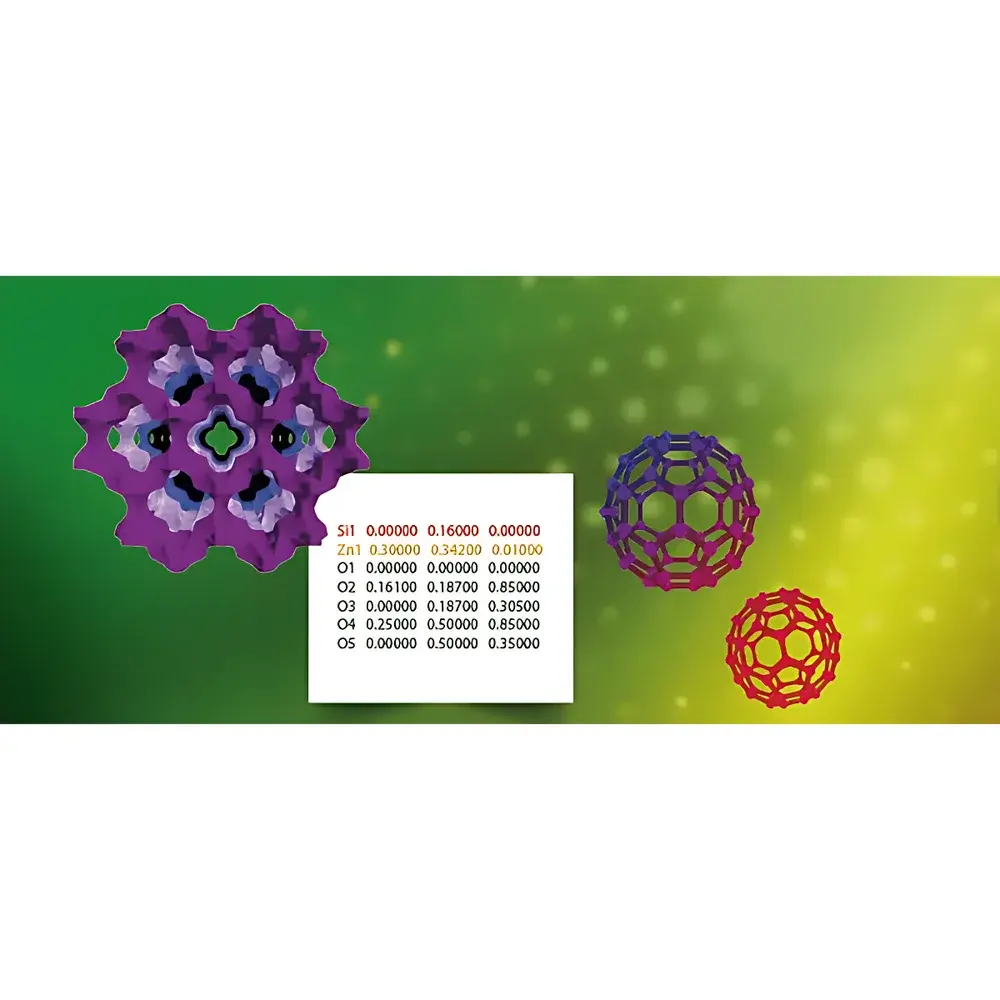
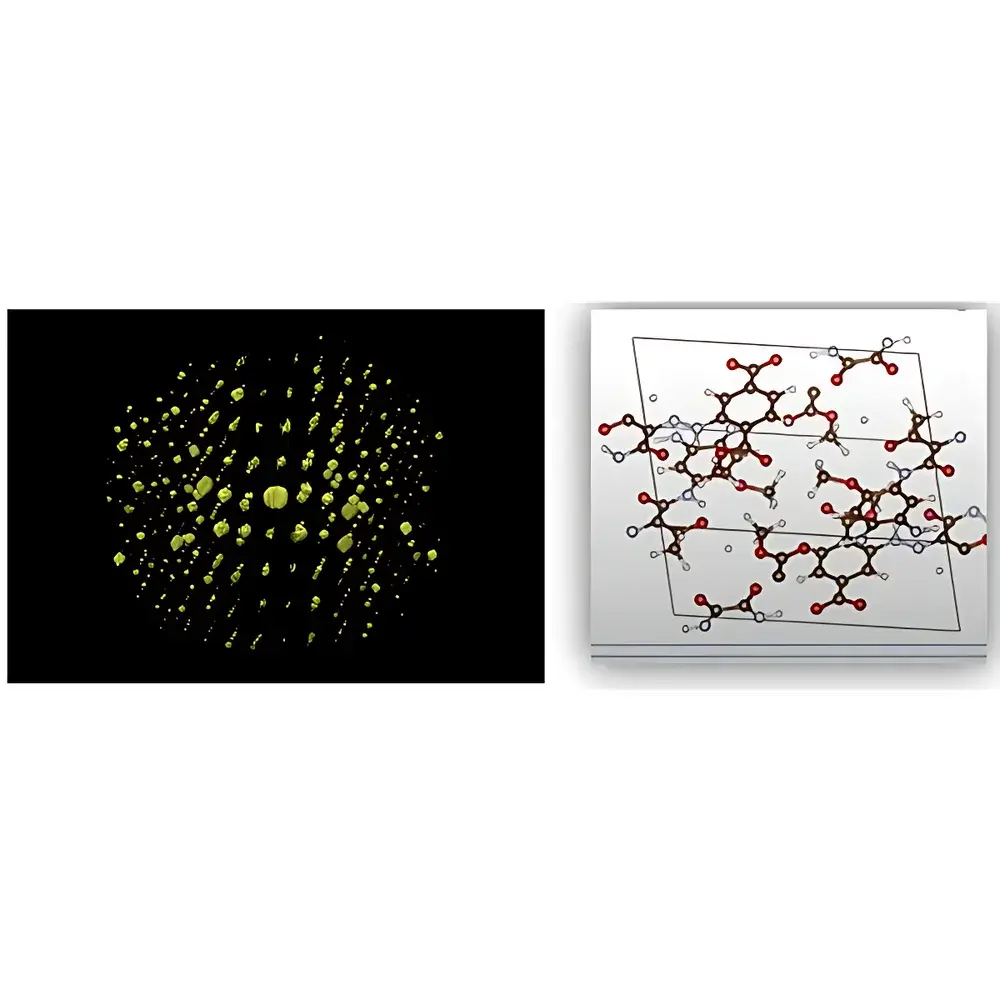
NanoMEGAS ADT-3D is a dedicated software platform for 3D precession electron diffraction tomography (PEDT), engineered to transform conventional transmission electron microscopes (TEMs) into high-resolution crystallographic analysis tools. By integrating with the DigiSTAR precession electron diffraction controller, ADT-3D enables acquisition of quasi-kinematical diffraction patterns—closely approximating X-ray diffraction intensity distributions—thereby overcoming dynamical scattering limitations inherent to conventional electron diffraction. The software implements a robust tomographic reconstruction pipeline that converts a series of tilt-series PED patterns into a full 3D reciprocal lattice volume. From this reconstructed volume, it automatically extracts unit cell parameters, assigns space group symmetry, and integrates 3D reflection intensities suitable for ab initio structure solution. This capability bridges the resolution gap between laboratory-scale TEMs and synchrotron-based single-crystal X-ray diffraction, particularly for nanoscale and beam-sensitive crystalline materials where traditional methods fail.
Key Features
- Full compatibility with 120–300 kV TEMs equipped with LaB6, tungsten, or field-emission gun (FEG) sources
- Seamless integration with DigiSTAR hardware for precise precession angle control (typically 0.5°–2.0°) and synchronized tilt-stage motion
- Automated or manual PED pattern acquisition in selected-area electron diffraction (SAED) or nano-beam diffraction (NBD) modes
- Support for diverse sample environments: single-tilt holders, tomography holders, and cryo-holders for radiation-sensitive specimens (e.g., MOFs, organic frameworks, biological crystals)
- 3D reciprocal space reconstruction from tilt-series data acquired over customizable angular ranges (−15°/+15° minimum; −45°/+45° recommended)
- Unit cell determination with typical accuracy of 2–5% relative error, validated against reference standards and cross-checked via lattice vector clustering
- Automated space group identification using systematic absences, reflection conditions, and symmetry-enhanced clustering algorithms
- Integrated 3D intensity measurement across all observed reflections, exported in standard formats (e.g., .hkl, .mtz) for downstream refinement in SHELX, Olex2, or PHENIX
Sample Compatibility & Compliance
ADT-3D is optimized for nanocrystalline specimens ranging from ~20 nm (inorganic oxides, metal chalcogenides) to ~100 nm (small-molecule organics, pharmaceuticals, zeolites). It accommodates heterogeneous, aggregated, or embedded samples—including multiphase mineral assemblages and catalytic nanoparticles—without requiring isolation or thinning beyond standard TEM specimen preparation. The software operates within established TEM workflow constraints and supports audit-ready data provenance when used in conjunction with TEM control systems that log acquisition metadata (timestamp, tilt angle, precession angle, exposure time, camera settings). While ADT-3D itself does not implement electronic signatures or 21 CFR Part 11 modules, its output files and processing logs are fully traceable and compatible with GLP/GMP-aligned laboratory information management systems (LIMS) when deployed on validated instrument platforms.
Software & Data Management
ADT-3D provides a modular graphical interface built on Qt and Python-based computational backends, supporting both interactive exploration and batch-mode processing. Raw diffraction images (TIFF, DM3/4) are imported directly from common CCD and direct-detection cameras (e.g., Gatan K2, FEI Ceta, TVIPS TemCam). The software applies background subtraction, contrast normalization, and spot-finding algorithms tuned for low-SNR PED patterns. Reconstructed reciprocal volumes are visualized in orthogonal projections and interactive 3D renderings, enabling manual validation of lattice indexing and outlier rejection. All processing steps—tilt alignment, lattice fitting, intensity integration—are logged with timestamps and parameter sets. Export options include CIF-compatible structural descriptors, structure factor amplitudes, and metadata-rich JSON sidecar files for long-term archival and FAIR (Findable, Accessible, Interoperable, Reusable) compliance.
Applications
- Nanomaterial crystallography: Solving structures of sub-100 nm metal–organic frameworks (MOFs), covalent organic frameworks (COFs), and quantum dot assemblies
- Pharmaceutical solid-state analysis: Polymorph identification, hydrate/solvate characterization, and chirality determination in micron- to nanoscale API crystals
- Mineralogy & geosciences: Phase identification and structural refinement of natural nanocrystalline aggregates (e.g., olivine–pyrope mixtures) without separation
- Catalysis research: Structural elucidation of supported nanoparticle catalysts and surface-adsorbed intermediates under operando-relevant conditions
- Electron crystallography education: Teaching reciprocal space concepts, symmetry operations, and structure solution workflows using real TEM data
FAQ
Is ADT-3D compatible with my existing TEM?
Yes—ADT-3D requires only a TEM equipped with a DigiSTAR precession controller and a motorized tilt stage. It supports all major manufacturers (Thermo Fisher, JEOL, Hitachi) operating at 120–300 kV with standard LaB6, W, or FEG sources.
What camera resolution is required?
A minimum of 1k × 1k pixels is recommended; higher resolutions (e.g., 4k × 4k) improve spot separation and indexing reliability for densely packed reciprocal lattices.
Can ADT-3D process MicroED data?
Yes—the software natively supports continuous-rotation MicroED acquisition protocols and includes dedicated routines for helical data stitching and dynamic scattering correction.
Does ADT-3D support cryo-EM workflows?
It fully supports cryo-TEM data collected using Gatan cryo-holders or similar; beam-induced drift compensation and low-dose acquisition metadata are preserved during import.
How is data reproducibility ensured?
All processing parameters are saved with each project file. Unit cell refinements include statistical uncertainty estimates, and intensity integration uses centroid-based peak fitting with user-adjustable sigma thresholds to ensure high reproducibility across operators and instruments.




