
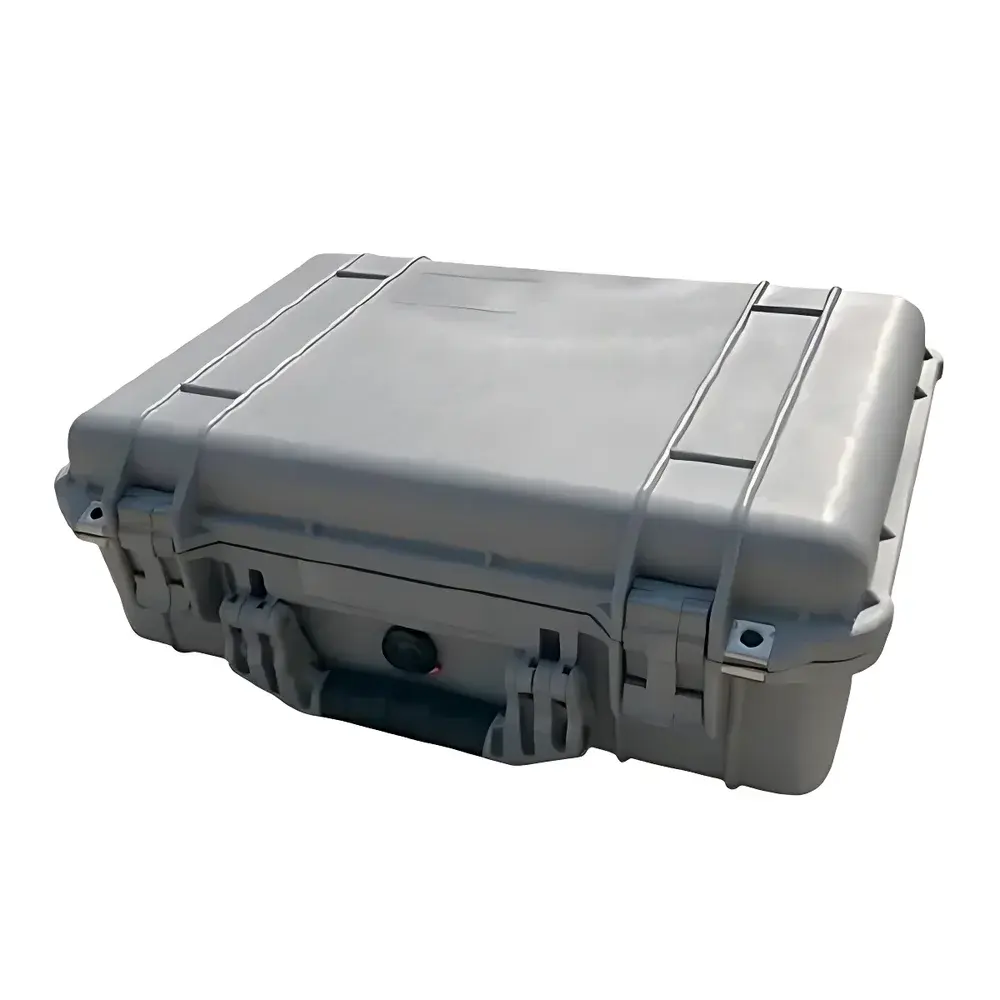
NanoTest P300 Portable Gas Chromatograph for VOC Analysis
| Brand | NanoTest |
|---|---|
| Origin | USA |
| Model | P300 |
| Instrument Type | Portable GC System |
| Detection Principle | Microfluidic Gas Chromatography |
| Detection Limit | Sub-ppb (typical for target VOCs) |
| Integrated Control | Onboard Industrial Computer |
| Regulatory Alignment | Designed for field-deployable compliance with EPA Method TO-17, ASTM D5504, and ISO 16017-1 workflows |
| Compliance Ready | Audit-trail capable data logging per GLP/GMP-aligned practices |
Overview
The NanoTest P300 Portable Gas Chromatograph is a field-deployable microfluidic gas chromatography system engineered for rapid, on-site quantification of volatile organic compounds (VOCs) in air, soil headspace, and industrial emission samples. Unlike conventional benchtop GC systems requiring laboratory infrastructure, the P300 integrates a miniaturized capillary column oven, thermally controlled micro-injector, high-sensitivity flame ionization detector (FID), and embedded industrial computer into a single ruggedized chassis. Its core architecture leverages microfluidic flow control to achieve precise carrier gas regulation and reproducible retention time stability—even under variable ambient temperatures and humidity conditions. The system operates on standardized GC separation principles: sample introduction via thermal desorption or direct injection, compound separation across a fused-silica capillary column (e.g., DB-5ms or equivalent), and detection based on ion current generation proportional to carbon mass flow. This enables trace-level identification and quantification of C2–C12 hydrocarbons, chlorinated solvents, oxygenates, and aromatic compounds without laboratory-grade environmental conditioning.
Key Features
- Integrated microfluidic GC platform with onboard temperature-controlled column oven (range: 30–250 °C, ±0.1 °C stability)
- Embedded industrial-grade computer running NanoTest GC Control v4.2 firmware—no external PC required
- Pre-calibrated FID with linear dynamic range spanning 10⁴ and sub-ppb detection limits for benzene, toluene, ethylbenzene, xylenes (BTEX), and common chlorinated VOCs
- Ruggedized aluminum alloy enclosure rated IP54 for dust and splash resistance; operational in -10 °C to +50 °C ambient environments
- Intuitive touchscreen interface with guided workflow menus—designed for non-chromatographers with minimal training
- Real-time chromatogram display, automated peak integration, and customizable report generation (PDF/CSV) within ≤3 minutes post-injection
- Onboard battery support (up to 4 hours continuous operation) and universal AC/DC power input (100–240 V, 50/60 Hz)
Sample Compatibility & Compliance
The P300 accepts gaseous samples collected via Tedlar® bags, SUMMA canisters, or direct probe insertion into stack emissions or ambient air streams. It supports thermal desorption tubes (e.g., Tenax TA, Carbopack B) when paired with optional field-compatible desorber modules. All analytical methods are aligned with regulatory frameworks including U.S. EPA Method TO-17 (for sorbent tube analysis), ASTM D5504 (for natural gas and refinery gas), and ISO 16017-1 (indoor air VOC determination). Data integrity is maintained through time-stamped audit trails, user-access controls, and electronic signature capability—supporting GLP and GMP documentation requirements under 21 CFR Part 11 when configured with validated software packages.
Software & Data Management
NanoTest GC Control software provides full instrument control, method development, calibration management, and raw data archiving. Each analysis generates a timestamped .gcx binary file containing chromatographic metadata (oven ramp profile, detector gain, integration parameters) alongside processed results. Export formats include ANSI-compliant CSV for LIMS integration and encrypted PDF reports with digital signatures. Remote diagnostics and firmware updates are supported via secure HTTPS connection. Data storage complies with IEC 62443-3-3 cybersecurity standards for field instrumentation, ensuring confidentiality and integrity during transfer and archival.
Applications
- Environmental site assessments: real-time screening of soil vapor intrusion and landfill gas plumes
- Industrial hygiene monitoring: workplace exposure evaluation for OSHA-permissible exposure limits (PELs) and ACGIH TLVs®
- Emergency response: rapid identification of unknown VOC releases during hazmat incidents
- Regulatory compliance verification: stack testing, fugitive emission surveys, and indoor air quality audits
- Research fieldwork: mobile atmospheric chemistry studies and biogenic VOC flux measurements
FAQ
Does the P300 require carrier gas cylinders on-site?
Yes—helium or hydrogen carrier gas is supplied via disposable 90-L aluminum cylinders (included in standard field kit); optional integrated gas generator module available for extended deployments.
Can the P300 be used for semi-volatile organic compounds (SVOCs)?
No—the system is optimized for VOCs with boiling points below 250 °C; SVOC analysis requires higher-temperature ovens and alternative detectors (e.g., ECD, MS), which are outside the P300’s design scope.
Is method validation support provided?
NanoTest supplies IQ/OQ documentation templates, certified reference standard protocols, and third-party validation assistance for EPA, ISO, and internal QA/QC programs.
What maintenance intervals are recommended?
FID jet cleaning and column trimming every 200 injections; annual detector calibration and oven sensor verification—documented in the onboard maintenance log.
How is data backup handled during field use?
Automated daily sync to encrypted microSD card (128 GB included); optional cloud backup via LTE-enabled gateway module (sold separately).







