
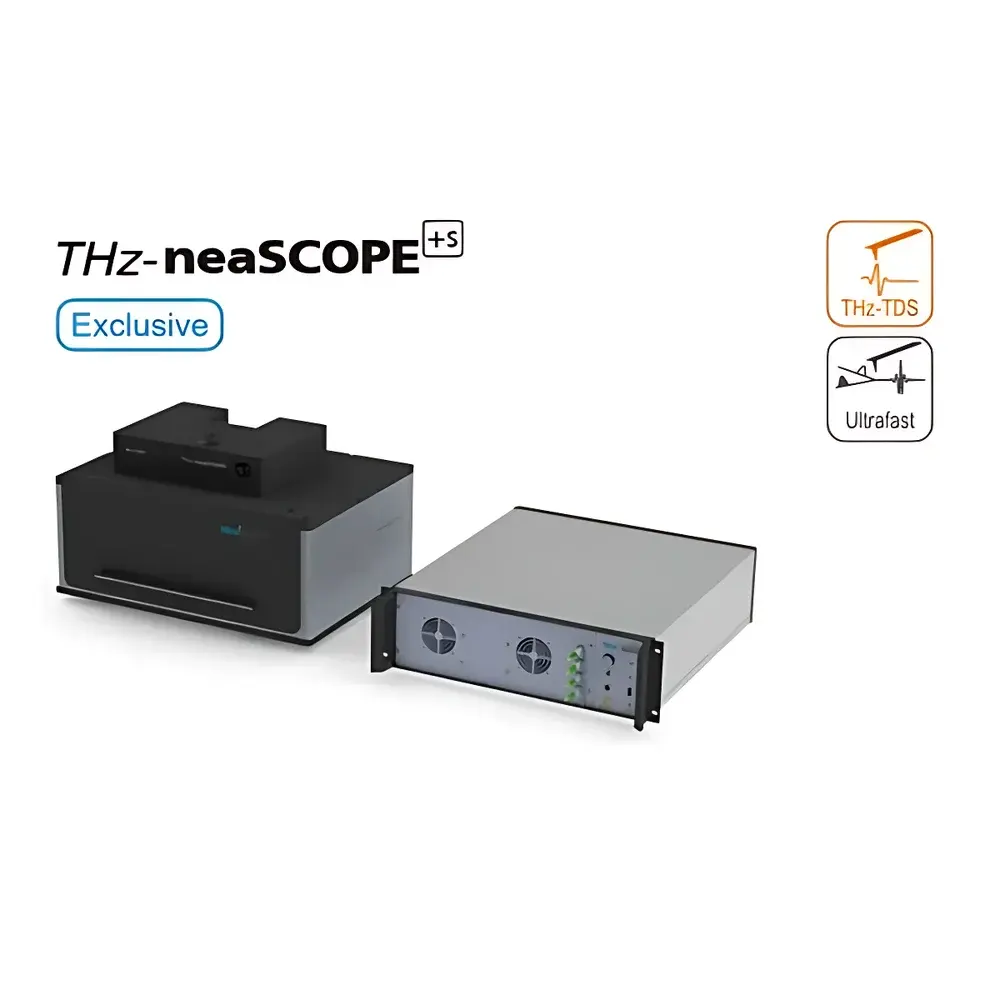
Neaspec neaSCOPE Scattering-type Scanning Near-field Optical Microscope (s-SNOM) System
| Brand | Neaspec |
|---|---|
| Origin | Germany |
| Model | neaSCOPE |
| Detection Principle | Scattering-type Near-field Optical Microscopy (s-SNOM) |
| Spatial Resolution | <10 nm (wavelength-independent) |
| Spectral Range | Visible, Mid-IR (2.5–20 µm), THz (0.1–10 THz), Ultrafast (fs pump-probe) |
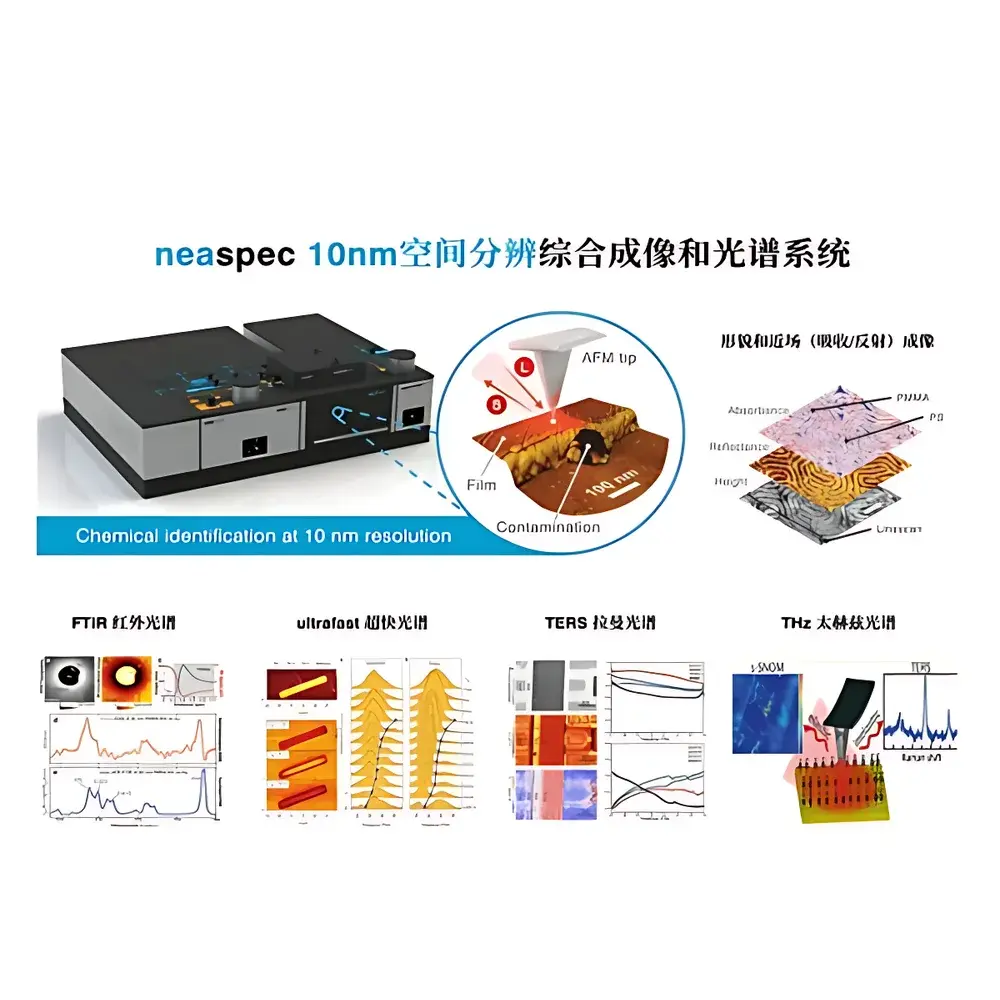
| Compatible Modalities | nano-FTIR, TERS, ultrafast s-SNOM, cryo-s-SNOM, THz-s-SNOM, polarization-resolved s-SNOM |
| AFM Integration | Fully integrated high-stability atomic force microscope with tapping, contact, and non-contact modes |
| Environmental Options | Ambient, vacuum, cryogenic (down to 4 K) |
| Software Platform | neaSCAN v5.x with guided workflow, real-time FFT processing, GLP-compliant audit trail, and 21 CFR Part 11-ready user access control |
Overview
The Neaspec neaSCOPE is a research-grade scattering-type scanning near-field optical microscope (s-SNOM) engineered for quantitative nanoscale optical spectroscopy and imaging across multiple electromagnetic regimes. Unlike conventional far-field optical microscopy constrained by the diffraction limit, the neaSCOPE leverages the physical principle of tip-enhanced near-field confinement: when a focused laser beam illuminates a metallized atomic force microscope (AFM) tip, localized plasmonic enhancement generates an optical hotspot with dimensions determined solely by the tip apex radius—typically <10 nm—regardless of incident wavelength. This enables true nanoscale spatial resolution in visible, mid-infrared (2.5–20 µm), terahertz (0.1–10 THz), and ultrafast (femtosecond pump-probe) spectral domains. The system operates on a robust, vibration-isolated platform with active drift compensation and sub-nanometer closed-loop Z-positioning, ensuring high reproducibility essential for quantitative comparative studies in nanophotonics, quantum materials, and soft matter.
Key Features
- Fully integrated dual-function platform combining high-resolution AFM and s-SNOM in a single vacuum-compatible or cryogenic (4 K) chamber
- Wavelength-independent <10 nm spatial resolution validated via independent calibration standards (e.g., SiO₂ gratings, graphene edges, plasmonic nanodisks)
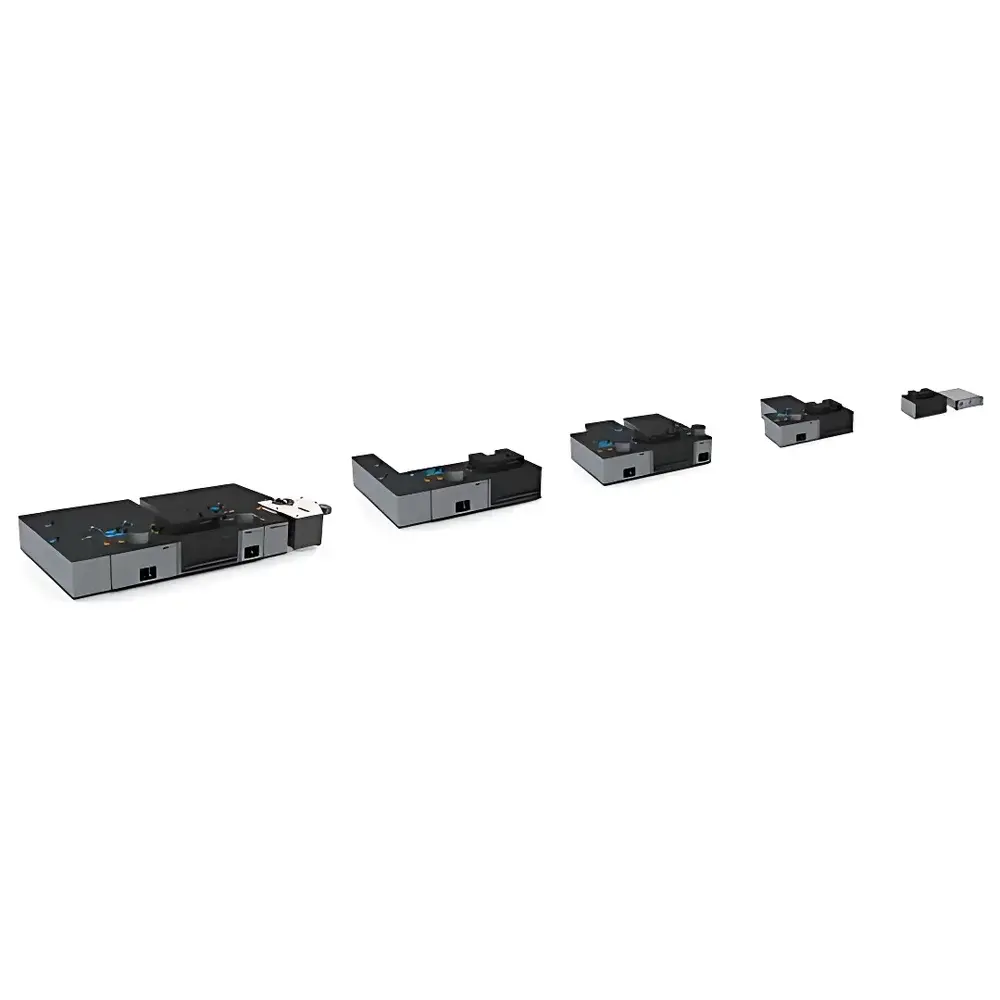
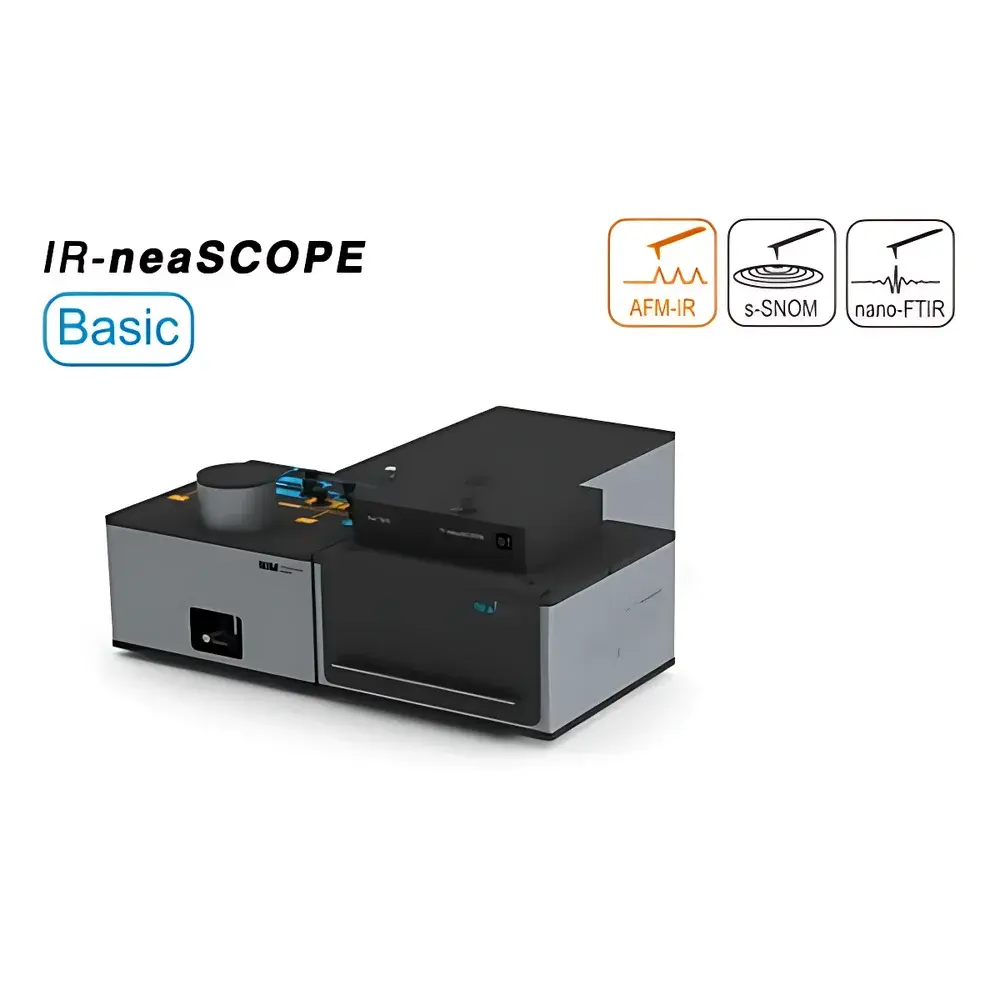
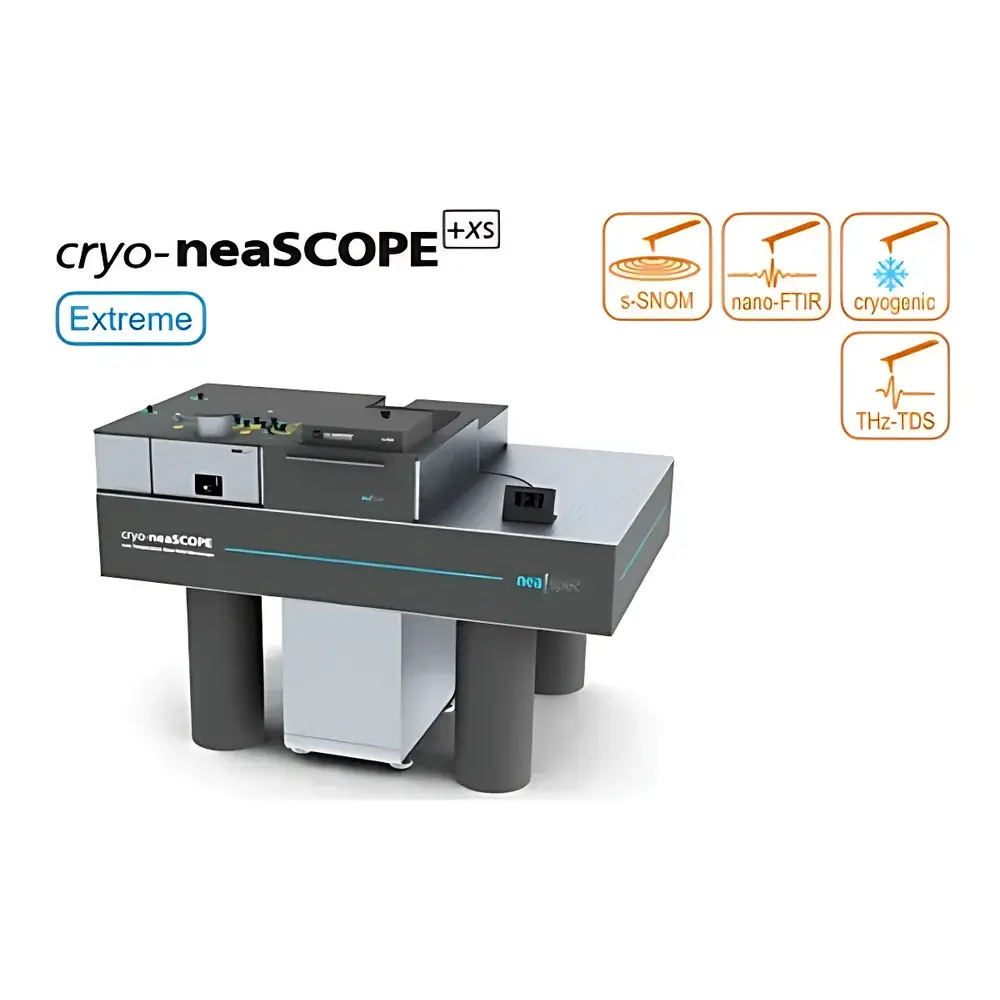
- Modular architecture supporting six core operational configurations: IR-neaSCOPE+s (nano-FTIR), VIS-neaSCOPE+s (polarization-resolved amplitude/phase imaging), THz-neaSCOPE+xs (nanoscale THz-TDS), cryo-neaSCOPE+xs (low-temperature s-SNOM), IR-neaSCOPE+fs (10 nm / 10 fs spatiotemporal resolution), and IR-neaSCOPE+TERso (combined TERS/o-PL/nano-FTIR)
- Standardized AFM capabilities including tapping mode, contact mode, phase imaging, Kelvin probe force microscopy (KPFM), conductive AFM (C-AFM), and piezoresponse force microscopy (PFM)
- Real-time interferometric detection with pseudo-heterodyne demodulation at harmonics ≥3rd for optimized signal-to-noise ratio and artifact suppression
Sample Compatibility & Compliance
The neaSCOPE accommodates a broad range of solid-state and biological specimens—including monolayer 2D materials (graphene, TMDCs), semiconductor heterostructures, plasmonic metasurfaces, polymer blends, lipid bilayers, and fixed cellular sections—without requiring metal coating or vacuum compatibility constraints. All configurations comply with ISO/IEC 17025 requirements for measurement traceability, and software workflows support GLP/GMP-aligned documentation: full electronic audit trails, user-defined role-based permissions, and timestamped raw data archiving. The neaSCAN software meets FDA 21 CFR Part 11 criteria for electronic records and signatures when deployed with optional validation packages. Instrument calibration protocols reference NIST-traceable standards for topography (Si grating SRM 2059), optical contrast (Au/SiO₂ step height), and spectral accuracy (polystyrene IR reference film).
Software & Data Management
neaSCAN v5.x provides a unified, context-aware interface designed for both novice and expert users. Its guided workflow engine walks operators through alignment, tip approach, parameter optimization, and acquisition sequencing—reducing setup time by >60% compared to legacy s-SNOM platforms. All data are stored in vendor-neutral HDF5 format with embedded metadata (laser power, modulation frequency, scan parameters, environmental conditions). Real-time Fourier-domain analysis enables immediate evaluation of near-field phase and amplitude spectra during acquisition. Batch processing supports automated baseline correction, Mie-scattering deconvolution, and dielectric function retrieval via effective medium approximations. Export modules generate publication-ready figures compliant with Nature Photonics, ACS Nano, and Nano Letters formatting guidelines.
Applications
The neaSCOPE serves as a foundational tool in advanced nanoscale photonic characterization. It enables direct mapping of phonon polariton dispersion in hexagonal boron nitride (hBN), quantification of carrier density gradients in doped graphene and transition metal dichalcogenides, nanoscale identification of chemical heterogeneity in pharmaceutical amorphous dispersions, label-free infrared fingerprinting of protein secondary structure in membrane environments, and time-resolved tracking of hot-carrier relaxation dynamics in plasmonic nanostructures. Peer-reviewed publications using this platform exceed 1,200 indexed entries (Web of Science, 2018–2024), with methodological adoption documented in >40 national metrology institutes and university cleanroom facilities worldwide.
FAQ
What spectral ranges does the neaSCOPE support?
The base system covers visible (400–800 nm), mid-infrared (2.5–20 µm), and terahertz (0.1–10 THz); optional ultrafast laser integration extends coverage to femtosecond time-resolved measurements.
Is cryogenic operation available?
Yes—cryo-neaSCOPE+xs integrates a compact 4 K closed-cycle cryostat with optical access and thermal drift compensation for low-temperature nanospectroscopy.
Can the system perform correlative measurements with other techniques?
Absolutely—the platform supports synchronized acquisition with Raman spectrometers, time-of-flight secondary ion mass spectrometry (ToF-SIMS), and synchrotron IR beamlines via TTL-triggered external synchronization.
How is data integrity ensured for regulated environments?
neaSCAN includes configurable electronic signature workflows, immutable audit logs, and optional IQ/OQ/PQ documentation kits aligned with ISO 13485 and GxP requirements.
What AFM modes are natively supported?
Tapping, contact, non-contact, phase imaging, KPFM, C-AFM, PFM, and magnetic force microscopy (MFM) are all available without hardware modification.




