
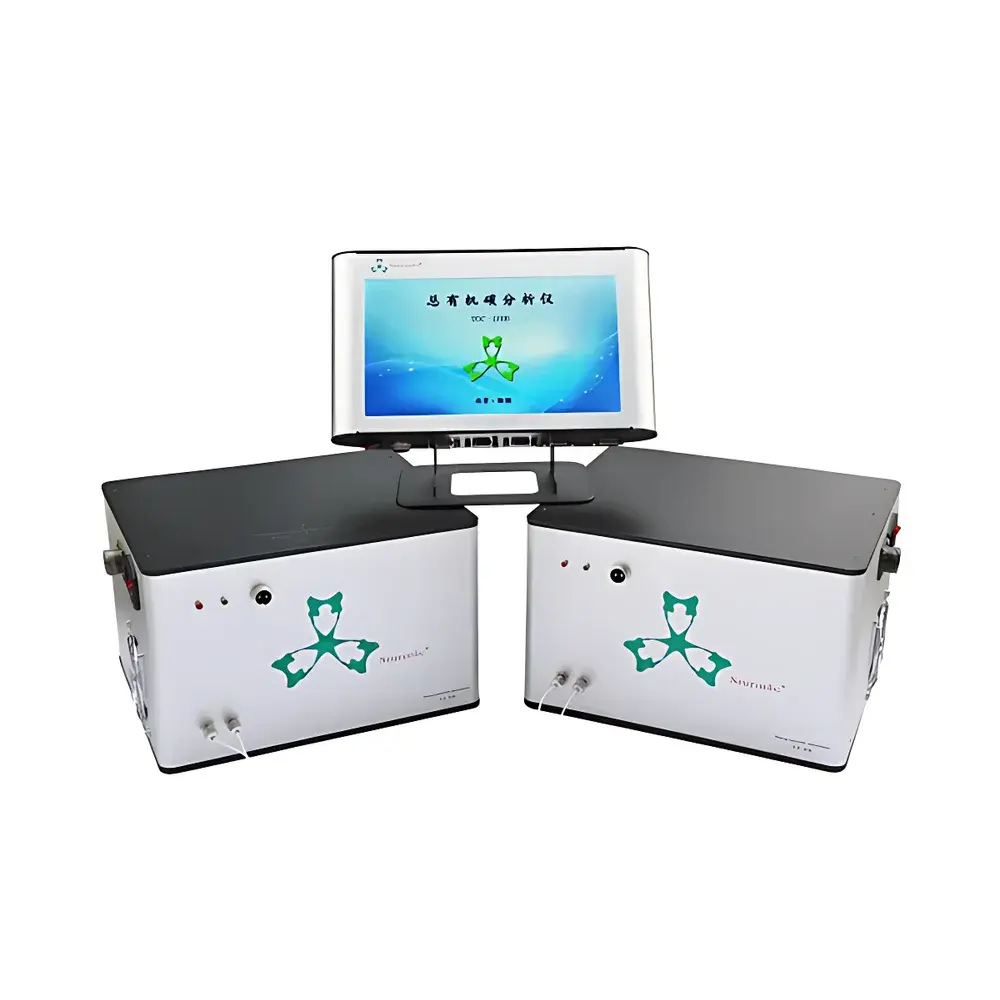
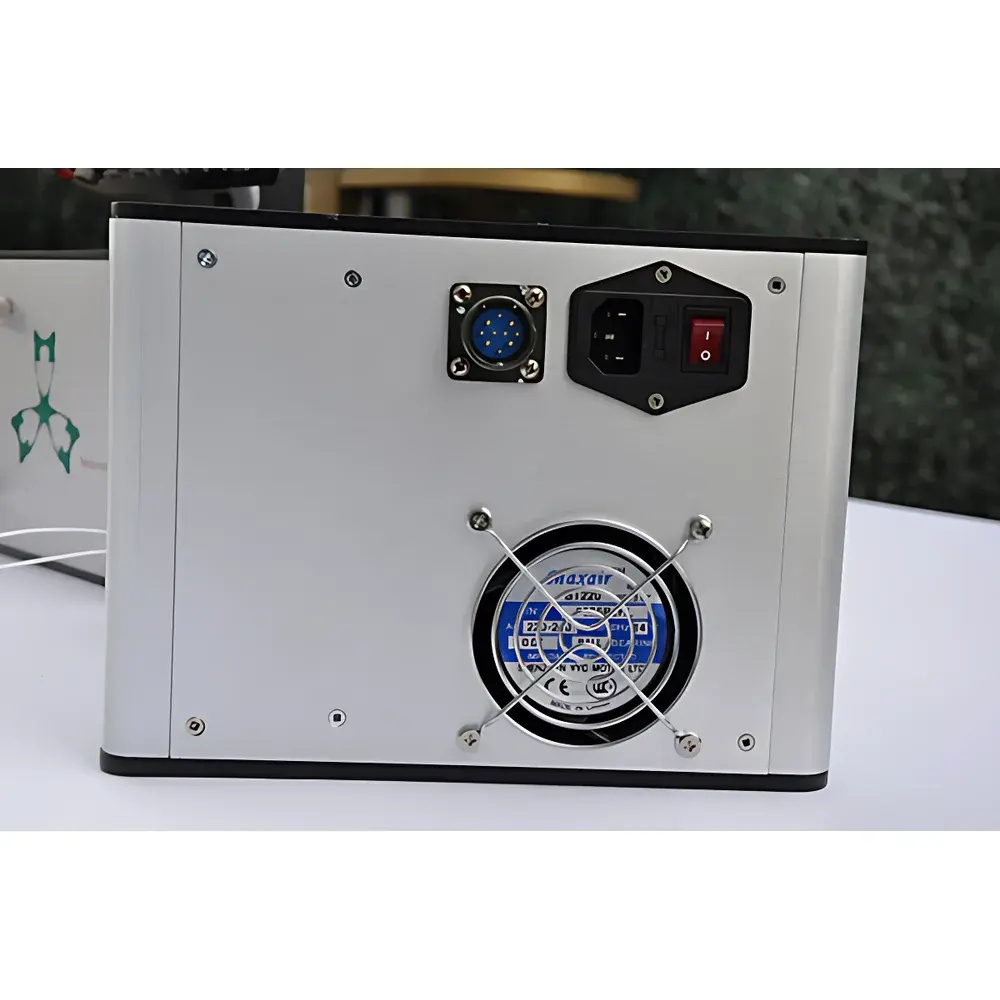
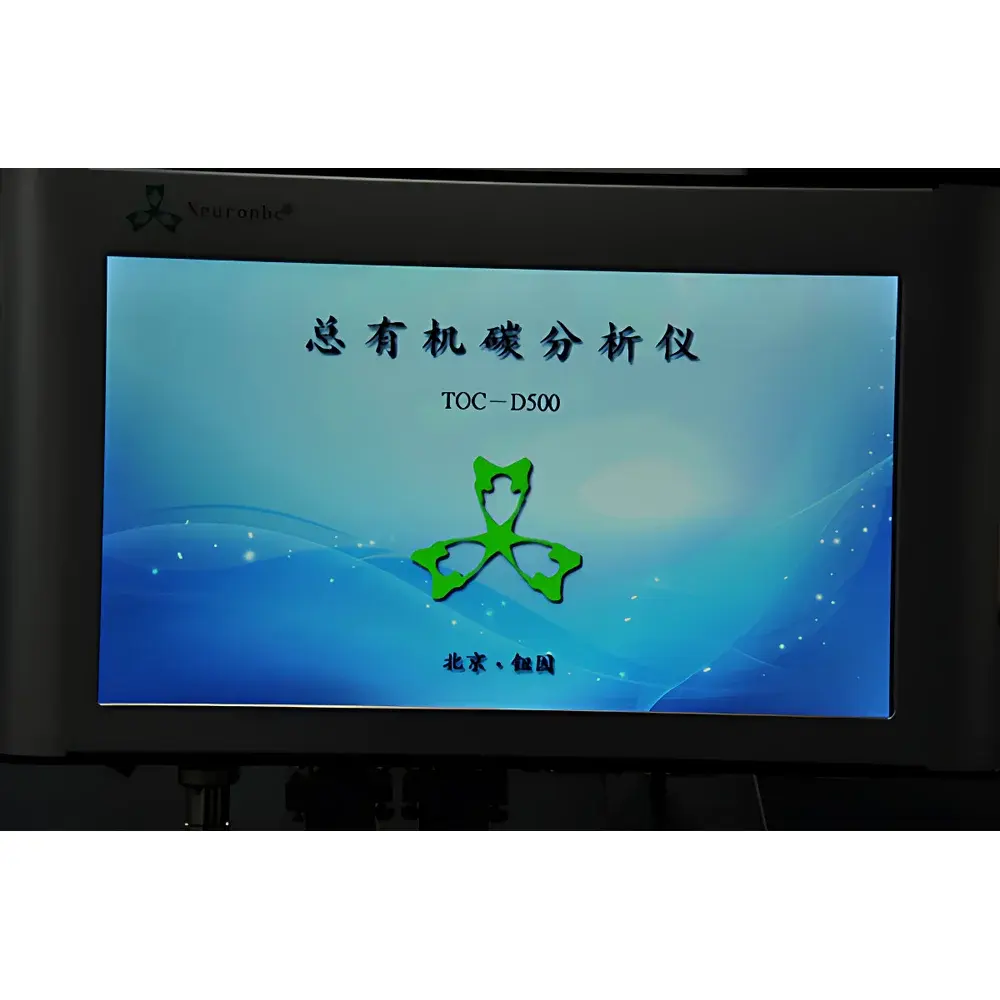
NeuronBC Carbon TA5.0 Multi-Point Online Total Organic Carbon Analyzer
| Brand | NeuronBC |
|---|---|
| Model | Carbon TA5.0 |
| Origin | Beijing, China |
| Instrument Type | Online TOC Analyzer |
| Detection Principle | Direct Conductivity Method |
| Oxidation Method | UV Photolysis (Static UV Oxidation) |
| Measurement Range | 1–1000 ppb (as C) |
| Accuracy | ±5% of reading |
| Detection Limit | 1 ppb (as C) |
| Resolution | 0.1 ppb (display), 1 ppb (reporting) |
| Repeatability | ±5% RSD |
| Conductivity Detection Range | 0.055–6.000 µS/cm |
| Sample Temperature Range | 0–100 °C |
| Ambient Operating Temperature | 5–65 °C |
| Relative Humidity | ≤85% RH (non-condensing) |
| Power Supply | 220 V ±10%, 50 Hz ±10% |
| Response Time | ≤5 min (t₉₀) |
| Drift | ±5% FS/24 h |
| Detector Unit Rated Power | 50 W per unit |
| Communication Interface | RS-485 (up to 48 nodes) |
| Display | 10-inch capacitive touchscreen HMI |
| Data Terminal | TOC-D500 central controller supporting up to 8 distributed TA5.0 sensor units |
| Sample Tubing | PTFE, 1 mm ID, fitted with Swagelok® 50-series quick-connect fittings |
| Data Storage | Internal SD card (≥8 GB), 10-year historical archive (1-min intervals) |
| Output | Real-time analog 4–20 mA, Modbus RTU/TCP, optional thermal printer integration |
Overview
The NeuronBC Carbon TA5.0 Multi-Point Online Total Organic Carbon Analyzer is an engineered solution for continuous, real-time monitoring of ultra-low-level organic carbon contamination in high-purity water systems. Designed specifically for regulated industrial environments—including pharmaceutical water distribution networks, semiconductor ultrapure water (UPW) loops, and power plant demineralized water circuits—the system implements the direct conductivity detection principle following UV photolysis oxidation. Unlike combustion-based TOC analyzers, the TA5.0 employs static UV oxidation at 185 nm wavelength to convert non-purgeable organic carbon (NPOC) into CO₂, which dissolves in the aqueous matrix and alters solution conductivity proportionally. This conductometric measurement—calibrated against NIST-traceable potassium hydrogen phthalate (KHP) standards—is inherently drift-resistant and requires no carrier gas or catalysts. The architecture separates sensing intelligence from data aggregation: each TA5.0 detection unit operates autonomously with dedicated UV lamp, conductivity cell, and flow control, while the TOC-D500 central terminal synchronizes, validates, stores, and visualizes data from up to eight parallel channels—enabling true spatial profiling across multi-point sampling locations.
Key Features
- Distributed multi-point architecture: Independent TA5.0 sensor units (each rated 50 W) deploy at critical sampling points—e.g., RO permeate, EDI outlet, storage tank return line—eliminating cross-channel interference and enabling root-cause isolation.
- UV-static oxidation: 185 nm low-pressure mercury lamp ensures complete oxidation of recalcitrant organics (e.g., acetic acid, ethanolamine) without ozone generation or quartz sleeve fouling; lamp lifetime exceeds 12,000 hours.
- High-fidelity conductometric detection: Platinum black-coated electrodes with temperature-compensated conductivity measurement (±0.01 µS/cm resolution) calibrated per ASTM D5907 and ISO 8245 protocols.
- Robust fluidic design: 1 mm ID PTFE sample tubing with Swagelok® 50-series fittings minimizes adsorption, particulate retention, and biofilm nucleation; wetted path complies with USP and EP 3.2.1.
- Centralized HMI: 10-inch industrial-grade touchscreen interface on TOC-D500 terminal supports time-synchronized data overlay, alarm threshold configuration (high/low, rate-of-change), and audit-ready event logging.
- Regulatory-ready data handling: Internal SD card archives raw conductivity, temperature, UV intensity, and calculated TOC values at user-defined intervals (1 sec to 60 min); all entries timestamped with NTP-synchronized UTC clock.
Sample Compatibility & Compliance
The Carbon TA5.0 is validated for use with purified water (PW), water for injection (WFI), and ultrapure water (UPW) meeting pharmacopeial specifications (USP , EP 2.2.44, JP 17). It accommodates sample temperatures from 0–100 °C and tolerates conductivity up to 6.000 µS/cm—enabling deployment downstream of polishing resins without dilution. All wetted materials comply with FDA 21 CFR Part 177 and EU 10/2011 for food-contact polymers. System firmware adheres to IEC 62304 Class B software safety requirements, and data integrity conforms to ALCOA+ principles (Attributable, Legible, Contemporaneous, Original, Accurate, Complete, Consistent, Enduring, Available). Full electronic records meet FDA 21 CFR Part 11 requirements when paired with TOC-D500’s role-based access control and audit trail functionality.
Software & Data Management
The TOC-D500 terminal runs embedded Linux with deterministic real-time kernel, hosting a native SCADA interface supporting Modbus RTU/TCP, OPC UA (compliant with IEC 62541), and 4–20 mA analog output. Historical data export is available in CSV and PDF formats—with configurable metadata (operator ID, calibration certificate number, system status flags). Thermal printer integration enables on-demand hardcopy of calibration reports, alarm summaries, and trending snapshots. Data validation includes automatic blank subtraction, conductivity baseline drift correction, and UV lamp intensity monitoring—triggering maintenance alerts if irradiance falls below 85% nominal. All firmware updates are cryptographically signed and installed via secure HTTPS portal.
Applications
- Pharmaceutical manufacturing: Continuous TOC verification of PW/WFI distribution loops per EU GMP Annex 1 and FDA Guidance for Industry (2022), including point-of-use monitoring at filling lines and bioreactor feed points.
- Semiconductor fabrication: UPW quality assurance in fab supply networks—detecting trace organics from photoresist strippers or CMP slurries that compromise oxide layer integrity.
- Power generation: Monitoring condensate polishers and boiler feedwater systems to prevent organic-induced corrosion and deposition in steam cycles.
- Research & development: Multi-location carbon mapping in pilot-scale water reuse systems or membrane fouling studies.
FAQ
What regulatory standards does the Carbon TA5.0 support?
It meets USP , EP 2.2.44, JP 17, ASTM D5907, ISO 8245, and supports compliance with FDA 21 CFR Part 11 and EU Annex 11 through configurable audit trails and electronic signatures.
Can the system operate in hazardous areas?
No—TA5.0 units are rated for Class I, Division 2 (non-hazardous) environments per NEC Article 500; intrinsic safety barriers are not integrated.
How often is calibration required?
Initial calibration uses KHP standards; routine verification is performed weekly per internal SOP, with full recalibration recommended every 3 months or after lamp replacement.
Is remote diagnostics supported?
Yes—TOC-D500 provides SSH-enabled CLI access and web-based diagnostic dashboard showing lamp health, conductivity cell impedance, and communication latency metrics.
What is the minimum sample flow rate?
The system operates reliably at 10–100 mL/min; lower flow rates increase residence time in UV chamber but may elevate carryover risk in high-TOC matrices.







