
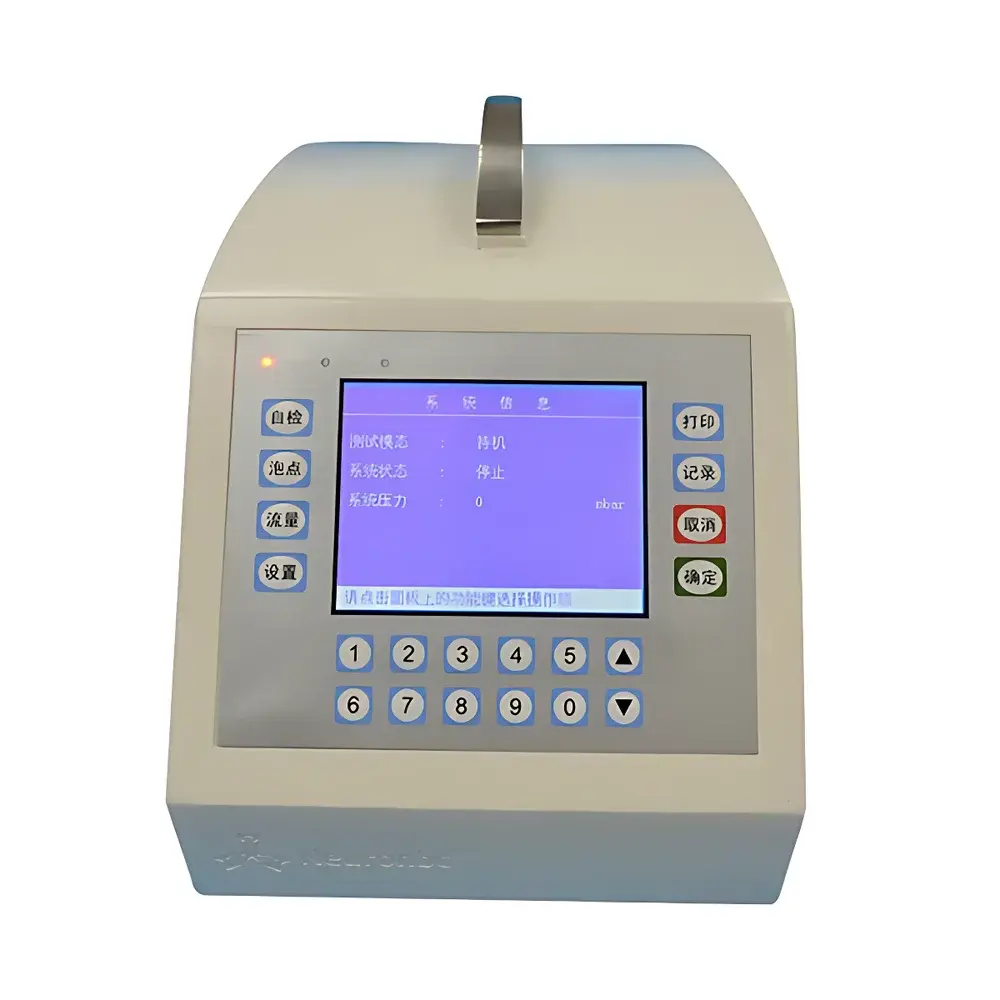
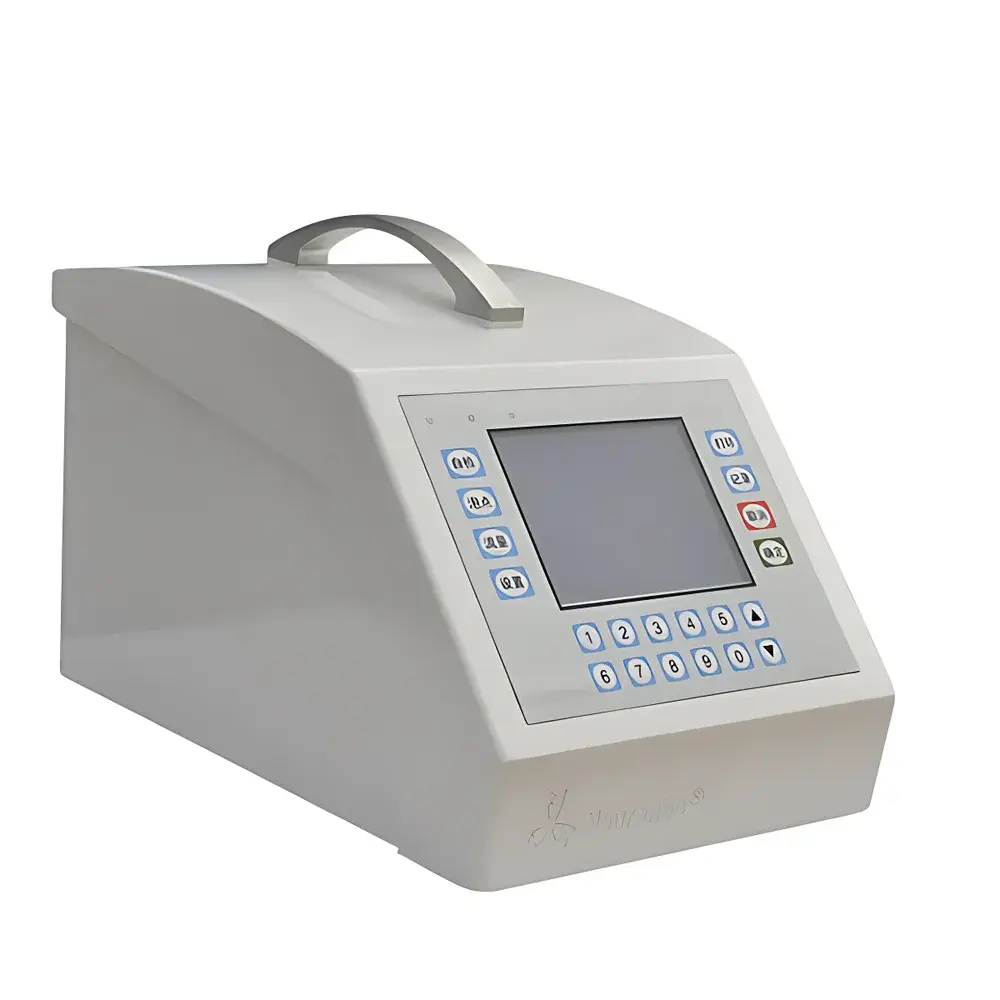
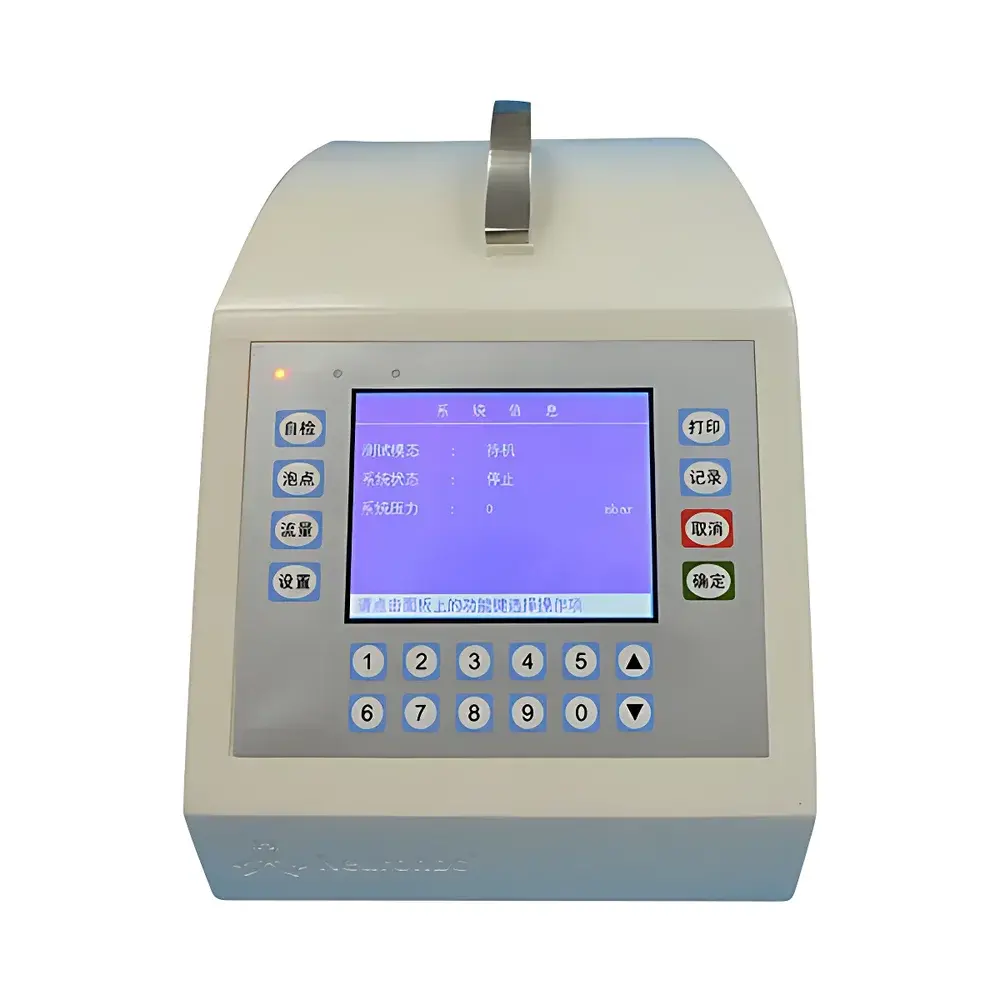
NeuronBC Integtest™ V4.0 Portable Filter Integrity Tester
| Brand | NeuronBC |
|---|---|
| Origin | Beijing, China |
| Model | Integtest™ V4.0 Portable |
| Power Supply | 100–240 V AC, 50/60 Hz, 100 W |
| Operating Pressure Range | 100–6900 mbar |
| Pressure Resolution | ±1.0 mbar |
| Bubble Point Accuracy | ±75 mbar |
| Test Duration (Rapid Bubble Point) | 8 ± 2 min |
| Test Duration (Bubble Point Scan) | 20 ± 2 min |
| Ambient Operating Conditions | 5–35 °C, 10–80% RH |
| Display | Monochrome LCD, 73 × 39 mm with backlight |
| Data Storage | 20 test records |
| Print Output | Integrated Chinese-language thermal printer |
| Dimensions (W × D × H₁ × H₂) | 400 × 380 × 100 × 235 mm |
| Weight | Approx. 8.2 kg |
| Compliance | Designed to support FDA 21 CFR Part 11 readiness, USP <1207>, ISO 13408-2, and Annex 1 (2022) requirements for sterile filtration validation |
Overview
The NeuronBC Integtest™ V4.0 Portable Filter Integrity Tester is an engineered solution for on-site, non-destructive verification of membrane filter integrity in regulated biopharmaceutical, vaccine, and sterile drug manufacturing environments. It operates on three internationally accepted physical principles: bubble point testing (based on capillary flow theory), diffusion flow (forward flow) measurement (governed by Fick’s law of gas permeation through wetted pores), and pressure hold (decay) testing—each aligned with the mechanistic foundations described in USP and ISO 13408-2. Unlike benchtop systems requiring fixed installation or compressed air infrastructure, the V4.0 integrates a high-stability diaphragm vacuum/pressure pump, precision digital transducers, and sealed pneumatic circuitry into a compact, battery-ready chassis—enabling full compliance-grade testing at filtration points including tank vent filters, point-of-use water filters, capsule filters, and multi-cartridge housings without compromising downstream sterility.
Key Features
- True portable architecture: Weighing under 8.2 kg with integrated handle and shock-absorbing housing, designed for repeated transport between cleanrooms, isolators, and utility corridors.
- Triple-method validation capability: Automated execution of bubble point scan, rapid bubble point, diffusion flow (with user-defined upstream volume input), and pressure hold tests—all selectable via intuitive Chinese-language GUI.
- Real-time system diagnostics: Built-in self-check sequence validates pneumatic seal integrity, sensor zero stability, and valve actuation prior to each test cycle; error codes identify leaks, moisture ingress, or transducer drift.
- Regulatory-aligned data handling: Thermal printer outputs include timestamp, operator ID (manual entry), test method, applied pressure, measured flow/decay rate, pass/fail status, and environmental conditions—structured to support GLP/GMP audit trails.
- Optimized human-machine interface: Backlit monochrome LCD (73 × 39 mm) with high-contrast character rendering ensures legibility under low-light cleanroom lighting or gloved operation.
- No external gas supply required: Self-contained pressure generation eliminates dependency on facility nitrogen or compressed air lines—critical for mobile QC deployment and emergency validation during utility outages.
Sample Compatibility & Compliance
The Integtest™ V4.0 accommodates a broad spectrum of single- and multi-element filtration assemblies without adapter kits. Validated configurations include disc membranes (Φ25 mm to Φ300 mm), standard cylindrical cartridges (2.5″ to 40″ length, 1–15 elements), capsule filters (including luer-lock and sanitary clamp variants), mini-cartridges, and vent-style air filters used on stainless-steel storage tanks and process vessels. All test protocols adhere to the acceptance criteria and procedural rigor defined in FDA Guidance for Industry: Sterile Drug Products Produced by Aseptic Processing (2004), EU Annex 1 (2022), and USP Chapter “Package Integrity Evaluation – Sterile Products.” The instrument’s pressure control fidelity (±1.0 mbar resolution) and bubble point repeatability (±75 mbar) meet the minimum metrological requirements for filter qualification per ISO 13408-2 Annex B.
Software & Data Management
While the V4.0 operates as a standalone embedded system without PC dependency, its firmware architecture supports traceable data governance. Each test record stores date/time stamp, operator identifier, filter type and dimensions, test method selected, target pressure, actual applied pressure, measured diffusion rate or pressure decay slope, calculated bubble point, and final verdict (PASS/FAIL/OVER-THRESHOLD). Twenty test histories are retained in non-volatile memory with overwrite protection. Printed reports comply with ALCOA+ principles (Attributable, Legible, Contemporaneous, Original, Accurate, Complete, Consistent, Enduring, Available) when paired with controlled logbook documentation. Optional firmware updates—distributed via secure USB key—maintain alignment with evolving regulatory interpretations of Annex 1 §6.45 and FDA data integrity expectations under 21 CFR Part 11 (where electronic signatures and audit trails are implemented externally).
Applications
- Pre-use post-sterilization integrity verification of hydrophilic/hydrophobic sterilizing-grade filters in API purification trains.
- Routine challenge testing of compressed air and nitrogen distribution system vent filters in Grade A/B environments.
- Final filter release testing for purified water (PW) and water-for-injection (WFI) loops prior to point-of-use dispensing.
- Emergency requalification of filters following extended idle periods or after maintenance interventions on filtration skids.
- Supporting media fill investigations by correlating filter performance deviations with microbial excursion events.
FAQ
Does the V4.0 require calibration certification before first use?
Yes. Each unit ships with a factory-issued calibration certificate traceable to NIM (National Institute of Metrology, China) standards for pressure and time domains. Annual recalibration is recommended and supported under the included one-year free calibration service.
Can diffusion flow results be corrected for temperature and pressure variations?
The firmware applies real-time compensation using built-in ambient temperature and barometric pressure sensors, normalizing diffusion rates to 23 °C and 1013 mbar per ISO 13408-2 Section 7.3.
Is the thermal printer compatible with LIMS integration?
The printed report provides all essential metadata for manual LIMS entry. For automated ingestion, optional RS-232 or USB-to-serial export (firmware v2.1+) enables direct transfer of ASCII-formatted test logs.
What maintenance intervals are specified for the internal pump and valves?
Diaphragm pump service life exceeds 10,000 test cycles; preventive replacement is advised every 24 months under typical QC lab usage. Solenoid valves undergo functional verification during quarterly system checks per manufacturer’s PM checklist.
How does the V4.0 handle wetted filter surfaces during diffusion testing?
It employs a patented dual-sensor differential pressure algorithm that distinguishes true diffusive gas flow from transient moisture-induced signal drift—minimizing false failures common in high-humidity cleanroom settings.




