
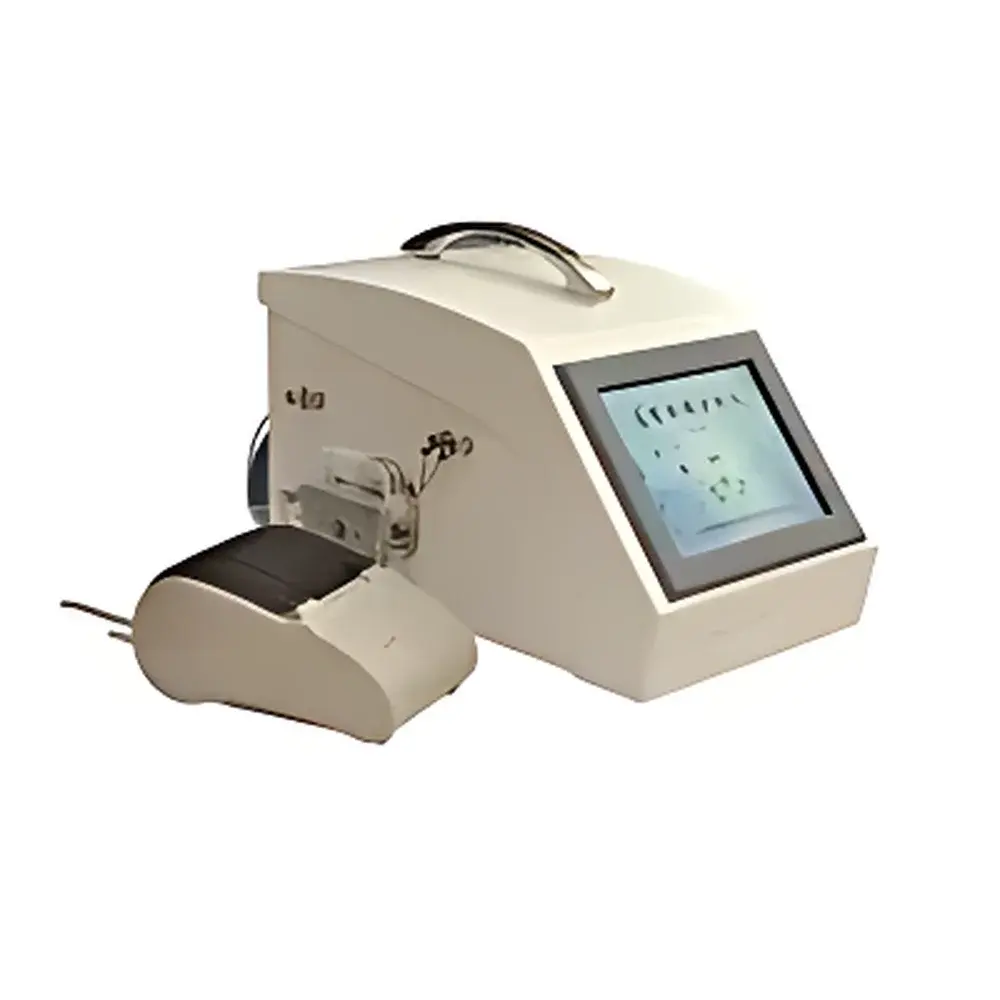
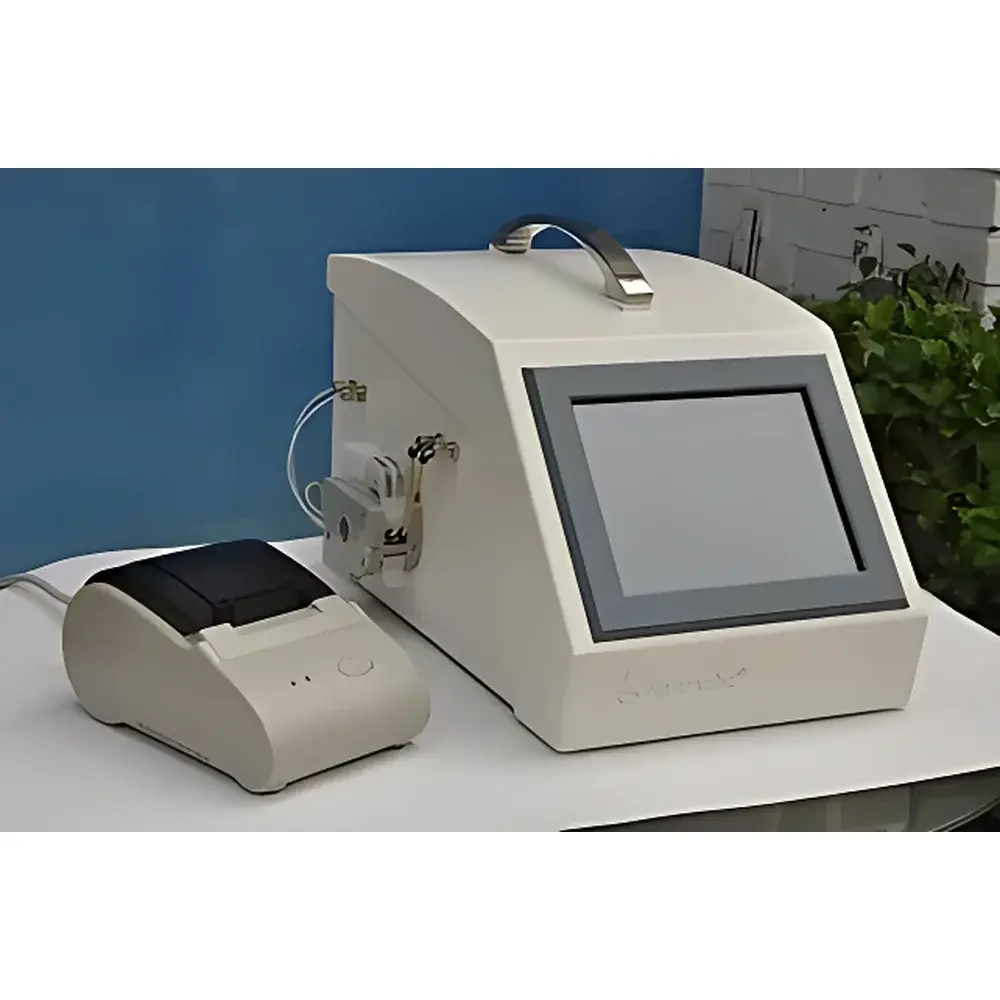
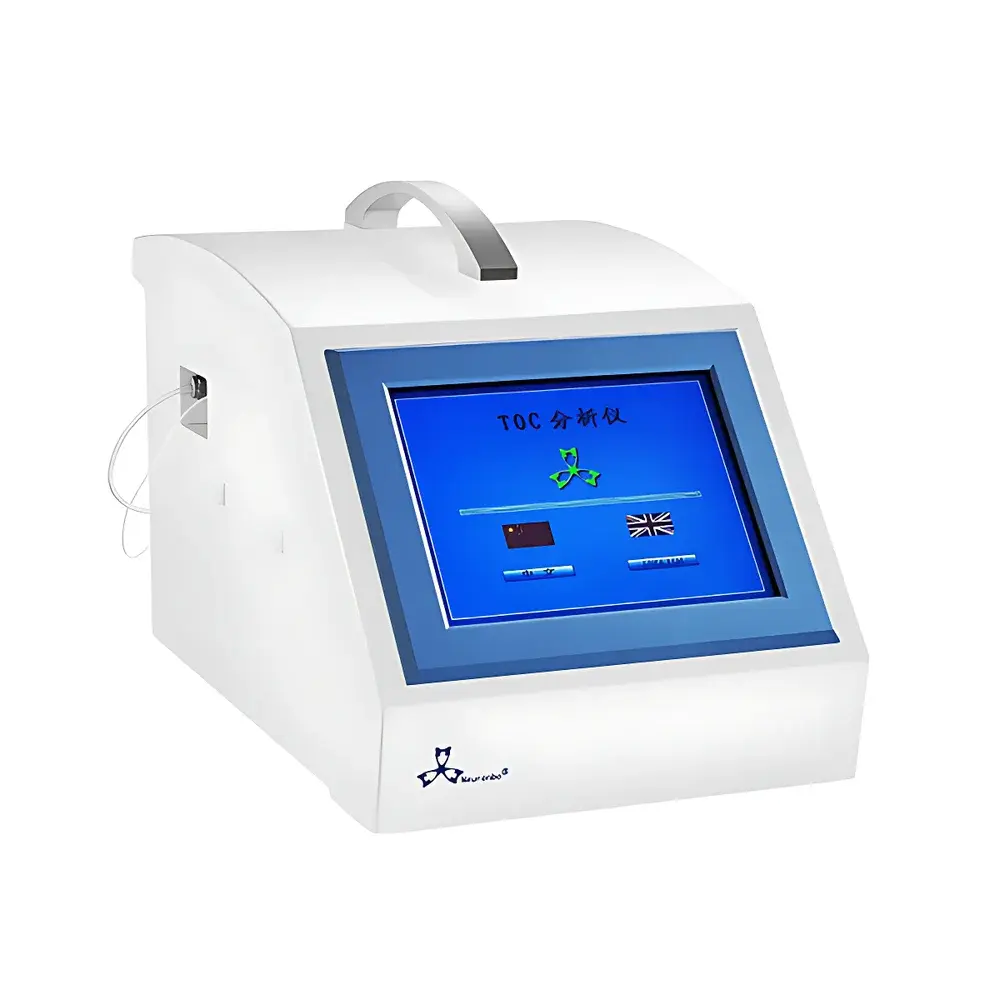
NeuronBC TA-1.0 Offline Total Organic Carbon (TOC) Analyzer
| Brand | NeuronBC |
|---|---|
| Origin | Beijing, China |
| Model | TA-1.0 |
| Instrument Type | Laboratory TOC Analyzer |
| Detection Principle | Direct Conductivity Method |
| Oxidation Method | UV Photocatalytic Oxidation |
| Measurement Range | 0.001–1.0 mg/L (1–1000 ppb) |
| Accuracy | ±3% |
| Resolution | 0.001 mg/L |
| Detection Limit | 0.001 mg/L |
| Repeatability | ±3% |
| Power Supply | 100–240 VAC, 50 Hz, 120 W |
| Sample Temperature Range | 1–99 °C |
| Data Logging | 5000+ records |
| Audit Trail | 16-event log with timestamped entries |
| User Access Control | 4-tier password authentication compliant with FDA 21 CFR Part 11 |
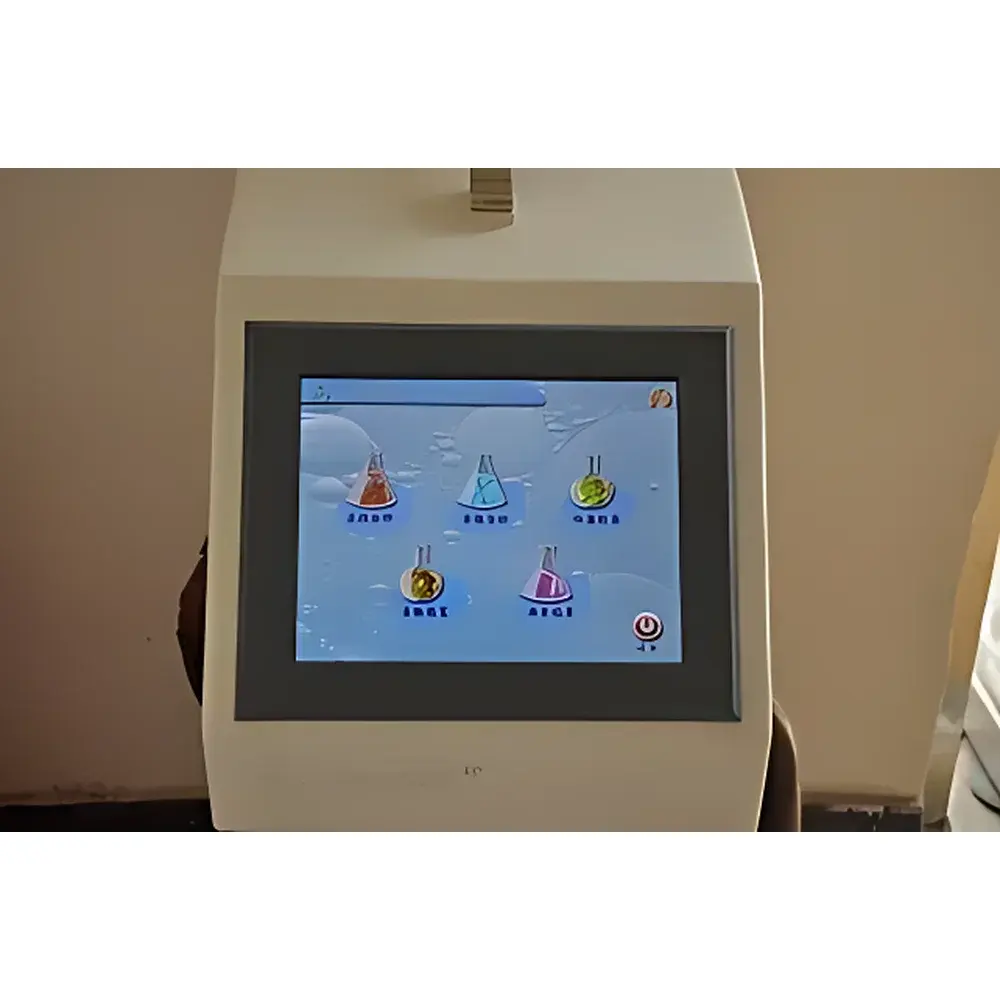
| Display | Color touchscreen |
| Dimensions (L×W×H) | 400 × 240 × 270 mm |
| Weight | 8.5 kg |
Overview
The NeuronBC TA-1.0 Offline Total Organic Carbon (TOC) Analyzer is a laboratory-grade analytical instrument engineered for precise, regulatory-compliant quantification of total organic carbon in ultrapure water matrices. It operates on the principle of UV photocatalytic oxidation followed by direct conductivity detection — a methodology widely accepted in pharmaceutical and biotechnology settings for its simplicity, robustness, and absence of consumable reagents. In this system, organic compounds in the aqueous sample are oxidized to CO₂ under 185/254 nm UV irradiation in the presence of a titanium dioxide catalyst. The resulting CO₂ dissolves to form carbonic acid, inducing a measurable increase in solution conductivity. This change is linearly correlated to TOC concentration and quantified without interference from inorganic carbon species when operated in NPOC (Non-Purgeable Organic Carbon) mode via acid sparging or integrated blank subtraction. Designed specifically for offline analysis of Water for Injection (WFI), Purified Water (PW), and other high-purity process waters, the TA-1.0 meets pharmacopeial requirements outlined in USP , EP 2.2.44, and ChP , supporting routine quality control and cleaning validation workflows.
Key Features
- UV photocatalytic oxidation (185/254 nm dual-wavelength lamp) with TiO₂-coated quartz reactor — eliminates need for persulfate, acid, carrier gas, or high-temperature combustion
- Direct conductivity detection with temperature-compensated electrode array — delivers stable baseline and high signal-to-noise ratio in low-conductivity ultrapure water
- Integrated automated sample handling — compatible with optional autosampler for unattended batch analysis and system suitability testing
- Full 21 CFR Part 11 compliance architecture — including role-based 4-level user authentication, electronic signatures, and immutable 16-event audit trail with time-stamped actions
- Limited-range calibration and alarm logic — configurable upper action limits trigger visual and audible alerts upon exceedance, supporting alert-and-action threshold protocols per ICH Q5C
- Onboard color touchscreen interface with intuitive navigation — supports method storage, real-time trend display, and embedded help documentation
Sample Compatibility & Compliance
The TA-1.0 is validated for use with low-ionic-strength aqueous samples typical of pharmaceutical water systems: WFI, PW, and clean-in-place (CIP) rinse waters. It accommodates sample volumes of 1–5 mL and tolerates temperatures from 1°C to 99°C, enabling analysis of both chilled and ambient-conditioned samples. All measurement protocols align with ISO 8573-7 (for compressed air system water testing), ASTM D5905-22 (Standard Test Method for TOC in Water), and the Chinese Pharmacopoeia 2020 Edition Chapter 0831. Its design supports IQ/OQ/PQ execution per GAMP 5 guidelines, with documented traceability to NIST-traceable TOC standards. The absence of hazardous reagents and pressurized gases simplifies facility qualification and reduces operational safety oversight burdens.
Software & Data Management
Data acquisition, reporting, and archival are managed via embedded firmware with export-ready output formats (CSV, PDF). Historical data — exceeding 5,000 test records — are stored locally with automatic timestamping, operator ID tagging, and result flagging (e.g., “out-of-spec”, “retest required”). USB port enables secure data backup to encrypted external drives; no cloud connectivity or remote access is implemented, preserving data sovereignty. Audit trail entries include user login/logout, method modification, calibration event, result override, and report generation — all non-erasable and independently verifiable. Software validation packages (including URS, FRS, IQ/OQ protocols, and traceability matrices) are available upon request to support regulated site deployments.
Applications
- Routine QC release testing of pharmaceutical water systems per USP/EP/ChP monographs
- Cleaning validation studies for multi-product facilities — TOC recovery assessment of active pharmaceutical ingredients (APIs) from equipment surfaces
- Investigation of microbial contamination events via correlation of TOC spikes with bioburden excursions
- Monitoring of pretreatment and polishing stages in ultrapure water generation skids
- Supporting environmental monitoring programs in aseptic manufacturing suites
FAQ
Does the TA-1.0 require carrier gas or chemical oxidants?
No — it uses only UV light and a solid-phase photocatalyst; no nitrogen, oxygen, persulfate, or acid addition is needed.
Is the instrument suitable for GMP-regulated environments?
Yes — its 4-tier access control, electronic signature capability, and full 21 CFR Part 11-compliant audit trail meet ALCOA+ data integrity principles.
Can the system be integrated into a LIMS?
Raw data export via USB in CSV format enables manual import; native LIMS API integration is not supported.
What is the recommended calibration frequency?
Daily system suitability testing is advised prior to sample analysis; calibration verification using certified TOC standards should occur at least per shift or per batch, per internal SOP.
How is inorganic carbon interference managed?
The instrument implements acidification and sparging (NPOC mode) or differential conductivity subtraction (TC mode), selectable via software configuration.
Related Products







