
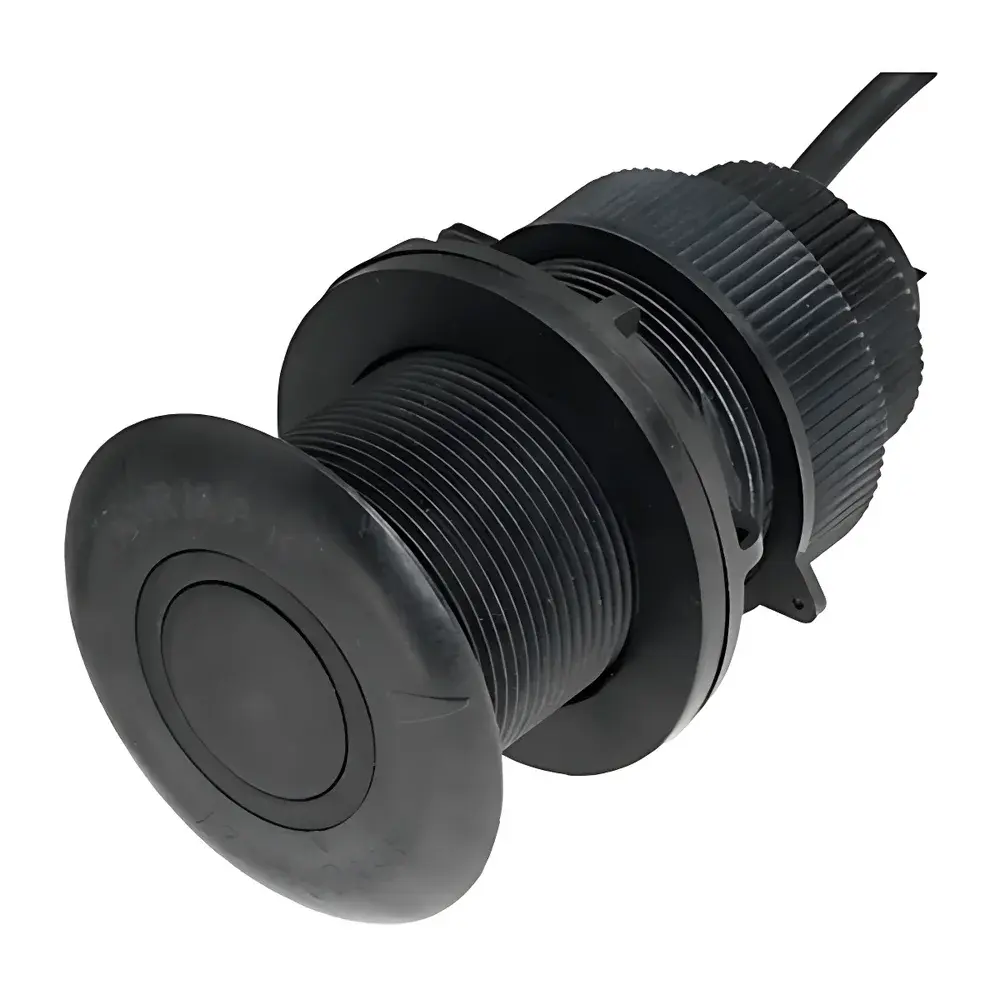
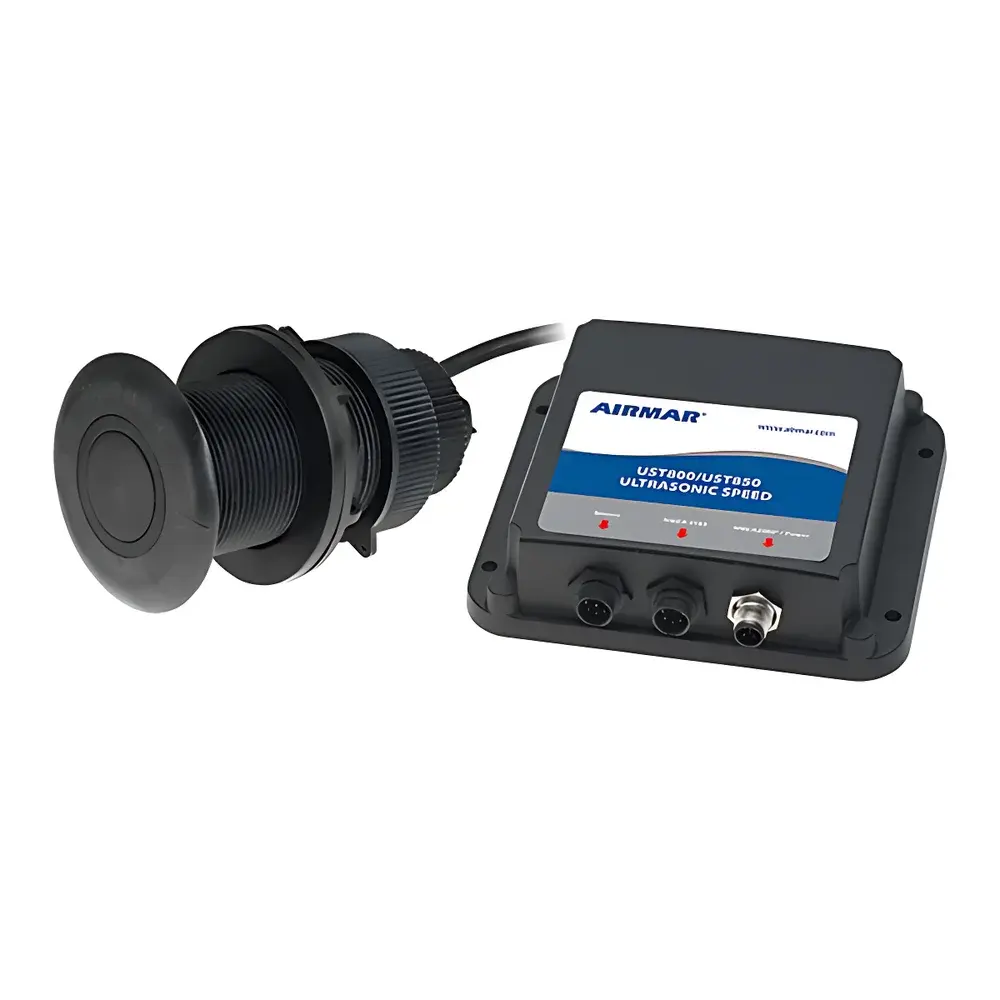
Airmar UST850 Ultrasonic Speed Through Water Sensor
| Brand | Airmar |
|---|---|
| Origin | USA |
| Model | UST850 |
| Output Protocols | NMEA 0183, NMEA 2000® |
| Speed Range | 0.1–50 knots |
| Operating Temperature | −4 to 40 °C |
| Transmit Frequency | 4.5 MHz |
| Pulse Repetition Frequency | 0.5–12 kHz (adaptive) |
| Supply Voltage | 9–16 VDC |
| Average Current Draw | 125 mA @ 12 VDC |
| Housing Material | Plastic / Bronze / Stainless Steel |
| Through-Hull Diameter | 51 mm |
| Weight | 1.4 kg (plastic), 1.8 kg (bronze) |
Overview
The Airmar UST850 is an ultrasonic speed-through-water (STW) sensor engineered for high-fidelity marine navigation and performance monitoring. Unlike mechanical paddlewheel or electromagnetic flow sensors, the UST850 employs time-of-flight ultrasonic transit-time measurement—based on the principle that sound propagates at different velocities in moving versus stationary water. Paired with integrated temperature sensing, it delivers true speed relative to the water mass beneath the hull, independent of GPS drift, current shear, or seabed interference. This makes it indispensable for precision sailing instrumentation, dynamic vessel control systems, and hydrodynamic validation in both recreational and commercial maritime applications. Its solid-state design—free of rotating parts or exposed electrodes—ensures long-term stability in fouling-prone environments while maintaining calibration integrity across salinity gradients (fresh to seawater) and thermal transients.
Key Features
- Integrated ultrasonic speed and temperature measurement in a single through-hull housing
- Adaptive pulse repetition frequency (0.5–12 kHz) dynamically optimized for vessel speed, depth, and acoustic transmission conditions
- High-resolution velocity output updated up to 10 times per second (10 Hz), with internal processing at 25 calculations per second for transient response fidelity
- Extended operational range: 0.1–50 knots (0.05–25.7 m/s), suitable for displacement yachts, high-speed planing craft, and workboats
- Patented echo-correlation digital signal processor (DSP) with real-time adaptive filtering to suppress noise from bubble clouds, plankton, or hull vibration
- CE-compliant construction with optional bronze or stainless-steel through-hull housings for corrosion resistance in saltwater service
- Low-power operation (9–16 VDC, avg. 125 mA @ 12 VDC) compatible with standard marine electrical architectures
Sample Compatibility & Compliance
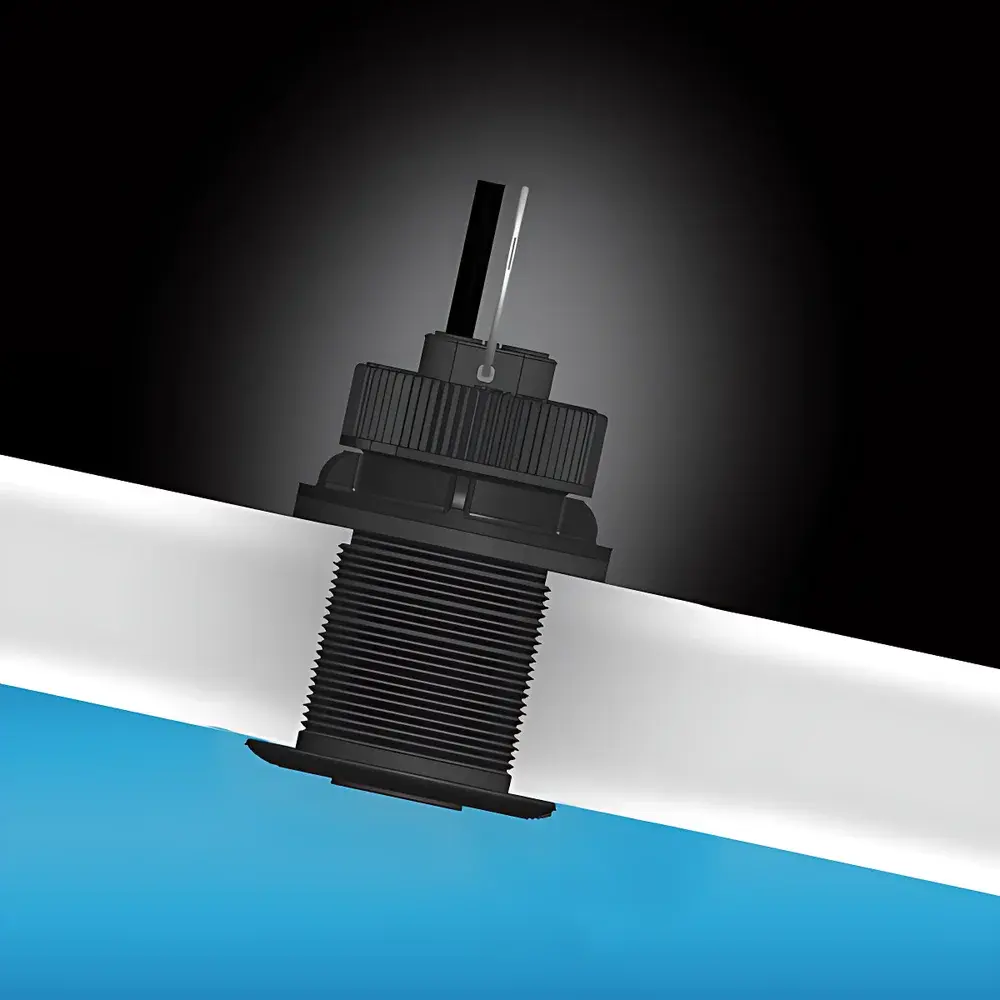
The UST850 is designed for installation on fiberglass, aluminum, steel, and wood hulls via a single 51 mm (2″) through-hull opening. Its ultrasonic transduction is insensitive to biofouling accumulation on the transducer face, eliminating routine cleaning cycles required by optical or mechanical alternatives. The sensor meets IEC 60945 maritime equipment standards for environmental robustness (including IP68 ingress protection and vibration resistance per ISO 10816-3). It complies with CE marking requirements under the Marine Equipment Directive (MED 2014/90/EU) and adheres to EMC Directive 2014/30/EU for electromagnetic compatibility in dense onboard RF environments. While not certified for safety-critical navigation under IMO Resolution A.694(17), it is routinely deployed in GLP-aligned hydrographic survey workflows and OEM integration where STW data feeds into autopilot logic, fuel optimization algorithms, or performance analytics dashboards.
Software & Data Management
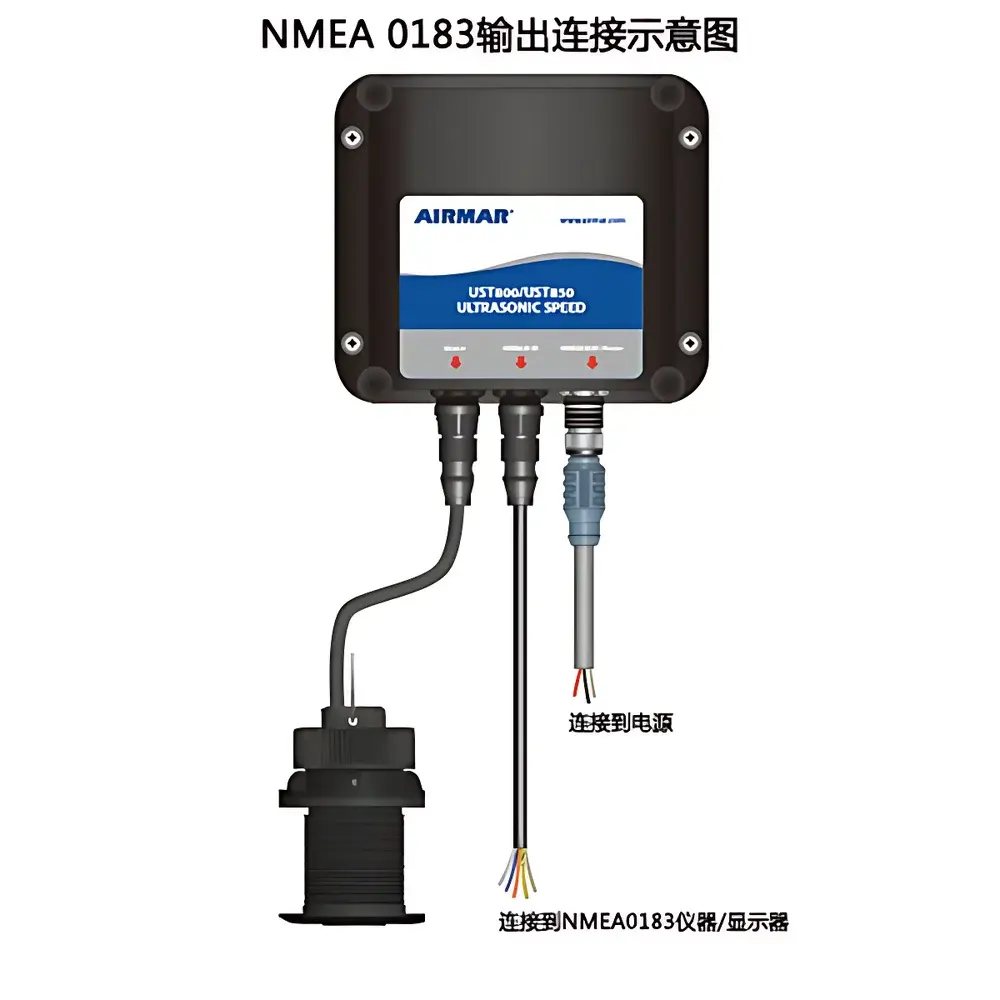
The UST850 outputs calibrated speed-through-water and water temperature data natively via NMEA 0183 (RS-422) and NMEA 2000® (CAN bus) protocols—enabling plug-and-play interoperability with chartplotters (e.g., Raymarine Axiom, Garmin GPSMAP), multifunction displays (MFDs), and third-party vessel management software (e.g., Expedition, Sailmon, OpenCPN). No proprietary drivers or configuration utilities are required; device parameters—including depth compensation offset and salinity correction factor—are set via standardized NMEA command strings (e.g., $PASHR, $SDDBT). All data streams include timestamping synchronized to the host system’s RTC, supporting post-mission replay and correlation with AIS, GNSS, and wind data in compliance with ISO 22861:2020 metadata tagging conventions. Audit trails for firmware updates and parameter changes are maintained locally within the sensor’s non-volatile memory for traceability during regulatory review.
Applications
- Racing sailboat performance analysis—real-time STW input for polar optimization and VMG calculation
- OEM integration into integrated bridge systems (IBS) for dynamic trim and propulsion control
- Scientific research vessels requiring stable, low-drift velocity reference for ADCP synchronization
- Commercial ferries and tugs where fuel efficiency modeling depends on accurate water-referenced speed
- Autonomous surface vehicle (ASV) navigation stacks requiring redundant speed sources compliant with ISO 19901-7
- Marine training simulators requiring physically modeled STW response under varying sea states
FAQ
Does the UST850 require calibration after installation?
No—factory calibration is retained across power cycles and environmental shifts. Field verification may be performed using known-speed transits or co-located Doppler logs, but routine recalibration is not specified in the maintenance schedule.
Can the UST850 operate reliably in shallow water (< 1 m depth)?
Yes—the adaptive PRF and echo-correlation DSP maintain signal lock down to 0.3 m depth, provided the transducer face is fully submerged and free of air entrapment.
Is NMEA 2000® PGN support limited to specific message types?
It broadcasts PGN 128259 (Speed Water Referenced), PGN 130310 (Environmental Parameters), and PGN 127250 (Fluid Level) with full field resolution per NMEA 4.10 specification.
What is the maximum cable length supported for NMEA 0183 output?
Up to 10 meters using shielded twisted-pair (STP) cabling meeting RS-422 impedance specifications (100 Ω ±10%). Longer runs require active repeaters or conversion to NMEA 2000®.
How does the UST850 handle air bubbles generated by hull cavitation?
The echo-correlation algorithm distinguishes coherent water-reflected signals from broadband bubble noise via cross-spectral coherence analysis, preserving velocity accuracy even during planing or stern lift events.
Related Products







